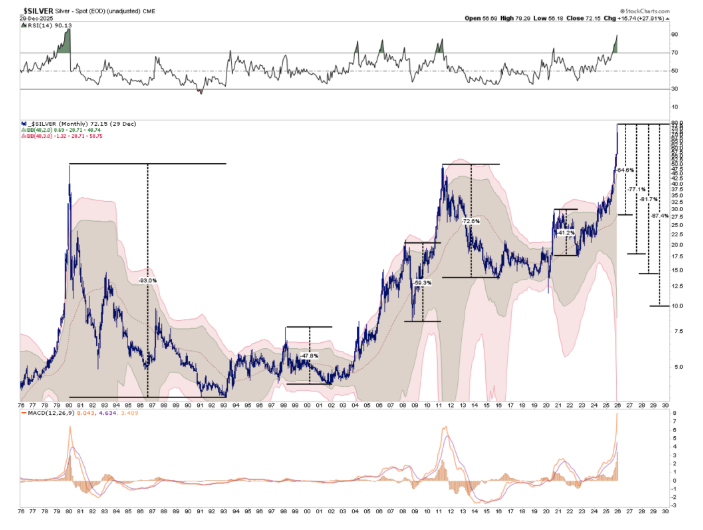
In 2025, the prices of precious metals rose sharply, with silver prices recently surging past $80 per ounce. Of course, when precious metals rise, there is always the same group of commentators (mostly paid newsletter writers and physical metal dealers) to declare that a financial breakdown is underway. Articles like those published on ZeroHedge by guest commentators suggest that such price moves signal more than a market rally. They argue that we are in the early stages of fiat currency failure and systemic collapse. These narratives often rely on the assumption that sudden gains in precious metals represent a mass flight from fiat currencies into “real money.” They claim that this behavior presages delivery defaults on futures contracts, a breakdown of trust in exchanges, and eventual repricing of metals into extreme valuations, such as $200 silver and $10,000 gold.
However, the data behind these dramatic predictions doesn’t support the story. For example, the World Gold Council reported in Q2 2025, “Total gold demand stood at 1,249t, up 7% year-on-year,” while mine production rose modestly. Silver also saw stronger industrial and investment demand, such as in EVs and solar panels, but according to the Parkview Group, “demand in green energy applications, not retail hoarding, has remained the main price driver.” The critical point here is that these moves are significant; they are not unprecedented. Instead, they are a function of demand and supply in the commodity markets. However, price surges are a different matter.
Pricing for all commodities, and particularly precious metals, is ultimately determined in the futures markets. These markets primarily function through the COMEX and CME. In the long term, physical demand indeed affects prices. However, in the short term, prices are set by futures contracts where buyers and sellers speculate, hedge, or arbitrage for profit. Given that the vast majority of these contracts are cash-settled, meaning they don’t result in physical delivery, the price is set more by the volume and positioning of financial participants than by immediate physical demand or scarcity. This structure allows large institutions, hedge funds, and algorithmic traders to influence price direction through leverage, often independent of underlying physical flows. As a result, even substantial physical shortages or premiums in retail markets may not reflect directly in futures-based spot prices unless accompanied by shifts in futures market positioning.
Of course, two primary factors drive speculators in the precious metals markets. The first is a narrative. When the prices of precious metals increase, it tends to correlate with periods of uncertainty. For example, when the Federal Reserve signals interest rate cuts, real yields decline, or geopolitical tensions rise. While none of these conditions indicate systemic collapse, the narrative brings institutions into the market.
The second is price momentum. As prices increase, the narrative gains traction, and traders begin to chase the price higher, building stronger momentum. That price momentum attracts more investors to chase the price higher. As demand for futures contracts exceeds supply, prices are driven even higher. It is a virtual spiral that builds until it eventually busts. For example, we have seen such an event occur in silver several times during its history. Each of those spikes eventually led to a sharp reversal as long-term economic supply/demand drivers returned.

Another issue is the actual supply and demand for precious metals. Silver, for instance, plays a crucial role in industrial production, particularly in sectors such as electronics, photovoltaics, and automotive systems. When silver prices rise sharply due to perceived or real shortages, the immediate impact is higher input costs for manufacturers that rely on it. These increased costs often get passed along the supply chain, raising prices for end products and reducing consumer demand. As demand for finished goods declines, the industrial need for silver also drops, easing pressure on the metal’s supply chain, leading to an increase in supply over demand. Simultaneously, elevated prices encourage miners to ramp up production or bring marginal projects online, further boosting supply.
In other words, “The cure for high prices is high prices.”
This process eventually rebalances the market; higher prices choke off demand and attract new supply, creating the conditions for price stabilization or decline. This self-correcting dynamic is familiar in commodity markets and illustrates why sustained shortages rarely lead to permanent price increases.
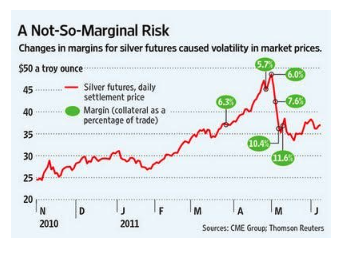
Lastly, another reason price surges in commodities tend to be temporary is the actual commodity traders themselves. When commodity prices surge sharply, the COMEX or CME will raise margin requirements to protect market integrity and reduce systemic risk. Those “purveyors of perpetual doom” will claim it’s “market manipulation,” but in reality, it is a function of managing systemic market risk. Margin is the collateral that traders must post to hold positions, and when prices become volatile, the potential for significant losses increases. Therefore, increasing margin requirements ensures that traders have sufficient capital to cover adverse market movements, thereby reducing the risk of default.
Since the beginning of December, the CME has already increased margin requirements more than once. As shown below, in 2011, it took several margin hikes before the market mean-reverted.
The management of margin requirements protects not only individual counterparties but also the clearinghouses that guarantee trades. Raising margin requirements also helps to cool excessive speculation by making it more expensive to hold leveraged positions, promoting more stable and orderly markets during periods of heightened price movement.
Now that we understand how the market actually functions, let’s address the nonsensical claims of doom.
Breaking Down the Speculative Claims
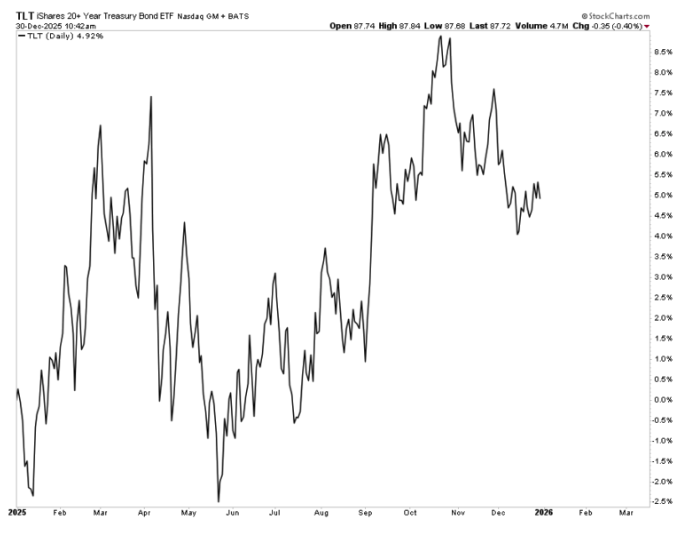
Let’s start with the assertions that fiat currencies are collapsing. There is a complete lack of evidence to support that statement. If such were the case, yields on Treasury bonds would be spiking, rather than turning in a positive total return in 2025.
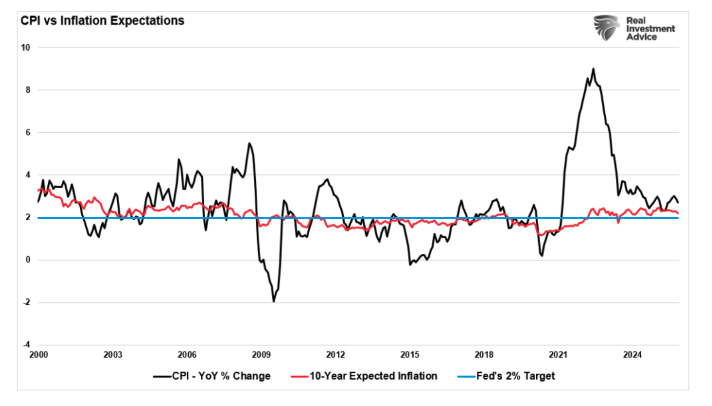
Furthermore, inflation would run at double-digit rates, along with inflation expectations, as foreign reserve currency holders lost confidence in the value of the US dollar. As shown, neither is the case.
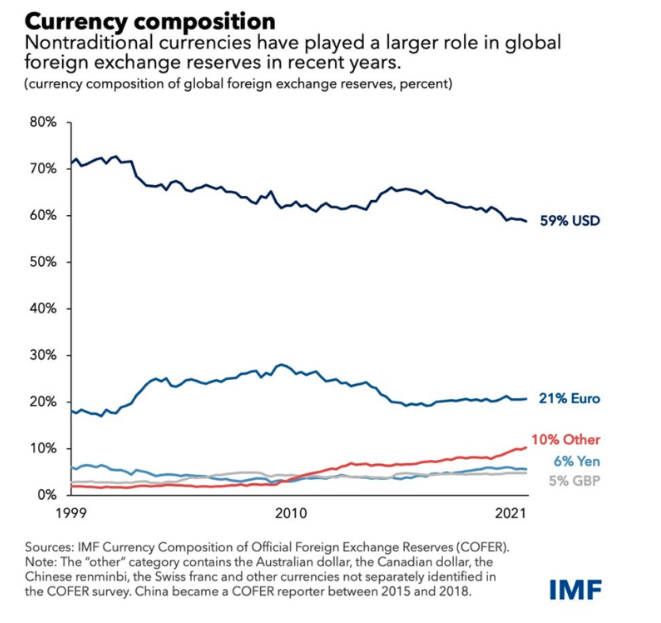
The reality, as discussed in “The Dollar’s Death Is Greatly Exaggerated,” is that the U.S. dollar remains the global reserve currency. Furthermore, the euro and yen continue to function normally, and there are no indications of hyperinflation in any major economy. Yes, nontraditional currencies have increased in their scope of the currency composition, but that is because those economies, like China, have grown economically over the last 25 years. As such, it should be unsurprising that their currency has gained traction; however, that is a significant difference from the claim that “fiat currencies are dying.”
As such, the argument that sudden silver price spikes indicate the end of trust in paper markets and the beginning of extreme physical scarcity is both speculative and historically inaccurate. For example, John Rubino recently stated, “When prices move like this, an awful lot of bad things become possible,” alluding to the fact that if silver futures fail to deliver, it would mean the collapse of paper markets and the end of trust in COMEX and other exchanges.
That view misrepresents how futures markets operate. Most commodity futures never settle with physical delivery. Traders either close the contract or roll it forward. Furthermore, exchanges like COMEX are specifically designed to handle delivery stress through margining, clearing, and regulatory protocols, as noted above. Even during the COVID-induced volatility of 2020 and the 2008 financial crisis, these mechanisms functioned, and short-term delivery delays or short-term backwardation did not lead to structural failure.
The claim that futures markets could collapse due to a single delivery crisis also overlooks the fact that these markets are global and liquid. Cash settlement is a standard option, not a sign of default. Suggesting that one event would lead to a breakdown in trust is speculation, not actual analysis.
Rubino also stated that “currencies are pouring into real money in anticipation of the existing fiat currencies dying.” This is also another huge fallacy. First, it assumes that gold and silver price spikes reflect a widespread erosion of trust in fiat currencies. However, no such evidence exists. Central banks continue to operate with autonomy, payment systems are functioning, and inflation in developed economies has moderated from pandemic highs.
Secondly, shifting from the US Dollar to gold is not a remedy. Gold trades in dollars on global markets, and to buy or sell it, you need a fiat currency. Furthermore, to use gold for transactions, buying groceries, or paying rent, you must first convert it into fiat. That violates one of the basic functions of money: direct usability as a medium of exchange.
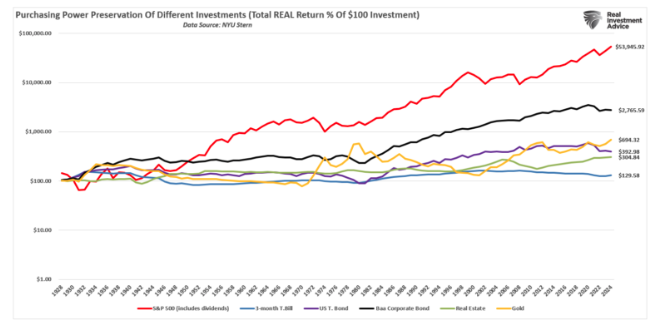
In other words, if gold were “real money,” you would be able to spend it directly, without needing to price it in another currency or exchange it before use. In today’s system, gold functions more like a speculative asset, similar to stocks, bonds, or cryptocurrencies, which are expected to rise in price over time, thereby serving as a“store of value” for our savings. The chart below displays the total, after-inflation returns on a $100 investment across various asset classes since 1928. While gold has done a good job of preserving purchasing power, stocks and corporate bonds have done much better.
While gold may hedge against fiat devaluation or inflation, labeling it “real money” in a fiat world is a philosophical stance, not a functional truth. In practical terms, if gold must be priced in dollars and then converted back to dollars for use, then dollars are the medium of exchange. Gold is the asset.
Lastly, extreme forecasts, such as $200 Silver or $10,000 gold, lack a basis in supply and demand fundamentals. For such prices to materialize, a monetary event of unprecedented magnitude is required. Currently, there are no indicators (real yields, CPI levels, GDP growth) that even remotely suggest this outcome.
The rally in precious metals is meaningful, but it is not evidence of collapse. Instead, it reflects several overlapping themes:
- Anticipation of interest rate cuts in 2026. A potentially weaker dollar could support non-yielding assets, such as gold and silver.
-
Increased central bank purchases. If the dollar does weaken, central banks could seek further reserve diversification to hedge against currency risk. In other words, central banks buy gold or Treasury bonds to preserve the “purchasing power parity” of their reserve currency holdings.
- Geopolitical uncertainty, particularly in Eastern Europe and East Asia.
- Continued industrial demand for silver in solar panels and electric vehicle components.
State Street Global Advisors noted, “Inflows into gold-backed ETFs in 2025 reflect cautious investor sentiment amid rising geopolitical tensions and the anticipation of Fed easing.” These are rational investment behaviors based on policy expectations, not indicators of systemic collapse.
Overall, the current market structure remains healthy with silver trading in a liquid, globally arbitraged market. The idea that ETFs or futures products are “on the verge” of default is unfounded. Yes, leverage and volatility present risks. However, there are no regulatory or structural failures evident in either the COMEX or ETF custodianship frameworks.
Lastly, gold’s price behavior also fits into this picture. In periods when real yields fall, and nominal yields stagnate or decline, gold becomes more attractive. This pattern is well-documented across multiple cycles, including those from 2003 to 2006, 2009 to 2011, and 2020 to 2021. What we see now in 2025 is not new and does not indicate a failure of the fiat system.
The evidence strongly suggests the collapse narrative will turn out to be false. Therefore, speculative metals investors face real risks rooted in market mechanics rather than systemic failure.
- Rising Margin Requirements: High volatility in futures contracts could prompt exchanges to raise margin requirements. This occurred during previous silver spikes, forcing leveraged traders to post additional collateral or exit their positions. These increases can trigger forced liquidations, compounding price swings.
-
Liquidity Risk in Niche Products: Investors face liquidity risks. Chasing upside through low-volume ETFs, junior mining stocks, or structured notes inevitably yields poor results. These instruments often suffer from poor bid-ask spreads and can be difficult to exit in fast markets.
- Unallocated Storage Risk: Some gold and silver investors use storage accounts that are unallocated or pooled. In high-stress events, claims on physical assets may be delayed or subject to legal contestation. Investors should understand the terms of their custodians.
- Regulatory Reactions: Rapid price increases in commodities can prompt the implementation of temporary regulations or transaction taxes. These have historically included short-selling restrictions or higher disclosure thresholds, which can limit tactical maneuverability.
-
Sentiment Reversal Risk: If inflation data weakens or central banks pause their easing measures, precious metals could experience rapid reversals. In such scenarios, highly concentrated positions in metals can result in significant losses.
These risks are tangible and measurable. They require a disciplined strategy, not faith in collapse scenarios. Yes, precious metals have a place in diversified portfolios. However, the assumption that they are immune to volatility or risk is false.
Set aside the perennially wrong view of the“perma-doomers.“ Instead, focus on the fundamental drivers and risks of managing investments in a volatile and ever-changing market.
References
Lance Roberts is a Chief Portfolio Strategist/Economist for RIA Advisors. He is also the host of “The Lance Roberts Podcast” and Chief Editor of the “Real Investment Advice” website and author of “Real Investment Daily” blog and “Real Investment Report“. Follow Lance on Facebook, Twitter, Linked-In and YouTube Customer Relationship Summary (Form CRS)
Join RIA Advisors and elevate your career within a deeply experienced team focused on innovation. Our collaborative environment is built on a foundation of advanced technology and effective investment models, designed to enhance your ability to serve clients and grow your practice. Benefit from a supportive culture that encourages professional development and fosters a forward-thinking approach. By joining our team, you’ll be part of a group dedicated to excellence and continuous improvement, empowering you to focus on building meaningful client relationships and pursuing your business ambitions. Discover the advantages of working with our accomplished advisory team by starting your conversation today.
A message from Advisor Perspectives and VettaFi: Discover something new! Click here to register for our upcoming webcasts.
© Real Investment Advice
Read more commentaries by Real Investment Advice