Stock market volatility has a way of triggering powerful emotions. Rising prices foster confidence. But when markets fall, fear can take over, leading investors to make decisions that may undermine long-term returns.
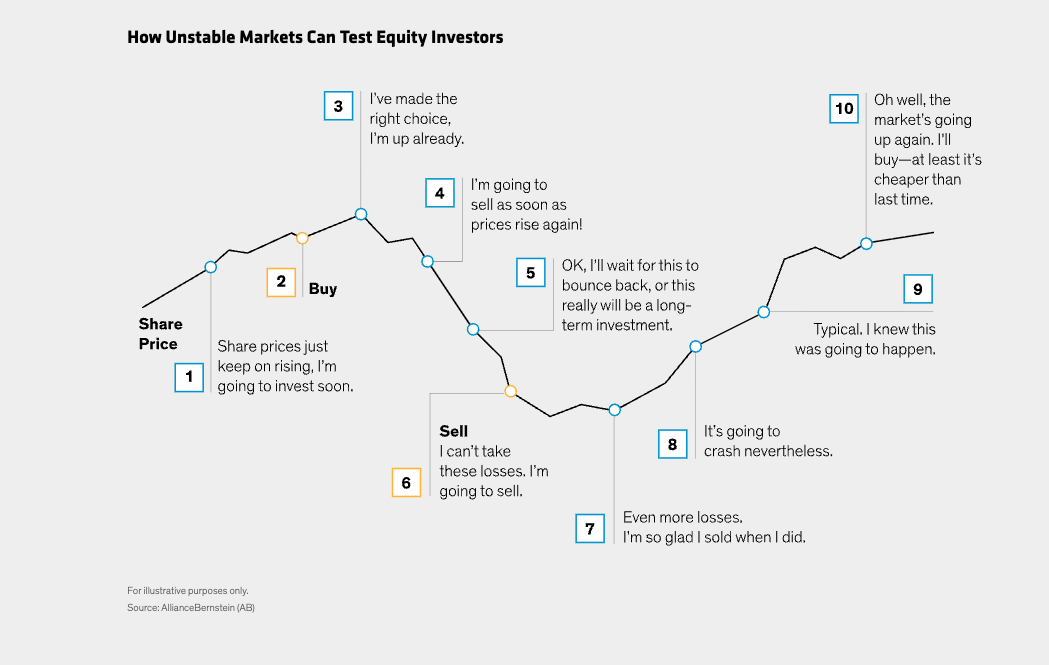
Behavioral reactions to market dynamics tend to follow familiar patterns (Display). Market gains make investors feel “safe” and want to buy more. Yet in declining markets, painful losses may prompt investors to sell with the intent of reentering before a recovery. Unfortunately, investors who sell and miss the rebound’s inflection point will have locked in losses. History and academic research show that attempts to time markets are rarely successful—and can be costly.
Prepare Portfolios for a Bumpier Long-Term Journey
Market timing may feel intuitive because short-term market moves seem obvious in hindsight. In reality, markets are driven by uncertainty and incomplete information, which often lead to emotional decisions.
That’s why it’s best to prepare for volatility when markets are calm. Building resilience into a portfolio before turbulence strikes can make the difference between staying disciplined and making counterproductive decisions in choppy conditions.
Recent experience underscores this point. Even though equities rose sharply in 2025, the steep April downturn tested investors’ conviction. Those who stayed invested were rewarded for their discipline as markets rebounded rapidly. In 2026, the AI buildout, macroeconomic concerns and geopolitical tensions suggest the road ahead won’t be smooth.












