The Real Affordability Problem
Membership required
Membership is now required to use this feature. To learn more:
View Membership BenefitsEverything is relative. That’s one reason the economy is so hard to understand. In a very real sense, we all live in our own individual economies.
Take the current buzzword, “affordability.” We all want it… but what does the word even mean?
Affordability is the intersection of “need” and “want.” Everyone has a certain level of purchasing power, based on their assets, income and credit limits. Likewise, everyone also has a desired lifestyle they want to maintain. When what you have suffices to buy what you want, life is affordable. That’s not the case for a large portion of the US population.
The challenge is that needs, wants and income are all variable in both directions. The resources available to us can go up and down. Our dreams can change, too, as can our circumstances. We aspire to greater things when we feel confident, or we settle for less when those greater things seem out of reach.
All this works fine when everyone feels they have at least a chance to reach their goals. It goes sideways very quickly when people think their chance is gone or, worse, someone stole it from them.
That’s where we are now. Millions of Americans think their dreams are out of reach. They think this for a variety of reasons, but for many it’s because the price of reaching those dreams rose faster than their financial condition improved. This is most obvious in housing (the “American Dream”) but common to almost every spending category.
Today we’re going to explore this “affordability” issue, looking at economic facts, survey data and simple intuition. As you’ll see, it’s not as simple as some people think. I also make a quick comment about the appointment of Kevin Warsh as Fed chair at the end.
Depressing Effect
Way back in October 2015, I wrote a letter called Your Own Personal Inflation Rate. The gist was that inflation is hard to measure partly because we all have our own unique spending patterns. The Consumer Price Index measures prices for a standardized basket of goods and services the average consumer supposedly buys. In fact, almost no one is average. Changes in the inflation rate as defined by CPI probably bear little resemblance to your household’s cost of living.
I also pointed out something few realize: the CPI isn’t even intended to measure the cost of living. I quoted something from the BLS FAQ page which, remarkably, is still on the site 10+ years later. Here it is, with my emphasis in bold.
“The CPI frequently is called a cost-of-living index, but it differs in important ways from a complete cost-of-living measure. We use a cost-of-living framework in making practical decisions about questions that arise in constructing the CPI. A cost-of-living index is a conceptual measurement goal, however, and not a straightforward alternative to the CPI. A cost-of-living index would measure changes over time in the amount that consumers need to spend to reach a certain utility level or standard of living. Both the CPI and a cost-of-living index would reflect changes in the prices of goods and services, such as food and clothing that are directly purchased in the marketplace; but a complete cost-of-living index would go beyond this role to also take into account changes in other governmental or environmental factors that affect consumers' well-being. It is very difficult to determine the proper treatment of public goods, such as safety and education, and other broad concerns, such as health, water quality, and crime, that would constitute a complete cost-of-living framework.”
In other words, the agency that compiles CPI says don’t expect CPI to measure changes in the cost of living. It ignores “governmental or environmental factors” as well as safety, education, health, water quality and crime.
BLS does it this way not because those things are unimportant, but because they’re hard to measure. Sadly, that’s how a lot of economic data works. We measure the things we can, not necessarily the things we should or would like to.
I bring this up because much of the affordability discussion reflects discrepancies between officially reported inflation rates and the lived experience of actual humans. If, for instance, CPI tells people inflation is down, they may not feel it, in part because of what the quote explains.
CPI isn’t supposed to measure your full cost of living. But almost no one knows this – including our leaders. I assure you, not a half-dozen members of Congress have ever read the above paragraph.
This gap between data and reality, if allowed to fester, has a depressing effect on confidence. This is evident in the latest Consumer Confidence Index, which plunged this month to the lowest point in 12 years.
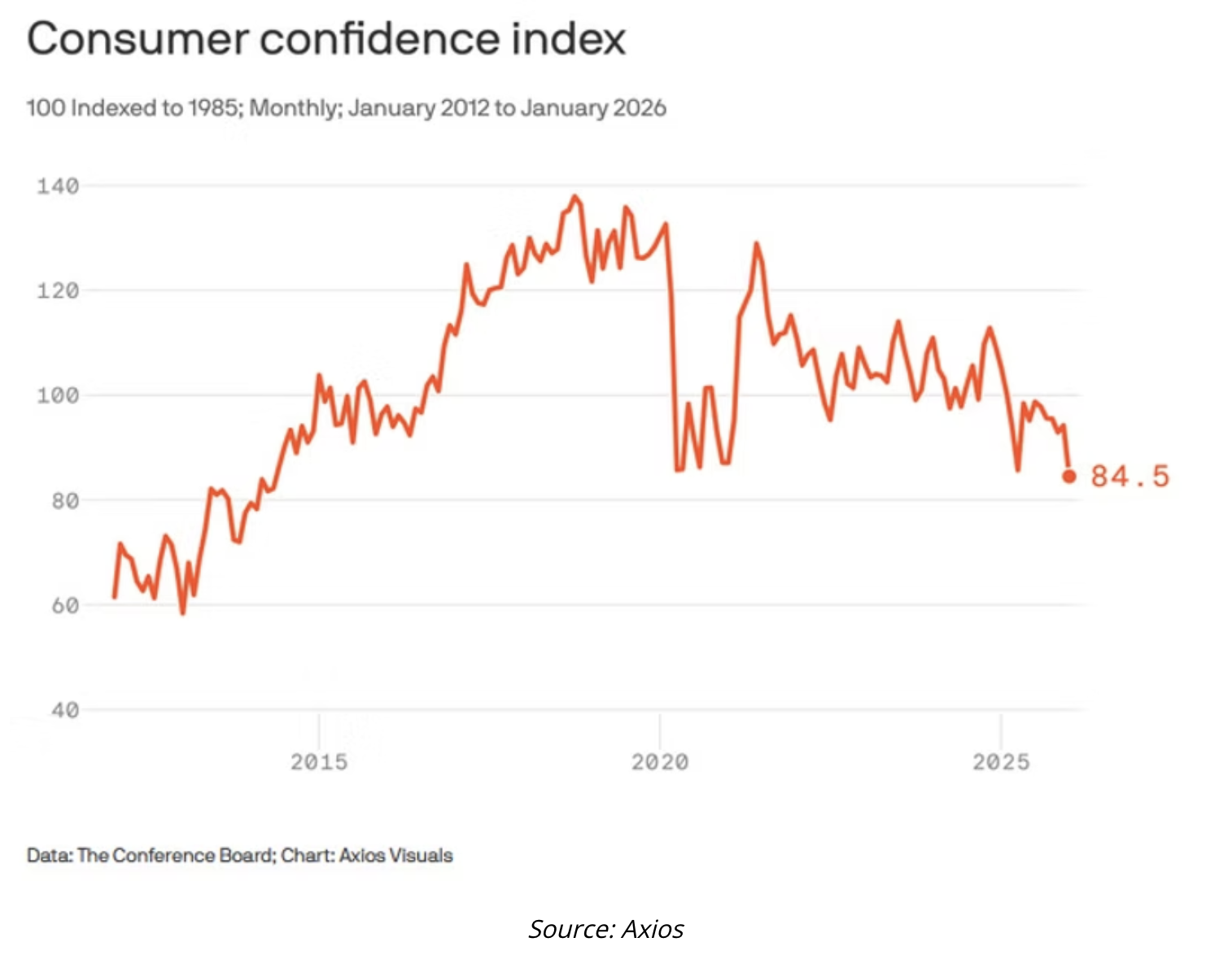
This index is now below where it stood in the worst months of the COVID-19 pandemic, when the unemployment rate had surged to almost 15%. To many people, it makes no sense that people would feel this way, but I’ve heard it enough times to believe the survey is probably right. Indexes like the consumer confidence index measure how people feel versus their actual circumstance. And if they are not confident about the future, or their ability to navigate it, they grew less confident.
The Conference Board’s press release noted:
“Consumers’ write-in responses on factors affecting the economy continued to skew towards pessimism. References to prices and inflation, oil and gas prices, and food and grocery prices remained elevated. Mentions of tariffs and trade, politics, and the labor market also rose in January, and references to health/insurance and war edged higher.”
There’s that “health” thing which CPI can’t and doesn’t even try to measure. It does measure health insurance but not well. Under CPI’s weird methodology, health insurance prices are down 19% over the last five years.
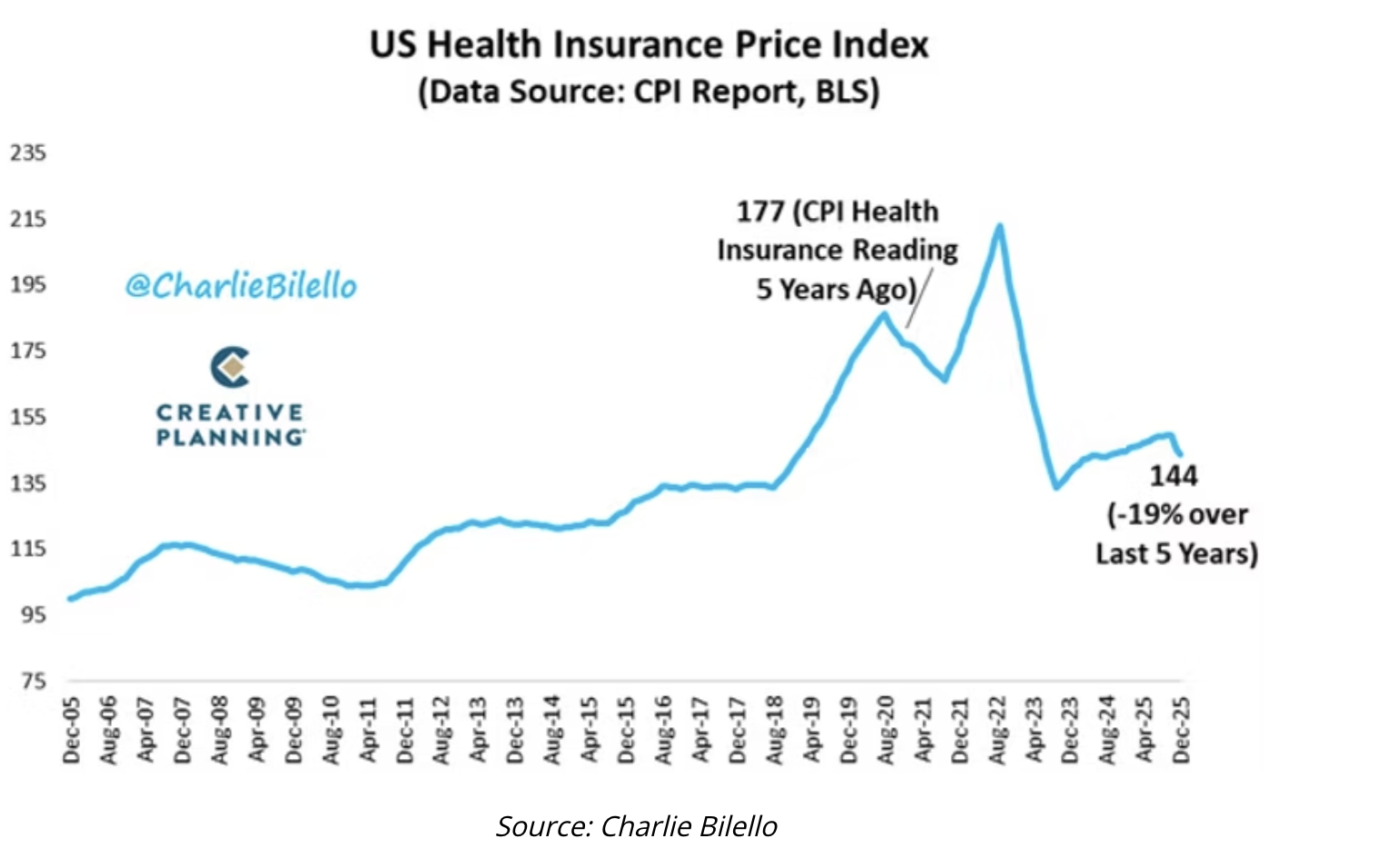
If you are able to buy health insurance for less than you paid for comparable coverage five years ago, please tell me where you found it. Inquiring minds want to know. And I am sure many readers would like to know that source as well.
You don’t have to be an economist to know this kind of data is laughably wrong. But when government agencies report it anyway, people know. No surprise it puts them in a bad mood.
Price of Entry
A recent New York Times/Siena University poll has some additional clues to consider. The responses suggest that “affordability” concerns aren’t about the price of eggs or gasoline or the other everyday things politicians like to zero in on.
It’s a broader concern about what Nate Cohn in this column called “the rising price of entry for middle-class life.” Here’s Cohn (emphasis mine):
“When we asked voters what they were most worried about affording, they usually didn’t mention the costs of goods that surged in the wake of the pandemic, like gas, cars and food. Instead, they mentioned major expenses like housing, retirement and health care.
“Overall, 51 percent of voters named one of those major middle-class essentials, from housing to raising children, compared with just 23 percent who named their monthly bills or other expenses, like groceries, utilities, gas or cars…
“The significance of these big-ticket items helps explain a lot about the affordability issue, including the disconnect between the overall economic numbers and public opinion.
“Usually, the strength of the economy is measured by economic growth or the number of jobs. But while concerns about housing or health care costs are undoubtedly economic — and while housing and health care represent big sectors of the economy — this is not a problem with ‘the economy’ as ordinarily defined. They’re so different that you could craft solutions to help the economy or even inflation and still not make a dent in affordability. Indeed, the cost of these middle-class essentials has been rising for decades, even through periods of low inflation.
“What makes these items so different? One factor is that they have relatively inelastic supply and demand: People still need medical care or a home in a recession; it takes a long time to train a new doctor or build a home. In part as a result, a tighter monetary policy to tame inflation, for instance, doesn’t do much to slow the growth of the cost of insurance or medicine. Higher rates can even make it more expensive to get a student loan or a home mortgage — something not measured by the Consumer Price Index.”
Cohn also notes younger adults are far more pessimistic than older ones. And he offers a simple reason why:
“What makes young people unique is that they’re the ones trying to buy a ticket to the middle-class life. The higher cost of housing or raising a family could make a young person’s most important life goals feel far out of reach. This has less of an effect on older people, who have already paid for many of these costs, have Medicare, and benefit from higher home values if they own a home.”
The data we have doesn’t capture this split:
“The usual economic data doesn’t necessarily measure this specific challenge for young adults. While the economic data suggests that Americans’ incomes have kept pace with higher costs overall in recent decades, they haven’t kept up with housing, child care, health care and educational costs. These costs are borne disproportionately by young families, but the Consumer Price Index represents the average consumption patterns for the entire adult population — and less than half of households have a child under 18. Real median incomes might not have gone up to the same extent, or perhaps even at all, for a household trying to start or raise a family.”
Summing up, Cohn says “Younger people are frustrated because they’re being pushed further from realizing ambitions that older people attained long ago.”
Speaking as one of those older people, I have to admit he’s right. I see it in the challenges my own children describe. Their world is not like ours was at that age. Each generation has its own challenges (mine was high inflation), but that doesn’t change the way the current young generation feels.
Unsolvable Problem
Chief among the ambitions young people can’t reach is the dream of owning a comfortable home, or in many places even renting one. This isn’t a new problem; Politicians across the spectrum have talked about fixing it for years now. But they haven’t fixed it, and their inability to do so has let it reach crisis level.
Note I said their inability to fix the problem. I don’t question their desire to fix it. Unfortunately, there’s not a whole lot they can do.
First, let’s recognize that home prices are a kind of zero-sum game. People who already own homes want their homes to gain value. They won’t support policies that do otherwise. People who want to own homes need the opposite: lower home prices. Pleasing both those groups at the same time is hard. And because homeowners tend to be older and wealthier, they have more political influence than young first-time home buyers. That’s true at all levels: federal, state and local.
At the federal level, almost everything the Fed, the president or Congress can do simply spurs more demand. Do something to reduce mortgage rates, for example, then yes, maybe some more people qualify for loans and start looking. But it doesn’t increase the supply of homes for sale. Sellers may even raise their asking prices and negate the benefit of lower mortgage rates.
More housing supply is mainly a local issue: getting cities and counties to relax zoning laws, lot size requirements, permitting hassles and so on. That doesn’t happen easily because the authorities who would do it are elected by… current homeowners.
Healthcare – the other big problem area Nate Cohn describes – is equally resistant. We have a large cohort of Baby Boomers keeping demand high and a limited supply of working-age people with the necessary skills. In the absence of new supply, programs to reduce healthcare costs have an effect similar to reducing mortgage rates. They actually raise demand and prices follow.
Let’s look at a few charts showing the healthcare problems that all of us face to see the extent of the problem. There are good reasons healthcare is one of the two biggest affordability problems.
In the last five years healthcare costs have risen over 7% annually. Every year.
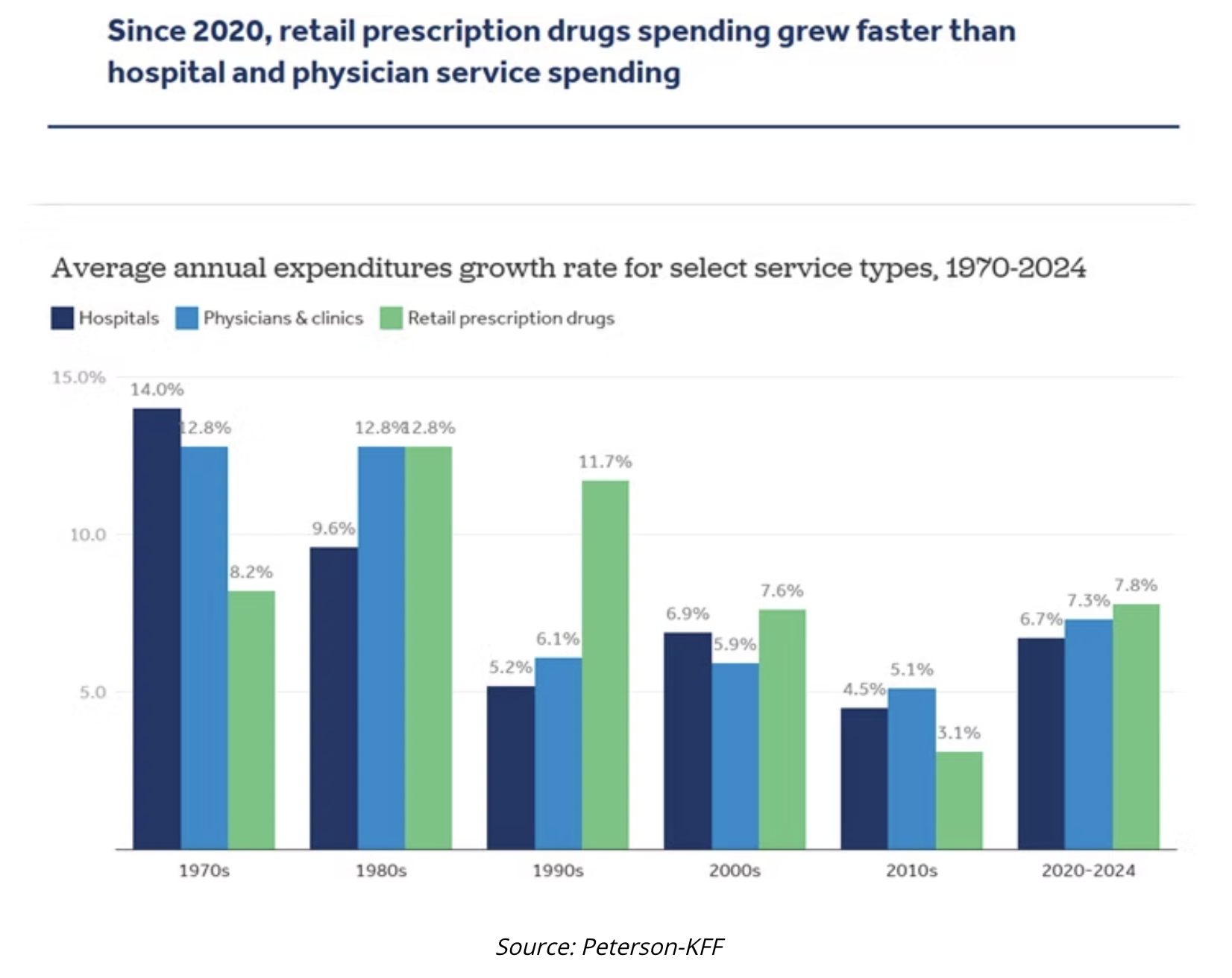
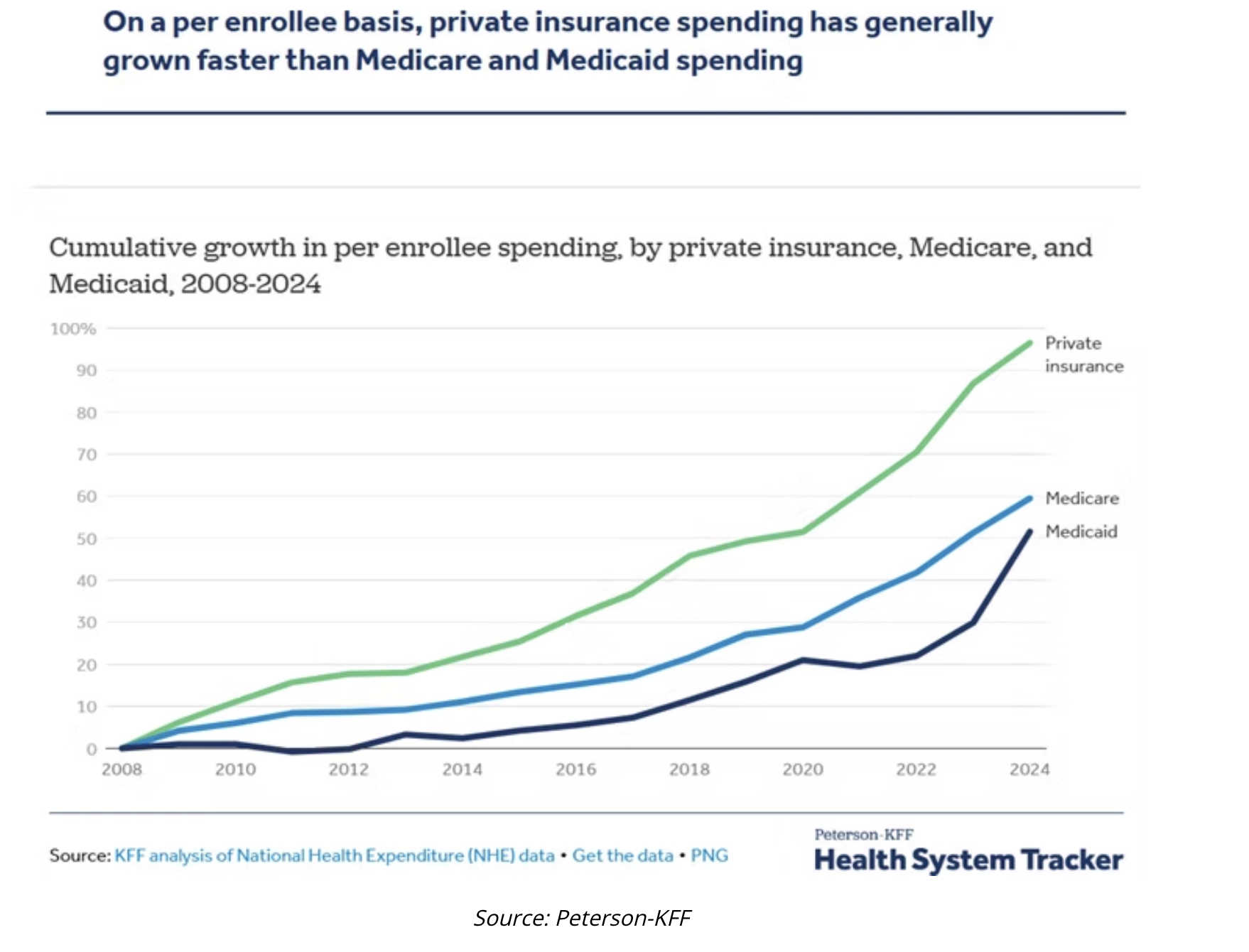
We all know how much Medicare and Medicaid prices are rising, but private insurance prices are rising at almost twice the rate. This has serious effects on corporations and small businesses, not to mention individual contractors/gig workers/consultants. Families are being priced out of the insurance market as ACA (Obamacare) prices keep rising precipitously.
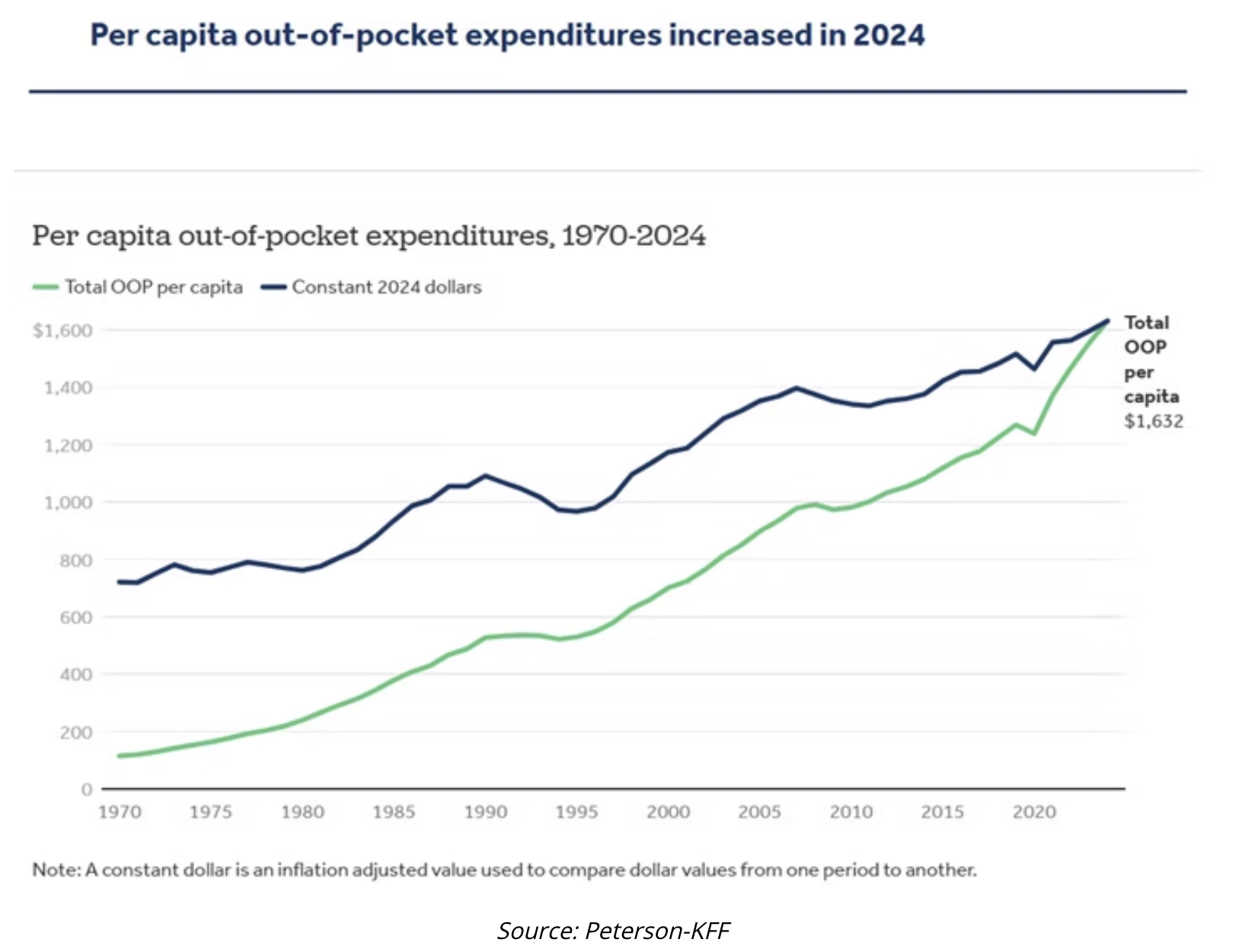
But it’s worse for individual families because insurance no longer covers much of what it did. Out-of-pocket expenses are rising significantly, even in constant dollars.
In 2025, the chart below shows annual healthcare costs for a family of four were $35,119, almost triple the cost in 2005 ($12,214). Between 2005 and 2025, healthcare costs increased 188% while wages grew only 84%.
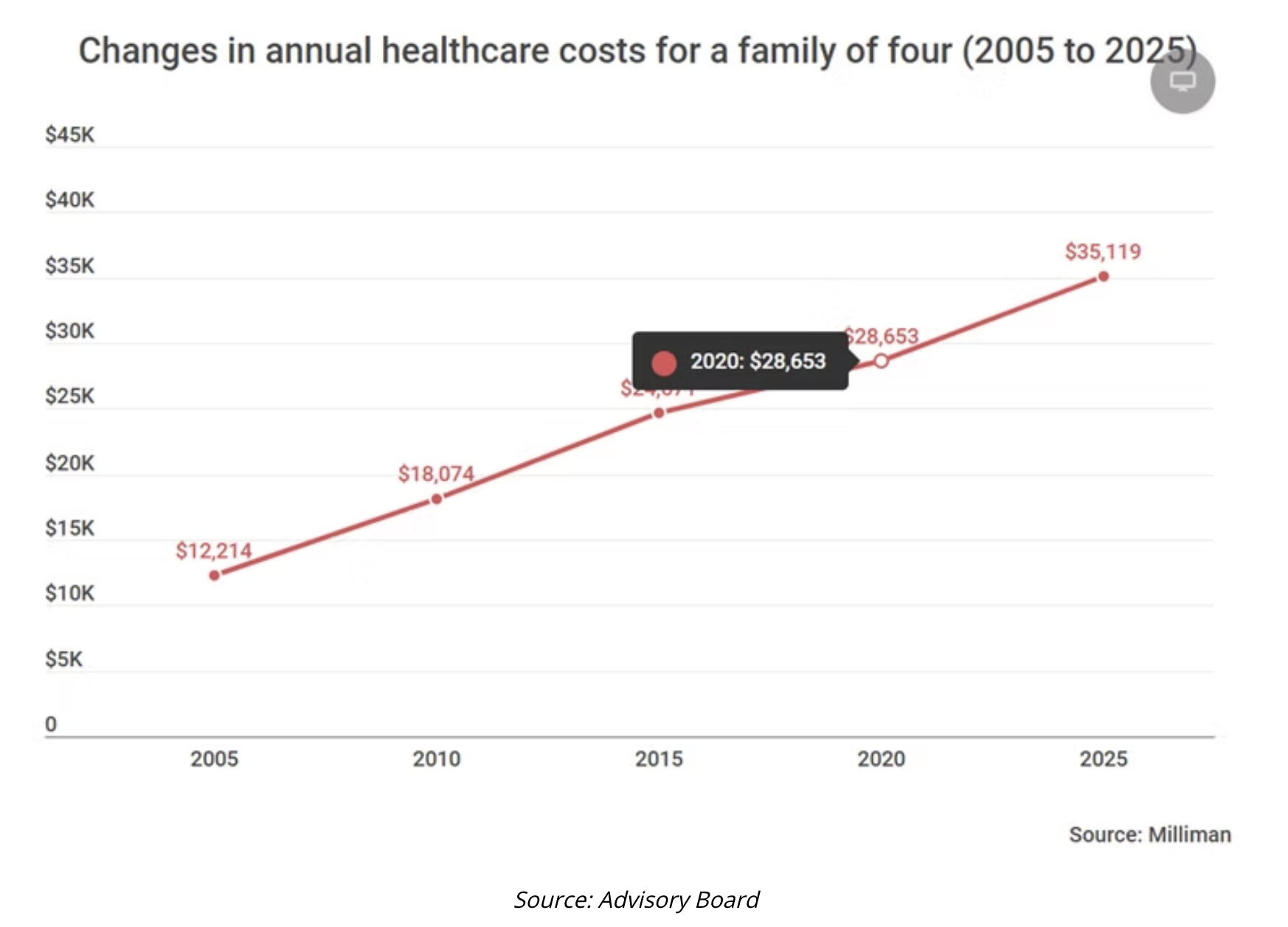
Annual healthcare costs of $35,000 are simply not affordable for a significant portion of the country.
Then there’s housing. We wake up this Friday morning to news President Trump said this at a recent Cabinet meeting:
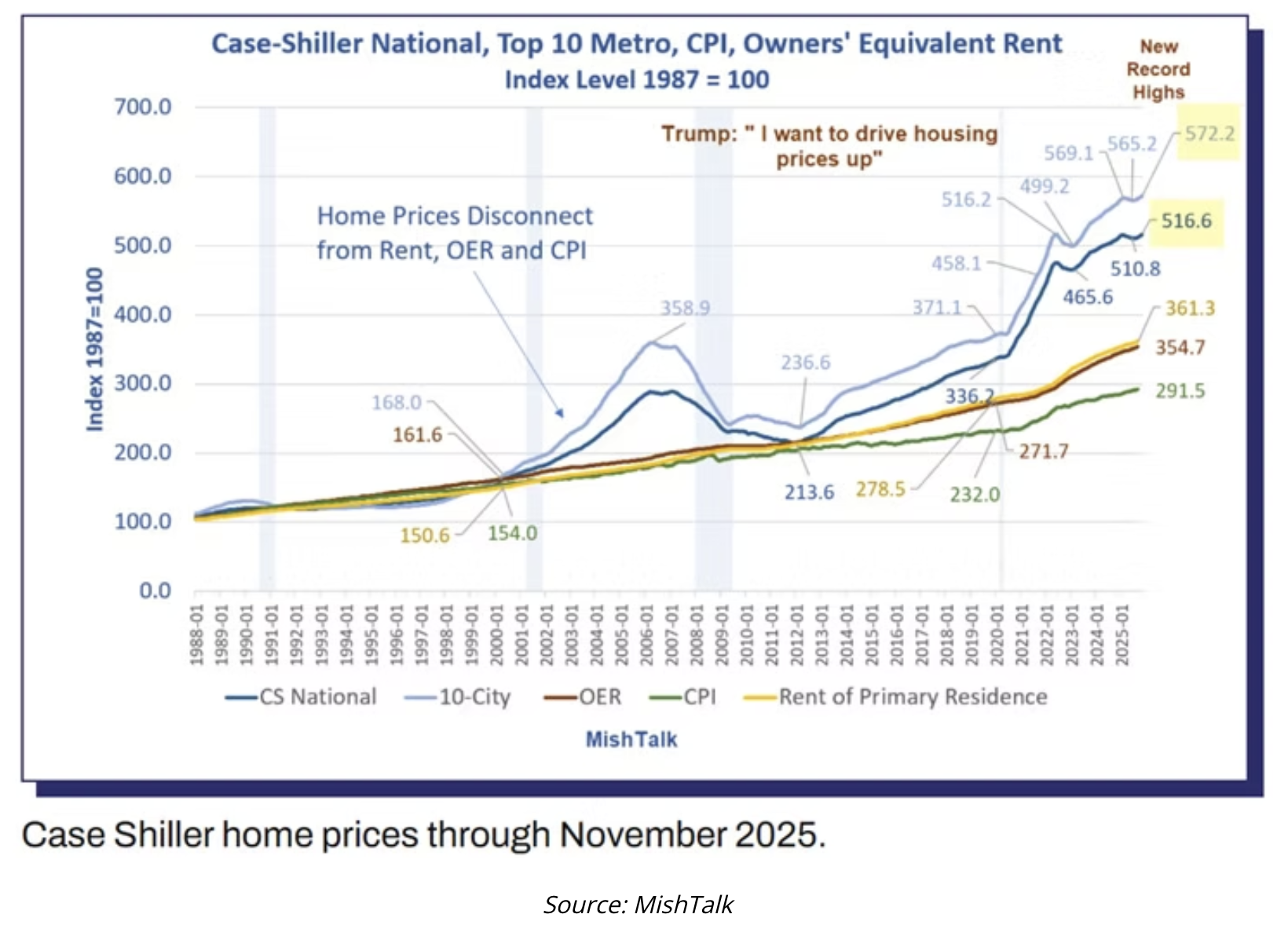
“People who own their homes, we are going to keep them wealthy. We are going to keep those prices up. We are not going to destroy the value of their homes so that somebody who didn’t work very hard can buy a home. … I don’t want to drive housing prices down. I want to drive housing prices up. They can be sure that’s what’s gonna happen.”
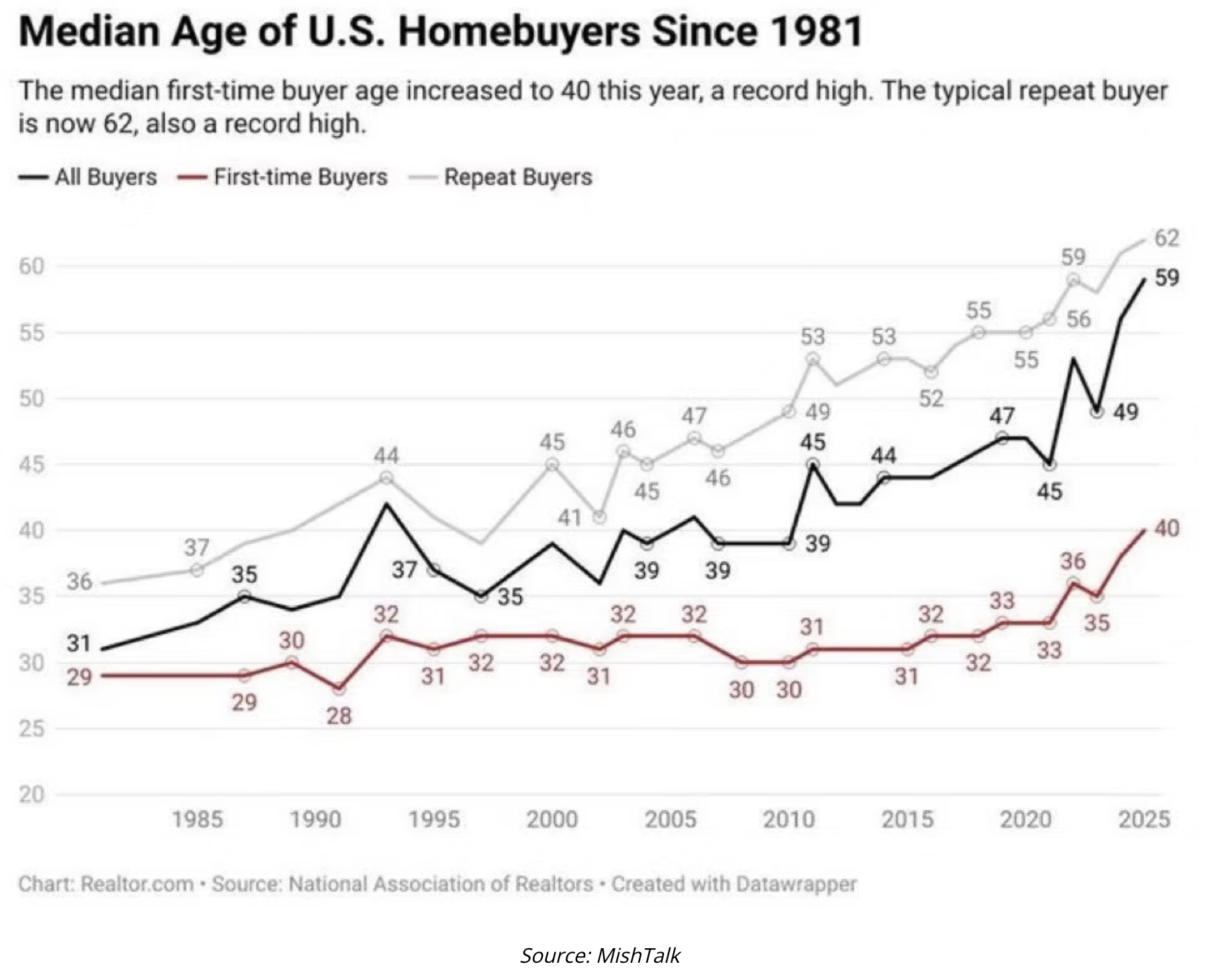
I suppose that makes older homeowners happy, but not younger generations trying to have a home as part of their American dream. In fact, the average age of first-time homebuyers has been rising since 1980 but really jumped since 2020.
My friend Mike Shedlock creates a great chart he updates from time to time comparing the Case Shiller housing price indexes with CPI, OER and actual rent. Note that OER which is used in the CPI calculation is up 350% since 1988, but actual home prices are up over five times. Incomes may have kept up with CPI inflation but not with housing costs. Which of course, makes it more difficult to purchase a home and explains why the age of first-time buyers is rising.
Middle-class life can’t get more affordable unless something drastically reduces housing and healthcare prices. I don’t know what that would be. If I did, then we would have to look at the side effects. Physicians and other healthcare professionals are a large group of affluent consumers. Anything that seriously reduces healthcare costs will seriously reduce that group’s income. Not to mention that the biggest lobby against reforming Medicare and Medicaid is the insurance lobby, as they have seen revenues and profits explode since the introduction of the ACA. It’s no surprise that insurance stocks take a hit at any time somebody mentions reducing Medicare payments.
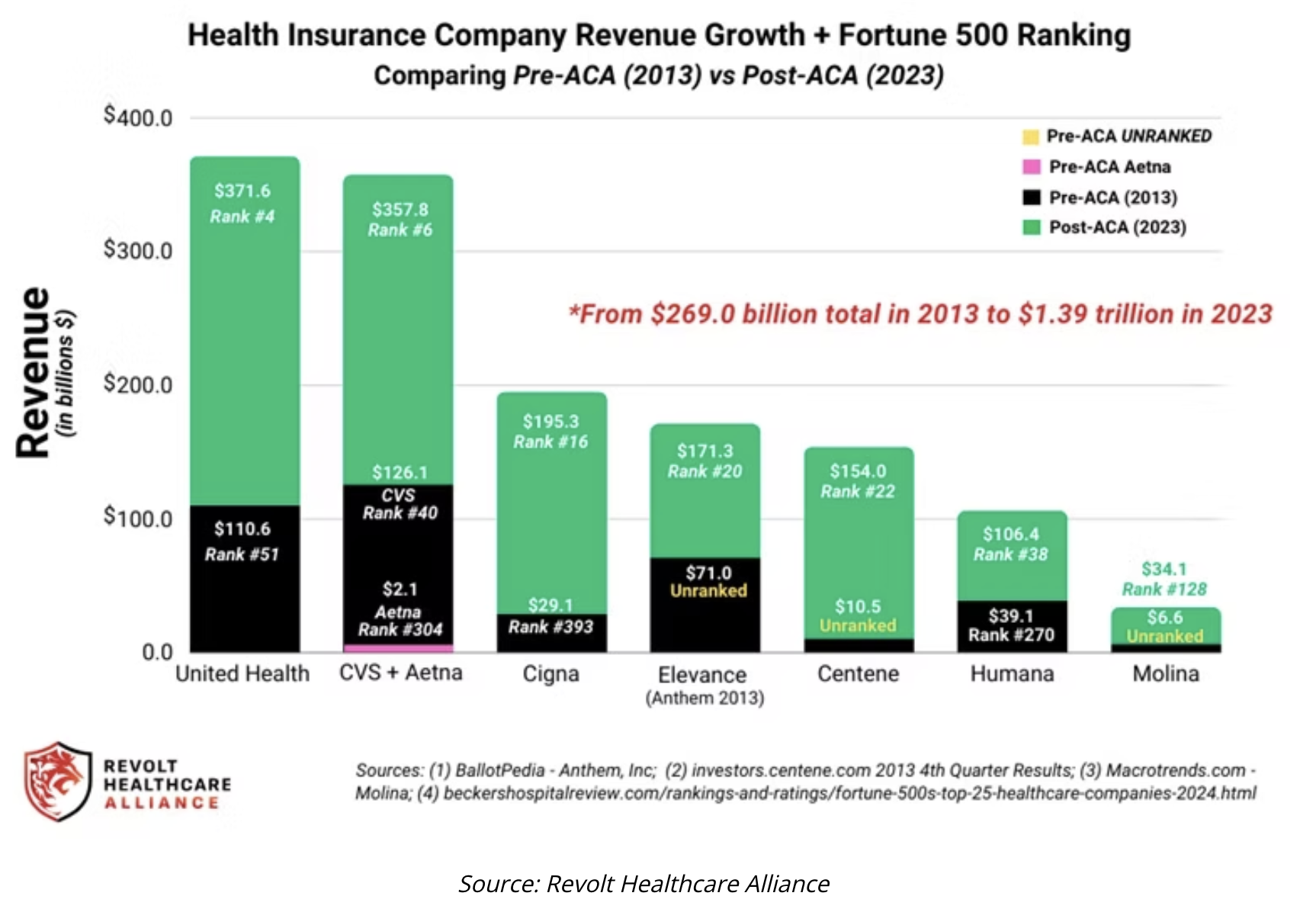
Sad to say, I think this is one of those problems that can’t be resolved without a crisis to force it. Something will have to blast NIMBY groups and other entrenched interests out of their dug-in positions.
Unfortunately, I think exactly such a crisis is coming. Resolving the government debt problem will resolve these other problems, too. But the way we do it may be ugly.
Chairman Kevin Warsh
Long-time readers know that I have been clearly expressing my preference for Kevin Warsh as Fed chair. President Trump has nominated the real adult in the room. Yes, all potential nominees said they were committed to some level of rate cuts, so I expect some rate cuts once Warsh is in office. But that assumes unemployment stabilizes and inflation drops a little, which is what I expect. Warsh will be focused on inflation over his term.
There are those who believe that cutting short-term rates will have the effect of reducing long-term interest rates, especially mortgages. But that’s not necessarily the case. The Fed began cutting rates in September 2024 with a 50-basis point cut. Since then they have cut rates another 125 basis points, so a total of 1.75% cuts.
The 10-year bond price was 3.65% before the September cut. Today it is 4.24%. Ten-year Treasury bond yields, which are the basis for mortgage rates, are up 0.69 percentage points since the rate cut cycle began.
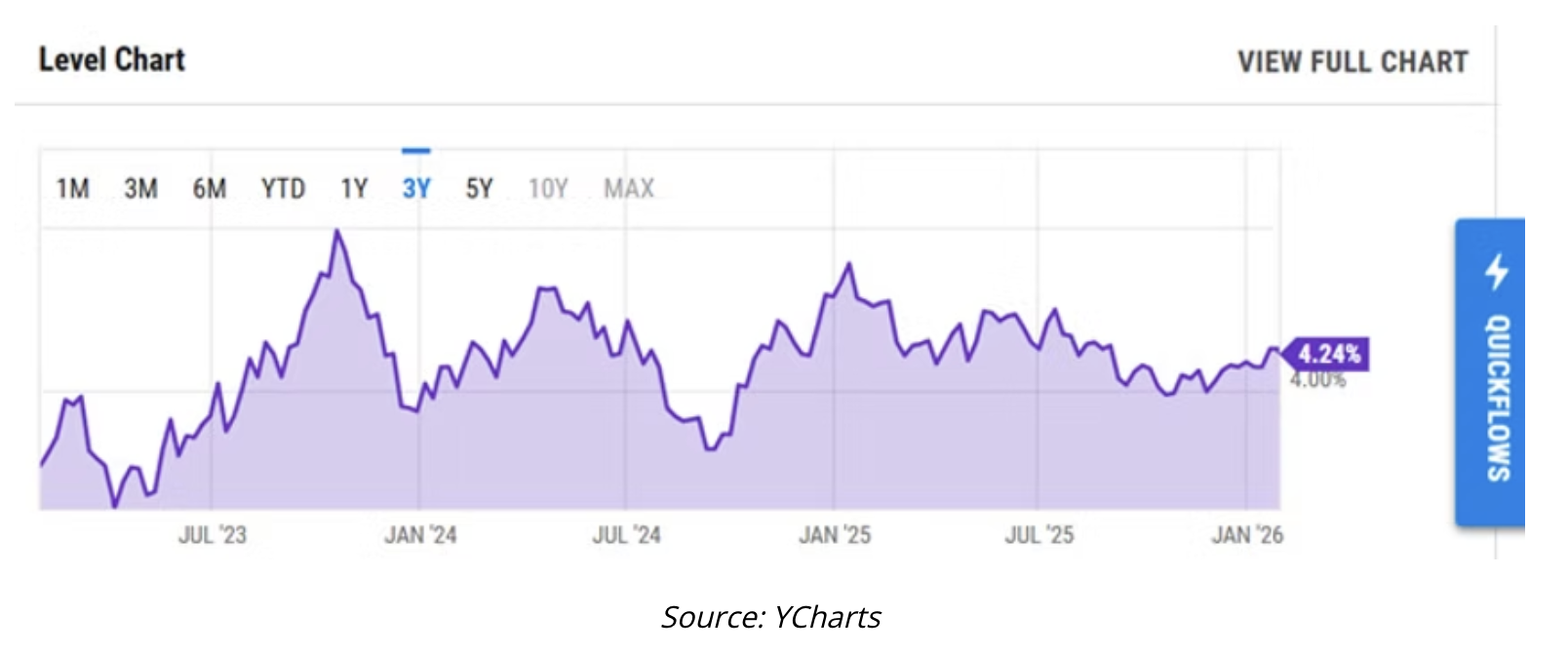
Ironically, when the Fed funds rate was higher and monetary policy too tight, the 10-year bonds were saying the economy was in jeopardy. That kept long-term rates lower. As monetary policy eased, the bond market apparently became more concerned about inflation as well as an economy that is seemingly going to grow at 4+ percent this year, which is pretty hot. That gives us the disconnect in rates.
This next chart is a little wonky, but it basically shows the differential between the Fed funds rate and the 10-year bond for the last four years. It doesn’t follow that lowering short-term rates will automatically bring down long-term rates. It might lower the government’s cost of borrowing, but it is not lowering mortgage rates.
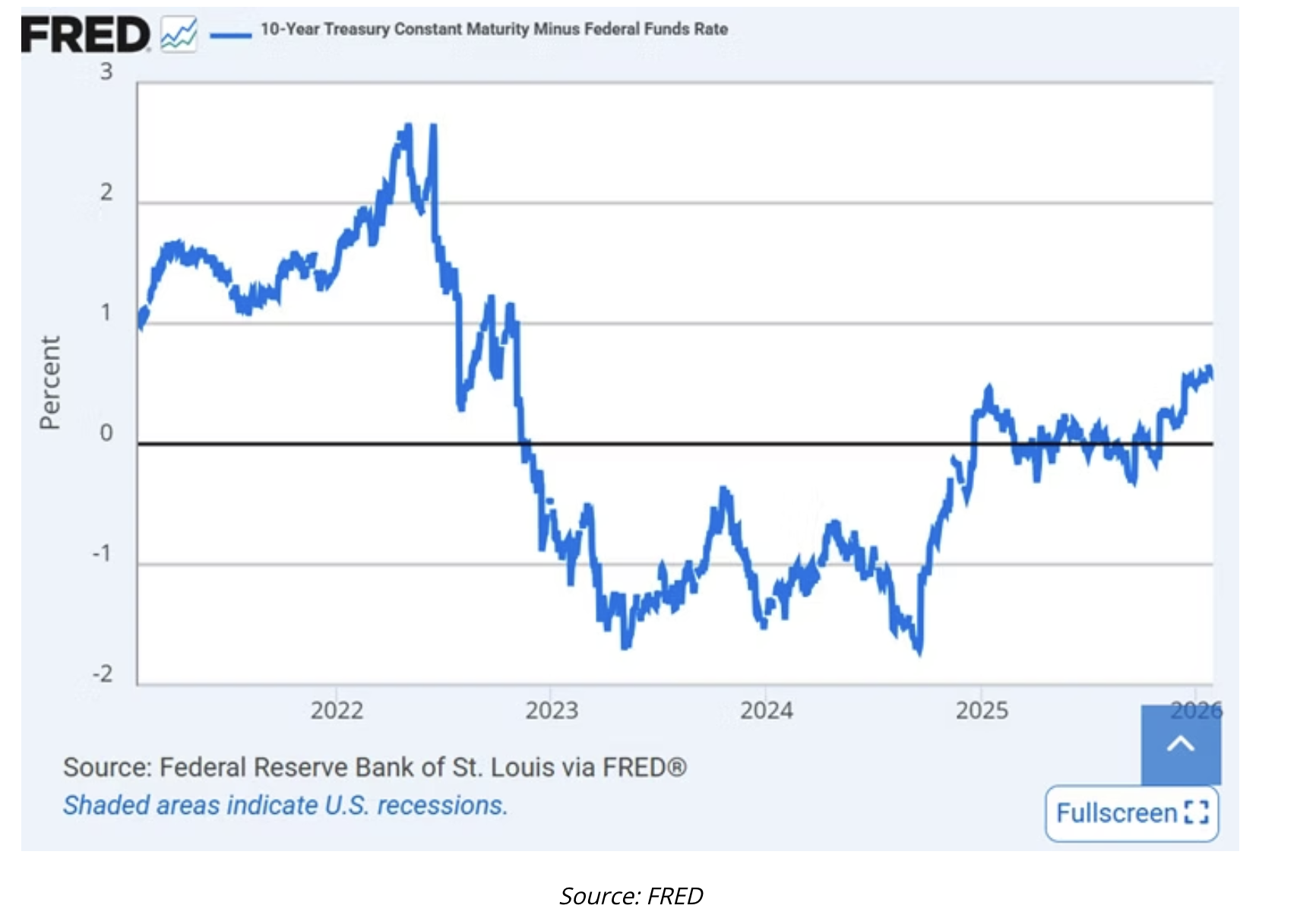
We will go into it in detail in future letters, but Kevin Warsh will, if confirmed, take office at a time when the bond market is worried about the fiscal deficits and sovereign debt in the US (and elsewhere) and the Fed has little control over the long end. Persuading long-term bondholders to take significantly lower rates will require the US government to get deficits and debt under control. You tell me how likely that is.
The government’s giant deficit is helping the economy run hot. Kevin Warsh will have a particularly difficult needle to thread. We should all wish him luck. He is going to need it.
Deficit spending at the level the US is doing will be inflationary. Warsh has repeatedly said he is focused on inflation (as well as completely reforming the Fed and banking regulations), but it is going to be a difficult environment. Sigh…
The crisis is getting closer.
New York, Houston, Los Angeles and More
I plan to be in Houston in early March to attend an economics event at Rice University. I am on something called the RISE Council that works with the economics department. This year, they will be hosting Dr. Ken Rogoff for a lecture series. I’m looking forward to attending. I also will need to be in New York sometime in March as well as Los Angeles. Plus other cities.
We have (finally!) opened the Lifespan Edge clinic here in Dorado, Puerto Rico. I was the first patient to receive the treatment on Wednesday, and it went relatively smoothly. I’m actually quite energetic the past two days. Shane went the next day for her first time. She is also feeling energetic. We both feel the need for the gym.
The Dallas clinic is doing well and its patient numbers are increasing. Dr. Mike Roizen will be in the Dallas clinic for the next two weeks at least seeing patients for therapeutic plasma exchange. If you have been thinking about going to Dallas for TPE and would like to actually meet Dr. Mike Roizen and ask questions, you might think about doing it while he is there.
For those who are interested in longevity, the first part of your journey should begin with therapeutic plasma exchange. Seriously. You can learn more at Lifespan-Edge.com (note the dash). If you haven’t, you really need to read our main research report. The research and other information can make a real difference in your life. You can set up a discovery call to talk with our doctors about the procedure, as well as look at a lot more research.
It is time to hit the send button. Life has been busier than ever, but we’re making progress. This will be an interesting year or two and I look forward to working through it together. Have a great week!
Your happy about the Fed Chair appointment analyst,
John Mauldin
A message from Advisor Perspectives and VettaFi: Discover something new! Click here to register for our upcoming webcasts.
Membership required
Membership is now required to use this feature. To learn more:
View Membership BenefitsSponsored Content
Upcoming Virtual Events View All












