Gold has always been one of the go-to assets when stomach-churning volatility forces queasy investors into safe havens. However, recent volatility has been challenging that safe haven narrative, and one of the drivers has been speculative trading activity in China ETFs. The spillover effect also means U.S. ETFs have been seeing heightened activity.
Gold futures dipped near the end of January amid the price swings, but have been steadily climbing again. The precious metal has been on a historical run the past couple of years, rising roughly $850 per ounce since early 2024 or a 42% increase.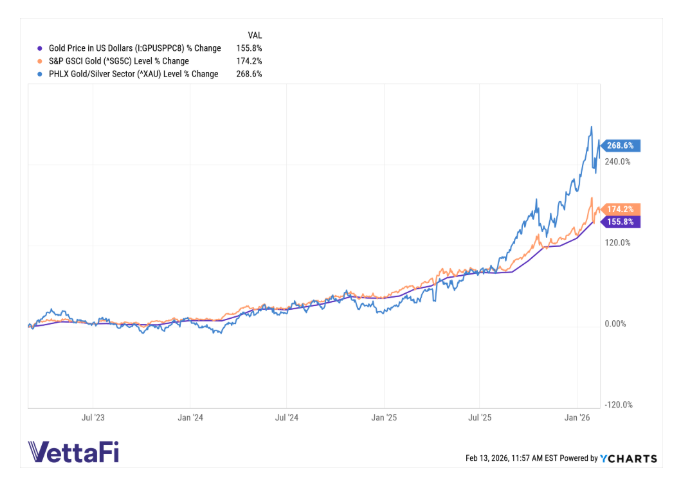
Gold Price in US Dollars data by YCharts
China Sneeze = Gold Squeeze
After rising above $5,000 per ounce in the early going of 2026, a confluence of factors pushed it below that price level. One of them is heavier trading activity at the institutional and retail level in China ETFs linked to the precious metal.
“This [volatility]is partly because of growing access to gold-linked financial products like futures contracts and exchange-traded funds (ETFs) in China,” said Hamad Hussain, economist at Capital Economics, in a CNBC report. “What’s more, there are signs of increasing amounts of leverage in China’s gold market too, which can lead to significant gold price volatility.”
The report also noted that Chinese gold-backed ETF holdings have more than doubled since the start of last year. It’s a classic case of when China sneezes, the gold market catches a cold—the byproduct of China being the world’s largest gold consumer. As a result of the recent volatility, Chinese regulators have been raising margin requirements for gold futures.
“The growing use of futures contracts and leverage to invest in gold is not typical of investors seeking a safe haven asset,” Hussain added.











