Despite gold’s sideways performance in recent weeks, UBS still expects gold to gain 20 percent from its current price this year.
Since the big selloff in January, gold has generally traded in a range between $5,000 and $5,200 an ounce. It got a little bump when the U.S. began military operations in Iran, but quickly settled back into that range.
Gold followed a similar pattern when it corrected last fall, trading sideways for a few months before taking off again.
While many may be surprised that gold has surged due to the war, the yellow metal hasn’t typically had a long-term impact on the gold price. After an initial safe-haven bump at the onset of a war, other factors, particularly monetary policy, have driven the gold price in wartime.
n a note, UBS analysts noted that gold has not been able to break through resistance at $5,200 even with the geopolitical uncertainty of the Iran war, calling it “a contrast to its 65 percent rise last year, when heightened geopolitical risks served as a tailwind amid fundamental drivers such as lower real interest rates and debt concerns.”
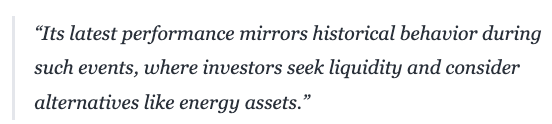
However, they noted that gold seems to be following a familiar wartime pattern, with many investors using gold as a source of liquidity to manage stock and commodity price swings.

They backed up their generalization of the wartime pattern by pointing out that gold behaved similarly during other recent military conflicts.
Looking beyond the short-term impacts of the war, UBS analysts remain bullish on gold, forecasting the price to rise to between $5,900 and $6,200 by the end of the year, “as the key drivers underpinning its strong rally remain in place.”
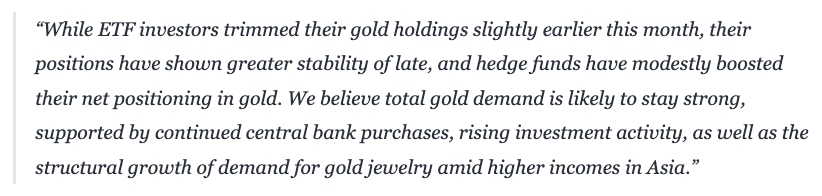
They point out that investment demand remains robust, even as the metal trades rangebound.
ETFs globally added 26 tonnes of gold in February, pushing total holdings to a record of 4,171 tonnes.
Analysts at the Swiss bank add that the factors driving the bull market before the war remain in place and may be exacerbated by the ongoing conflict.
The UBS note cautioned that investors could see some short-term pressure on gold prices due to the war.
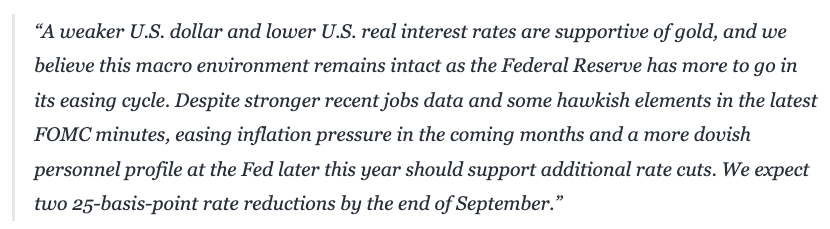
However, UBS analysts don’t think central banks will be inclined to hike rates.
In fact, the Federal Reserve is caught in a Catch-22 where it should hold rates higher for longer to battle rising inflation (war or no war), but can’t because the economy is being warped by a giant Debt Black Hole. In fact, further monetary easing seems far more likely than interest rate hikes.
UBS analysts agree.
Furthermore, as James Madison said, “War is the parent of armies; from these proceed debts and taxes.” The federal government already has a spending problem. A war won’t help. In fact, we can likely expect bigger deficits and an even more quickly ballooning national debt.
UBS analysts agree, noting that the longer the war drags on, the greater the risk of negative economic impacts.
Ultimately, we’re talking about an inflationary scenario, as the Fed will likely have to take steps to monetize the wartime debt. That means more money creation.
The UBS analysts emphasized that gold “stands out as a hedge against inflation.”
The war could also exacerbate ongoing de-dollarization, as other nations worry about being exposed to U.S. fiscal malfeasance.
A message from Advisor Perspectives and VettaFi: Discover something new! Click here to register for our upcoming webcasts.
Our Service, Use, and Transaction Terms (“Terms”) and Privacy Policy (collectively, the “Policies”) govern your access to and use of this Website. By using the Website or engaging in transactions with Money Metals, you acknowledge that you have read and agree to be bound by the Policies, which are incorporated herein by reference. NOTICE REGARDING MARKET RISKS, ORDER ACCEPTANCE, AND CANCELATIONS: By placing an order online or over the phone with Money Money Metals Exchange, you agree to be bound by our Terms and liable for any and all losses in value of the items you ordered. You may not cancel any order after you place it with Money Metals. If you fail to follow through with timely payment on an order, you are responsible to Money Metals for any monetary damages (including, but not limited to, market losses, collection fees, setoffs, etc).
Read more commentaries by Money Metals Exchange