Your Portfolio Was Built for This: Iran War Update
The past three weeks have been unsettling, and not just for markets, but for anyone paying attention to what is happening in the world. Politics aside, the war unfolding in the Middle East has real consequences for economies and portfolios, and we want to share our views on where things stand and how it’s impacting our investments.
On February 28, the United States and Israel conducted joint military strikes against Iran, triggering retaliatory attacks across the Gulf and effectively shutting down traffic through the Strait of Hormuz, the narrow passage that carries roughly 20% of global oil and LNG supply. Importantly, what began as a geopolitical event has now transformed into an economic one.
To better understand the implications of these events, and what it means for investors, we looked at 1) how these events have historically played out, and 2) how they are typically felt within a portfolio.
What History Actually Says About Geopolitical Shocks and S&P 500 Returns
As of March 20th the S&P 500 is down nearly 6% from its January peak. This drawdown (like most) feels uncomfortable while happening, but historically are not unusual.
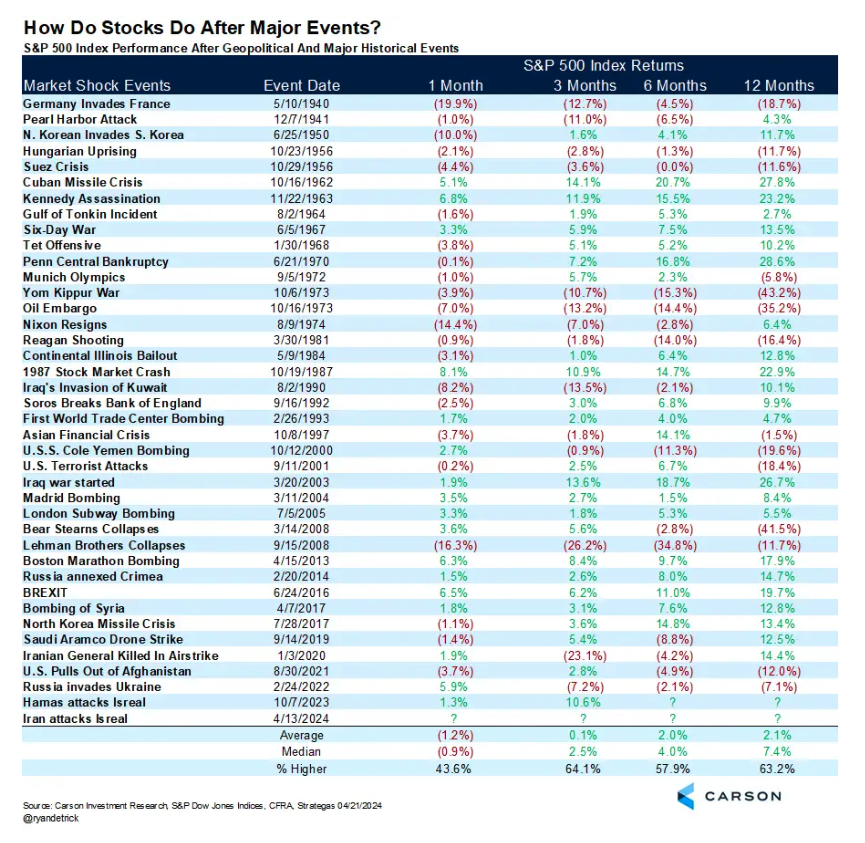
In 20 major military conflicts since World War II, the S&P 500 fell an average of 6% from the start of the conflict to its lowest point, and those sell-offs tend to be short-lived. In fact, across 40 major geopolitical events spanning 85 years, the S&P 500 lost an average of 0.9% in the first month following each event, but ending up rising 3.4% over the subsequent six months.

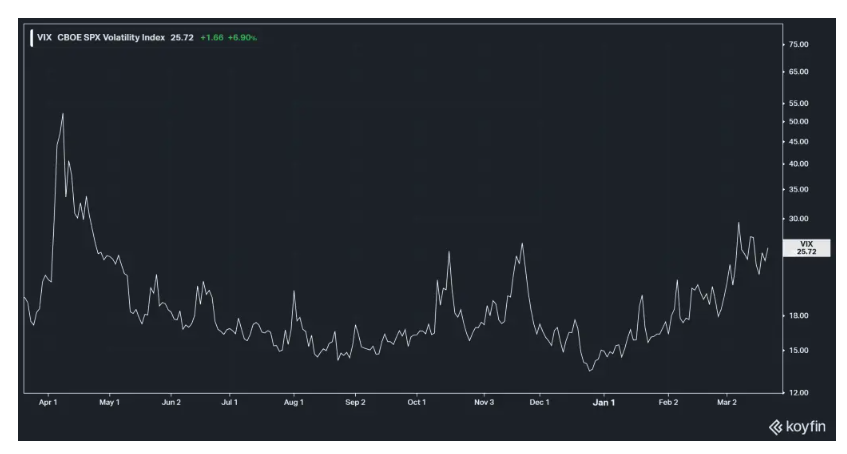
In our view, the more notable moves have been in volatility and energy related companies. The VIX, Wall Street’s fear gauge, spiked from mid-teens levels to a high near 32 by early March before pulling back, and sits near 26 as of this writing.
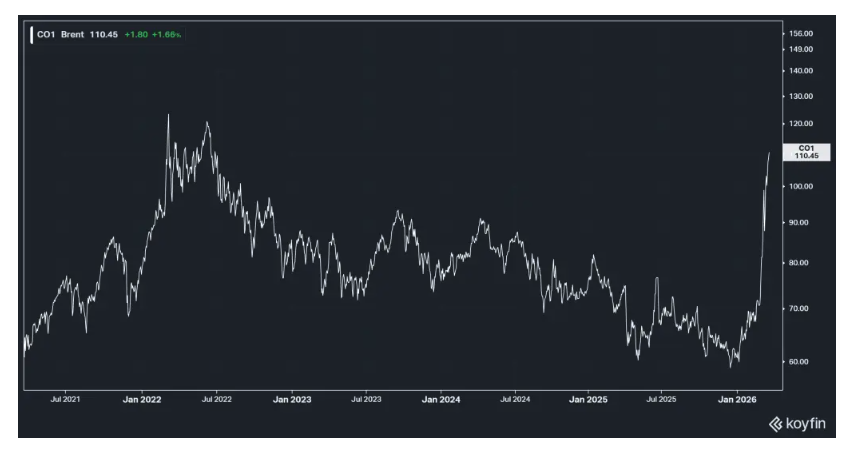
Brent crude meanwhile surpassed $100 per barrel on March 9 for the first time since 2022, and are up more than 40 percent from pre-conflict levels. For perspective, oil prices have already risen at a magnitude comparable to the Ukraine war shock of 2022, which ultimately delivered a 25% drawdown over its full arc.
What We’re Watching: Oil Prices, Inflation, and the Iran War
The two variables that will drive outcomes from here are conflict duration and whether the energy shock passes through into core inflation.
Some economists currently estimate Brent crude could return to the mid-$60s by year end under a short conflict scenario, or approach $130 per barrel in 2Q if the war extends for several months. The difference between those outcomes has direct implications for equity valuations, bond yields, and consumer spending.
More significant is the potential risk of stagflation, an environment where inflation spikes and economic activity weakens. Higher energy prices feed into headline inflation, which complicates the Fed’s path on rate cuts. Federal Reserve officials now appear to see the first 2026 rate cut pushed to 3Q26 (at the earliest).
We are not making reactive changes based on headlines. Instead, we are making sure that what was designed to protect capital in environments like this is doing its job.
Why Portfolio Diversification Matters During Geopolitical Risk
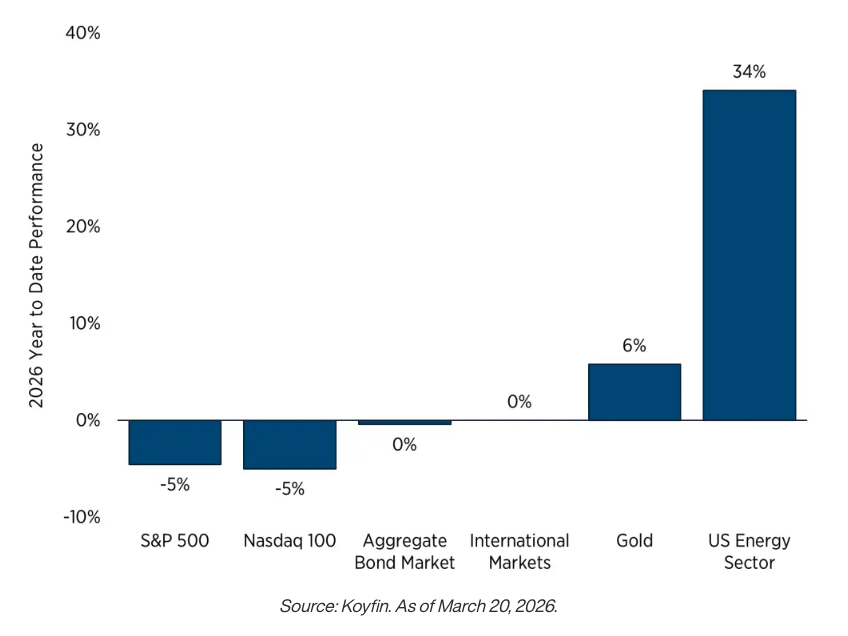
This is also why we build portfolios the way we do. In energy-driven volatility, assets like gold, real assets, and international equities tend to behave differently from domestic large-caps – and that is exactly what we have seen over the past three weeks. Gold surged above $5,400 per ounce as investors moved toward safety. Energy-related holdings have appreciated sharply. The allocations that can feel abstract during calm markets are earning their place right now.
The point is not that every part of a diversified portfolio goes up in a crisis. It is that the pieces move differently, which is precisely what reduces the overall damage when one part of the market is under pressure. That design is intentional, and it is working.
What Investors Should Do During Market Uncertainty
The most important thing you can do right now is nothing rash. Your portfolio was built with the expectation that moments like this would happen – not as rare anomalies, but as a normal part of investing over a lifetime.
If you are feeling uneasy, that is completely understandable. We would rather you call us to talk through what you are feeling than sit with the anxiety alone. And if you have an upcoming liquidity event, a business transaction in progress, or concentrated equity exposure that is keeping you up at night, this is exactly the right time to pressure-test those plans together.
Reach out anytime. That is what we are here for.
Frequently Asked Questions: Iran War and Your Investments
How does the Iran war affect the stock market?
Geopolitical shocks tend to produce short-term volatility rather than permanent damage. Across 40 major events spanning 85 years, the S&P 500 lost an average of 0.9% in the first month but recovered to gain 3.4% over the following six months. The more significant risk in the current conflict is the energy shock as oil prices have risen at a magnitude comparable to the 2022 Ukraine war shock, which ultimately delivered a 25% drawdown over its full arc. Duration and inflation pass-through are the variables worth watching.
Should I sell my investments during a geopolitical crisis?
In almost every historical case, selling into a geopolitical shock has proven to be the wrong decision. The investors most harmed by crises are typically those who exit during the downturn and miss the recovery. If your portfolio was properly constructed before the conflict began, diversified across asset classes, sized to your time horizon, and not dependent on short-term market levels for liquidity, the right move is usually to stay the course. If you have near-term liquidity needs or concentrated equity exposure, those are worth reviewing with your advisor now, not after the fact.
How does oil price volatility affect a diversified portfolio?
Rising oil prices affect portfolios through several channels: they push headline inflation higher, which complicates Federal Reserve policy and delays rate cuts; they compress consumer spending power, which can weigh on corporate earnings; and they increase input costs across energy-intensive industries. At the same time, energy equities, commodities, gold, and certain real assets tend to appreciate during oil shocks — which is precisely why holding them alongside domestic large-caps matters. A well-diversified portfolio does not eliminate the impact of an oil shock, but it distributes it across assets that respond differently.
What is stagflation and why does it matter for investors in 2026?
Stagflation is the combination of rising inflation and slowing economic growth. This is a particularly difficult environment for policymakers because the tools used to fight inflation (higher interest rates) also slow growth further. It is historically rare, but energy shocks are one of the few reliable triggers. The 1973 OPEC embargo is the most cited example. The concern in 2026 is that a prolonged Strait of Hormuz disruption could push energy costs high enough to lift inflation while simultaneously weighing on GDP. That scenario would limit the Federal Reserve’s ability to cut rates and put pressure on both equity valuations and bond prices simultaneously. It is a tail risk worth understanding, not a base case.
Please read important disclosures here.
A message from Advisor Perspectives and VettaFi: Discover something new! Click here to register for our upcoming webcasts.
© Defiant Capital Group
Read more commentaries by Defiant Capital Group