The Oil Shock May Not Stop at the Pump
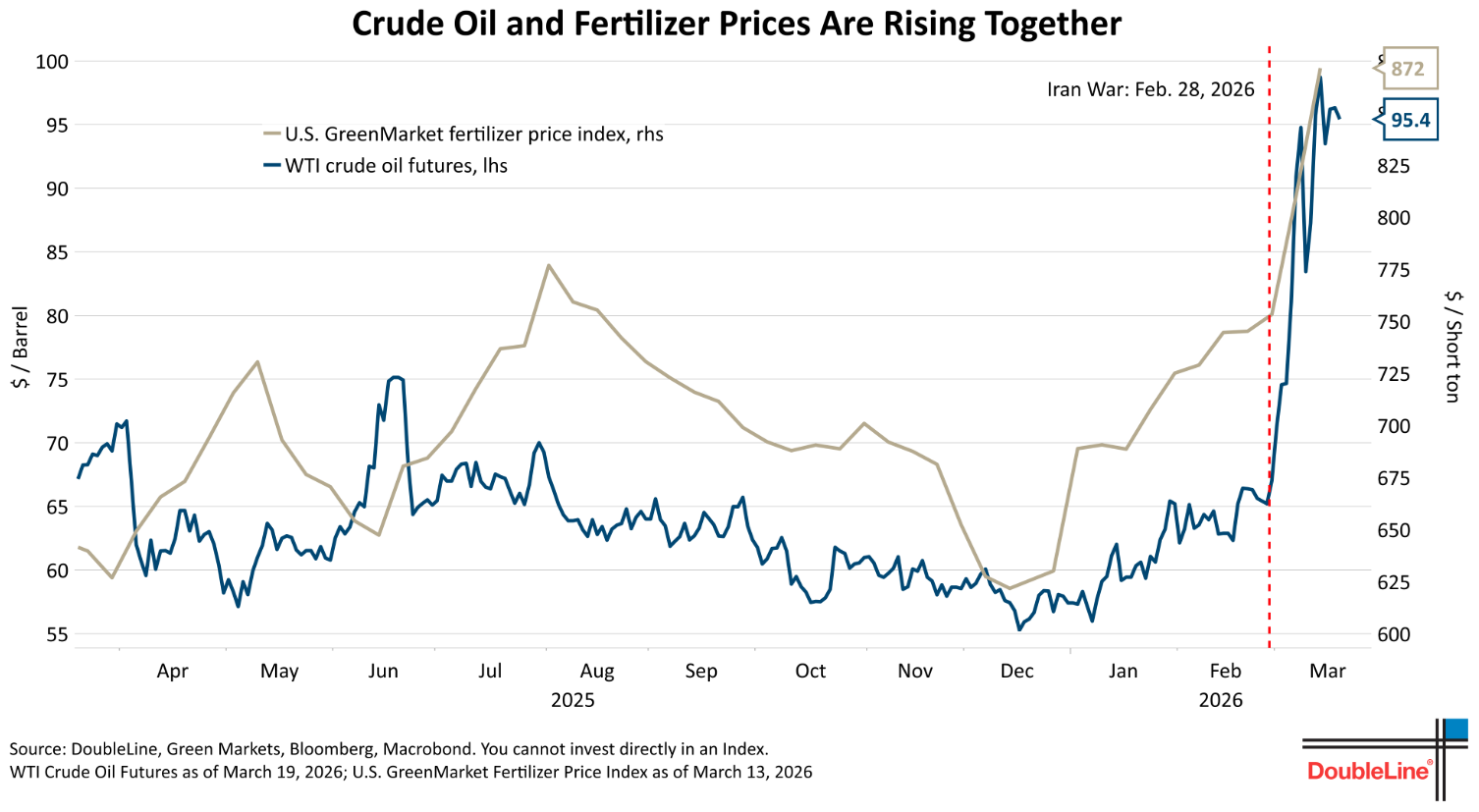
Markets have already priced the most visible consequences of a disruption in the Strait of Hormuz. Oil prices have surged, gasoline prices are moving higher, and inflation concerns have re-emerged. The initial market reaction has been the most visible but least revealing. The tougher question is, what happens if the disruption pushes costs deeper into the real economy? This chart points to one of the earliest channels through which an oil shock can spread into a broader inflation problem: fertilizer.
The strait carries far more than crude. Roughly one-third of global fertilizer exports are tied to the Persian Gulf region, and roughly one-third of traded urea, a key nitrogen-based fertilizer, moves through the waterway. Hormuz also matters for sulfur and other agricultural inputs. Fertilizer sits close to the base of the food system, and its economics are deeply linked to energy. Natural gas represents between 60% and 80% of the production cost of nitrogen fertilizer, allowing an energy and shipping disruption to move quickly into farm input costs and ultimately into food prices.
The timing makes the current move more consequential. A fertilizer shock in mid- to late March arrives during a sensitive part of the crop calendar, when producers are already making key planting and input decisions. That gives the current rise immediate consequences for farm margins and broader food-production costs.
To view The Oil Shock May Not Stop at the Pump, please visit: https://doubleline.com/markets-insights/the-oil-shock-may-not-stop-at-the-pump/
A message from Advisor Perspectives and VettaFi: Discover something new! Click here to register for our upcoming webcasts.











