Today, Vanguard decided to join the target-maturity party, launching a suite of corporate bond ETFs designed to assist investors with bond laddering. Vanguard’s entry is significant due to its massive distribution scale in tandem with its low-cost reputation. The firm is essentially joining a party that’s been in full swing for over a decade. However, it’s doing so with its own style.
Vanguard’s new suite, the Vanguard Target Maturity Corporate Bond ETFs (TMEs or BondBuilder TMEs), consists of 10 funds (target maturity dates from 2027 through 2036). The suite bridges the gap between the liquidity inherent in the ETF wrapper with the precision of individual bond exposure. As the product announcement noted, these are features typically reserved for separately managed accounts (SMAs).
The 2030 Comparison
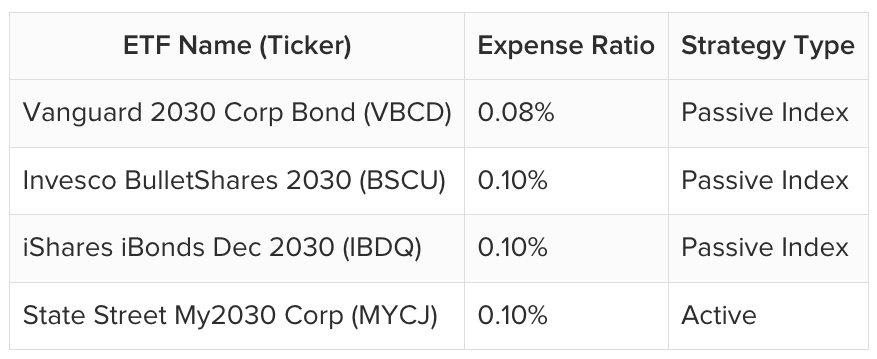
To understand where Vanguard fits, below are three offerings from its peers in the 2030 maturity date iteration. This summarizes the competition that Vanguard is facing:
- Invesco BulletShares 2030 Corporate Bond ETF (BSCU) is the proverbial veteran of this group. Invesco pioneered the defined-maturity structure, offering a massive BulletShares suite that runs the gamut in bonds from investment-grade corporate to munis.
- iShares iBonds Dec 2030 Term Corporate ETF (IBDQ) builds off the expansive iShares brand cache with the deep liquidity and tight spreads that institutional ladder builders have been relying on since 2010. The iShares iBonds suite is heavily diversified with munis, Treasuries, and corporates.
- State Street My2030 Corporate Bond ETF (MYCJ) distinguishes itself with the active management approach inherent in its MyIncome ETF suite. MYCJ’s portfolio managers tactically select securities within the 2030 window to optimize for added yield and credit quality.
Vanguard’s own version of the 2030 target date, the Vanguard 2030 Corporate Bond ETF (VBCD), enters the fray looking to compete in this already-crowded space. However, it does so by winning the fee battle. All ETFs in the suite are offered at just eight basis points, the lowest in its peer group.