Spirit Airlines and the $500 Million Bailout That Could Reshape the Airline Industry
Membership required
Membership is now required to use this feature. To learn more:
View Membership BenefitsRonald Reagan famously quipped that the nine most terrifying words in the English language are: “I’m from the government, and I’m here to help.”
The former president’s comment feels especially relevant this week as news broke that the Trump administration is negotiating a $500 million rescue package for Spirit Airlines, in a deal that could give Washington the option to control as much as 90% of the twice-bankrupt low-cost carrier (LCC).
It’s a remarkable development, and one I believe investors should be aware of. Not because Spirit itself is a compelling investment—at this point, it’s anything but—but because the story includes all the important details reshaping the commercial airline industry today, from the evolution of the low-cost model to the rising value of loyalty programs.
Low-Cost Carriers Still Dominate Globally
Despite the turbulence, the global LCC market remains an enormous force. Four of the world’s 10 largest airlines—Ryanair, Southwest, IndiGo and easyJet—operate on a low-cost model. The broader budget travel market is projected to exceed $315 billion by 2028, according to Statista.
What’s changed, especially since the pandemic, is a surge in demand for premium travel experiences.
Read more: Building Runways for Planes That May Not Return
An increasing number of consumers seek upgrades like wider seats, increased reclining and improved meal options. Combined with the skyrocketing value of frequent flyer programs, this has given legacy carriers like Delta, United and American an advantage that simply didn’t exist in previous downturns.
In past pullbacks, budget airlines led by Southwest typically outperformed the broader market. This time around, the opposite appears to be happening.
Consider that in the first quarter of 2025, Southwest, Frontier and JetBlue all posted sharp declines in their operating margins as international tourism to the U.S. weakened. Delta and United, meanwhile, held firm.
Last year, United CEO Scott Kirby went so far as to declare the ultra-low-cost carrier (ULCC) model “dead.” Frontier’s CEO Barry Biffle disagreed, calling Kirby’s comments “cute” and pointing to Frontier’s cost-per-available-seat-mile advantage. Biffle argued the real problem is oversupply, not the discount model itself.
Budget Airlines Are Ancillary Revenue Machines
I believe Biffle has a point. The price-sensitive traveler hasn’t disappeared, and the industry has proven remarkably resilient.
Budget carriers have become sophisticated revenue machines, with ancillary income from baggage fees, seat upgrades, onboard food and cobranded credit card partnerships accounting for a growing share of total revenue. According to IdeaWorks, Frontier generated 62% of its total revenue from ancillary sources in 2024, up from 56% the prior year. Five airlines worldwide now earn more than half their revenue from these non-ticket, add-on services.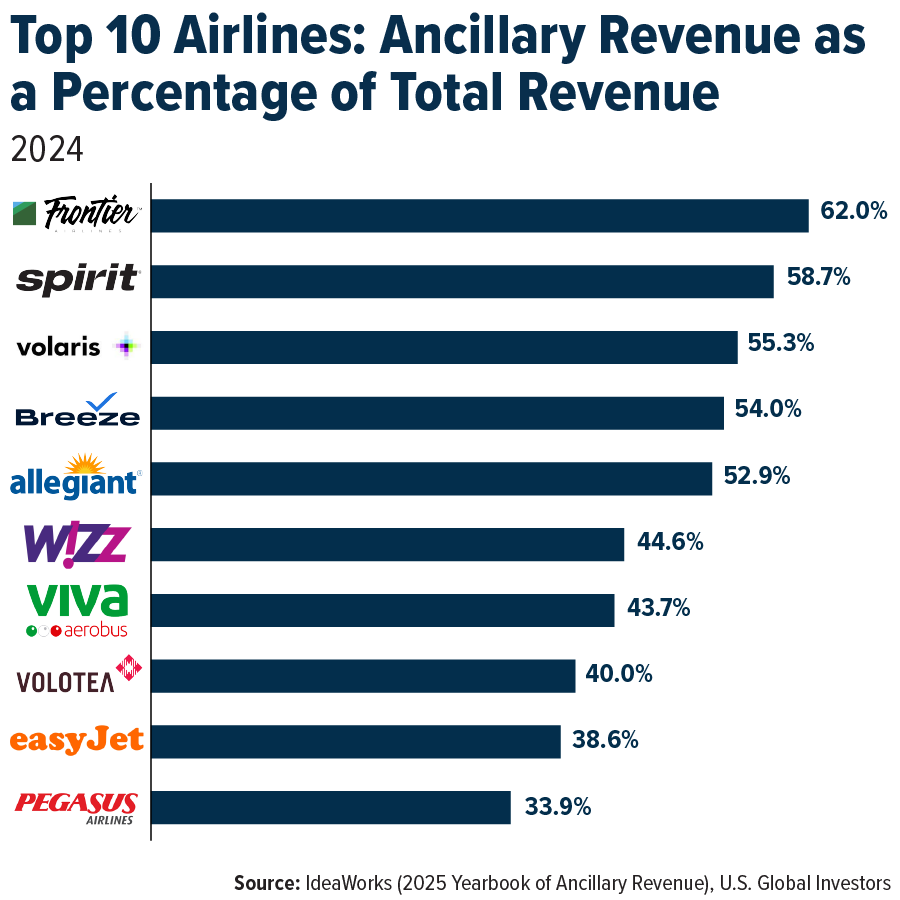
Globally, airlines generated an estimated $157 billion in ancillary revenue in 2025, up from $148.4 billion in 2024 and more than double the $67.4 billion recorded in 2016.
Delta’s SkyMiles Now Worth More Than Most Public Companies
One of the most underappreciated stories in the industry is just how valuable frequent flyer programs have become. According to the On Point Loyalty 2026 Report, Delta’s SkyMiles program is now valued at a record $31.7 billion, more than many publicly traded companies. American’s AAdvantage clocks in at $26.7 billion, United’s MileagePlus at $25.3 billion and Southwest’s Rapid Rewards at $8.9 billion.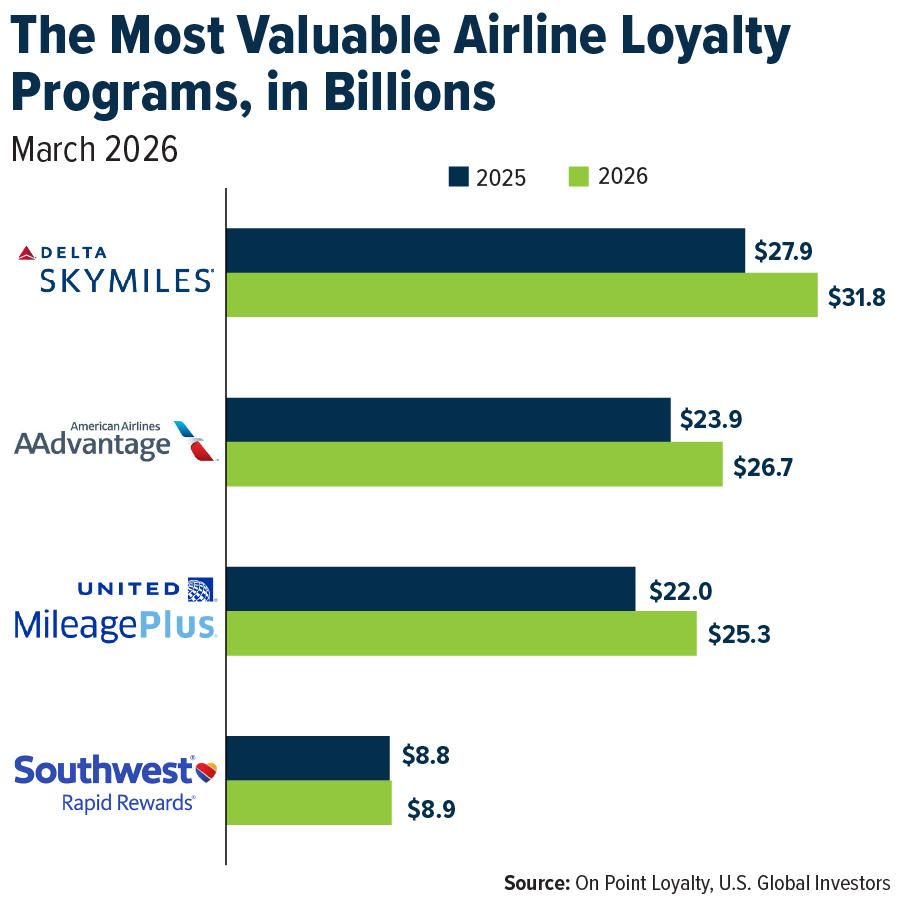
Once considered a secondary marketing tool, these programs are now critical financial assets. During the pandemic, airlines leveraged the predictable cash flows of their loyalty programs to secure record-breaking financing when traditional funding sources dried up. The average program valuation reached $2.4 billion in 2026, up from $2.0 billion in 2023.
It seems to me that this is a key reason the full-service carriers have pulled ahead. Their loyalty programs create consistent revenue streams and deep customer moats that some budget carriers struggle to achieve.
Washington Blocked the Spirit Deal… And Now Wants to Bail It Out
Spirit Airlines, headquartered near Mar-a-Lago in Dania Beach, Florida, has lost roughly $2.1 billion over the past four years, including $900 million last year. Its restructuring plan assumed jet fuel prices of around $2.20 per gallon for 2026, but the Iran conflict and the closure of the Strait of Hormuz has sent prices soaring. That alone could push operating margins into negative territory, with extra costs exceeding cash reserves.
There’s a bitter irony at the center of the story. If you recall, JetBlue agreed to acquire Spirit in 2022 for $3.8 billion, a deal that could have provided Spirit a viable path forward. But the Biden Justice Department sued to block the merger, arguing it would reduce competition and raise fares, and a federal judge agreed.
Now, the same government that blocked a private-market deal is considering taking an equity position in the very company its earlier intervention helped destabilize.
As the Cato Institute’s Tad DeHaven warned this week, the growing list of government equity deals “has opened up a Pandora’s box.” The administration has already taken stakes in Intel, accepted a golden share in U.S. Steel and invested in critical minerals companies. A stake in Spirit would extend that pattern into commercial aviation for the first time outside of a broad industry crisis.
JPMorgan analyst Jamie Baker raised a practical concern in a recent client note: if Spirit receives a cash infusion, competitors like JetBlue and Frontier may expect the same, creating a chain reaction.
Some of the hardest political pushback has come from members of Trump’s party. Senator Ted Cruz (R-TX) called the bailout proposal “an absolutely TERRIBE idea,” while Senator Tom Cotton (R-AR) questioned whether taxpayer dollars should be used to prop up a company whose own creditors have lost confidence in its profitability.
Commerce Secretary Howard Lutnick reportedly pitched the deal to President Trump as a political win ahead of the midterms, emphasizing Spirit’s 14,000 jobs. But Transportation Secretary Sean Duffy pushed back, warning that voters could view it negatively as a bailout of a failing company.
What Smart Airline Investors Should Focus On
The challenges facing LCCs are real, but they’re concentrated among the most leveraged and least-adapted players. As I’ve said before, airlines that have invested in their product, diversified their revenue streams and built popular loyalty programs are better positioned for what comes next.
What concerns me as an investor is not the market itself, but the prospect of government overreach distorting it. As you know, free markets work best when companies are allowed to compete and fail on their own terms, without Washington picking winners and losers.
Interestingly, Spirit is a cautionary tale on both sides of the equation: an antitrust action that blocked a willing buyer, followed by a potential taxpayer-funded rescue that could keep a “zombie airline” flying.
The airline industry has weathered wars, recessions, pandemics and fuel shocks before. It’ll weather this one too. The key for investors is to focus on the companies with pricing power, operational discipline and the financial assets to thrive under any conditions.
Airlines and Shipping
Strengths
- The best-performing airline stock for the week was Grupo Aeropuerto Pacifico, up 5.8%. According to UBS, Cathay Pacific recorded a strong rebound in both passenger and cargo demand in March amid Middle East disruptions. Passenger traffic rose 22% year-over-year (YoY), significantly outpacing capacity growth of 9%, as it gained traffic share from Gulf carriers, especially on European routes. Cathay’s network flexibility and access to Russian airspace are driving market share gains and premium demand capture as competitors struggle with disruptions.
- China Shipbuilding Industry Corporation marked another strong month for new orders, lifting first quarter 2026 global new orders by 40% YoY and driving the global order book up 5% YoY. Tankers were the primary driver of ordering activity in the first quarter. Newbuild prices continued to firm sequentially, supported by robust demand amid strong second-hand and time-charter rates, as well as tight supply. Global yard forward cover extended to 4.19 years from 4.08 years, according to Bank of America.
- United Airlines continues to show that “Good Is Leading the Way.” It reported first quarter adjusted earnings per share of $1.19, ahead of Goldman Sachs estimate of $1.05, and within the company’s original guidance range of $1.00 to $1.50 despite the significant run-up in jet fuel prices during the quarter. The beat versus its forecast was driven by higher-than-expected unit revenue, partially offset by higher-than-expected unit cost inflation and slightly higher jet fuel prices.
Weaknesses
- The worst-performing airline stock for the week was Allegiant, down 13.9%. According to Bank of America, Grupo Aeroportuario del Pacífico first quarter traffic reached 15.4MM passengers, decreasing 5.5% year-over-year (YoY), 1% below consensus. Revenues are expected to total 8.3B pesos, decreasing 1% YoY and coming in 2% below consensus, due to weak traffic in Jamaica as well as Mexican international traffic in Guadalajara, Tijuana, and Puerto Vallarta.
- After showing large spikes in recent weeks, freight rates on key routes have started to roll over in the last two weeks. Rates peaked at $160/ton in late March but have since declined to $74/ton, according to Morgan Stanley.
- Grupo Aeroportuario del Sureste reported first quarter 2026 results below JPMorgan Chase expectations, with EBITDA of 5,354 million pesos (-6% YoY, -7% versus its estimate), driven by weaker-than-expected aeronautical and non-aeronautical revenue per passenger. Net revenues totaled 8,350MM pesos (+2% YoY), -7% versus its estimate, reflecting a 6% miss in aeronautical revenue per passenger led by Mexico and San Juan.
Opportunities
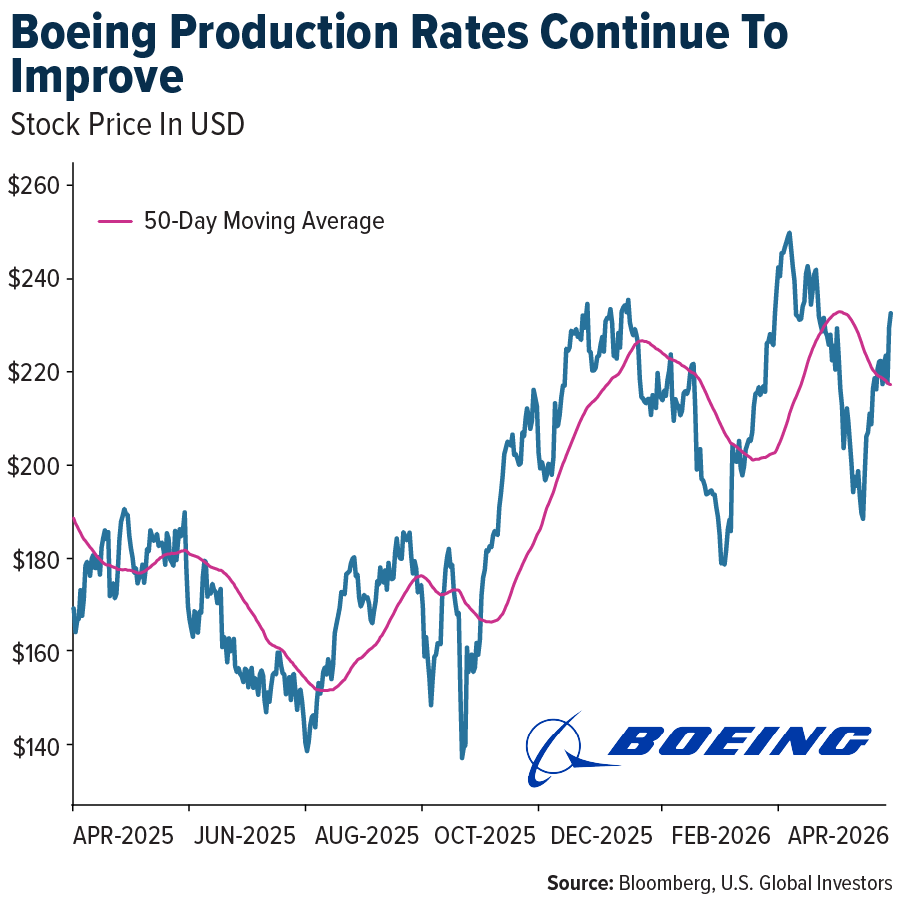
- Boeing continues to perform well. Revenue rose 14%, and cash flow came in ahead of expectations. The commercial aircraft division grew 13% due to higher plane deliveries, including 114 737 deliveries in the quarter. 737 production is running at 42 per month, while 787 production is eight per month. The backlog stands at 6,000 aircraft, valued at $576 billion. The company is preparing to increase 737 production to 47 per month and plans to raise 787 production from eight to 10 per month later this year.
- According to Clarksons Research, crude exports from Yanbu remained strong at 4MM barrels per day last week, while US crude exports rose above 5MM barrels per day for the first time in seven months. As a result, the daily average number of westbound crude tankers via the Cape of Good Hope increased 50% week over week.
- Morgan Stanley’s latest survey shows that corporate travel budgets are trending up 6% year-over-year (YoY) in 2026, an improvement from its year-end survey conducted in October. Strength is expected to continue in 2027 at 6% YoY, though the firm will continue to monitor trends closely given ongoing geopolitical tensions.
Threats
- Asian airlines are aggressively cutting capacity, according to Bank of America. Australia has seen cuts of -7% to second quarter 2026 timetabled supply, largely driven by -10% international reductions, while domestic cuts of -2–3% point to market discipline. India’s capacity cuts of -3.8% over the past month are led by reductions in international routes to the Middle East, North America, and Australia, while China’s -3.5% decline is evenly split between domestic and international.
- In the context of the Middle East conflict that began in late February, UBS estimates global dedicated air freight capacity declined 7% year-over-year (YoY) in March, with end-of-March to early-April capacity down in the mid-single digits YoY.
- Lufthansa announced it will cut 20,000 uneconomic short-haul flights from its European summer schedule due to rising fuel costs. This represents roughly 1% of summer capacity and is expected to weigh on flight cycles in Europe over the summer, reports Bank of America.
Luxury Goods and International Markets
Strengths
- Moncler has emerged as one of the early standout performers of the 2026 luxury earnings season, delivering a first-quarter report that exceeded expectations and offering a notable contrast to the more measured updates from industry heavyweights that reported last week, such as Kering, LVMH, and Hermès.
- L’Oréal also delivered a positive surprise in its latest quarterly update, reporting results that came in ahead of expectations. The beauty group saw solid growth across key divisions, supported by resilient demand in skincare and continued momentum in emerging markets.
- Hotel Shilla was the best-performing name in the S&P Global Luxury Index over the past five days, with shares rising 14.5% after the company reported stronger-than-expected first quarter results, including a return to profitability.
Weaknesses
- Preliminary April PMI data for the euro area signaled a weakening economic backdrop, driven largely by a sharp downturn in services activity. The flash composite PMI fell into contraction territory at 48.6, as the services PMI dropped to 47.4—its steepest decline in months and a sign of deteriorating demand.
- The appointment of a new CEO at Lululemon Athletica marks an important development for the sector this week, with longtime Nike executive Heidi O’Neill set to take over later this year. However, her start date in September creates a period of uncertainty and limited near-term leadership direction. This gap could delay key strategic decisions and execution at a time when the company is already facing softer demand and increasing competition, potentially pushing out the timeline for a meaningful turnaround.
- Lucid Group was the worst-performing name in the S&P Global Luxury Index, with shares declining roughly 14.7% over the past five days. The move was driven by weak fundamentals, including a recent revenue miss and ongoing concerns around cash burn, losses, and demand, pushing the stock toward 52-week lows and weighing on investor sentiment.
Opportunities
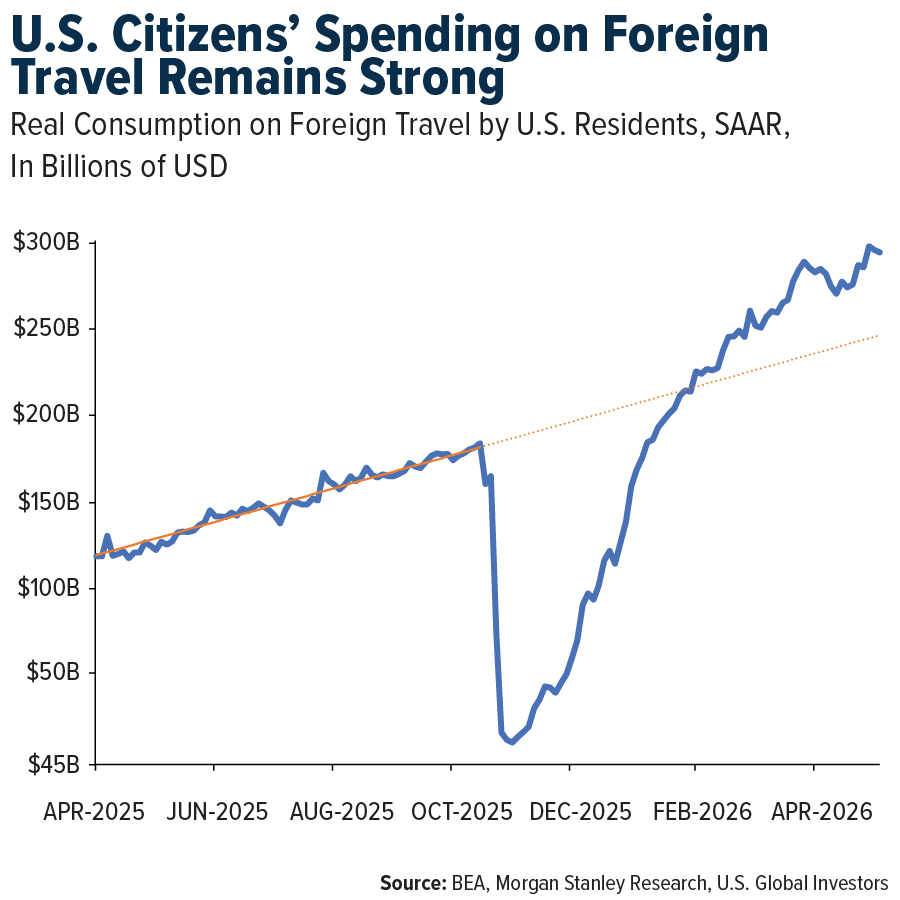
- While inbound foreign visitors to the United States remain below pre-2019 levels, real foreign travel consumption by U.S. residents has surpassed pre-COVID levels, highlighting the resilience and increasing spending power of American consumers abroad. This divergence represents a meaningful opportunity for global luxury brands, as the Americas remain one of the strongest luxury markets globally, with U.S. travelers among the most significant and consistent spenders in the luxury ecosystem.
- Bernard Arnault, CEO of LVMH, has stated that his goal is for Tiffany & Co. to become one of the world’s leading jewelry brands within the next five years. Since the acquisition, he has focused on elevating Tiffany’s brand positioning, strengthening its presence in high jewelry, and expanding its global appeal to compete at the top end of the luxury jewelry market.
- Electric vehicle (EV) sales are gaining momentum across Europe, increasingly driven by rising oil prices linked to heightened geopolitical tensions in the Middle East, including Israel stepping back from negotiations. As crude prices increase, fuel costs for petrol and diesel vehicles have climbed, improving the relative economics of EV ownership. Combined with government incentives and expanding charging infrastructure, this dynamic is accelerating consumer demand for electric vehicles.
Threats
- Rising tensions in the Middle East have added fresh uncertainty to global energy markets, particularly after Israel reportedly pulled back from ongoing negotiations, reducing expectations for a near-term de-escalation. The breakdown in diplomatic efforts raises concerns about potential disruptions to oil supply routes in the region, which accounts for a significant share of global production.
- Luxury stocks have seen muted performance this year despite expectations for a recovery in growth. However, rising tensions in the Middle East, including uncertainty involving Israel, could slow that recovery by dampening travel and discretionary spending. If the conflict persists, sector growth may remain weaker for longer and take more time to return to historical averages.
- A number of travel-related companies, including Hilton Worldwide Holdings and Royal Caribbean Group, are set to report first-quarter results in the coming weeks. Rising energy prices are increasing operating costs, while geopolitical tensions—particularly in the Middle East—are disrupting travel patterns and weighing on consumer confidence. This could lead to weaker bookings and softer performance across the sector. The luxury segment, which relies heavily on international tourists for a significant share of revenue, may be especially vulnerable if travel demand continues to ease.
Energy and Natural Resources
Strengths
- The best-performing commodity for the week was WTI crude, rallying 15.47%. Brent crude climbed to $104.44 per barrel on Friday as President Trump signaled no urgency to resolve the conflict with Iran, raising concerns about potential disruptions to the Strait of Hormuz. Gold, silver, and palladium also moved higher, while base metals such as copper and aluminum declined amid inflation concerns linked to elevated energy prices.
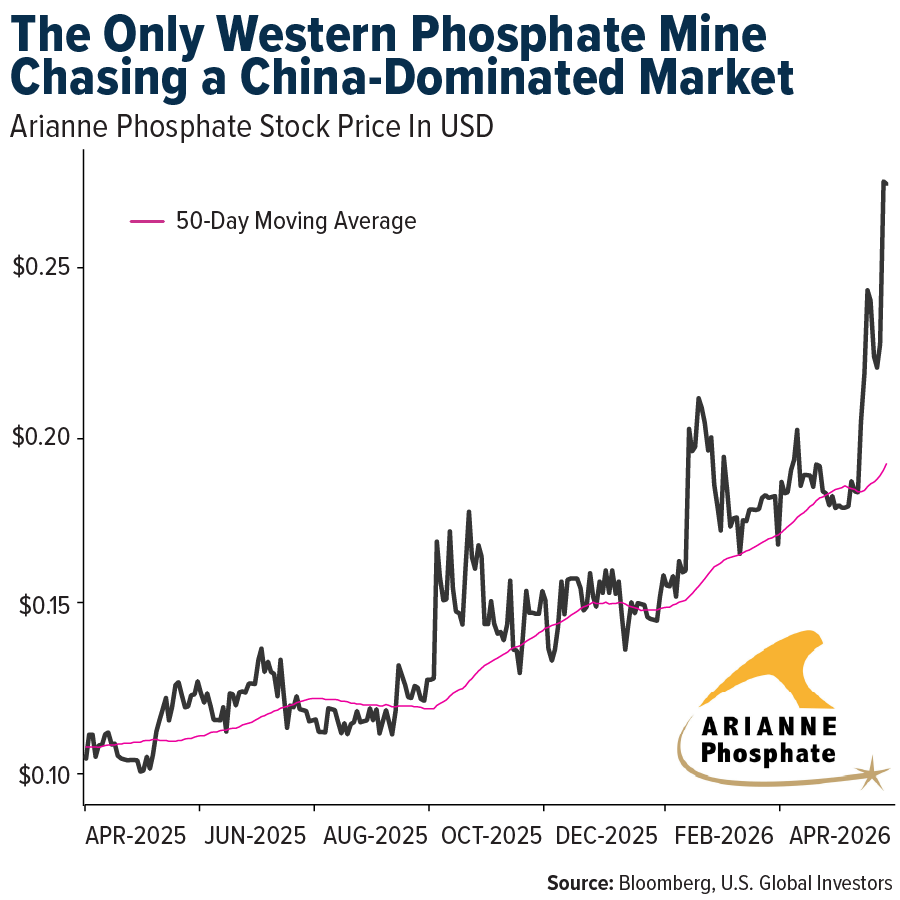
- Arianne Phosphate has signed an option agreement for a purified phosphoric acid demonstration plant in Quebec, advancing its partnership with Travertine Technologies as it moves downstream in acid production. The development is notable as Arianne’s Lac à Paul project—the only permitted phosphate mine in the West and host to one of the world’s largest greenfield deposits—positions itself as a key domestic source for LFP battery materials used in EVs and energy storage.
- Peru has reauthorized Southern Copper’s $1.8B Tía María copper project, with production expected by late 2026 or early 2027 at 120,000 tonnes annually. The approval comes amid political uncertainty ahead of the June 7 runoff election, with candidates holding divergent views on the country’s mining sector.
Weaknesses
- The weakest-performing commodity of the week was natural gas, down 5.76%. Europe is on track for its first monthly decline in LNG imports in over a year this April, with volumes running ~3% below last year due to maintenance outages across Spain, Greece, Italy, and Germany, as well as tighter global supply with more cargoes diverted to Asia. This adds pressure ahead of summer, as Europe looks to rebuild inventories amid stronger competition and potentially higher spot prices.
- Freeport-McMoRan’s quarterly earnings were negatively received after the company signaled a slower ramp-up at the Grasberg Block Cave. While the phased restart began in late March 2026, the path to full production has been delayed, leading to lower full-year guidance. Consolidated copper sales are now expected at ~3.1 billion pounds (1.4 million tonnes), down from prior estimates of 3.4 billion pounds.
- IGO Limited’s Greenbushes mine—responsible for roughly one-fifth of global lithium supply—cut full-year output guidance by up to 13%, citing systemic issues across safety, feed grade, plant reliability, and maintenance. The revision highlights ongoing challenges in lithium supply at a time of rising demand and broader pressure on critical minerals.
Opportunities
- Tesla’s Texas refinery uses a proprietary alkaline leach process that replaces traditional sulfuric acid roasting, which previously generated hazardous sodium sulfate waste. The new method produces a benign sand-and-limestone byproduct that can be repurposed for construction, effectively turning waste into a usable resource.
- BHP is exploring large-scale copper deposits in Zambia using advanced data analysis to identify deeply buried mineral systems, as the country aims to more than triple copper output by 2031. This marks a notable return to Africa for BHP following its exit via the South32 spin-off in 2015.
- Export-Import Bank of the United States Chairman John Jovanovic stated the agency is on pace to authorize a record level of transactions and support more American jobs than any year in its history, with a $71 billion active pipeline across critical minerals, nuclear energy, and advanced manufacturing. Backed by initiatives such as the nearly $12 billion “Project Vault” and a broader $100 billion energy investment push, EXIM is positioning itself as a strategic economic tool to counter China and Russia’s state-backed financing.
Threats
- America’s nuclear renaissance faces key structural bottlenecks, including fewer than 5,000 certified nuclear welders nationwide and a projected 320,000 welder shortfall by 2029. The U.S. also remains dependent on Russia for 40–45% of global uranium enrichment, while domestic HALEU production is still limited. First-of-a-kind SMR costs of $89–$180 per megawatt hour versus $40–$65 for natural gas, combined with a history of nuclear project overruns, highlight significant cost risk even as demand from Meta Platforms, Microsoft, and Amazon grows via large power purchase agreements.
- The European Union has approved a new sanctions package banning Russian imports of refined copper, platinum, cobalt, nickel powder and scrap, and aluminum products, escalating efforts to reduce Moscow’s metals export revenues. The measures tighten already constrained critical minerals markets and come as Western nations, including through initiatives such as EXIM’s Project Vault, accelerate efforts to secure alternative supply chains for materials essential to manufacturing and defense.
- The conflict in Iran is cascading through global mining supply chains, with sulfur prices doubling to around $1,200 per ton and diesel shortages impacting operations from the Democratic Republic of the Congo to Australia. The disruptions threaten hundreds of thousands of tons of copper and cobalt output at a critical time for supply chains. The Democratic Republic of the Congo—largest cobalt producer globally—is particularly exposed due to its reliance on Middle Eastern sulfur and complex fuel logistics, compounding pressure from new EU sanctions on Russian metals.
Bitcoin and Digital Assets
Strengths
- Bitcoin’s credibility as a secure and resilient network continues to strengthen, with the U.S. military confirming it is actively running a node for cybersecurity testing. Admiral Samuel Paparo highlighted the protocol’s “incredible potential” for national security and strategic competition, particularly with China. With an estimated 15,000–20,000 publicly reachable nodes worldwide, Bitcoin remains highly decentralized, and participation by a major military command underscores its robustness against centralized control. This reinforces Bitcoin’s role as critical digital infrastructure in a fragmented geopolitical environment.
- Institutional adoption of Ethereum is accelerating as Bitmine, one of the largest corporate holders of ETH, staked over $320 million in ether in 24 hours, bringing more than 70% of its holdings into yield-generating positions. The firm now holds ~3.5 million ETH, valued at $8.1B, representing over 4% of total supply. With projected annual staking rewards of nearly $300 million, this highlights how institutions are both accumulating and actively monetizing crypto assets, reinforcing Ethereum’s role as a productive institutional asset.
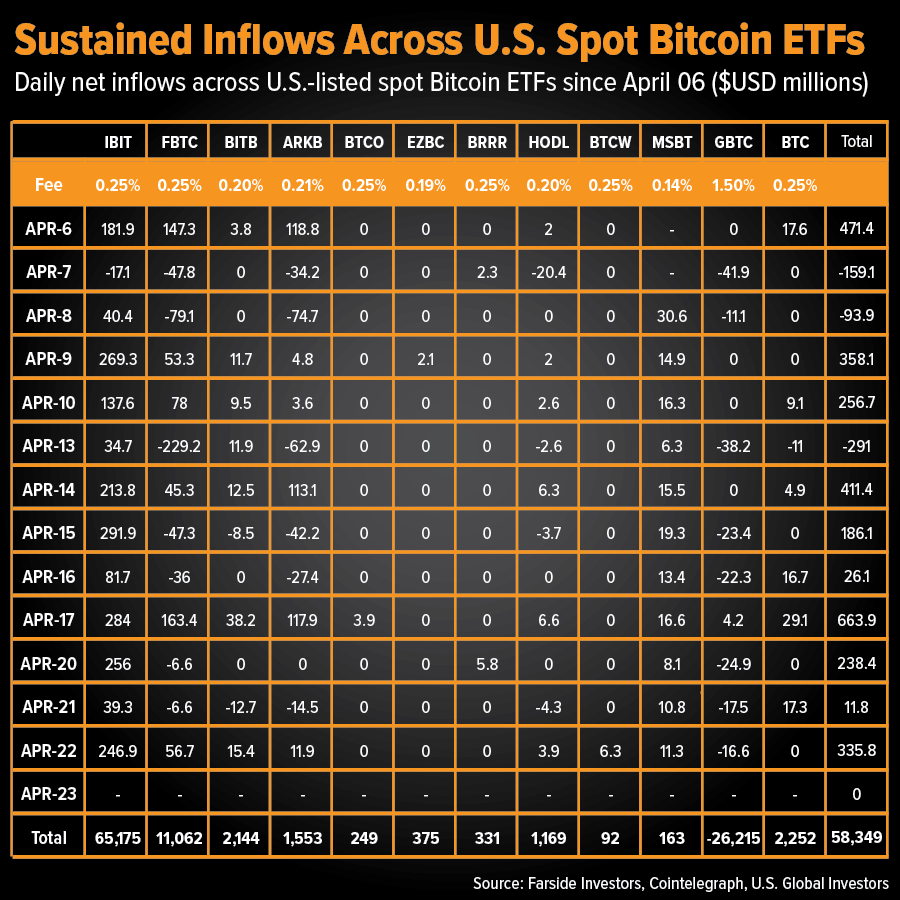
- Institutional demand for Bitcoin remains strong, with U.S.-listed spot ETFs recording a seven-day inflow streak totaling $1.9B, according to Farside Investors. BlackRock’s iShares Bitcoin Trust (IBIT) led with $1.4B in inflows, accounting for over 73% of the total, while overall ETF assets reached ~$103B. Morgan Stanley’s Bitcoin Trust, launched April 8, has seen no outflows to date and has generated $163M in inflows, including $95M in the latest streak. This broad-based demand reinforces Bitcoin’s integration into traditional markets and supports the ongoing recovery in the asset class.
Weaknesses
- Structural weaknesses in the crypto ecosystem were exposed as over 90% of Web3 gaming projects failed following a $15B investment boom, according to Caladan. Token values in the sector have fallen ~95% from 2022 peaks, while funding to studios dropped 93% by 2025, with more than 300 blockchain games shutting down. The play-to-earn model proved unsustainable as user growth lagged, with only 12% of players ever engaging with crypto games. This highlights ongoing challenges around product-market fit and capital allocation within speculative segments of the crypto market.
- Bitcoin’s recent move toward $80,000 has shown signs of weakness, with prices quickly pulling back to around $77,600. The rally appears largely driven by leveraged derivatives activity rather than spot market demand, suggesting limited outright accumulation. Broader participation remains muted, with weakness across altcoins and persistent selling pressure. This raises concerns about sustainability, as crowded leverage could unwind quickly if momentum fades.
- Operational risks in crypto custody remain a concern. Spanish authorities recently seized cold wallets containing ~€400,000 ($467,000) in a piracy-related raid, while separate cases in South Korea involved losses of 22 BTC (~$1.5M) and 320 BTC (~$21.3M) from police custody. These incidents highlight ongoing challenges around storage, access, and internal controls, underscoring gaps in infrastructure even among official entities. This continues to weigh on trust and complicates broader institutional and regulatory adoption.
Opportunities
- A PwC survey found that 79% of over 300 companies are already adopting AI agents, underscoring a rapid shift toward automation in financial decision-making. This trend is driving “agentic finance,” where AI systems not only advise but execute transactions, positioning crypto as critical backend infrastructure. Stablecoins, blockchain networks, and wallets enable always-on, programmable global payments that traditional rails cannot support. As AI agents evolve into economic participants, they may significantly expand long-term demand for crypto infrastructure.
- Regulatory clarity in the U.S. may be advancing as more than 100 crypto firms, including Coinbase and Circle, urged lawmakers to move forward with a comprehensive market structure bill. The proposed framework would clarify oversight between the SEC and CFTC, streamline disclosure rules, and protect non-custodial developers—key issues that have long created uncertainty. Industry participants warn that without clear legislation, innovation and capital could continue shifting to regions like the EU, which already has established crypto regulation.
- Adoption of digital assets is expanding into new markets as the PUSD stablecoin, a Shariah-compliant digital currency backed by Gulf currencies, is deployed on a Layer 2 network focused on institutional settlement. With ~$2.3B in circulation, PUSD is designed for corporate treasuries, exchanges, and payment providers, targeting the $3T Islamic finance market with support from regulated institutions including the UAE central bank. This highlights the growing role of stablecoins beyond crypto-native use cases into region-specific financial systems, supporting broader cross-border adoption.
Threats
- Regulatory risks in the crypto ecosystem are intensifying as Tether, issuer of USDT—the world’s largest dollar-pegged stablecoin—froze $344M in tokens on the Tron network following requests from U.S. authorities tied to alleged illicit activity. The move comes amid warnings from the Financial Action Task Force that stablecoins are increasingly used for money laundering and sanctions evasion. While Tether has supported over 2,300 law enforcement cases across 65 countries, the growing association with illicit flows could prompt tighter oversight and increase compliance burdens across the sector.
- Systemic risk concerns are rising as the Bank for International Settlements (BIS) warned that crypto exchanges are increasingly functioning like “shadow banks,” offering lending and yield products without traditional safeguards. The BIS noted that many “earn” products resemble unsecured loans rather than insured deposits, exposing users to solvency risks, as seen in collapses such as Celsius and FTX. It also pointed to a $19B wave of liquidations during the October 2025 flash crash, underscoring structural fragility that could lead to tighter regulation and constrain high-yield product expansion.
- Security vulnerabilities continue to weigh on DeFi’s institutional appeal. JPMorgan Chase highlighted a ~$20B decline in total value locked (TVL) following the KelpDAO exploit. KelpDAO, a restaking protocol allowing users to earn additional yield on ETH, was compromised via a cross-chain attack that minted $292M in unbacked assets and generated roughly $200M in bad debt. The incident highlights how interconnected DeFi systems can amplify contagion risk, while flat TVL in ETH terms and ongoing exploits continue to limit institutional confidence and adoption.
Defense and Cybersecurity
Strengths
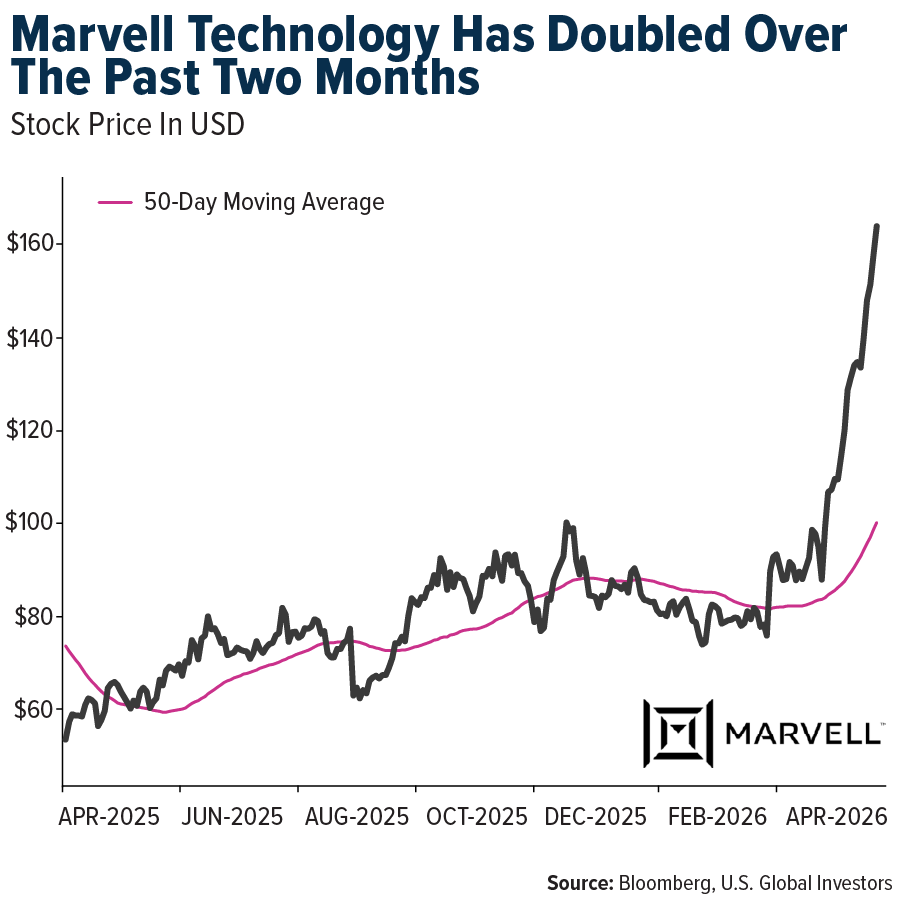
- Marvell Technology announced the acquisition of Polariton Technologies, adding plasmonics-based silicon photonics to enhance modulation performance and support optical scaling to 3.2T and beyond. The deal strengthens Marvell’s roadmap for next-generation coherent and data center interconnects by enabling faster, more energy-efficient, and higher-density optical links critical for AI-driven data center architectures. It also brings a specialized photonics engineering team, deepening capabilities across silicon photonics, DSP, and integrated electro-optical solutions.
- Lockheed Martin has been awarded a U.S. Navy contract to develop, integrate, and test the PAC-3 Missile Segment Enhancement interceptor within the Aegis Combat System for the first time.
- The European Union has approved a €90B financial support loan for Ukraine for 2026–2027, following Hungary’s general election and the restoration of the Druzhba oil pipeline. The funding is intended to support urgent budgetary needs and defense procurement, with repayment required only after Russia pays war reparations.
Weaknesses
- A UK tribunal has allowed a class-action lawsuit against Microsoft to proceed, seeking $2.8B in damages over alleged unfair cloud pricing, specifically higher Windows Server fees on rival clouds compared to Azure.
- Lockheed Martin reported first quarter 2026 free cash flow (FCF) of -$291 million (down from +$955 million year-over-year (YoY)), driven by working capital pressure and contract billing timing. The strain was compounded by a $125M loss on the F-16 program and the suspension of a $2B jet deal with Peru on April 20, highlighting ongoing inefficiencies in fixed-price contracts.
- Oracle’s cancellation of a major NVIDIA server rack order from Super Micro Computer has weighed on Super Micro’s stock, raising concerns about future revenue visibility.
Opportunities
- The U.S. Southern Command is launching its first dedicated unit to oversee unmanned missions in Central and South America. Known as the Autonomous Warfare Command, it will manage uncrewed and semi-uncrewed platforms designed to counter emerging threats across multiple domains.
- U.S. defense companies are seeing a surge in demand for military equipment as conflict in the Middle East drives new global orders, supporting expectations for strong 2026 earnings.
- Advanced Micro Devices has partnered with the French government to support its national AI strategy, contributing hardware, software, and expertise to the Alice Recoque project, expected to be France’s first exascale supercomputer. The collaboration also includes training to help local teams fully utilize the system.
Threats
- The Chinese Embassy in Iran has again urged its citizens to leave due to ongoing risks. A similar warning was issued just one day before previous strikes began. At the same time, the Israeli military has ordered the evacuation of a city in southern Lebanon, signaling potential renewed strikes and underscoring the fragility of the current ceasefire.
- Meta Platforms announced a 10% workforce reduction (approximately 8,000 employees) on April 23, 2026, aimed at offsetting rising AI infrastructure spending and streamlining operations. This highlights broader industry shifts as Big Tech accelerates investment in AI, often at the expense of traditional roles.
- Ukraine’s Ministry of Defense reports that Russia plans to produce more than 7 million FPV drones this year, up roughly 3 million from last year, signaling a significant expansion in low-cost, high-impact battlefield capabilities.
Gold Market
This week gold futures closed the week at $4,726.90, down $152.70 per ounce, or 3.13%. Gold stocks, as measured by the NYSE Arca Gold Miners Index, ended the week lower by 5.83%. The S&P/TSX Venture Index came in off 4.21%. The U.S. Trade-Weighted Dollar rose 0.42%.
Strengths
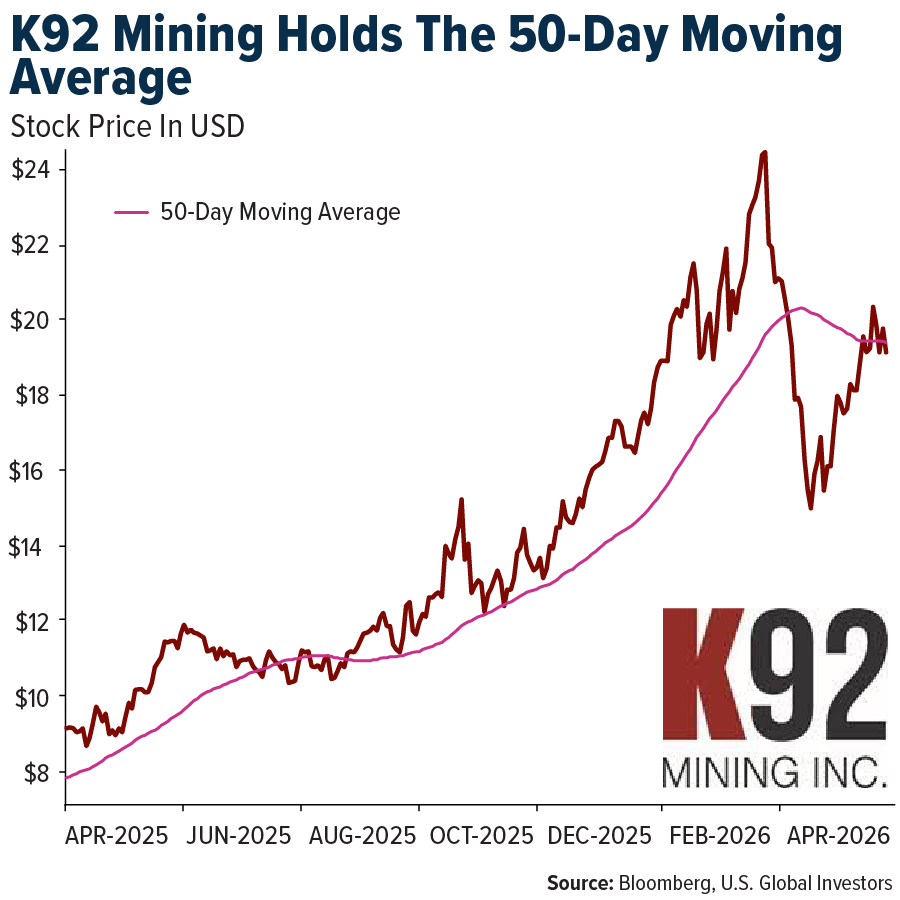
- The best-performing precious metal for the week was gold, but still down 3.13%. Even through the sector’s sharp swings, K92 Mining showed strong technical resilience, holding above its 50-day moving average as operational momentum builds. First quarter 2026 production of 46,743 oz AuEq came in on budget, supported by a 37% year-over-year increase in ore processed and metallurgical recoveries above feasibility study levels, with record lateral development of 3,007 metres now exceeding Stage 3 expansion requirements. Management reaffirmed full-year guidance of 190,000 to 225,000 oz AuEq, with output expected to be weighted toward a stronger second half as new mining fronts and infrastructure improvements lift throughput.
- The World Gold Council notes that China wholesale demand in March rebounded seasonally by 57% month over month to 134 tons, bringing the first quarter total 3% higher year over year to 345 tons, with strong investment buying offsetting weakness in jewelry demand. Chinese gold ETFs continued to expand, ending the first quarter with record inflows of $8.5 billion, total assets under management rose 26% to $44 billion, and holdings increased by 50 tons to 298 tons. The People’s Bank of China reported its 17th consecutive gold purchase in March, adding five tons to reach 2,313 tons, equal to 9% of total foreign reserves.
- Newmont Corporation shares traded higher following first quarter operating and financial results that materially exceeded consensus. Free cash flow reached $3.2 billion over a seasonally weaker period, implying a 10% annualized yield. This supported $1.9 billion in share buybacks during the quarter and a further $0.6 billion thus far in April.
Weaknesses
- The worst-performing precious metal for the week was silver, down 7.31%. B2Gold Corporation said late Sunday it now expects second quarter gold production at the Goose Mine of 18 thousand to 20 thousand ounces, down from a prior estimate of 29 thousand ounces, following a fire in parts of the crushing circuit last Thursday. The company said the fire caused no injuries and did not damage the mill or power facility. It expects production to continue in the near term, but at reduced levels due to lower throughput of crushed ore.
- Fresnillo reported silver equivalent output 2% below consensus. Silver production of 11.1 million ounces came in 3% below expectations, while gold output of 136,000 ounces was modestly ahead. The slight silver miss versus consensus was driven by lower ore grades and operational disruptions across key assets including Saucito and Fresnillo, according to Morgan Stanley.
- Laopu Gold shares fell as much as 3.9% after Citigroup noted that some boutiques could see double-digit sales declines during an April promotion event at high-end malls, as lower bullion prices weigh on entry-level demand.
Opportunities
- According to Scotiabank, Agnico Eagle Mines plans to consolidate Finland’s Central Lapland Greenstone Belt through three acquisitions: 1) an all-share purchase of Rupert Resources for $2.1B, 2) an all-cash acquisition of Aurion Resources for $320M, and 3) an all-cash acquisition of Fingold Ventures from B2Gold Corporation for $325M. Agnico already holds a 14% stake in Rupert and a 10% stake in Aurion.
- Fortuna Mining increased mineral reserves by 15% year-over-year after accounting for production depletion. At Séguéla, updated estimates as of March 31, 2026, showed a 34% increase in underground mineral reserves and a 55% rise in inferred mineral resources at the Sunbird deposit, driven by successful infill and exploration drilling in the second half of 2025. Consolidated proven and probable mineral reserves now stand at 3.0 million gold equivalent ounces, up 15% year-over-year.
- China’s silver imports surged to an all-time high in March as retail investment demand and strong solar industry consumption pushed purchases well above seasonal averages. The world’s largest silver consumer imported around 836 tons during the month, extending a strong run of inbound shipments so far this year, according to Chinese customs data.
Threats
- Ghana’s mining regulator has given Newmont Corporation, AngloGold Ashanti, and Chinese-owned Zijin Mining Group until December to shift mining operations to local contractors or face sanctions, according to Reuters, citing five sources and documents. The companies had separately requested extensions to ensure full compliance.
- According to Scotiabank, rising oil prices are expected to impact second quarter 2026 mining costs given on-site inventories. Approximately 7% of operator cost structures are fuel-related, with a further 6% tied to power. Assuming a $10 per barrel increase in oil prices, analysts estimate a $10 per ounce rise in costs driven by fuel exposure.
- According to Bloomberg, a Southern African nation raised $30 million from the sale of a portion of its gold reserves to purchase gasoline in an effort to avert a deepening fuel crisis, the Nation newspaper reported, citing Information Minister Shadric Namalomba. Malawi also expects the African Export-Import Bank to provide $120 million within the next week to support gasoline procurement.
A message from Advisor Perspectives and VettaFi: Discover something new! Click here to register for our upcoming webcasts.
U.S. Global Investors, Inc. is an investment adviser registered with the Securities and Exchange Commission (“SEC”). This does not mean that we are sponsored, recommended, or approved by the SEC, or that our abilities or qualifications in any respect have been passed upon by the SEC or any officer of the SEC.
This commentary should not be considered a solicitation or offering of any investment product. Certain materials in this commentary may contain dated information. The information provided was current at the time of publication. Some links above may be directed to third-party websites. U.S. Global Investors does not endorse all information supplied by these websites and is not responsible for their content. All opinions expressed and data provided are subject to change without notice. Some of these opinions may not be appropriate to every investor.
Holdings may change daily. Holdings are reported as of the most recent quarter-end. The following securities mentioned in the article were held by one or more accounts managed by U.S. Global Investors as of (03/31/2026):
Ryanair Holdings PLC
Southwest Airlines Co.
easyJet PLC
Delta Air Lines Inc.
United Airlines Holdings Inc.
American Airlines Group Inc.
Frontier Group Holdings Inc.
JetBlue Airways Corp.
Allegiant Travel Co.
Pegasus Hava Tasimaciligi AS
Moncler
Kering
LVMH
Hermes
L’Oreal
RealReal
Cathay Pacific Airways Ltd.
United Airlines
Grupo Aeroportuario del Pacifico
Grupo Aeroportuario del Sureste
Boeing
Deutsche Lufthansa AG
Marvell Technology
Lockheed Martin
Nvidia
Super Micro Computer
Advanced Micro Devices
Arianne Phosphate
Tesla Inc.
BHP
Amazon.com Inc.
Newmont Corporation
K92 Mining
Laopu Gold
Agnico Eagle Mines
Aurion Resources
Fortuna Mining
AngloGold Ashanti
*The above-mentioned indices are not total returns. These returns reflect simple appreciation only and do not reflect dividend reinvestment.
The Dow Jones Industrial Average is a price-weighted average of 30 blue chip stocks that are generally leaders in their industry. The S&P 500 Stock Index is a widely recognized capitalization-weighted index of 500 common stock prices in U.S. companies. The Nasdaq Composite Index is a capitalization-weighted index of all Nasdaq National Market and SmallCap stocks. The Russell 2000 Index® is a U.S. equity index measuring the performance of the 2,000 smallest companies in the Russell 3000®, a widely recognized small-cap index.
The Hang Seng Composite Index is a market capitalization-weighted index that comprises the top 200 companies listed on Stock Exchange of Hong Kong, based on average market cap for the 12 months. The Taiwan Stock Exchange Index is a capitalization-weighted index of all listed common shares traded on the Taiwan Stock Exchange. The Korea Stock Price Index is a capitalization-weighted index of all common shares and preferred shares on the Korean Stock Exchanges.
The Philadelphia Stock Exchange Gold and Silver Index (XAU) is a capitalization-weighted index that includes the leading companies involved in the mining of gold and silver. The U.S. Trade Weighted Dollar Index provides a general indication of the international value of the U.S. dollar. The S&P/TSX Canadian Gold Capped Sector Index is a modified capitalization-weighted index, whose equity weights are capped 25 percent and index constituents are derived from a subset stock pool of S&P/TSX Composite Index stocks. The NYSE Arca Gold Miners Index is a modified market capitalization weighted index comprised of publicly traded companies involved primarily in the mining for gold and silver. The S&P/TSX Venture Composite Index is a broad market indicator for the Canadian venture capital market. The index is market capitalization weighted and, at its inception, included 531 companies. A quarterly revision process is used to remove companies that comprise less than 0.05% of the weight of the index, and add companies whose weight, when included, will be greater than 0.05% of the index.
The S&P 500 Energy Index is a capitalization-weighted index that tracks the companies in the energy sector as a subset of the S&P 500. The S&P 500 Materials Index is a capitalization-weighted index that tracks the companies in the material sector as a subset of the S&P 500. The S&P 500 Financials Index is a capitalization-weighted index. The index was developed with a base level of 10 for the 1941-43 base period. The S&P 500 Industrials Index is a Materials Index is a capitalization-weighted index that tracks the companies in the industrial sector as a subset of the S&P 500. The S&P 500 Consumer Discretionary Index is a capitalization-weighted index that tracks the companies in the consumer discretionary sector as a subset of the S&P 500. The S&P 500 Information Technology Index is a capitalization-weighted index that tracks the companies in the information technology sector as a subset of the S&P 500. The S&P 500 Consumer Staples Index is a Materials Index is a capitalization-weighted index that tracks the companies in the consumer staples sector as a subset of the S&P 500. The S&P 500 Utilities Index is a capitalization-weighted index that tracks the companies in the utilities sector as a subset of the S&P 500. The S&P 500 Healthcare Index is a capitalization-weighted index that tracks the companies in the healthcare sector as a subset of the S&P 500. The S&P 500 Telecom Index is a Materials Index is a capitalization-weighted index that tracks the companies in the telecom sector as a subset of the S&P 500.
The Consumer Price Index (CPI) is one of the most widely recognized price measures for tracking the price of a market basket of goods and services purchased by individuals. The weights of components are based on consumer spending patterns. The Purchasing Manager’s Index is an indicator of the economic health of the manufacturing sector. The PMI index is based on five major indicators: new orders, inventory levels, production, supplier deliveries and the employment environment. Gross domestic product (GDP) is the monetary value of all the finished goods and services produced within a country’s borders in a specific time period, though GDP is usually calculated on an annual basis. It includes all private and public consumption, government outlays, investments and exports less imports that occur within a defined territory.
The S&P Global Luxury Index is comprised of 80 of the largest publicly traded companies engaged in the production or distribution of luxury goods or the provision of luxury services that meet specific investibility requirements.
Please consider carefully a fund’s investment objectives, risks, charges and expenses. For this and other important information, obtain a fund prospectus by visiting our prospectus page or by calling 1-800-US-FUNDS (1-800-873-8637). Read it carefully before investing. Foreside Fund Services, LLC, Distributor. U.S. Global Investors is the investment adviser.
Read additional important information. +
Membership required
Membership is now required to use this feature. To learn more:
View Membership BenefitsSponsored Content
Upcoming Virtual Events View All












