Key Takeaway
Supply shocks from the Strait of Hormuz don’t hit immediately. But the lag is over. What comes next, across oil, food, plastics, and chips, lands on a Fed in transition.
The last ships to escape the Strait of Hormuz before the war began have all arrived at their destinations. That means we will only now begin to feel the full impact here in the United States.
A strong inflationary pulse is coming, and it may arrive just as a new Fed chair is taking the helm. Markets and foreign governments alike are known to test incoming Fed chairs. This may be the biggest test yet.
Several forces are driving this inflationary wave:
Oil refinery mismatch
Oil is not a uniform commodity. US refineries along the Gulf Coast are built to process heavy, viscous crude, but what American wells produce is light, sweet crude. That mismatch doesn’t make refining impossible, but it makes it less efficient and more costly.
Read more: Hormuz Reopening Won't Mean Immediate Normalization
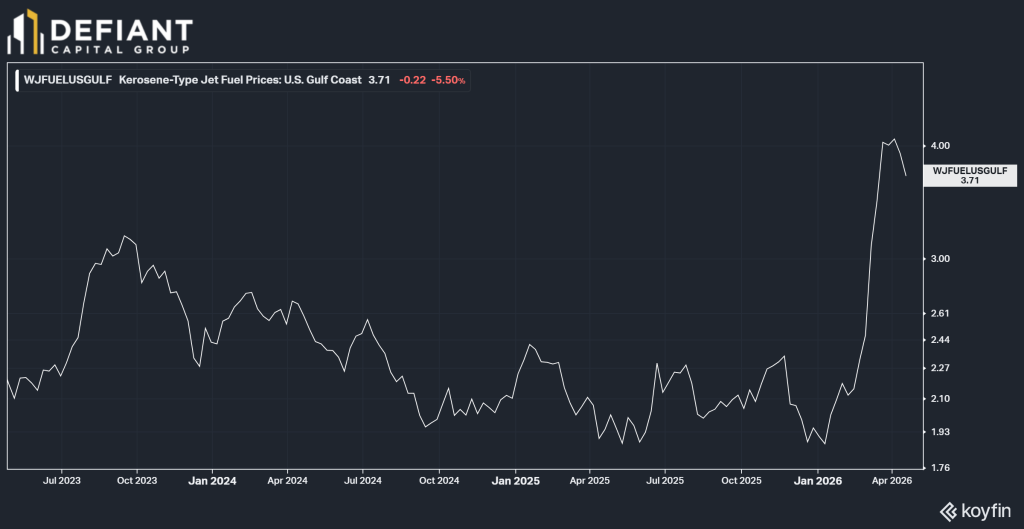
It’s also why jet fuel (as show in the chart below), which is better derived from heavier crude, may grow scarcer and more expensive even domestically.