Fears of hotter-than-expected inflation were realized today. Consumer Price Index (CPI) data revealed that headline CPI rose 0.6% month-over-month in April. This pushed the year-over-year figure to 3.8%, which constitutes the highest reading since May 2023. To beat the CPI heat, three distinct natural resource ETFs offer varying ways to hedge against higher inflation.
Natural resources such as energy, metals, and agriculture have historically exhibited inflation protection characteristics. As the cost of living rises, prices of the raw materials that fuel and feed the world typically follow in tow.
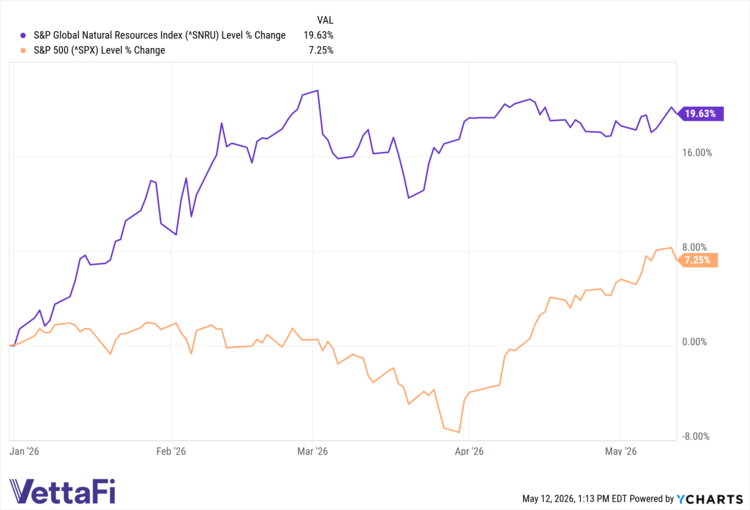
For investors, a pivot towards real assets provide a natural hedge against eroding purchasing power. The S&P Global Natural Resources Index is also outpacing the broader S&P 500 by over 12% year to date, which makes exposure all the more enticing. ETFs can provide ease of exposure to natural resources through a flexible investment vehicle.
Key Takeaways
With April’s CPI jumping to 3.8% — the highest level in nearly three years — natural resource ETFs are back in the spotlight as essential tools for preserving purchasing power through real asset exposure.
NDIV offers high income via covered calls (10%+ distribution rate), GUNR provides broad global upstream index exposure, and CSNR offers the flexibility of active management.
As the market prepares for a transition at the Federal Reserve, the persistent difficulty in tamping down inflation continues to create a favorable environment for energy, metals, and agriculture producers.
NDIV: Income-Focused Exposure
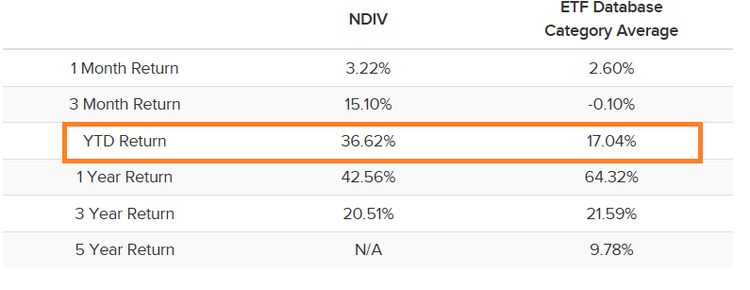
Up 37% year-to-date, the Amplify Energy & Natural Resources Dividend Income ETF (NDIV ) has been a standout performer. With a 30-day SEC yield of 4.67% and a distribution rate of of 10.79% (both as of April 30), the fund also provides income to boot in this higher-for-longer inflationary environment.
The fund targets high-dividend energy and natural resource equities while overlaying a strategic covered call strategy. This approach aims for an annualized income of 10% or more, providing a significant yield cushion even when volatility hits the broader market.
NDIV’s covered call methodology can be particularly effective when markets trend higher or even sideways. The fund generates monthly option premiums while maintaining exposure to production giants like Atlas Energy Solutions {5 stock AESI %}, which is its top holding (as of May 12). With the energy sector poised to benefit from AI-driven power demands, NDIV’s blend of growth and diversified income makes it a compelling choice.
To capture exposure to the upstream portion of the supply chain, the FlexShares Morningstar Global Upstream Natural Resources Index Fund (GUNRA+) is an ideal ETF play. Furthermore, those looking for a global mandate in an index fund that captures this upstream exposure will appreciate the country diversification of GUNR.
GUNR targets companies involved in the exploration and extraction of raw materials. Given this focus, the fund essentially captures pricing power at the source, which offers a way to hedge against the rising tide of energy prices. When global demand rises, price pressures first occur at the resource level where GUNR targets companies before it trickles down to manufacturers and consumers.
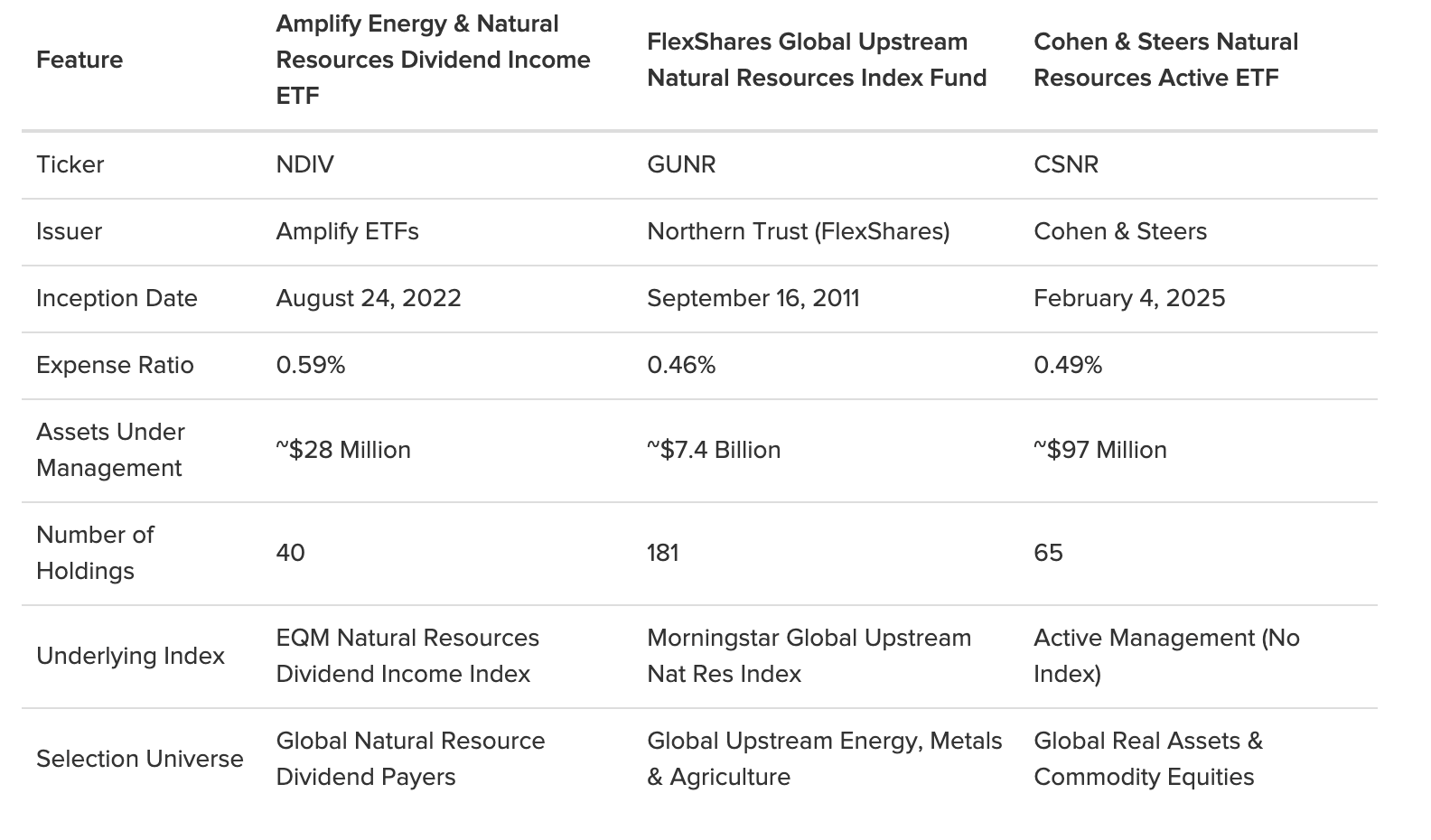
The fund is highly diversified with its over 180 holdings (as of May 11). By holding energy giants like Exxon Mobil and BHP Group, GUNR provides a direct link to the underlying economics of scarcity.
CSNR: An Actively Managed Option
For those seeking an actively managed fund, the Cohen & Steers Natural Resources Active ETF (CSNR ) is worth a look. Active management can be helpful in the natural resources space to navigate challenges associated with geopolitical tensions or supply chain disruptions that can upend markets quickly. As such, the flexibility of active management is a welcome benefit.
CSNR uses a proprietary risk-parity framework that diversifies exposure across energy value chains, metals, mining, and agriculture. As mentioned, the strategy can pivot its weightings based on real-time scarcity dynamics due to its actively managed portfolio. The fund has 65 holdings (as of March 31), which includes major energy players like Exxon Mobil Corporation alongside metal mining giants like Newmont Mining Corporation.
Tailwinds for Natural Resources?
With the U.S. Senate expected to confirm Kevin Warsh as the next Federal Reserve chair, grappling with inflation will be one of his primary tasks at the central bank helm. Tamping down inflation this year has been an elusive goal, but this can create further tailwinds for natural resources through the rest of this year.
For now, this bodes well for natural resource ETFs. Whether through the income-heavy covered call strategy of NDIV, the upstream focus of GUNR, or the active management of CSNR, investors have optionality when it comes to turning inflation into a performance driver.
VettaFi LLC (“VettaFi”) is the index provider for NDIV, for which it receives an index licensing fee. However, NDIV is not issued, sponsored, endorsed, or sold by VettaFi, and VettaFi has no obligation or liability in connection with the issuance, administration, marketing, or trading of NDIV.
A message from Advisor Perspectives and VettaFi: Discover something new! Click here to register for our upcoming webcasts.