Global bond sales have soared to a record this year as borrowers take advantage of easy market conditions to fund everything from the boom in artificial intelligence projects to a revival in acquisitions.
Prior to his most recent role, Marsh held several leadership positions including as head of the EMEA financing group, global co-head of credit finance and global co-head of the alternative capital solutions unit. He became a partner at Goldman in 2014 after joining the bank in 2006.
What do one of the largest private-school operators in the UK, a Spanish waste management company and a European fast food franchise of Burger King have in common? Their private equity owners are readying sales that don’t need debt underwriters.
Banks are looking to sell $2.25 billion of term loans and $2 billion equivalent of bonds for Boots, to help finance its acquisition by US private equity firm Sycamore Partners, according to people familiar with the matter.
As one of the world’s largest sovereign wealth funds warned this week that private equity is “very troubled” right now, a spate of recent buyout deals in Europe and the US points to a possible route out of the mire.
Private equity firms are called that because they own stakes in the companies they buy. Today, this assumption is looking ever more outdated.
Slowly but surely, investment bankers from New York to London are chipping away at the tens of billions of dollars in leveraged buyout debt that remains famously stuck on their balance sheets.
One of the most lucrative money-making machines in the world of finance is all clogged up, threatening a year of pain for Wall Street banks and private-equity barons as a decade-long deal boom goes bust.
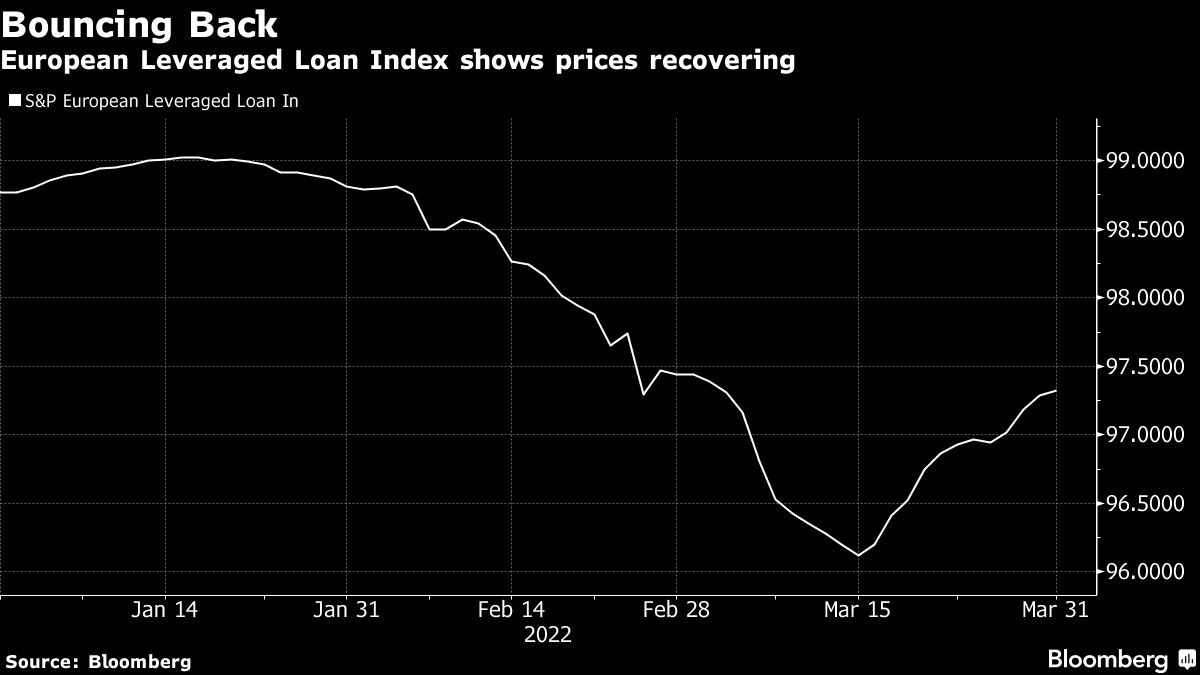
Investment bankers in the US and Europe are bracing for potentially billions of dollars in total losses on big-ticket leveraged buyouts as they struggle to offload risky corporate debt that’s plunging in value amid a sweeping market selloff.
Banks are gearing up to offload billions of dollars in junk debt backing leveraged buyouts, counting on the nascent stability in the market to finally get rid of underwrites for businesses such as Wm Morrison Supermarkets Plc and Unilever Plc’s tea unit.
Buyout activity is picking up pace in Europe, but a number of banks are taking a cautious approach to new risk, looking for higher pricing, more flex protection and in some instances fuller fees on junk-rated debt underwrites against a backdrop of heightened volatility, inflation and rising rates.