Look up the word “cycle” in a dictionary, and you’ll find something like this: “A regularly recurring sequence of events.” Sounds simple, but that definition leaves a lot of ambiguity.
Today we continue our study of the historical cycles suggesting a major crisis is in our near-term (5‒8 years) future. We don’t know the precise timing or nature of the crisis, but the patterns indicate one is coming and could be severe.
My last three letters reviewed Neil Howe’s new book about the Fourth Turning. Today we’ll look at another set of patterns observed by my friend George Friedman in the geopolitical realm. George’s view of how patterns shape countries is different but not inconsistent with Neil’s generational cycles.
Today we’ll continue reviewing Neil Howe’s magisterial new book, The Fourth Turning Is Here, focusing on the Millennial Generation’s important role in the coming crisis. Then we’ll think about what the crisis may look like. Finally—because I always try to look on the bright side—we’ll consider what Neil expects in the “First Turning” that will follow.
We are in the last half of what is the most disruptive and violent of the generational periods.
We talk frequently about the way central banks and governments affect the economy. In the grander scheme of things, though, whatever the Fed does is more like throwing a hand grenade into a large building. Yes, you’ll make some noise and cause some damage. People may be hurt. But the building won’t care, and the owner will fix it.
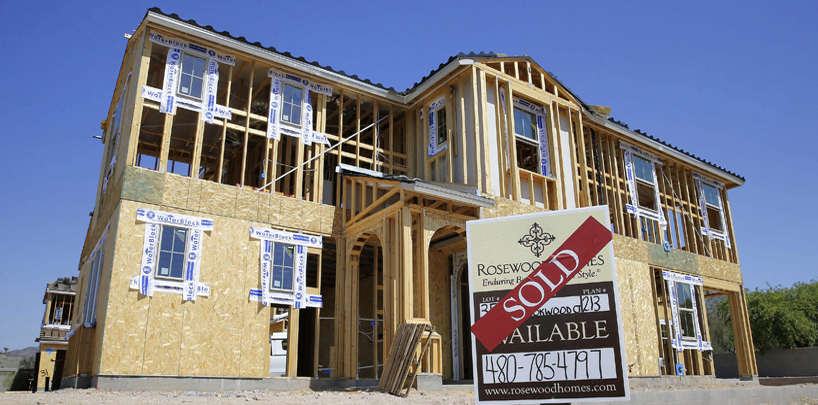
Housing is by far the biggest expense for most American households. Any inflation analysis that ignores housing misses not only the elephant in the room, but the room itself.
The market, and maybe all of us, would like to believe the latest 3% annual CPI number was a harbinger of ever-lower inflation, and we are on the road to 2% inflation by year end. I would argue, “Not so fast.” Inflation is far from dead, and CPI will likely go slightly up between now and the end of the year.
One of the hardest parts of economic forecasting is separating what we expect from what we want.
Central bankers think they can handle a situation and fire the artillery. It always has an effect… but ultimately it is rarely the effect they wanted. Doing nothing at all might have been better but that wasn’t an option. They’re trapped in an endless spiral of intervention.
Is recession still coming? Of course. But some funny things are happening on the way there.
A year ago, the US Consumer Price Index was rising at an almost 9% annual rate. The Federal Reserve was trying to change that trend with tighter policy. But it wasn’t just the Fed. All of us—businesses, consumers, everyone—responded to the pain.
In economics we often talk about cycles. “Business cycle theory” is an entire academic sub-field whose basic idea is that economic history really does repeat itself. Not in every detail, of course, but as a recurring sequence of expansions and recessions.
“Crisis” is an overused word. Actual crises are those rare times when we are on the knife edge of disaster. It’s not a crisis when a bank fails, or Congress can’t agree on a budget. Those are annoyances (unless it's your bank). While not good, they don’t spell immediate catastrophe.
Swiss money manager Felix Zulauf is a crowd favorite at SIC. His 2022 presentation was right on target, so I asked him back to tell us what he expects for the rest of 2023 and beyond. Unfortunately, he thinks a slowdown is coming that will hit markets hard.
We often talk about technology’s influence on the economy. After the Strategic Investment Conference, though, I’ve decided that isn’t strong enough. It’s more correct to say technology is the economy.
The economy co-exists and interacts with broader society, including government. Public policies—and the political processes that determine them—can change the economy in deep and lasting ways. We may not like them, but we can’t ignore them.
World economic growth is slowing. That’s so obvious, very few will disagree. I suppose there are people out there predicting imminent 1990s-like expansion, but they are few and far between. If recession begins soon, it will be the most anticipated one in history.
Next week also brings what could be a pivotal Federal Reserve policy meeting. We use this word “pivotal” to say an event is important. Taken literally, it means to turn in a different direction than you were previously going.
Back before clocks went digital, you could say “a stopped clock is right twice a day” and even youngsters would know what you meant. A mechanism could be nonfunctional but occasionally correct.
Spotting trend changes is the key to economic forecasting. They don’t happen often. Most of the time, this year will be similar to last year. The pace varies but the overall trend continues… until it doesn’t.
“Thinking the Unthinkable.” What does that phrase bring to mind? To me it suggests a situation that has become so stressed you are forced to consider undesirable solutions.
Remember when banks were small? Those old enough to have a bank account in the 1970s should. Back then, most people did their banking with a locally owned institution, often the First National Bank of (Your Town).
Recently I saw someone share a clip from their weather app. It said, “Rain expected at 3 pm,” right above a little graphic showing a 30% chance of rain at 3 pm. What’s wrong with that picture?
For years I’ve used a sandpile metaphor to describe complex systems like banking. Keep dropping grains of sand long enough and you will eventually trigger an avalanche.
If a picture is worth a thousand words, this will be the “longest” letter I’ve sent you in a while, as there are quite a few pictures. It may also be the most wide-ranging.
If you read and pay attention to the world, you probably know the recent past pretty well. And if you’re a history buff like me, you also know something about the more distant past.
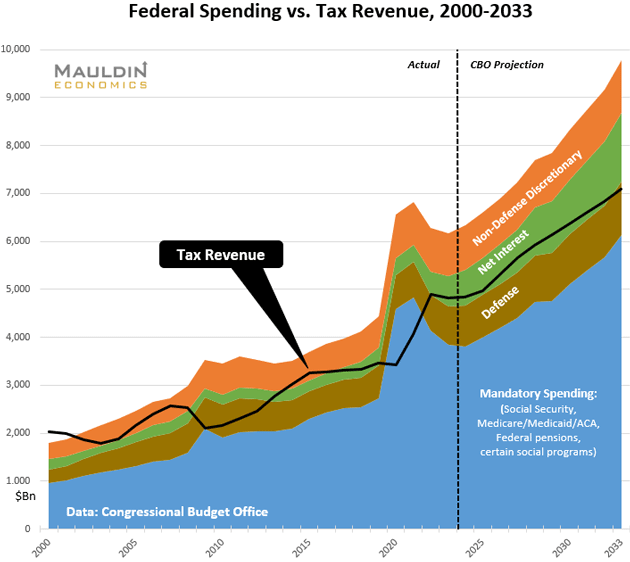
Debt isn’t forever but can definitely seem like it. That feeling is a clue you have too much debt. Wisely used, debt helps build income-generating assets that pay for themselves. The payments are manageable because you’re also getting something else of value.
Federal Reserve officials like to call their decisions “data dependent.” Business leaders say it a little differently, often “data driven.” The point, in both cases, is something like: “We consider relevant data when making important decisions.”
Assumptions can be wise or unwise. They can be unduly optimistic or excessively pessimistic. Slightly different assumptions can produce giant changes in predicted outcomes. Assumptions are necessary but we shouldn’t make them lightly, nor forget we are making them.
These weekly letters, of which I’ve now written well over 1,000 (plus 7 books and multiple papers and articles), are generally about two broad topics: the economy and the financial markets. While related, these aren’t the same. Good news for one can be (and often is) bad news for the other.
In stock investing there’s a management style called “growth at a reasonable price” or GARP. It seeks to achieve steadier results by avoiding both expensive growth stocks and beaten-down value stocks.
The world’s leading CEOs, politicians, and various do-gooders were in Davos, Switzerland, this week, discussing ways to solve our collective problems and create opportunities for their own companies. The most important conversations were off the record and many of the public speeches were simply performance art.
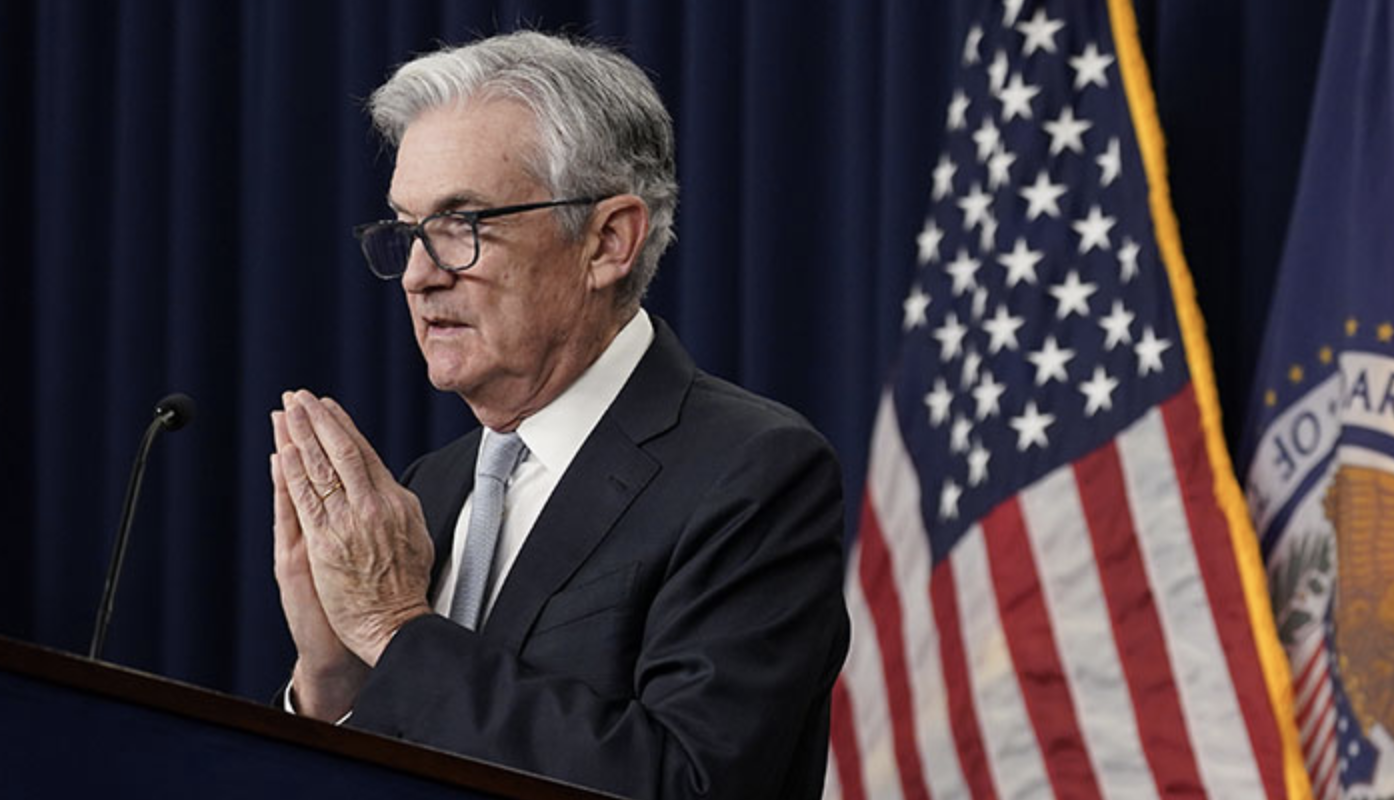
The Federal Open Market Committee’s 12 voting members differ on where they think interest rates should go this year. But we know they’re unanimously against cutting rates until at least 2024—or at least they were as of December, according to that meeting’s minutes.
Welcome to 2023. It’s Forecast Season on Wall Street, the time when everyone tells us what to expect for the new year. Do they really know? Of course not. Forecasters don’t know, investors know they don’t know, yet we all go through this exercise anyway.
This will be my last letter of 2022. I want to use this letter as a set-up for my annual forecast issue the first week of January. That means we will touch on a variety of topics, kind of a snapshot into where my mind is today. Get ready to travel the world but let’s start at home with the Federal Reserve meeting this week.
Economic news—and market reactions to it—increasingly resemble a tennis game. Spectators follow the ball back and forth, thinking something will happen but usually it doesn’t.
Change is constant, in the economy and everything else. We talk about it often. Yet when we talk about the economy changing, we usually mean the economy’s condition is changing—from expansion to recession, deflationary to inflationary, emerging to developing, etc. That’s different from changes in the economy’s actual structure.
This week, around my trip to a far-too-cold Denver, then to Dallas, and ultimately Tulsa to spend the Thanksgiving holiday with family, Keith and I did a 45-minute "interview" via Zoom. Less an interview, perhaps, than the two old friends catching up. I was surprised how many topics Keith and I aligned on perfectly, though our few disagreements about what comes next made for a great debate.
Financial crises are really about trust. They tend to occur when people lose trust in assets, institutions, or people they had thought trustworthy. Whether the lost trust was a consequence of the crisis, or its cause is a different question. But they do seem to go together.
Early this week, with the severe inverted yield curve and other signals flashing recession, I planned to use this letter to delve into the data. Then Thursday’s CPI data convinced markets to blow the all-clear whistle.
Historically speaking, this phase of life we call “retirement” is a new concept.
I literally grew up in the oil patch: Wise County, Texas, 60 or 70 miles northwest of Fort Worth in a little town called Bridgeport. The two first-generation Greek immigrant brothers who became Mitchell Energy talked old man Christie into funding Christie, Mitchell and Mitchell and they drilled (hundreds?) of natural gas wells which they eventually sold to an Illinois utility. This was in the 1950s and ‘60s.
Sandpiles can be fun. Nothing beats taking kids to the beach (or being a kid!) and watching their creativity blossom into all kinds of magical shapes. The problem with sand construction is it doesn’t last. I have it on good authority that building your house on the sand probably won’t end well.
Today I want to talk about why the labor market is so out of balance. Some of this is new and some has been brewing for many years. We will end with some commentary on yesterday’s unemployment report.
This dark symphony was never going to end without sparking a currency crisis, one which allows countries to blame other countries as the source of their own internal problems. We will see that it’s not always the case.
The world will be going from an era of zero rates and loose monetary policy to higher rates and likely slower growth, except in certain sectors. Adjusting to this change will be both problematic and also full of potential opportunities.
Remember when inflation was going to be transitory? Good times. I was in that camp myself early on, as were some serious analysts I greatly respect (and still do). Then the data began to show core inflation would be stickier than expected, and I turned in my Team Transitory T-shirt. I appreciate people who admit their mistakes. We all make them.
Many ask if Jerome Powell can emulate Volcker. We will certainly find out. But much has changed in 42 years. Does Powell even need to emulate Volcker? Here, some prominent economists disagree. Today we’ll talk about the issues.
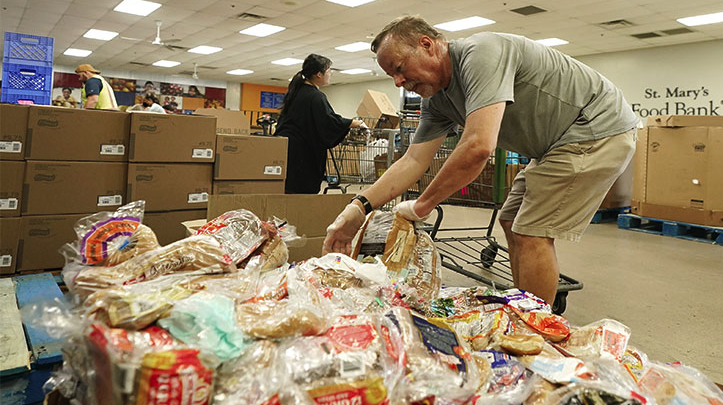
Everyone’s inflation experience is unique. We all have our particular spending patterns, so our experience will feel worse if inflation is more severe in the goods and services we normally buy. Or we might not notice it as much as others do.