When it comes to equities exposure, U.S. large-caps continue to garner the lion's share of capital allocations. However, emerging markets (EM) could finally be in the throes of a comeback. And there are already signs it could be in its early stages.
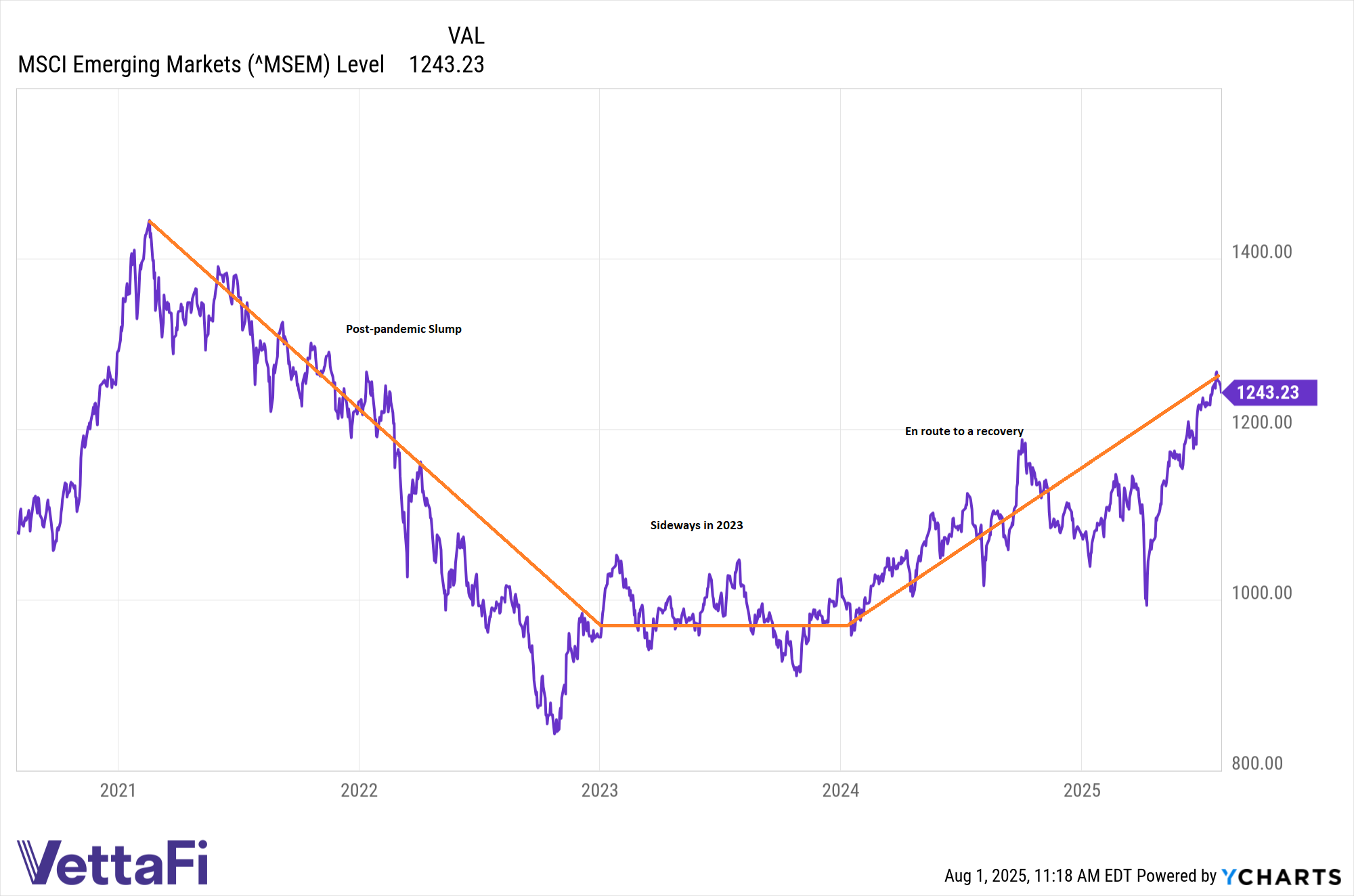
It's certainly been a painful slog for the most ardent EM investors the past five years. High interest rates fortified the U.S. dollar while investors sought the safety of tried-and-true assets like U.S. equities to escape volatility. Following 2020's pandemic sell-off, the MSCI Emerging Markets Index shot higher. Although a postpandemic slump ensued for the next few years, followed by a flat performance in 2023.
2024 started to show signs that a comeback could be in its nascent stages. But investors may have wanted additional confirmation beyond a one-year turnaround. 2025 could be the confirmatory evidence they seek. That because the index is up almost 16% year-to-date. Essentially, those who rode out the valleys may finally see peaks.

Greenback Pulls Back
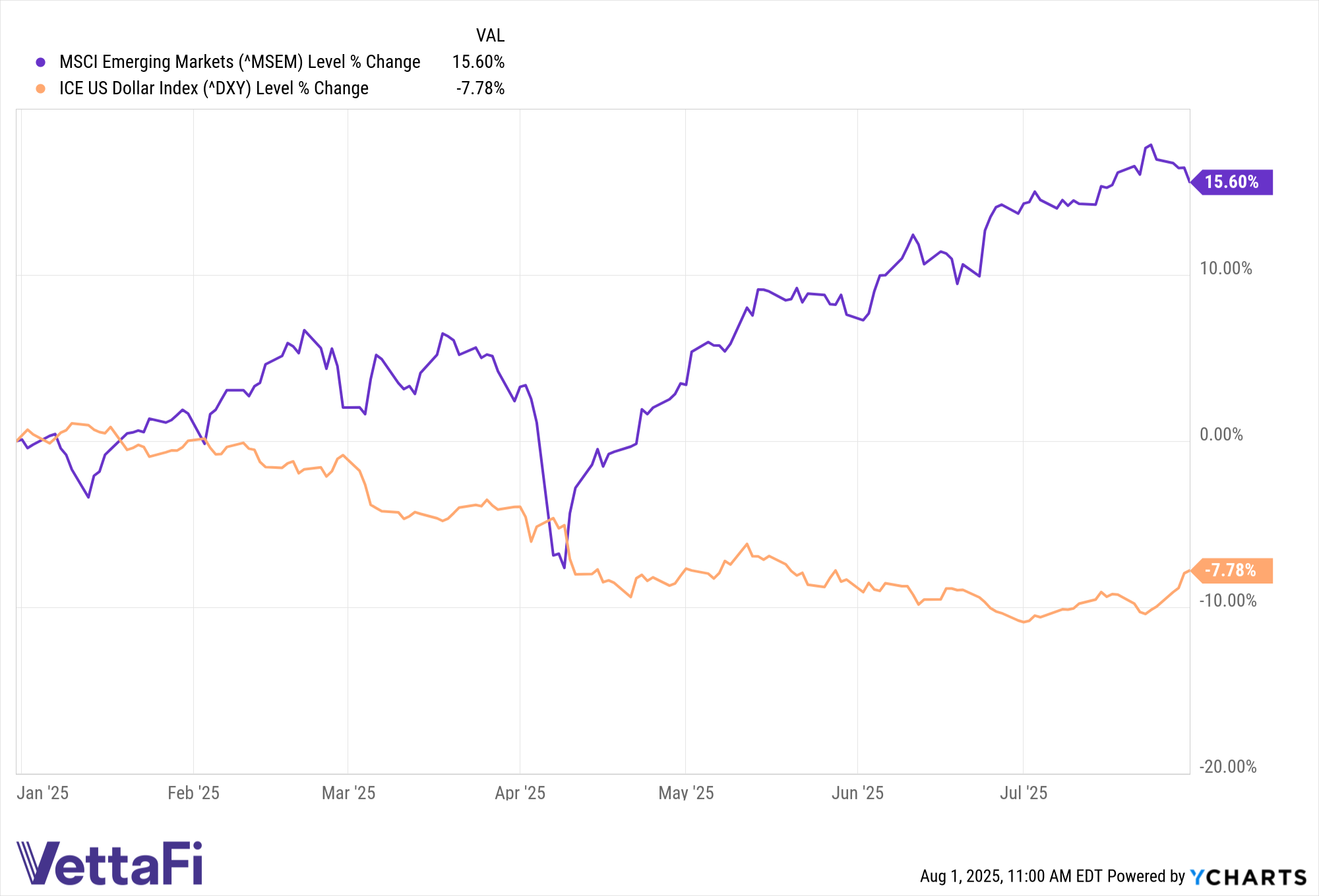
One of the evident signs of an EM comeback has been the pullback of the U.S. dollar this year. As seen through the ICE U.S. Dollar Index (DXY), it's fallen almost 8% through July 31. The market is still anticipating that interest rates will ease though the Federal Reserve elected to keep rates unchanged recently. The decision to stand pat on rates wasn't unanimous, as CNBC revealed Fed members were at odds. The dissention hints that rate cuts could finally be closer, as the idea of opposing Fed members is not something often seen.
"It is an exceedingly rare occurrence when two Fed governors dissent at an FOMC meeting, but it was the most well telegraphed dissention ever at today’s (July 30) FOMC meeting,” said Jack McIntyre, portfolio manager at Brandywine Global.
EM assets are typically anchored to the strength of their local currency, so any weakness in the dollar is a boon. When juxtaposed with the MSCI EM index, the divergence in performance is readily apparent. A rate cut will apply downward pressure on the dollar index. That would push the MSCI EM index even higher should that divergence trend sustain. Furthermore, there's already evidence investors have been hopping aboard an EM comeback train as the dollar slides.
That gets further exacerbated by de-dollarization as the greenback loses its grip on currency dominance. As opposed to stocking up on the U.S. dollar, central banks are turning to other assets like gold to build their reserves. In terms of hard currency, the euro and the yuan have also become viable options instead of the dollar. It doesn't translate to good news for dollar backers, but for EM assets, it could continue providing a bullish catalyst.
^MSEM data by YCharts
China's Recovery
The adage of "slow and steady wins the race" can certainly apply to China. It's difficult to discuss EM without also mentioning China. The country has been trying to regain its economic footing again after the pandemic in 2020, and a real estate development crisis in 2021 added more fire to the proverbial flame. If that wasn't enough, tariffs also provided an additional speed bump on the path to recovery. But the positive news is that the economy is still moving forward. And a snail's pace or not, forward is certainly better than backward.
The government has been injecting stimulus measures to try to resuscitate the economy again. And there are subtle signs of recovery. Most recently, construction equipment sales were higher. That is a key barometer for broader economic health.
The International Monetary Fund (IMF) raised its growth outlook for China to 4.8% in 2025. This was 0.8% higher than a previous forecast made by the IMF back in April.
“This revision reflects stronger-than-expected activity in the first half of 2025 and the significant reduction in US–China tariffs,” said the IMF.
ETF Performance = EM Strength
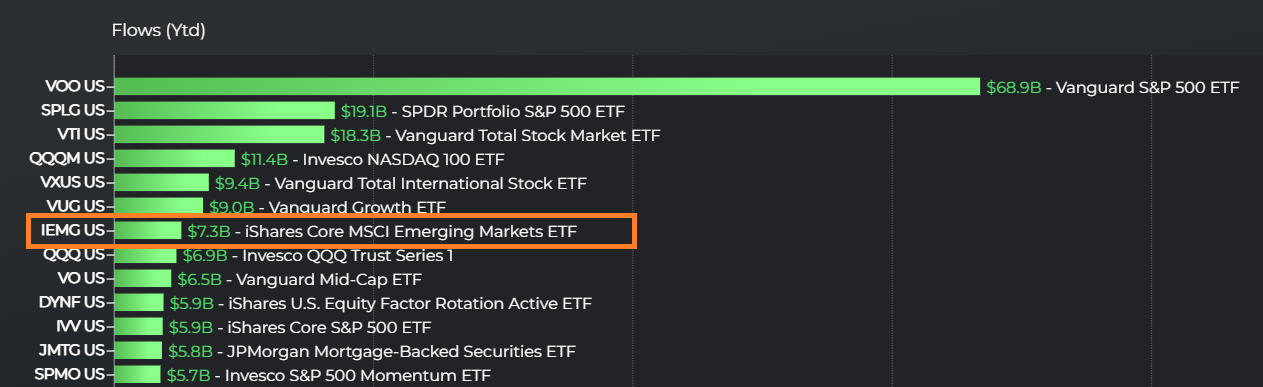
Exchange traded fund (ETF) inflows can offer a window into investor behavior. Assets are starting to pour into one popular EM fund. The iShares Core MSCI Emerging Markets ETF (IEMG) has gotten more than $7 billion in flows thus far this year. That indicates more investors are ready to at least get core exposure to EM.
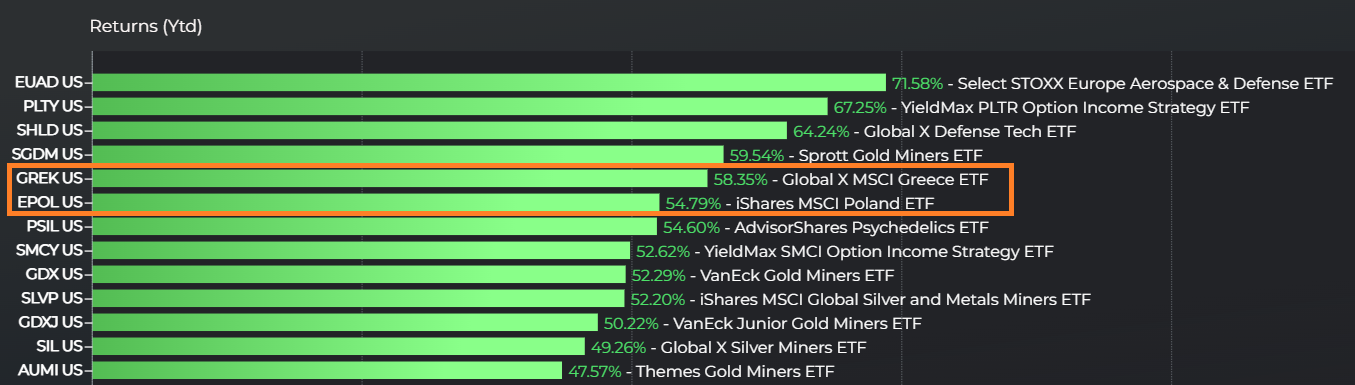
While core exposure is certainly an ideal starting point, country-specific ETFs are also supporting the case for EM. When looking at year-to-date performances through July 31, a pair of EM countries through their ETFs have been providing outsized gains. The Global X MSCI Greece ETF (GREK) and the iShares MSCI Poland ETF (EPOL) have been stellar thus far in 2025.
If the EM turnaround has legs, there are plenty of EM ETF options to run toward. EM offers investors diversification benefits along with growth potential tied to assets that have been relatively undervalued the past half decade.
ETF Options for EM Exposure
Prospective investors looking to get EM exposure have a plethora of options available to them, especially when it comes to equities. The aforementioned IEMG can provide an ideal starting point for investors to dip their toes into a vast pool of EM equities. Another from BlackRock's iShares suite is the iShares MSCI Emerging Markets ETF (EEM). Other core options from large providers include the Vanguard FTSE Emerging Markets ETF (VWO) and the SPDR Portfolio Emerging Markets ETF (SPEM).
Various providers also offer tailored exposure to EM equities for those looking beyond a one-size-fits-all core exposure. For example, those wanting a quality skew toward a more value- and fundamentals-focused ETF can take a look at the Invesco RAFI Emerging Markets ETF (PXH). Those looking specifically for small-cap exposure might want to try the iShares MSCI Emerging Markets Small-Cap ETF (EEMS). Or they can sidestep China exposure with the Global X Emerging Markets ex-China ETF (EEM). There are plenty of ways providers slice and dice EM exposure, so there's probably a fund that can suit an investor's needs.
When it comes to bonds, there are also EM options to look at if fixed income investors want to diversify their portfolios. Traditionally, EM bonds are sought after for their yield, but in return, the investor would have to take on more credit risk even though fundamentals are improving.
For core exposure, the Vanguard Emerging Markets Government Bond Index Fund ETF Shares (VWOB) is an ideal option. Others include the iShares J.P. Morgan USD Emerging Markets Bond ETF (EMB), the VanEck J. P. Morgan EM Local Currency Bond ETF (EMLC), and the Invesco Emerging Markets Sovereign Debt ETF (PCY).
A message from Advisor Perspectives and VettaFi: To learn more about this and other topics, check out some of our podcasts.
Read more commentaries by VettaFi | Advisor Perspectives