Throughout most of 2025, silver has recently outperformed gold, proving (ironically) that it is not always second place. Strength in silver built gradually through last year, but the latest pullbacks are a reminder that near-term market reactions can outweigh fundamentals and long-term investor sentiment. Since ETFs are generally the easiest ways to invest in commodities, there have been meaningful swings in flows in either direction as investors recalibrate exposure. This note lays out the core drivers of silver, how silver-linked ETFs have performed and evolved, and where diversified metals or broader commodity exposures may better match portfolio objectives.
Silver swings up and down—but still has performed well over the long-term
Silver often plays a partial safe-haven role in portfolios—similar to gold, but typically with higher volatility because it carries significant industrial demand characteristics alongside its safe haven appeal. Silver has high conductivity, which makes it suitable for use in vehicles, machinery, and electronics. This makes it as much of an investment opportunity as it does a method of savings. It also adds an extra layer of risk. For example, if industrial demand goes down due to tariffs or other economic/geopolitical conditions, that could affect demand for silver.
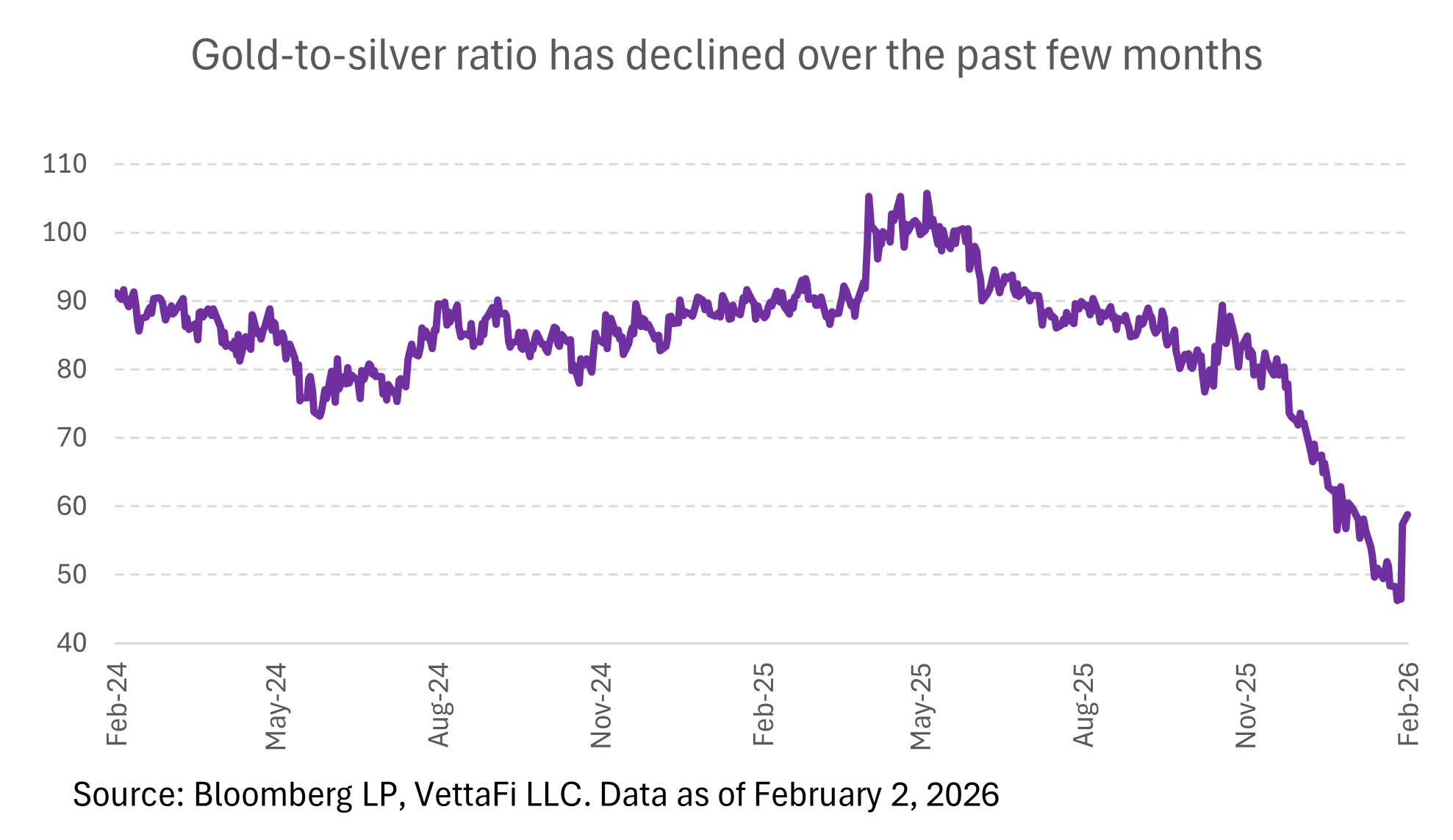
One way investors frame relative value is the gold to silver ratio (gold price divided by silver price): when the ratio is high (over 90), it takes more ounces of silver to equal one ounce of gold, which is often interpreted as silver being “cheap” versus gold. This ratio was over 80 for the majority of 2025. Toward the end of 2025, that ratio has fallen as silver prices accelerated much faster than gold prices.

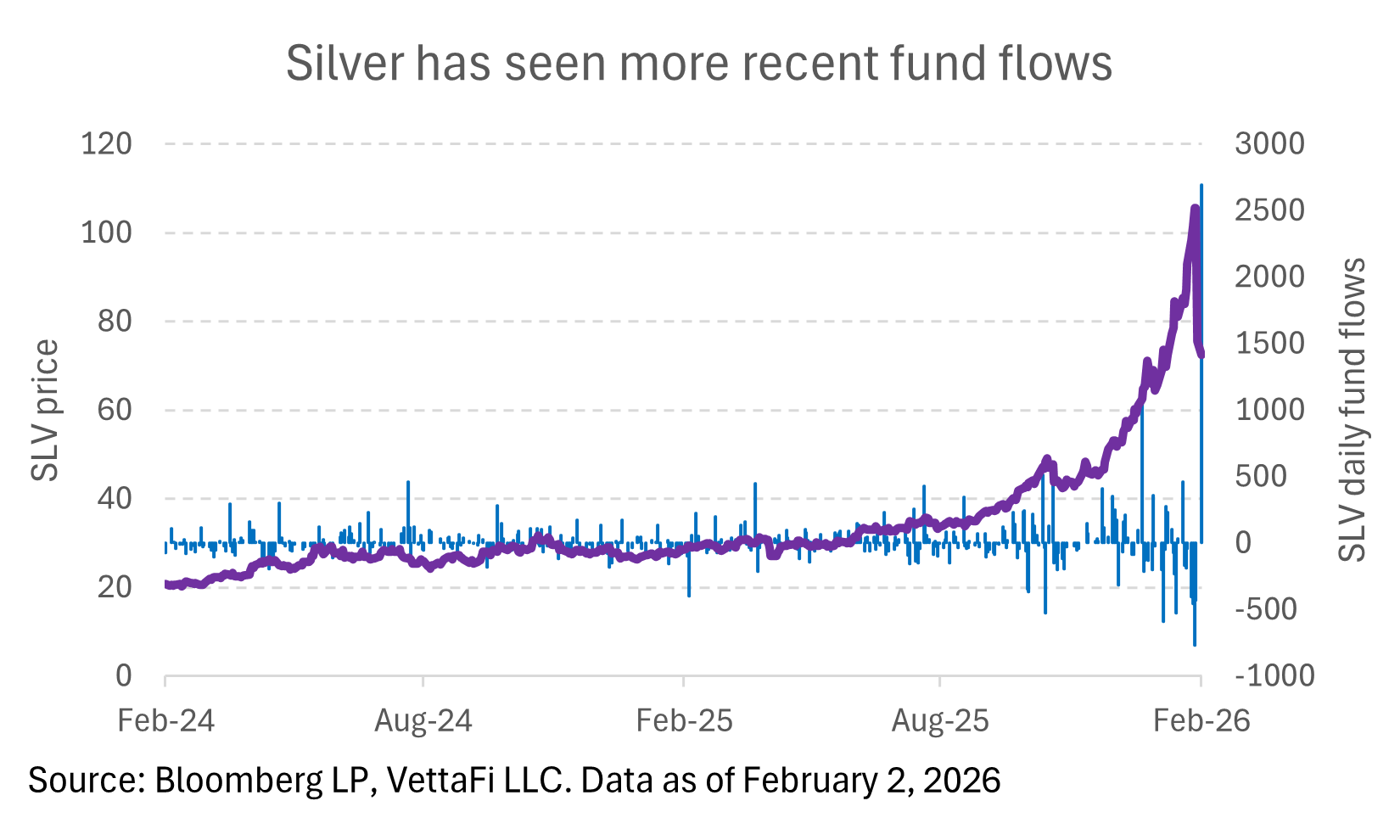
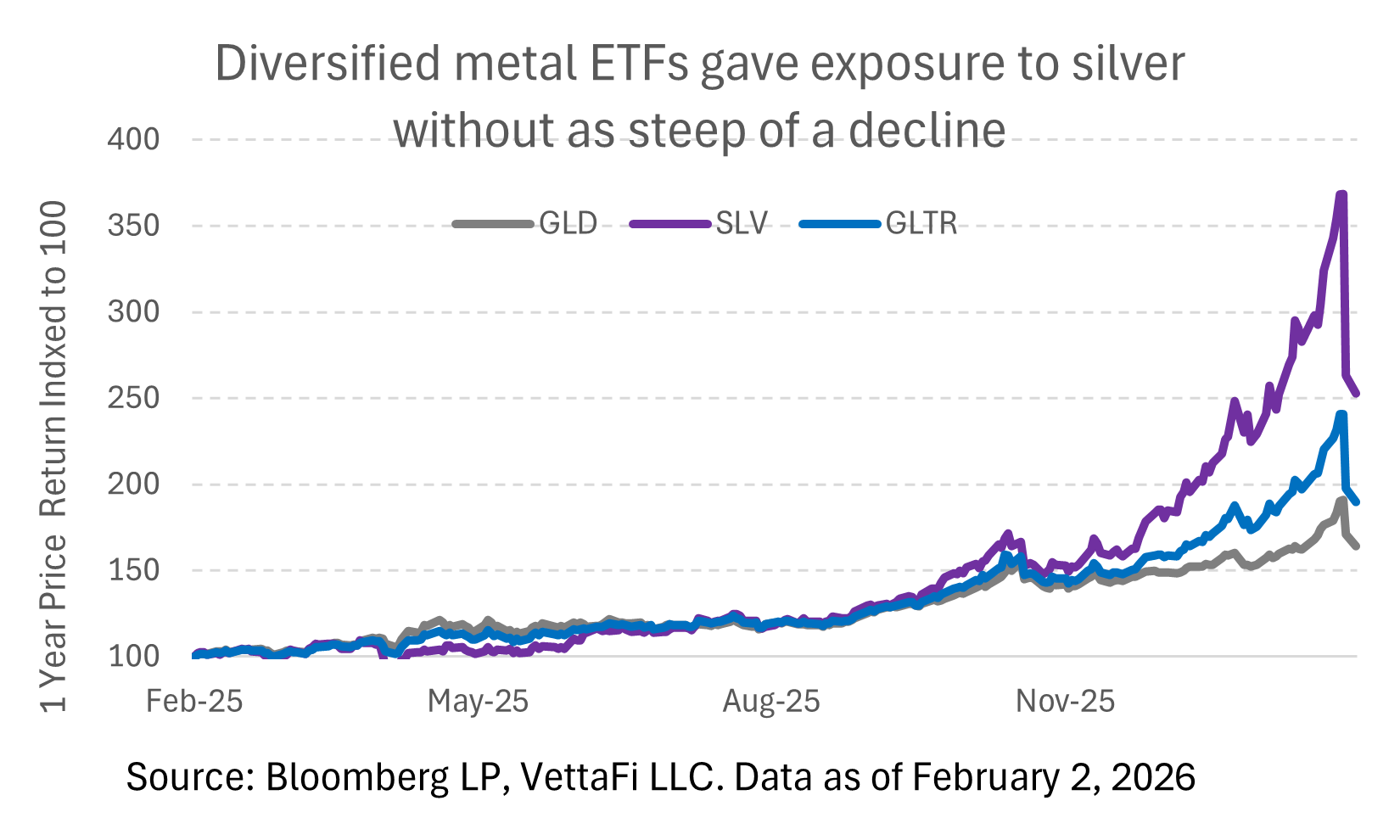
The recent drawdown looks less like fundamentals reset and more like a short-term shock. The January 30 White House announcement nominating Kevin Warsh as Federal Reserve Chair (an advocate of Fed independence) was a significant contributor to that catalyst. In that environment, silver’s higher volatility can work against it, meaning the same factor that helps silver lead on the way up can also magnify its downside. As of February 2, 2026, silver had fallen 32% from its recent January 28 peak (while gold fell 14% in the same time frame). Over a longer time period of one year, silver was still up 146%.
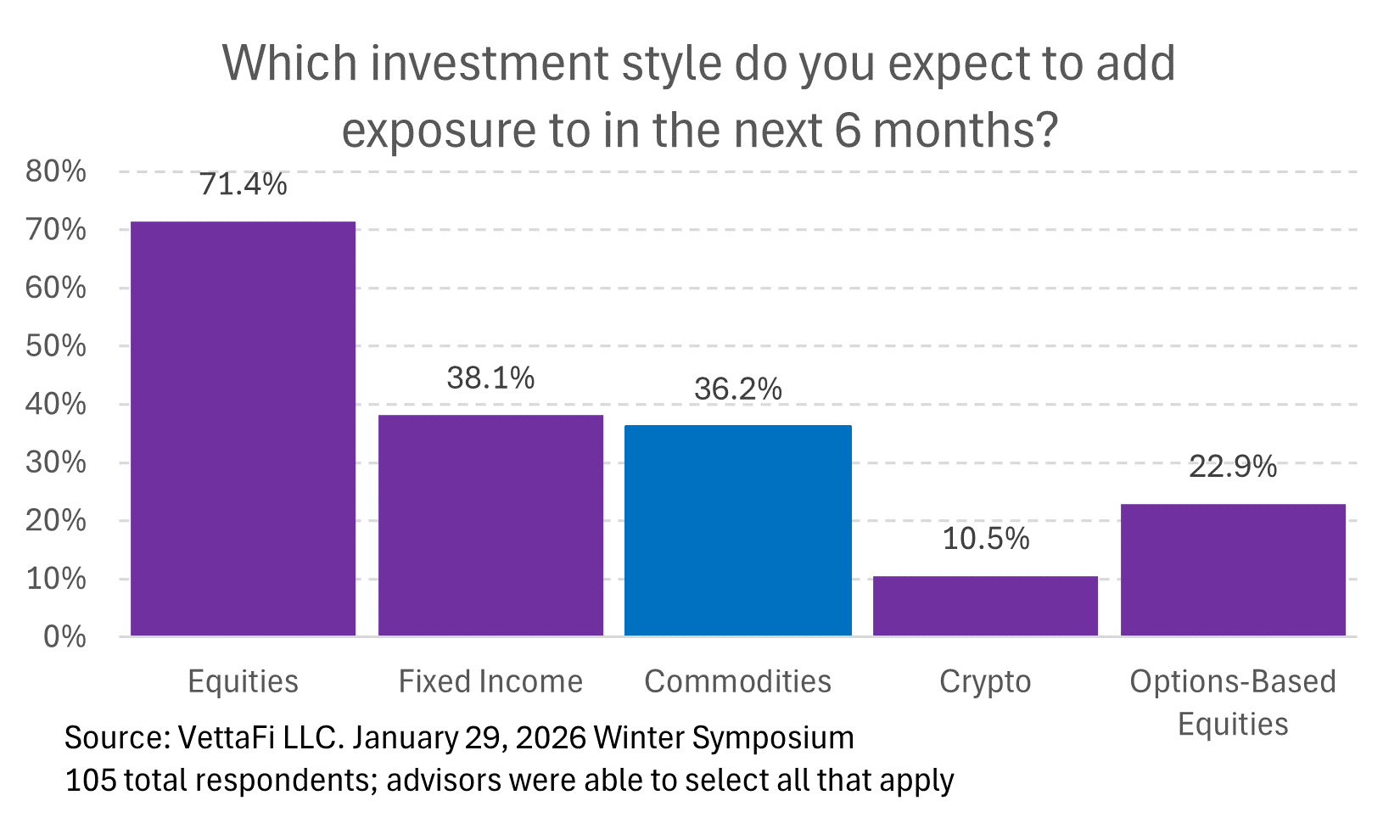
Despite some near-term volatility, implementation for silver (alongside gold) likely will still persist, especially for advisors using commodity ETFs to express their views. According to our recent VettaFi survey from our January 29, 2026 Winter Symposium, 34% of advisors said they wanted to add more to their commodities position in 2026.
Silver ETFs: Investors often choose physical silver ETFs as a portfolio diversifier
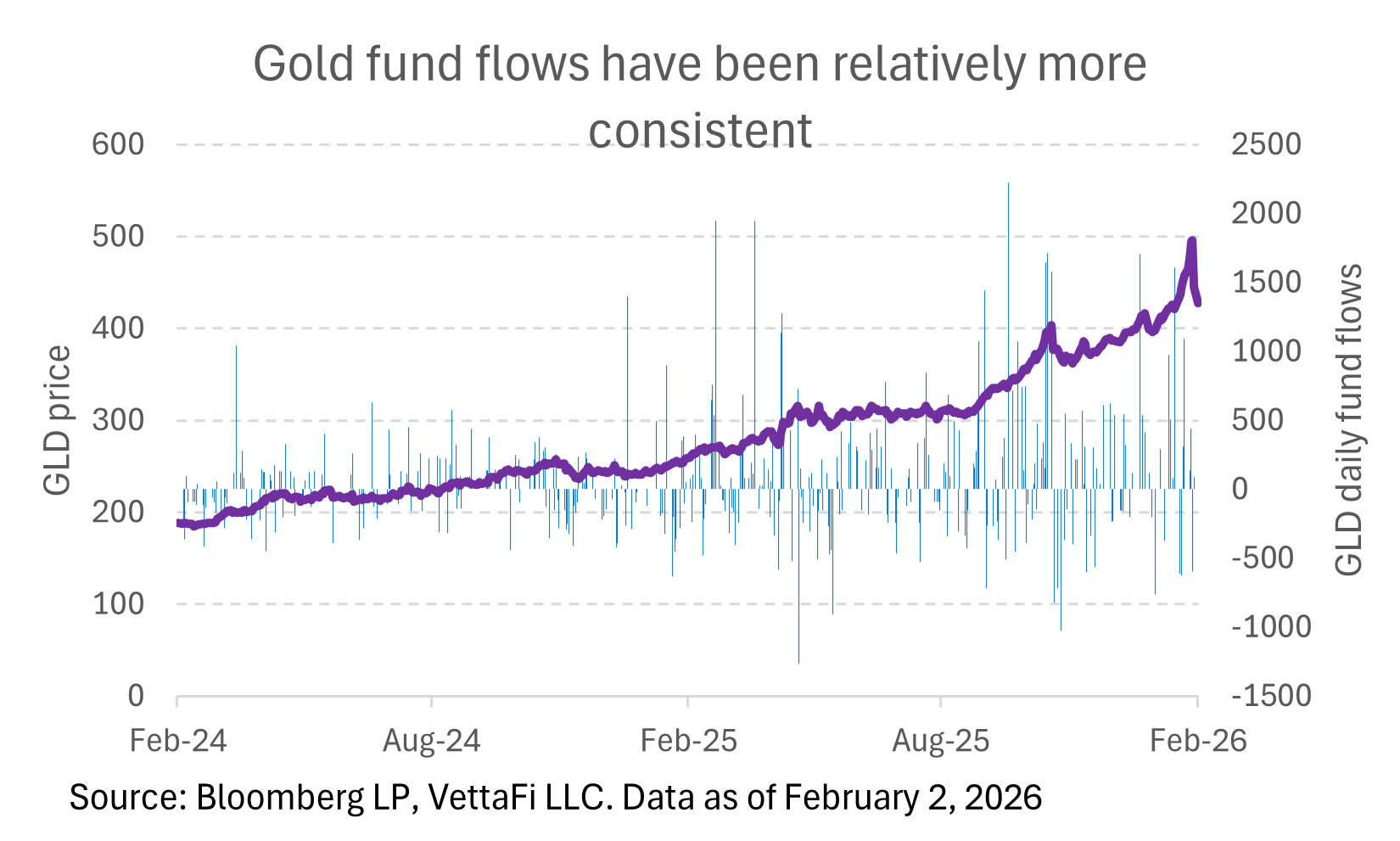
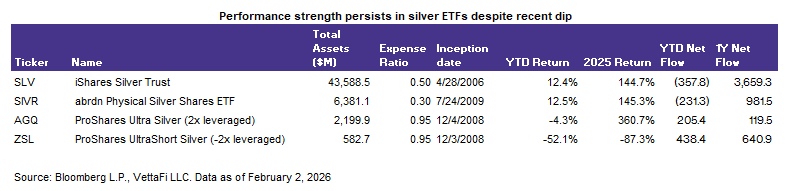
There are only two ETFs that solely hold physical silver. The oldest and largest fund is the iShares Silver Trust (SLV) which has $43.6 billion in assets. For reference, the largest gold ETF, the SPDR Gold Shares (GLD) has $164.7 billion in assets, so there is a significant gap in size between the two. The abrdn Physical Silver Shares ETF (SIVR) is much smaller at $6.4 billion but comes with a lower fee (30 basis points compared to SLV’s 50 basis points).
Some investors may also choose short-term exposure to silver through leveraged silver ETFs. Investors can target 2x daily exposure to silver through the ProShares Ultra Silver (AGQ) and -2x daily exposure through the ProShares UltraShort Silver (ZSL). Both funds use derivatives (e.g., futures contracts and swaps) to replicate performance. For a deeper look at the leveraged ETF universe, see this note.
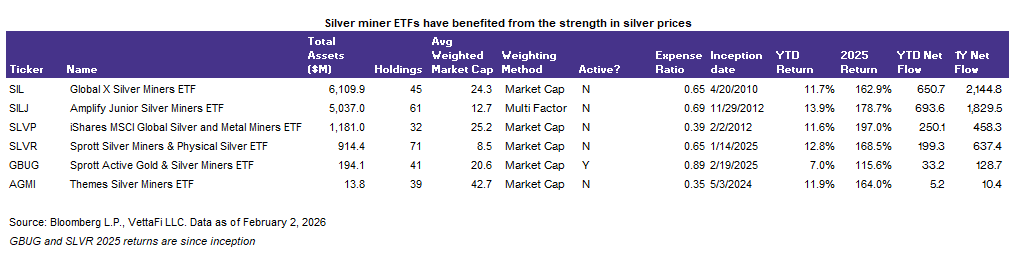
Outside of investing in physical silver ETFs, investors can also access silver through ETFs of silver mining equities. These add an extra layer of equity risk, but may offer higher returns when the underlying commodity (silver) performs well. Currently, silver mining ETFs are up around 11.5% YTD, while physical silver ETFs are up around 12.5%.
Diversified Metals ETFs can provide an alternative option
Diversified precious-metals baskets can be a useful hands-off approach for metal exposure without making a single-metal bet. But the trade-off is that performance becomes a weighted blend of several commodities.
- The abrdn Physical Precious Metals Basket Shares ETF (GLTR) is the only physical bullion ETF with both silver and gold (along with platinum and palladium). These metals are held bars in a secured vault in London. Weightings as of December 31, 2025 were 57% gold, 35% silver, 4% palladium, and 4% platinum.
- The Invesco DB Precious Metals Fund (DBP) also holds both gold and silver using futures contracts. This ETF holds gold (42%), silver (11%), and platinum (3%) with the remaining in collateral, according to Bloomberg data as of February 2, 2026.
Bottom Line:
Many commodities (like gold and even silver) are driven by macro views. While recent price corrections have spooked some investors, many are still sticking to their allocations. For interested investors who want a hands-off way to participate in silver, there are opportunities in diversified metals ETF like GLTR or DBP.
For more news, information, and analysis, visit VettaFi | ETF Trends.
Originally published on ETF Trends
A message from Advisor Perspectives and VettaFi: Discover something new! Click here to register for our upcoming webcasts.
Read more commentaries by VettaFi | Advisor Perspectives