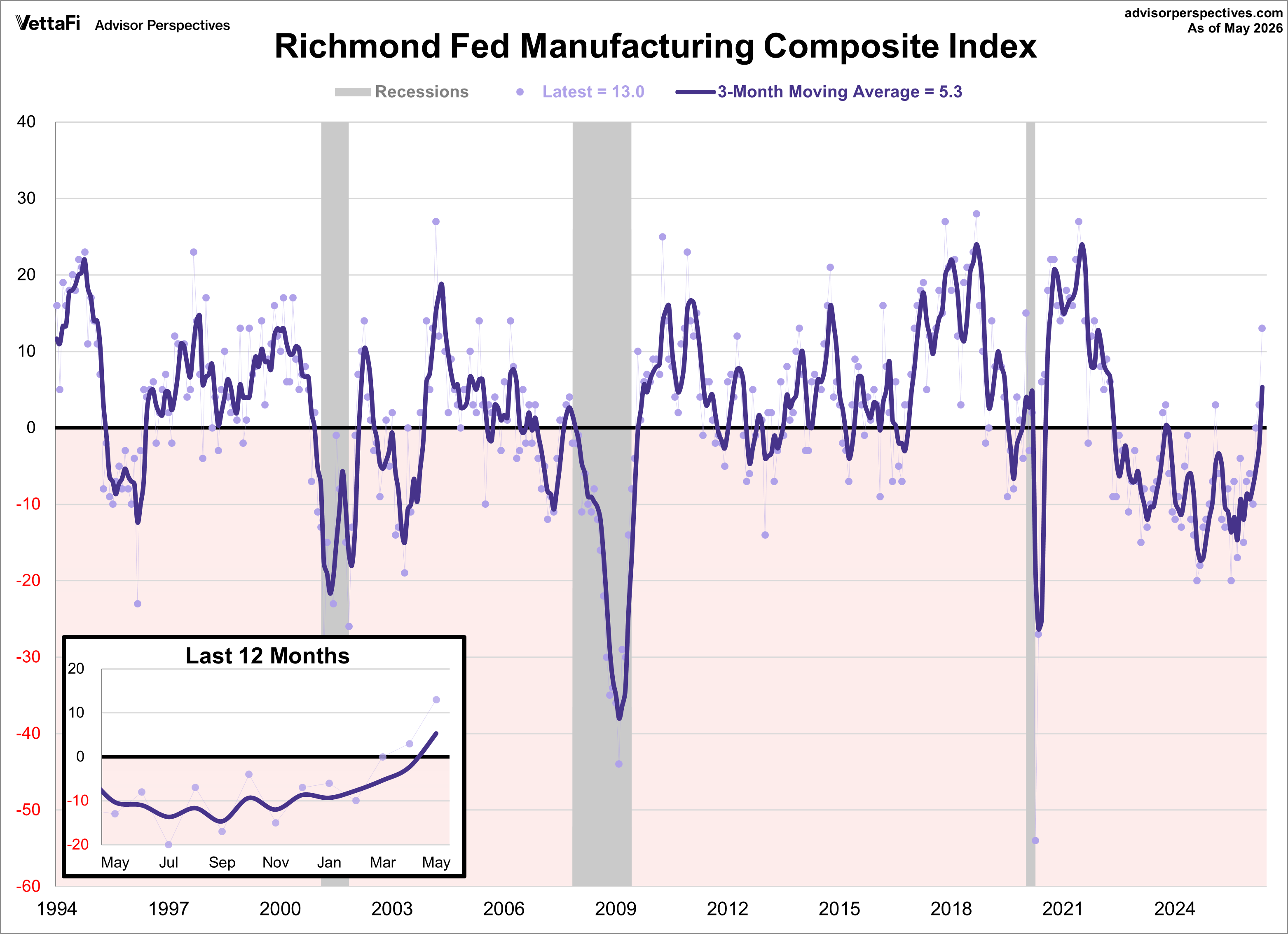
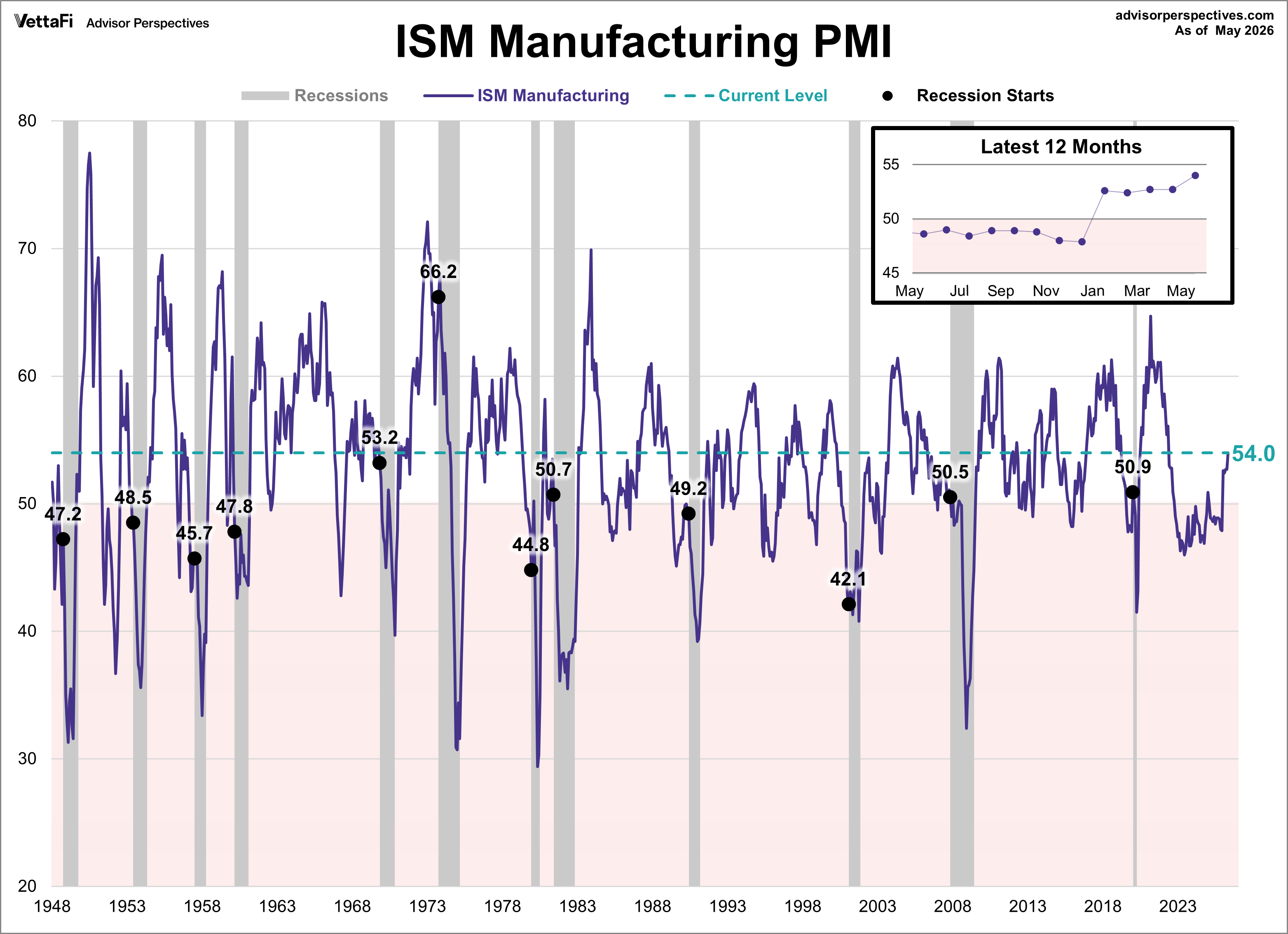
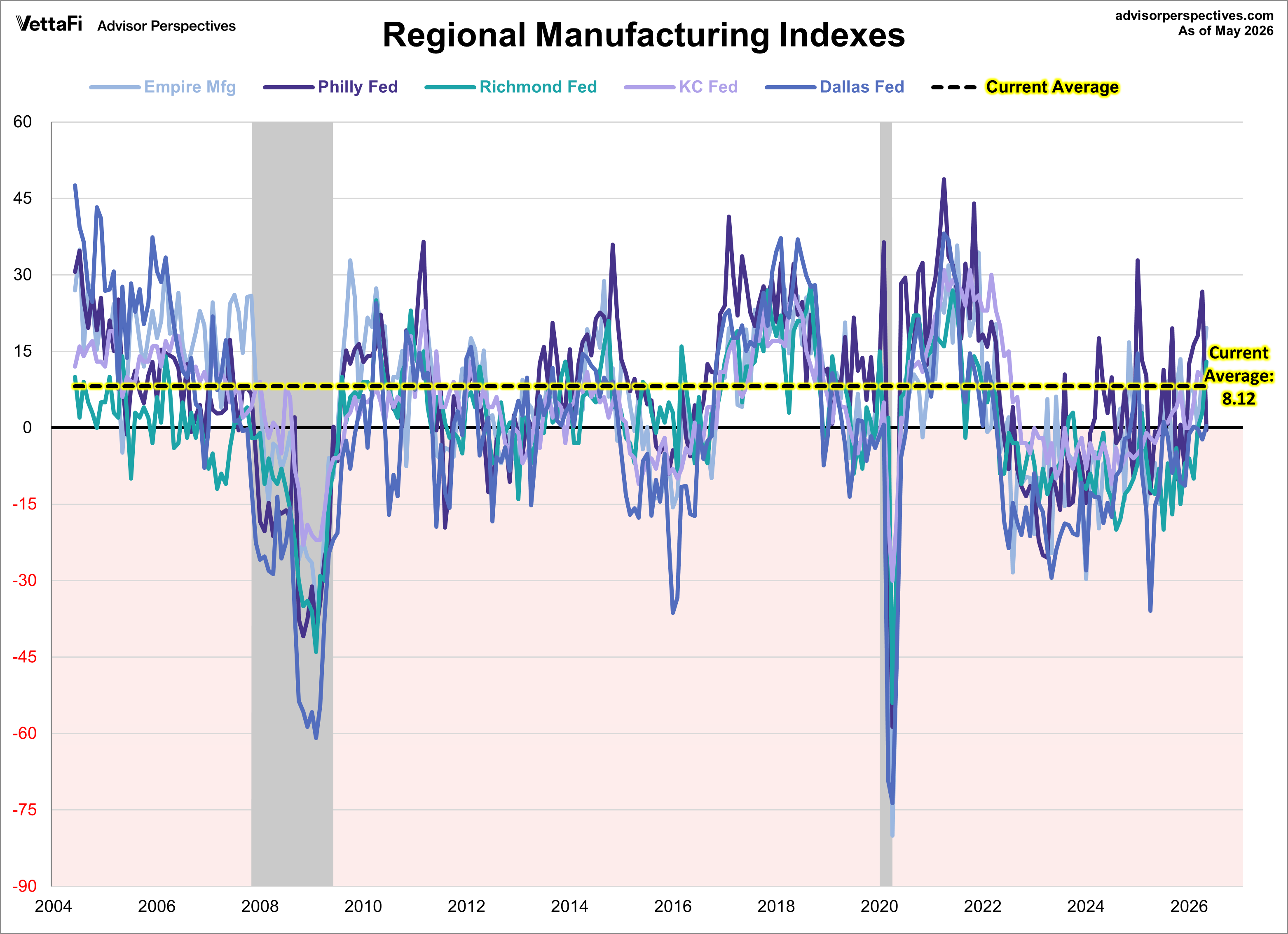
Fifth district manufacturing activity increased in May according to the most recent survey from the Federal Reserve Bank of Richmond. The composite manufacturing index rose ten points points to 13, marking the highest level in nearly five years. This month's reading was above the forecast of 4.
Here is an excerpt from the latest Richmond Fed manufacturing report:
Fifth District manufacturing activity improved in May, according to the most recent survey from the Federal Reserve Bank of Richmond. The composite manufacturing index increased to 13 in May from 3 in April. All three of its component indexes rose in May: shipments to 16 from −2, new orders to 17 from 8, and employment to 3 from 0.
The future indexes for shipments and new orders increased further into positive territory. The expectations index for employment rose notably to 23 from 7.
The local business conditions index decreased to 5 in May from 10 in April. Meanwhile, the future local business conditions index rose to 17 from 3.
The average growth rates of prices paid and prices received decreased somewhat in May. Firms expected growth in prices paid to moderate slightly over the next 12 months.
Background on Richmond Fed Manufacturing
The complete data series behind today's Richmond Fed manufacturing report, which dates from November 1993, is available here. The Richmond Manufacturing Index is a gauge of manufacturing activity in the Fifth Federal Reserve District (Maryland, North Carolina, the District of Columbia, Virginia, most of West Virginia, and South Carolina) compiled from a survey of ~100 manufacturers. The composite manufacturing index is an average of indexes on shipments, new orders, order backlogs, capacity utilization, supplier lead times, number of employees, average work weak, wages, inventories, and capital expenditures. This is a diffusion index, meaning negative readings indicate contraction and worsening conditions, while positive ones indicate expansion and improving conditions. The survey offers clues on inflationary pressures and the pace of growth in the manufacturing sector for this region of the country and the accumulated results can help trace long-term trends.