Hoisington Investment Management Co., the bond manager known for its bullish stance on US Treasuries going back more than 30 years, has turned bearish.
Investors from Fidelity say new Federal Reserve Chairman Kevin Warsh stands to stoke bond-market volatility by offering his views on inflation.
The rise in US yields has extended across the entire Treasury curve, creating a charged backdrop for Fed policymakers and their new chairman, Kevin Warsh, who helms his first meeting and press conference next week.
The 30-year rate increased six basis points to 5.18% on Tuesday, a level last seen on the brink of the global financial crisis in 2007, rising alongside US government yields across maturities.
Yields on US bonds dipped as much as three basis points Monday after Iran’s semi-official Tasnim reported that Washington proposed a temporary waiver on Iran oil sanctions until the final agreement, citing a source close to the negotiation team.
US Treasuries slumped for a second day as surging oil prices prompted traders to slash bets on more than one Federal Reserve interest-rate cut this year.
Clashes between global powers will fuel further market swings over the coming year, according to a JPMorgan Chase & Co. survey, with developments in artificial intelligence also top of traders’ minds.
The UK and Japan are responding to investor demand to boost short-term borrowing, a shift in strategy that offers governments lower interest payments but exposes them to potentially costly rates swings at the time of debt rollovers.
Investors are increasingly viewing bonds from large corporations like Microsoft and Siemens as safer than the sovereign debt of their home governments, a conclusion driven by a sharp contrast in fiscal management.
JPMorgan Chase & Co. will cut the weight of the largest bond issuers in its flagship emerging-market index, diverting investor flows from the likes of China and India toward smaller nations.
Bond investors are accepting the smallest compensation in years in return for taking default risk, as a potent combination of economic optimism and too much cash chasing too few securities skews costs.
The dollar soared and Treasuries fell as the trade war between China and the US eased, stoking appetite for risk assets.
The US stock market is finally as fast as it was about a hundred years ago.
When US markets reopen next Tuesday after the long weekend, everything will likely seem normal. It’s only after the close and in the following days that any cracks are expected to appear.
Treasury yields reached their highest levels of the year Monday — where they swiftly attracted buyers — as traders decided two Federal Reserve interest-rate cuts are likelier than three this year.
For a brief moment last week, the market and the Federal Reserve were on the same page about the pace of monetary easing. It didn’t last long, and Treasuries investors are paying the price.
Reliable sources of liquidity are at the top of traders’ minds as they brace for another year of turbulence, according to a JPMorgan Chase & Co. electronic trading survey.
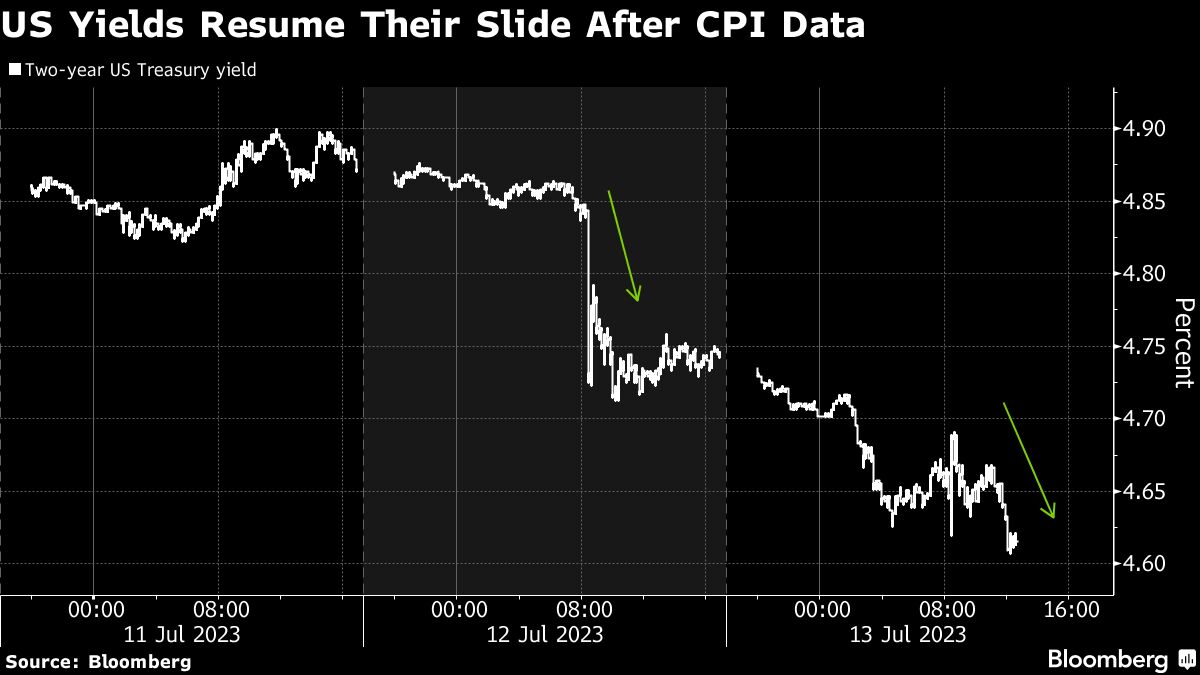
Bonds rallied for a second day as traders bet an aggressive streak of global interest-rate hikes is close to ending, bolstered by optimism that inflation in the world’s biggest economy will continue to slow.
Treasury bills maturing in the first half of June rallied as trading resumed following the Memorial Day holiday after a deal to lift the debt ceiling eased concern over the prospect of a calamitous US default.
Traders are betting artificial intelligence and machine learning will have the biggest impact on financial markets in the coming years.
After successful bets against the world’s major bond markets paid off in 2022, a BlueBay Asset Management fund is positioned for another debt selloff this year.
The asset management unit of BNP Paribas SA is stripping Europe’s top ESG designation from $16 billion worth of funds, adding to a tidal wave of reclassifications that the industry is blaming on unclear rules amid growing signs of anger from investors.
Europe’s top ESG fund class may be close to reaching a tipping point.
A new ESG product that JPMorgan Chase & Co. is about to start offering clients shows how rapidly perceptions are changing about the investment strategy.
Global bonds sold off as investors responded to central bankers signaling they will increase interest rates as much as necessary to bring down inflation.
The end of Boris Johnson’s run as prime minister may ease the sense of political chaos, but it won’t fix any of issues depressing UK markets.
The hottest US inflation in four decades will push the Federal Reserve to raise interest rates more aggressively this year, and a recession may not be far behind.
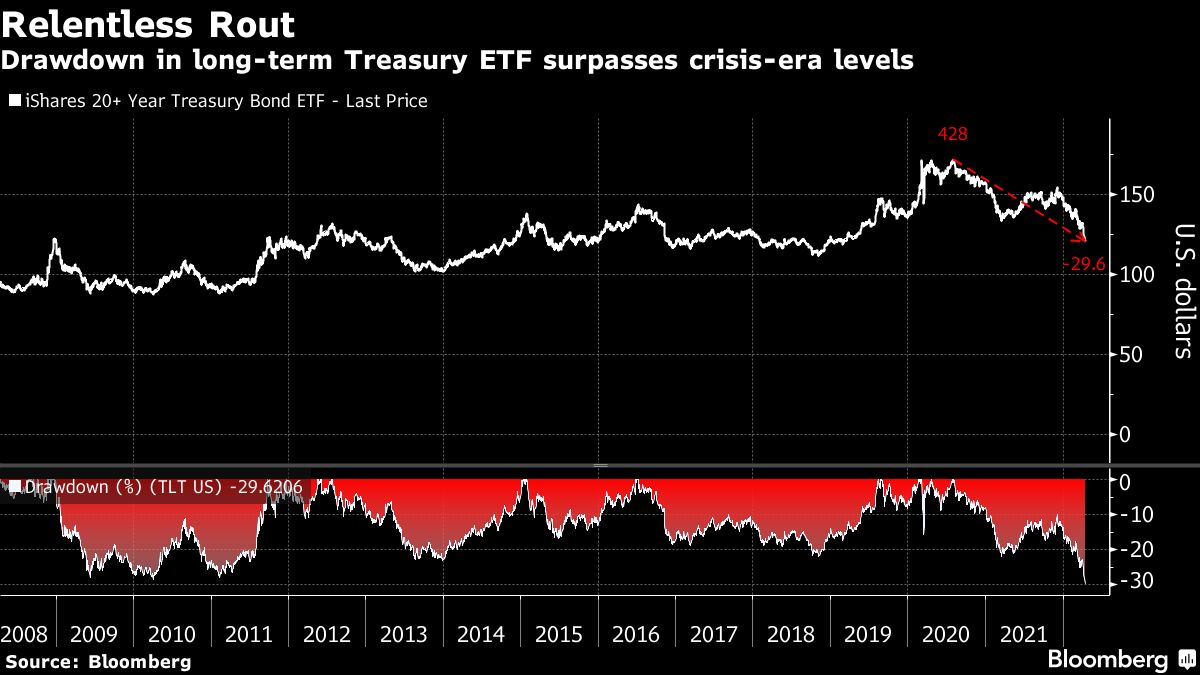
Long-maturity Treasuries are contending with their biggest drawdown on record, at least according to their most popular exchange-traded fund.
It’s the next big market call that could enrich traders across Wall Street: The raging global energy crisis and ever-more hawkish central banks knock key economies into 1970s-style stagflation. It’s a long shot for now, but anxiety is building among money managers that this market scenario -- out-of-control inflation just as growth slumps -- will eventually come to pass, especially in Europe.
Gauges of money market stress remain elevated after hitting their highest since 2020, though bank strategists don’t see the turbulence escalating into a full-blown crisis.
Europe’s stricter environmental, social and governance rules might be forcing companies in more controversial sectors to look across the Atlantic for funding.
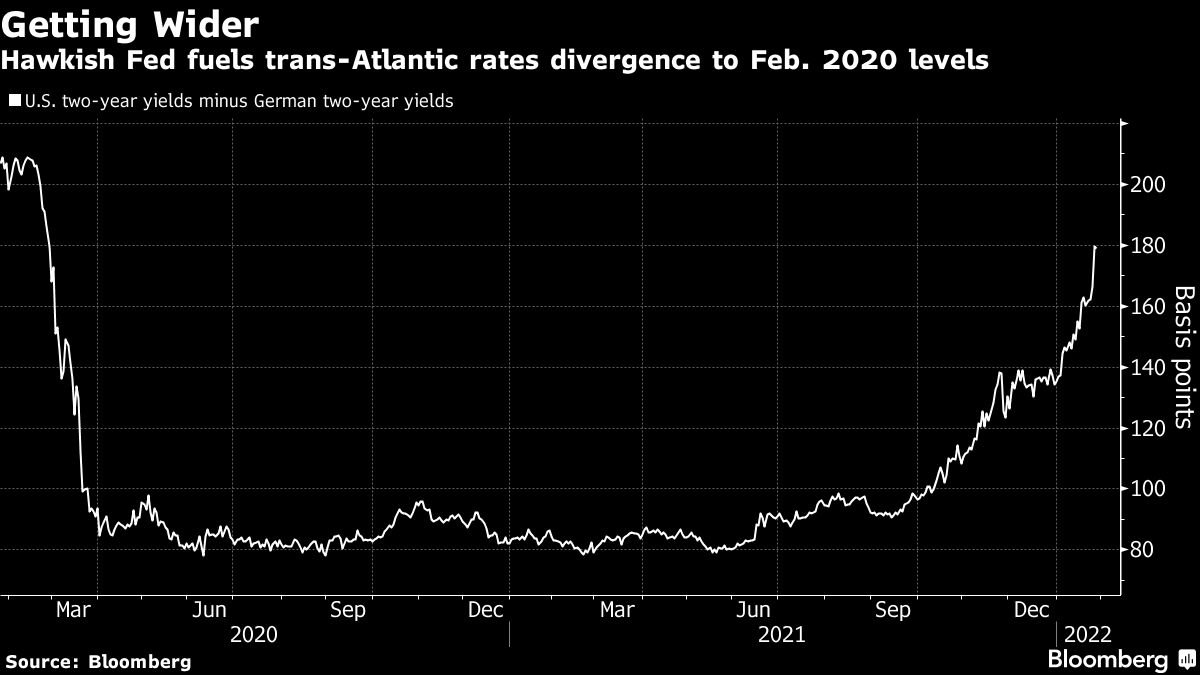
Bonds tumbled across the world on Thursday after Federal Reserve Chairman Jerome Powell’s latest hawkish pivot, with yields from Wellington to London breaching multi-year highs.
Signs are growing that U.S. Treasury yields may continue to march higher even if Federal Reserve Chair Jerome Powell strikes a balanced tone at Jackson Hole this week.
U.S. Treasury yields rose to the highest since February 2020 and are at risk of climbing further, as investors start to factor in the full economic impact of a stimulus plan totaling as much as $1.9 trillion.