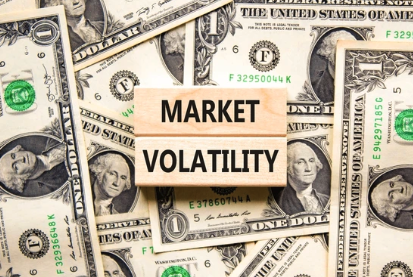
As April’s volatility storm fades into memory, traders are left balancing calmer markets and the ever-present risk of a fresh round of headline shocks.
For most of human history, an enchanted box that contained all knowledge and answered all questions would’ve been the stuff of allegory. For modern internet users, Google is one more thing to take for granted.
A KKR & Co. debt sale shows how far Wall Street is willing to go to keep leveraged underwriting business from slipping away to private credit after periods of turmoil.
The dollar soared and Treasuries fell as the trade war between China and the US eased, stoking appetite for risk assets.
The US and China will temporarily lower tariffs on each other’s products in a dramatic ratcheting down of trade tensions that buys the world’s two largest economies three months to work toward a broader agreement.
With Wall Street kicking off another rally, American stocks are now trading like Donald Trump’s “Liberation Day” shock never happened.
Financial advisors will be working with millennials and Gen Z, either as new clients or as family members of existing ones.
US equity investors will be watching closely as trade talks kick off between the Trump administration and China, with trillions of dollars hanging in the balance for American companies.
For more than a year, Alphabet Inc. shareholders have fretted over long-term risks posed by artificial intelligence to the company’s money-printing search business. This week the threat became much more immediate.
Major tech companies lobbying to salvage a tax deduction for research and development are warning they may pull back from high-profile pledges of new US investments if Congress doesn’t fully reinstate the break.
US stocks opened higher Friday as traders weighed comments from President Donald Trump suggesting that an 80% tariff on China seemed right, just as negotiations between the two countries are set to begin on Saturday.
The culture clash between Bitcoin enthusiasts and gold bugs is about to be played out in the world of exchange-traded funds.
The US said it’s developing a fast-track process for screening foreign investments in the US, an effort Trump administration officials expect could smooth the way for billions from wealth funds in the United Arab Emirates, Saudi Arabia and Qatar.
US stocks climbed at the open Thursday as investors welcomed news of a trade agreement between the US and the UK — a widely anticipated development that some traders say could serve as a blueprint for broader global negotiations
Blackstone Inc., Vanguard Group and Wellington Management Co are launching a fund that will invest in public equities, bonds and private markets, as part of their effort to expand private-market offerings to retail clients.
A potential regulatory shift in favor of the ETF industry is expected to shake up the business models of Wall Street brokers, with billions of dollars in revenue at stake.
In technology, disruption can happen slowly and then all at once. Alphabet Inc.’s Google unit is praying for the former right now.
Markets are desperate for good news about tariffs — or no news at all. It only took a pause on the reciprocal tariffs and vague promises of future trade deals for the bond market to stabilize and stocks to recover.
Even though Warren Buffett is 94 and decades past the average retirement age, the end of his run as CEO of Berkshire Hathaway Inc. was always going to come as a shock.
Most advisor websites are invisible because they’re built on a flawed assumption — that people will reach out just because you exist. That’s not how it works anymore.
Tracking marketing metrics isn’t about labeling efforts as a success or failure — it’s about identifying opportunities to tweak and improve what’s already working. By understanding the data, you can make informed decisions that enhance your outreach and client engagement.
In my team, we implement a concept called ARTICA, which I created a number of years ago . ARTICA is a step-by-step process to help you deal with the difficult conversations that might otherwise feel daunting,
US stocks jumped at the open Wednesday as investors were encouraged by news that the US and China are set to start trade talks this weekend, even as traders awaited the Federal Reserve policy decision later in the day.
A time-honored signal heeded by Wall Street’s credit industry — the weekly flow of money — is breaking down.
Bill Ackman said Harvard University’s endowment is heading for a painful financial reckoning as it weighs selling some of its private equity holdings while battling the Trump administration over federal research funding.
Sam Altman’s reputation for spin was out in full force this week in a published “letter to employees” announcing that he was abandoning plans to turn OpenAI into a for-profit company. Instead, it will “continue to be overseen and controlled” by its nonprofit board.
It was a glimpse of a very appealing future: A sleek 18-wheeler powered by Aurora Innovation Inc. trundled down Interstate 45 from Dallas to Houston last week with a trailer full of goods and a completely empty cab. At long last, autonomous trucking may have arrived.
So what has caused such a surge in international returns versus the U.S. so far this year? Is it just short-term noise, reversion to the mean, or something more systematic? If the last few months were purely short-term noise, we will soon know, as U.S. stocks will resume dominance.
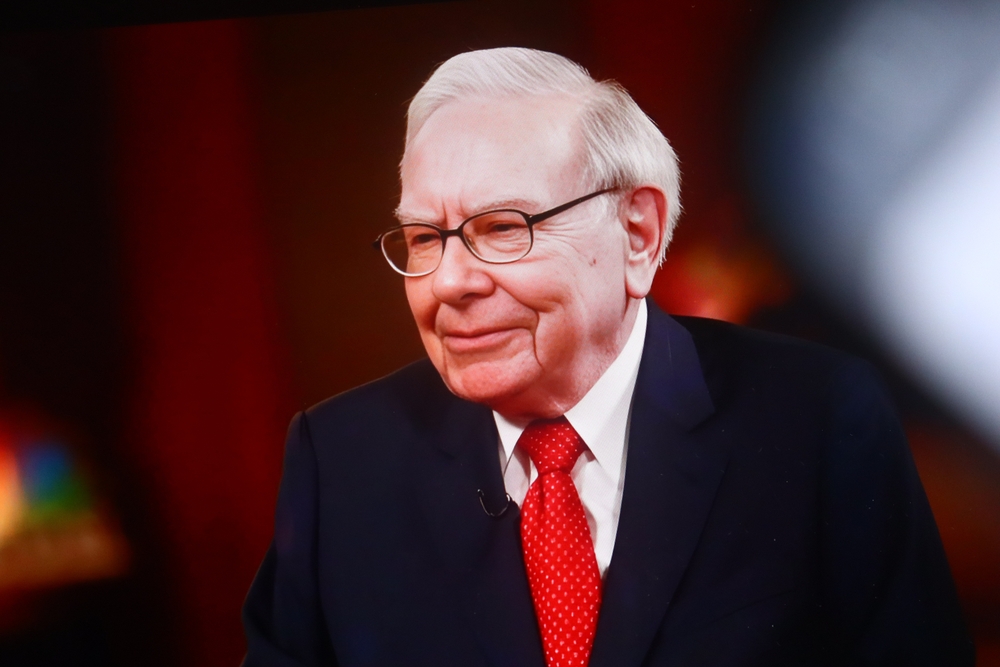
Warren Buffett, the greatest investor of all time, will step down as chief executive officer of Berkshire Hathaway Inc. at the end of the year. The six-decade track record he leaves behind is so astonishing that mere numbers on a page don’t do it justice.
Like an iceberg, what looks like a clear and present issue only appears that way from the surface. Navigating solely from what you can see on the surface puts you in danger of missing the deeper emotional issues and impacts that lie below.
With investors experiencing heightened anxiety about their financial futures, your approach can make the difference between client retention and attrition. This comprehensive guide from our senior consultants explores actionable strategies for effective client communication during market volatility.
This article focuses on asset-based fees that cover both advice and investment-related costs, which is a model that I believe is best-suited for most individuals, as advisors can add value across multiple dimensions.
We all respond differently to financial uncertainty. Some lean into hyper-vigilance—tightening budgets, tracking every headline. Others shut down, turning toward distraction. Still others press on as if nothing has changed.
Morningstar Inc. has been rating stock and bond funds for everyday investors for years. Now it will award gold, silver and bronze medals to less-liquid private asset funds marketed to the masses.
I confess that when the VIX, the Cboe Volatility Index, spikes, I brace for stock market declines. Judging by investors’ anxious reaction to the VIX’s surge following President Donald Trump’s big tariff announcement last month, I’m far from alone.
After months of public pressure, OpenAI walked back part of its effort to create a more conventional for-profit company, but its restructuring plans still have not received the blessing of a major stakeholder: Microsoft Corp.
Now that Warren Buffett, the philosopher king of modern investing, has announced that he will step down as Berkshire Hathaway Inc.’s chief executive officer at the end of the year, it’s a good time to marvel again at his career.
A key valuation metric touted by legendary investor Warren Buffett is signaling that equities are relatively cheap, bolstering the case that the sizzling rebound in US stocks has room to run.
Warren Buffett is retiring, but his investment advice is likely to carry weight for years to come.
While tariff negotiations may well bear fruit eventually, investors today are trying to figure out the impact of changing trade pacts on GDP growth, interest rate levels, the value of the dollar, and the ability of the Treasury to refinance $9.2 trillion of our $36 trillion federal debt in 2025.
Shockingly, given that I thought most readers would find interest rate swaps dull or wonky, we have received a few emails asking for more information. Given the importance of liquidity to all markets and how interest rate swap spreads are a good liquidity barometer, it's worth giving you that “coming article” now.
Jim Tuchler, a Chicago-area retailer, and Federal Reserve Chair Jerome Powell have a lot in common these days.
Citigroup Inc. is ramping up lending to private equity and private credit groups, working to catch up with peers like JPMorgan Chase & Co. and Goldman Sachs Group Inc. after the bank spent years on the sidelines.
Warren Buffett is stepping down as chief executive officer of Berkshire Hathaway Inc., the company he built alongside his later partner Charlie Munger for the past six decades.
Ahead of this quarter’s crop of tech earnings, I predicted companies would be reluctant to offer much in the way of forward guidance given the almost Covid-like upheaval of the global economy thanks to President Donald Trump’s tariffs. I was half right: There was some guidance — though it arrived with a large asterisk.
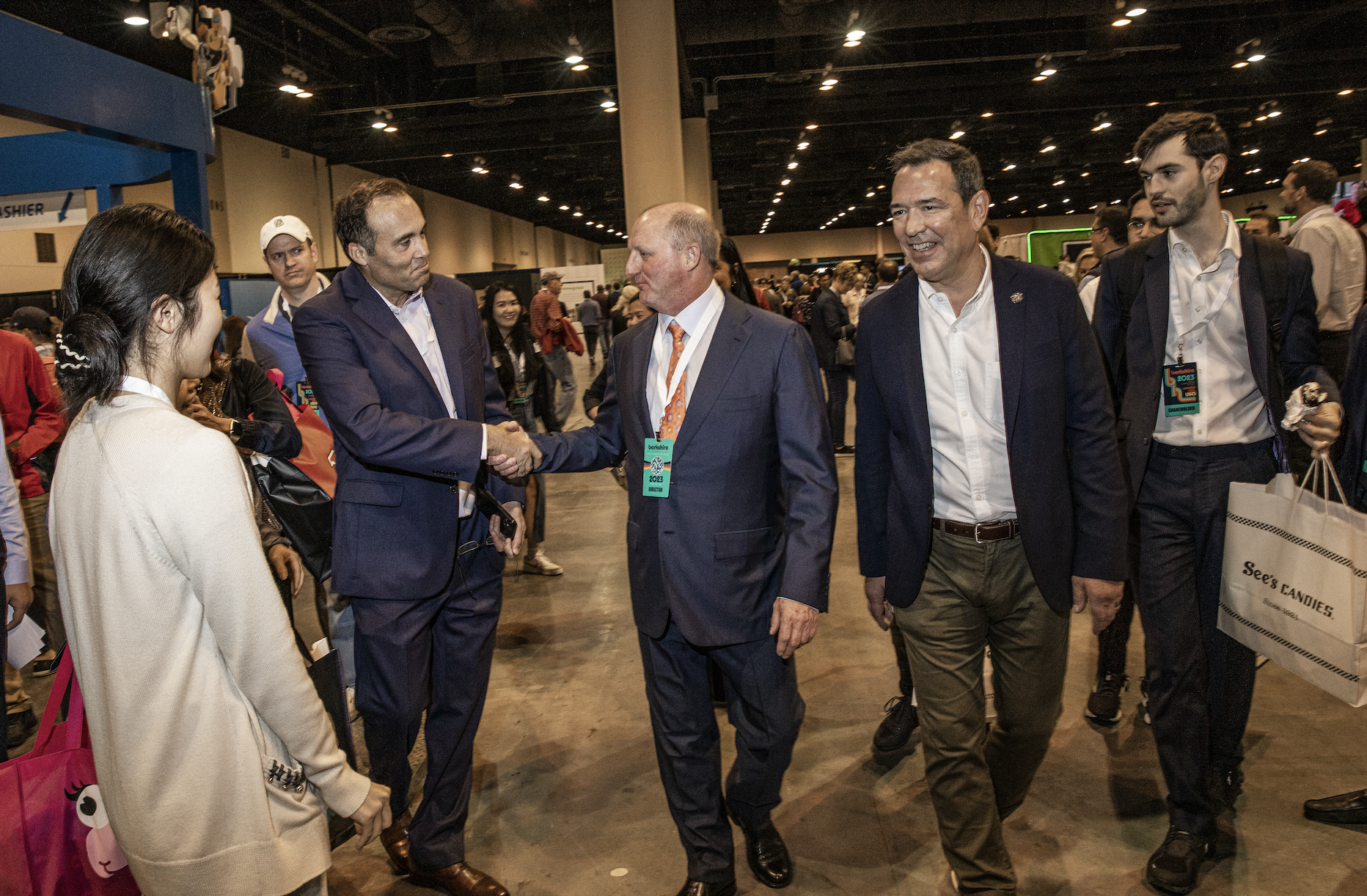
Warren Buffett picked the final minute of his 60th shareholder meeting to drop a long-awaited announcement that was still completely surprising for his fans, most of his board and even his successor.
Understanding and integrating resilience into investment strategies is not just prudent, it is critical for navigating the complexities of the current market landscape. In this article, I lay out seven key principles towards building resilient portfolios.
At the end of April, U.S.-listed ETFs gathered approximately $360 billion of new money.
Amazon.com Inc. said it’s bracing for a tougher business climate in the coming months, echoing concerns from a range of companies that tariffs and related economic turmoil could crimp consumer spending.
The world’s biggest exchange-traded fund just got its biggest endorsement yet.