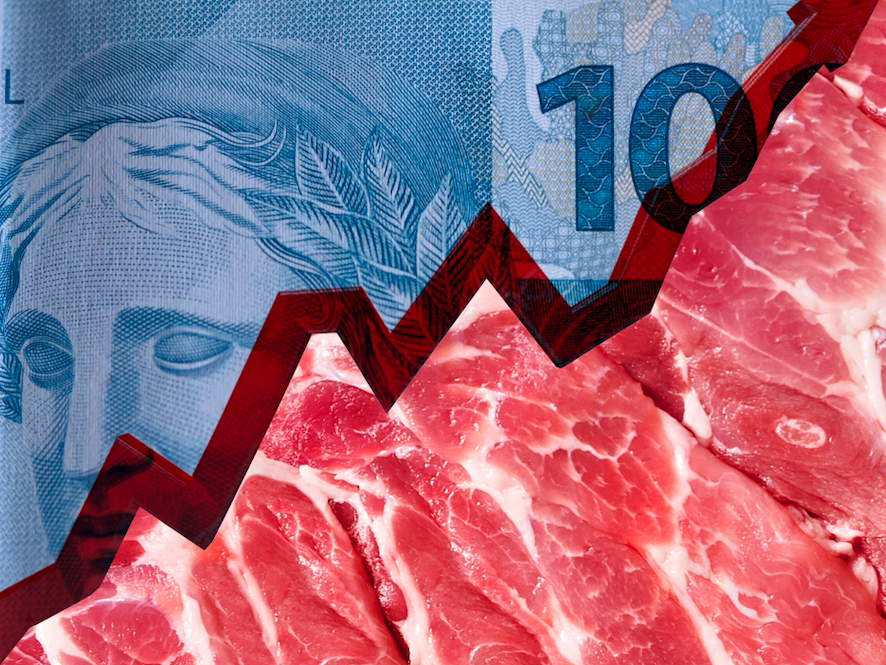
The prime culprit was renewed questioning of the artificial intelligence (AI) buildout given the increasing amount of capital investment needed to bring it to life and the corresponding costs for those who use the technology weighed against its potential productivity benefits.
After a difficult start to the year, investor sentiment reached a low point near the end of March as concerns around inflation, geopolitics, and rising interest rates weighed on risk assets.
Over the past few weeks, data has continued to point to a U.S. labor market that is healing after showing signs of weakness starting in late 2024 and persisting for nearly the entirety of 2025—a condition that spurred the Fed to cut rates even as inflation remained stuck above its 2 percent target.
In our view, this divergence continues to reflect how the buildout of artificial intelligence (AI) is influencing both the economy and markets as it progresses across the value chain, even as the associated costs continue to climb.
As the market continues to broaden in 2026, a balanced approach matters more than ever.
U.S. equities posted a modest advance during the holiday-shortened trading week despite a Wednesday sell-off following a more hawkish than expected Federal Reserve meeting under its new chair, Kevin Warsh.
Markets returned to positive territory for the week, with the turning point occurring Thursday after the announcement of a potential deal with Iran that would extend the ceasefire while reopening the Strait of Hormuz for the first time since February 27.
While job growth has reaccelerated, supporting consumption, the underlying income picture is less encouraging.
Stocks extended their advance for a ninth consecutive week, with the S&P 500 rising more than 5 percent in May on the heels of April’s 10 percent rally. This nine-week run coincides with the market’s March 30 bottom, when early signs of a potential off-ramp or ceasefire in the Middle East began to emerge.
In a relatively light week for traditional economic data, a mix of corporate earnings, business surveys, Federal Reserve minutes, and the latest read on the consumer from the University of Michigan helped paint an increasingly clear picture for investors.
A frequently asked question in recent weeks is whether the market is simply ignoring the risks stemming from the current geopolitical conflict, especially given the spike in oil prices that has pushed inflation pressures higher.
Beneath the surface, however, the story is more complicated. The economy is still advancing, yet it is doing so with a growing bifurcation between households and sectors, while inflation pressures continue to simmer in the background.
Despite continued geopolitical gridlock that has kept the Strait of Hormuz largely closed—and pushed West Texas Intermediate crude oil above $100 last week for the first time since the April 8 ceasefire announcement—U.S. equities continued to climb.
Economic data released last week continued to highlight the same tension investors have been grappling with for months: moderating growth, inflation that remains “stuck” near 3 percent, and interest rates that remain the key swing factor for markets.
Over the past few weeks, a rising tide of optimism has been gathering in the equity markets. This positive momentum reached a crescendo last week when Iranian Foreign Minister Abbas Araghchi announced that, in line with the ceasefire in Lebanon, the Strait of Hormuz would reopen for commercial vessels after being closed for approximately seven weeks beginning in late February.
Investor anxieties surrounding negotiations between the U.S. and Iran paused a rally on Friday, initially sparked by roughly in-line inflation data and the announcement of a two-week ceasefire on Tuesday night.
Despite West Texas Intermediate crude climbing to $111.54, U.S. stocks ended last week higher for the first time since February 20.
Stocks started the week on an upbeat note as the administration delayed a deadline to strike Iranian energy plants by five days, also announcing that the U.S. and Iran were in negotiations to end the conflict.
Stocks fell for the fourth consecutive week as rising interest rates and surging oil prices—driven by the ongoing conflict in the Middle East—continued to weigh on investor sentiment.
Skyrocketing oil prices were accompanied by mixed inflation readings last week. The headline Consumer Price Index (CPI) inflation rate held steady in February at 2.4 percent annually, while core CPI, which excludes more volatile food and energy costs, rose a modest 0.22 percent for the month.
We have repeatedly highlighted the delicate balance that the U.S. economy and markets remain suspended in as the Federal Reserve treads a thin line between a softening labor market and stubborn inflation that continues to hover above its 2 percent target.
Our framing and outlook for the U.S. economy and markets in recent months can be summarized by what I like to call the “three Bs”: Bifurcation and Broadening, all within the context of a delicate economic Balance.
After starting the year on a high note with the S&P 500 index of U.S. Large Cap stocks posting an all-time high on February 19th, equities retreated during the second half of the quarter, officially falling into correction territory (down 10 percent) on March 13.
In our Q3 market commentary, we described the primary economic fears behind a lackluster and trendless market.
Correction fears are overdone – amidst all the chatter about stocks being expensive and due for a correction, Brent’s team dissected price data going back to 1950 and found that corrections and bear markets are rarer than commonly perceived.
A year ago it would have been hard to imagine where we’d be sitting today.
Equity markets continued a torrid run in the fourth quarter, propelling nearly all sectors and asset classes back into the black for 2020. But Q4 was defined by a notable shift in market leadership as cyclical sectors and asset classes bested defensives and growth stocks.
Overall, Brent is optimistic about the U.S. economy and stock market heading into the fourth quarter.
It’s hard to recall a more confusing quarter for investors. While economic data plumbed depression-level depths for most of the past three months, equity markets rallied heavily. This odd juxtaposition led many to opine that markets had disconnected entirely from the economy. We disagree.
We entered the new year with fresh economic momentum fueled by global central bank rate cuts and a tamping down of the trade war. Global markets rallied until mid-January, at which point news of a novel coronavirus outbreak in China emerged.
A new decade, seismic shifts and the importance of diversification.
Never in my investment career can I recall political “happenings” carrying so much weight in daily market movements. Today’s markets are whipsawed by political slings and arrows, often in the form of tweets or breaking news reports. And “investors” increasingly are reacting impulsively to a reality that’s shifting minute-by-minute.
Q1 2019 proved to be the exact opposite of Q4 2018; it was the quarter where nearly everything worked. Virtually all asset classes produced positive returns, from U.S. and International equities of all sizes and sectors, to higher quality bonds and junk bonds, and, yes, even commodities floated with the rising tide.
2018 will be broadly remembered as a year when nothing worked and daily stock market volatility spiked. This contrasted with 2017 where seemingly everything pushed higher, and volatility was low. But in 2018, nearly every single asset class and all but one major stock market index (Brazil) around the globe posted negative returns.
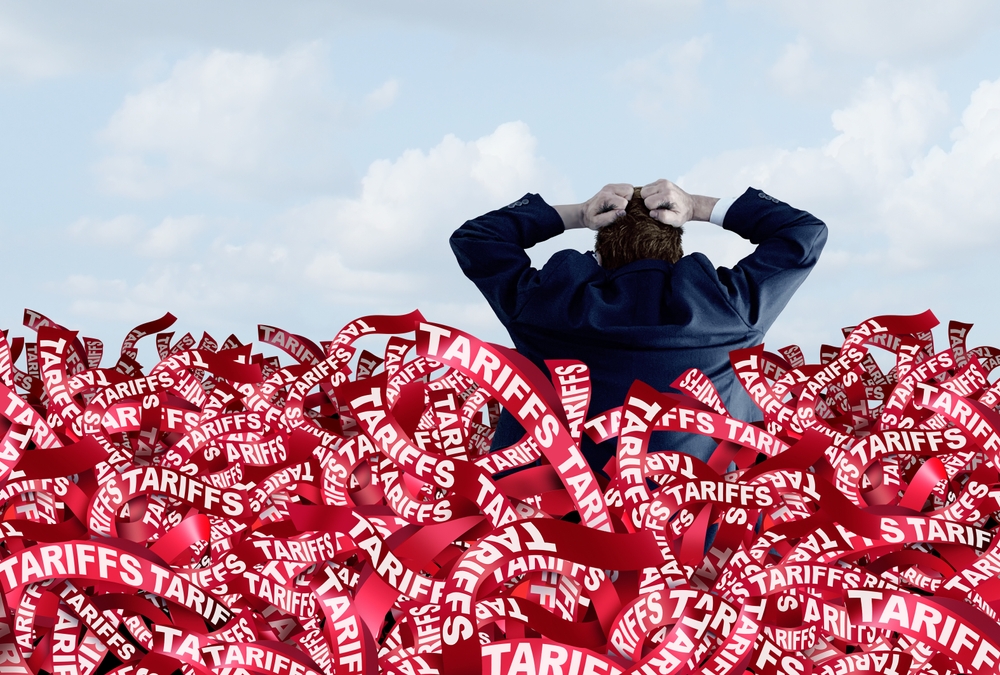
It is hard to say with certainty what drives trading on any particular day, but it doesn’t seem a stretch to say that over the past few months a combination of tariffs and Federal Reserve rate hike fears have broadly impacted both equity and fixed income markets.
For much of this recovery and expansion, many have opined that this economic cycle would ultimately end very differently than those of the past. We have resisted this narrative and instead explained our belief that this cycle will indeed follow the same path and end like all others.
2018 began much as 2017 ended, with steadily rising equity markets, low interest rates and burgeoning market optimism. Indeed, investors were increasingly convinced that the lowest stock and bond market volatility since 1965 was set to continue in 2018. Who could blame them?
What a difference a year makes. It is hard to recall but at the turn of calendar to 2017 investors were debating whether stronger economic growth would ever return, largely because it had been so weak for much of late 2015 and 2016.
The reports of the coming economic demise continue to prove premature. For much of the past few years, we have filled these pages with our data-driven retort to the constant noise about the next impending economic and market downturn.
Who can forget the harrowing start to the year that saw markets plunge 13% in the first 20 days of January? China debt fears, global deflation, secular stagnation worries, the Brexit and the United States election surprises were the dominant headlines of 2016.