Weekly Economic Snapshot: Erosion of Confidence and Extended Market Losses
Heavily influenced by escalating geopolitical conflicts, last week's economic snapshot reveals a sharp erosion of confidence among consumers and investors alike. Driven by high energy costs and global instability, consumer sentiment has fallen to multi-month lows. This cautious outlook is mirrored by a significant pullback in investor borrowing, hinting at a potential reversal of the market's long surge in risk appetite. Consequently, equity markets have struggled, extending a sustained period of losses and reaching new lows. Against this backdrop of volatility, the Federal Reserve's path is expected to remain stable, with current interest rates projected to hold steady for the foreseeable future.
Consumer Sentiment
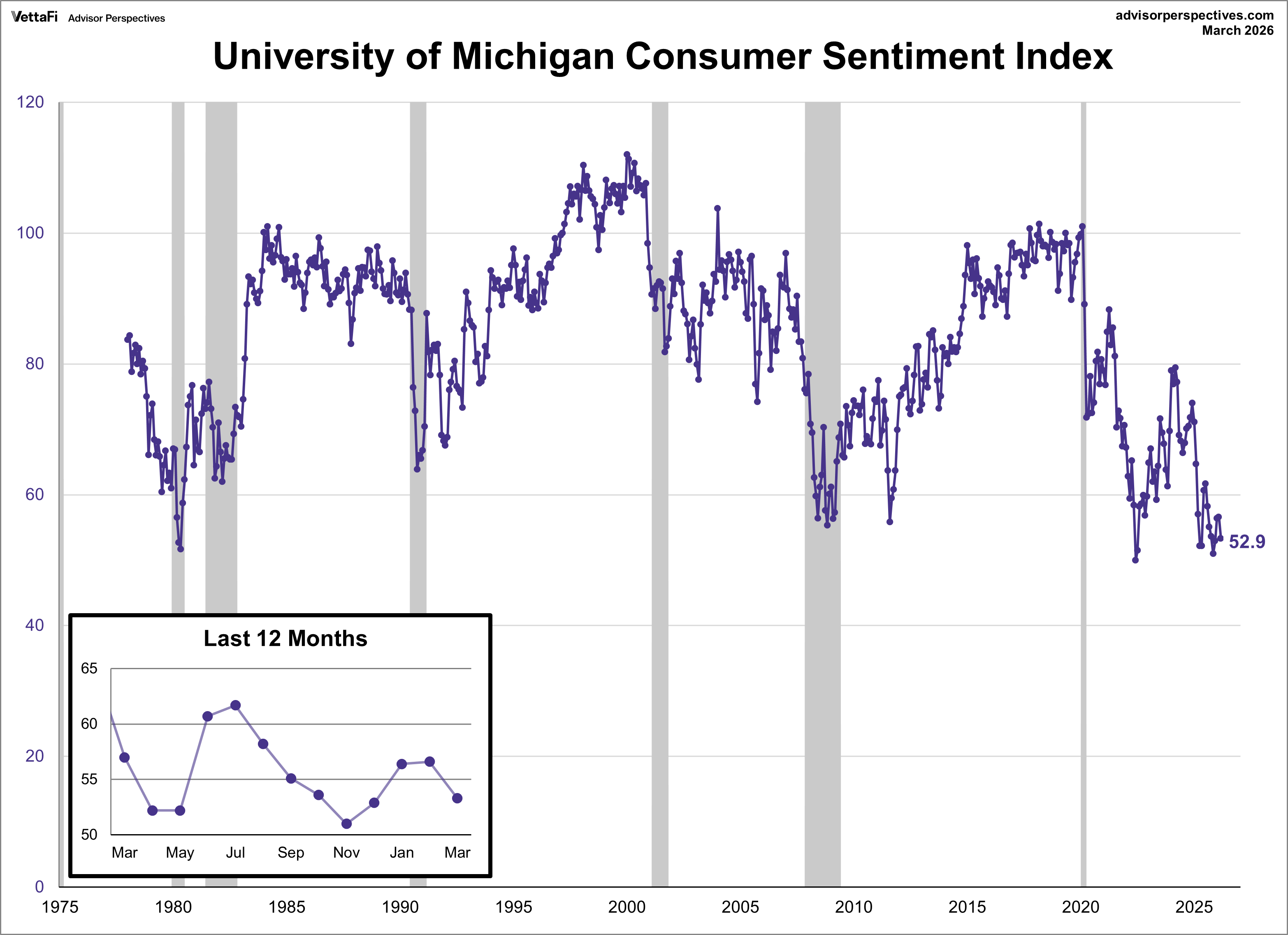
Consumer sentiment plummeted in March, falling nearly 6% to its lowest point since late 2025. This sharp decline, driven by escalating gas prices and financial market instability, breaks a four-month streak of gains. The Michigan Consumer Sentiment Index dropped 3.7 points to 53.3, missing the forecast of 55.5, as consumers reacted to the fallout from the ongoing conflict in Iran. The current sentiment level is now situated in the bottom 1st percentile of the index's historical data.
This month’s drop was widespread, affecting all age groups and political affiliations. While both short-term and long-term expectations fell, the decline for the long run was more modest, suggesting consumers may not believe the recent negative developments will persist. Regarding inflation, near-term expectations increased from 3.4% in February to 3.8%. In contrast, long-term five-year expectations slightly decreased from 3.3% to 3.2%.
The Consumer Discretionary Select Sector SPDR ETF (XLY) is tied to consumer sentiment.
Margin Debt
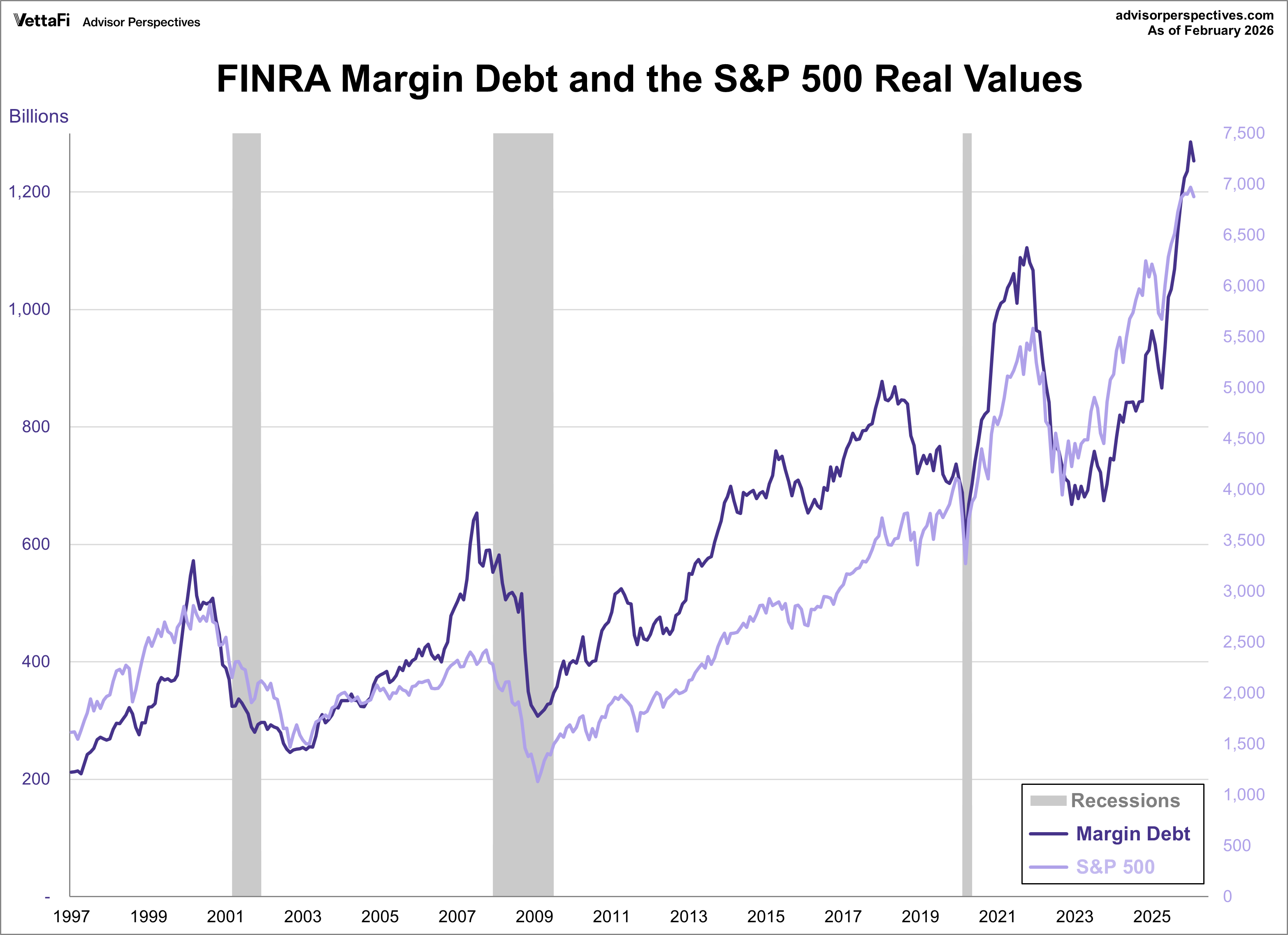
Margin debt, a significant indicator of investor sentiment and risk appetite, decreased by 2% in February to $1.25 trillion. This marks the first decline in ten months, signaling a potential slowdown in borrowing after a 35% surge over the last year.
Historically, margin debt and the stock market share a near-parallel relationship. High levels of debt often coincide with market peaks, while troughs tend to precede market bottoms. Although the recent high levels reflect strong investor confidence, they also suggest unparalleled risk-taking and increased market volatility. The current dip, following a long upward trend, could signal the start of a trend reversal.
Market Reactions
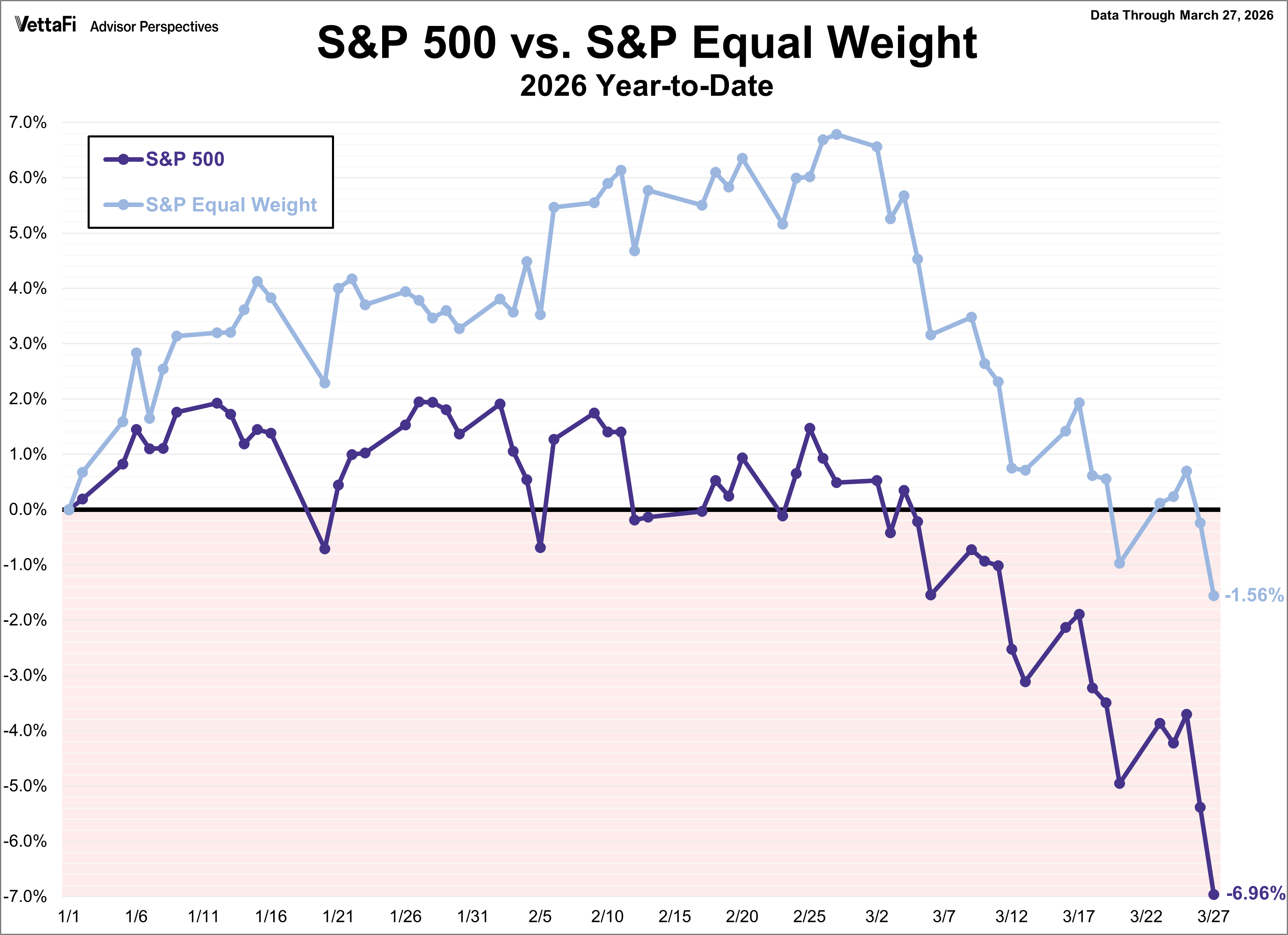
The S&P 500 posted its fifth consecutive weekly loss last week, its longest streak since 2022. The index fell 2.1% and is now at its lowest level in over seven months. As a result, the SPDR S&P 500 ETF Trust (SPY) fell 2.2% last week. Meanwhile, the S&P Equal Weight Index was up/down XX% from the previous week and the Invesco S&P 500® Equal Weight ETF (RSP) fell 1.1%.
The 10-year Treasury yield finished the week at 4.44%, its highest level since July 2025, while the 2-year note finished at 3.88%.
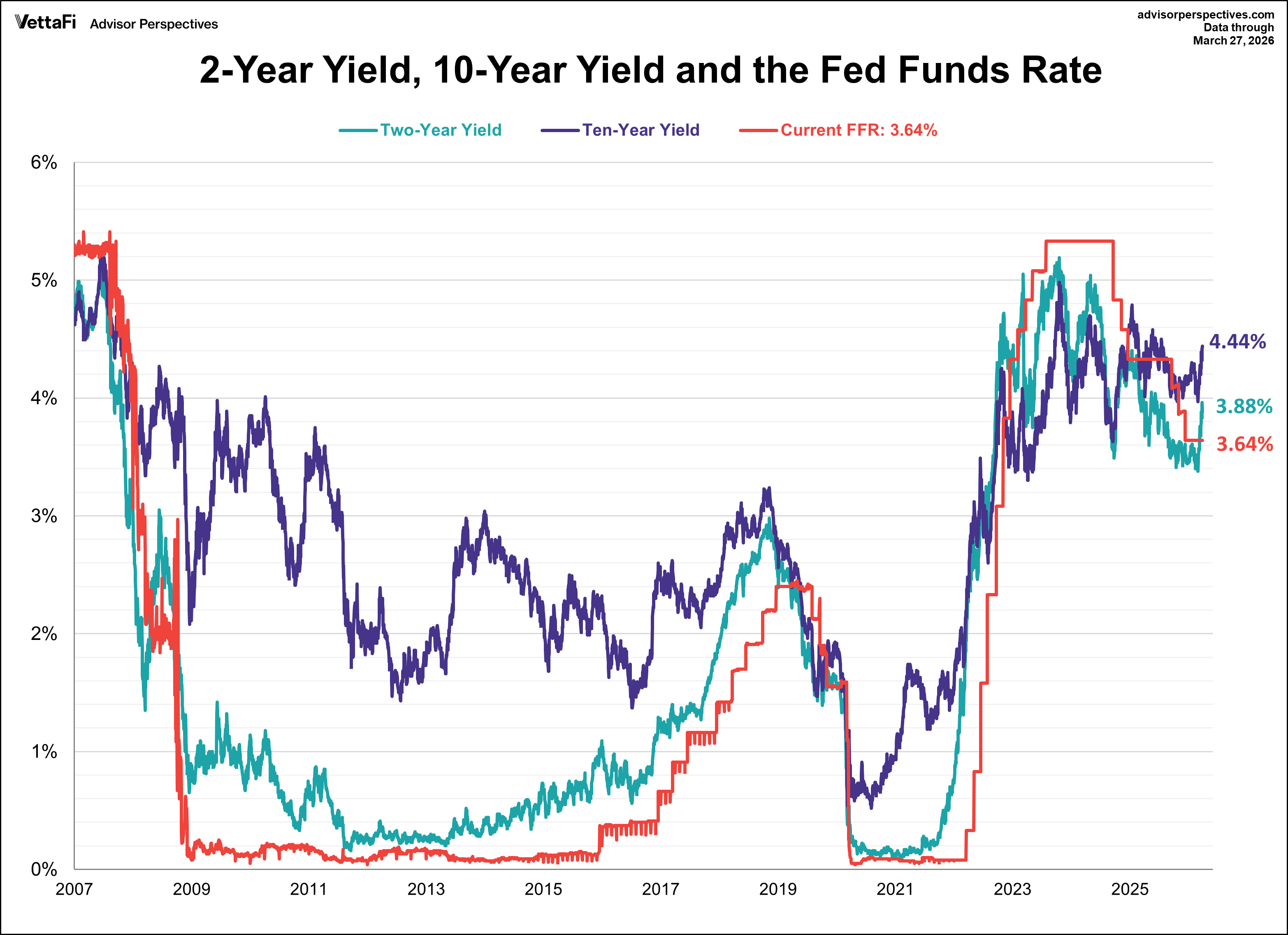
The CME FedWatch Tool currently shows a 96% chance the Federal Reserve will maintain current interest rates at their meeting next month, with a 96% probability of a hold versus a 4% chance of a hike. Markets are currently pricing in a stable rate environment through 2026, with the first rate movement, a 25 basis point cut, projected for late 2027.
Economic Data in the Week Ahead
- Monday: Dallas Fed Manufacturing Index (Mar)
- Tuesday: S&P/Case-Shiller Home Price Index (Jan), FHFA Home Price Index (Jan), Conference Board Consumer Confidence Index (Mar), Chicago PMI (Mar), Job Openings and Labor Turnover Summary (Feb)
- Wednesday: ADP Employment Report (Mar), Retail Sales (Feb), S&P Global Manufacturing PMI (Mar), ISM Manufacturing PMI (Mar)
- Thursday: Weekly Jobless Claims, Trade Balance (Feb)
- Friday: U.S. Holiday - BLS Employment Report (Mar), S&P Global Services PMI (Mar)












