Google searches for "can I afford a home" are at their highest level in nearly two decades. While a Google search on its own isn't proof of anything, millions of queries might be a proxy for the national vibe.
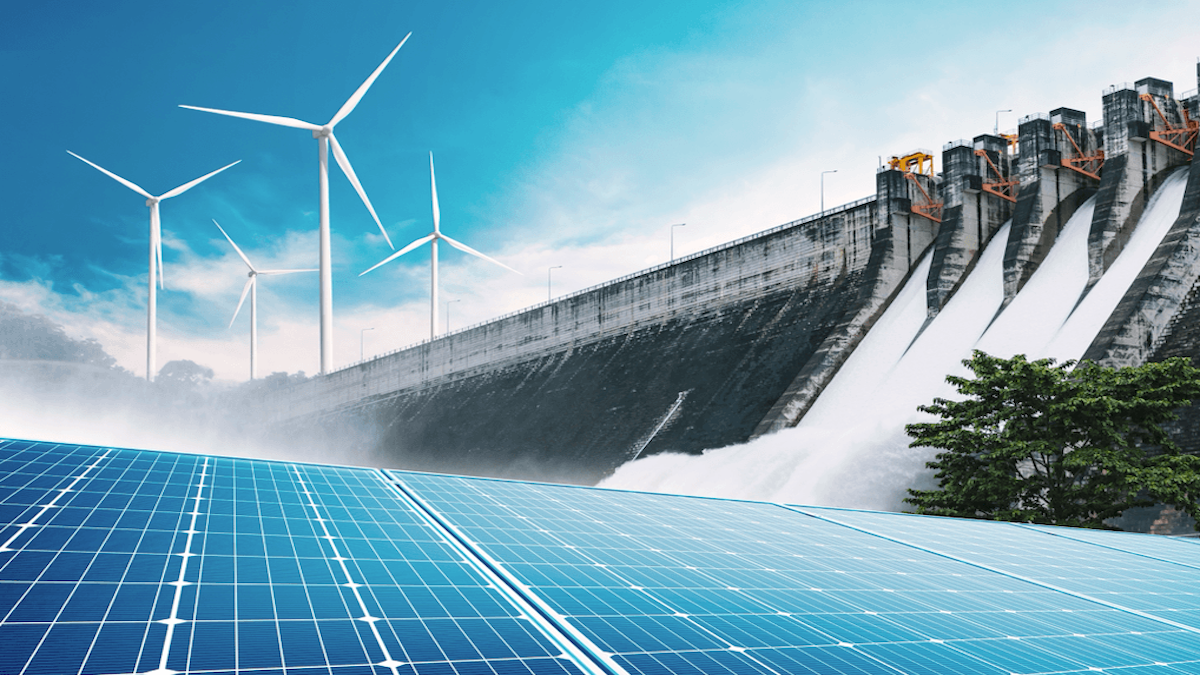
A country drowning in energy shouldn't also feel like it's running out of electricity. In other words: before we ask whether America can make more things again, we should probably ask whether America can power the production.
If there's one thing you should take away from it, it's this: these six measures rarely move together. When they have, twice in 250 years, the country entered a period of real upheaval. Right now, they're moving together again.
We covered a lot of ground, but one image stuck with me: He called the Strait of Hormuz the sword of Damocles hanging over the global economy. For decades, the world’s most critical energy chokepoint has dangled there.
This week I sat down with Eric Fine, who manages emerging market bond portfolios at VanEck. I had a tidy interview all mapped out… and then escalating events in the Middle East reshuffled the deck. That’s okay because it ultimately led us somewhere more interesting than where I’d intended to go.
Gavekal CEO Louis Gave is one of my favorite people to speak with on anything related to portfolio construction and the non-US perspective, and I knew our latest conversation about emerging markets (EM) would be anything but conventional.
If you’re still attempting to make investment decisions without fully integrating geopolitics into your analysis, you’re operating at a significant disadvantage in today’s markets.
One of Liz Ann’s key messages for investors is to have a good plan for your portfolio. A good plan isn’t driven by FOMO. It’s not driven by getting too concentrated in what’s working, because what worked last year might not work moving forward. I’ll let you read the transcript or watch our conversation to hear, firsthand, what makes a good investment strategy.
This week, my friend Lyric Hughes Hale and special guest Eric Huang of Taiwan share with us the details of what could be another massive fallacy of composition. Oddly, this time the risk lies with one of the US’s largest creditors.
While AI adoption is becoming ubiquitous across all segments of society, a significant bottleneck is emerging that could slow its expansion: a critical power problem. AI data centers consume massive amounts of electricity—up to the equivalent of 100,000 households—with projections showing they will account for nearly half of US electricity demand growth through 2030.
If you’d told me twenty years ago that we’d soon see rockets launching into orbit every day-and-a-half, I’d have smiled politely and changed the subject. Yet here we are: in the first half of 2025, a new launch hit the sky every 28 hours—six hours ahead of last year’s record pace.
We are living through what Torsten Slok of Apollo Global Management calls a K-shaped economy, with the two arms of that K moving in radically different directions.
Everyone is wondering if we’re in another tech bubble. Tech companies are breaking valuation records, with Nvidia Corp. leading the charge. On Wednesday, it became the first company ever to reach a $5 trillion market cap.
The Fed’s balance sheet has two sides: On the asset side are Treasury bonds and mortgage-backed securities—the financial instruments the Fed buys to inject money into the economy. On the liability side are the reserves that banks hold at the Fed, along with physical currency in circulation.
There’s a concerning undercurrent running through the US labor market. The unemployment rate has been steadily climbing. That’s unusual. Typically, when unemployment goes up, it spikes.
The newest member of the Federal Reserve Board, Stephen Miran, recently outlined his reasons for wanting interest rates to come down by roughly 2 percentage points—far more than any other Fed member.
When I first wrote to you about quantum computing in October 2024, I called it the “next big thing.” Many readers agreed that the potential of quantum computing was exciting but felt it could be a decade or more away from commercial viability.
Much of the data we see today indicates the economy is fine. Stocks continue making new highs. Consumer spending is shattering records. Unemployment rates remain low. Yet a single anecdote can dispel the illusion that everything is truly fine for the average American.
Since the global financial crisis, value investing has been a lonely grind. Yet I know several managers who never gave up on value, and others who are uncomfortable with tech valuations and have been reallocating to lower P/E stocks.
Today, let’s take a look at a company sitting at the center of all these technologies. It’s a great example of the outsized potential and the volatility that often come with investing in companies on the edge of big breakthroughs.
This week, the White House released America’s AI Action Plan. This plan is the clearest signal yet that Washington now views AI as launching the next industrial super-cycle.
Last week, we covered my concerns about AI’s impact on jobs. This week, we’ll take a look at its impact on energy demand and who pays for that energy.
Most of us are not prepared for the incredible degree of change Artificial Intelligence (AI), combined with automation, is bringing to society.
The trajectory of small businesses often goes something this: a first-generation entrepreneur starts and grows a company. It could be a software company, but also a plumbing, electrical, or HVAC business.
Everybody has an opinion about quantum computing lately. Last week Nvidia CEO Jensen Huang suggested we were 15–30 years away from “useful” quantum computing
Copper prices have pulled back since peaking in May at $5.12, but the long-term bull case for copper remains strong.
We have been talking about resiliency-driven inflation for the past several weeks. As the US and its Western allies realign supply chains to strengthen economic resiliency, the cost of certain goods and commodities will go up.
The appetite for nuclear energy is growing fast. Here in the US, most adults now favor expanding our nuclear power capabilities because it’s a great alternative to fossil fuels. Unlike wind or solar, nuclear provides energy around the clock. So, why haven’t we built more nuclear power plants?
In seasoned investment circles, nearly everyone reads the memos from Howard Marks, the co-chairman of Oaktree Capital Management, which he’s been writing for his clients since 1990. The most widely read of these memos, “Something of Value,” is foundational reading for anyone serious, or anyone who wants to get serious, about investing.
No investor wants to miss the wave of a massive, transformational technology. Spot these big shifts early, and you have a chance at Nvidia-like returns.
Investors often ignore geopolitics, usually to their benefit. Now might be one of those times when we should pay attention. In the past few weeks, hostilities between East and West have accelerated. It’s a worrisome trend.
The price of oil is hovering around $76 per barrel, 38% off its 5-year high. With so much geopolitical tension, why isn’t it higher?
Copper prices have exploded higher, up 33% year to date.
The path to the US’s energy future is becoming obvious. Over time, nuclear will become one of, if not the primary, sources of energy feeding our ever-growing demand for electricity. China and India are far ahead of the US on this, with hundreds of new reactors slated for construction.
So much happened in the spring of 2020 that it’s easy to forget we were on track for a recession just before COVID hit. QI Research founder Danielle DiMartino Booth mentioned this during her presentation with Lacy Hunt at our Strategic Investment Conference.
Have you seen the price of natural gas lately?
Apple makes around 90% of iPhones in China. From a supply chain perspective, this is better than where Apple stood a few years ago when it made all its iPhones there.
Gold started this week at an all-time high. It’s up about 10% since the start of the year. That’s roughly on par with the S&P 500. All of this while inflation is trending down (with some bumps).
Earlier this week, I shared my thoughts on a ban or forced sale of social media platform TikTok. The Chinese Communist Party can use it to surveil and manipulate Americans, and we should ban it immediately. Many of you sent thoughtful feedback, which I appreciate.
Last week, the House passed a bill that would require ByteDance, the Chinese company that owns TikTok, to sell within six months or face a ban. Now the bill faces an uphill battle in the Senate.
India’s growth story is unprecedented.
NVIDIA’s spectacular quarter and forecast are dominating headlines this week.
We are in the early days of an AI-driven productivity boom.
After the great financial crisis, China’s appetite for commodities and technology fueled a global economic recovery.
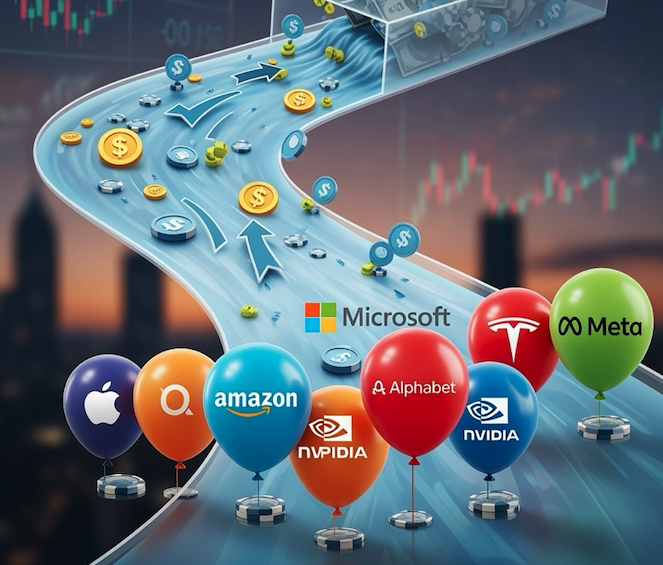
The “magnificent seven,” Amazon, Alphabet, Apple, Meta, Microsoft, Nvidia, and Tesla, soared 112% (equally weighting each). They outperformed both the SPDR S&P 500 ETF Trust (SPY), which is weighted by market cap, and the Invesco S&P 500 Equal Weight ETF (RSP), which weights each stock equally.
I am traveling for business this week, but I’ll return with a fresh interview for Global Macro Update next Friday. For those of you who missed my interview with Louis Gave last week, read on… There’s a reason this was one of our most-watched Global Macro Update interviews of the year.