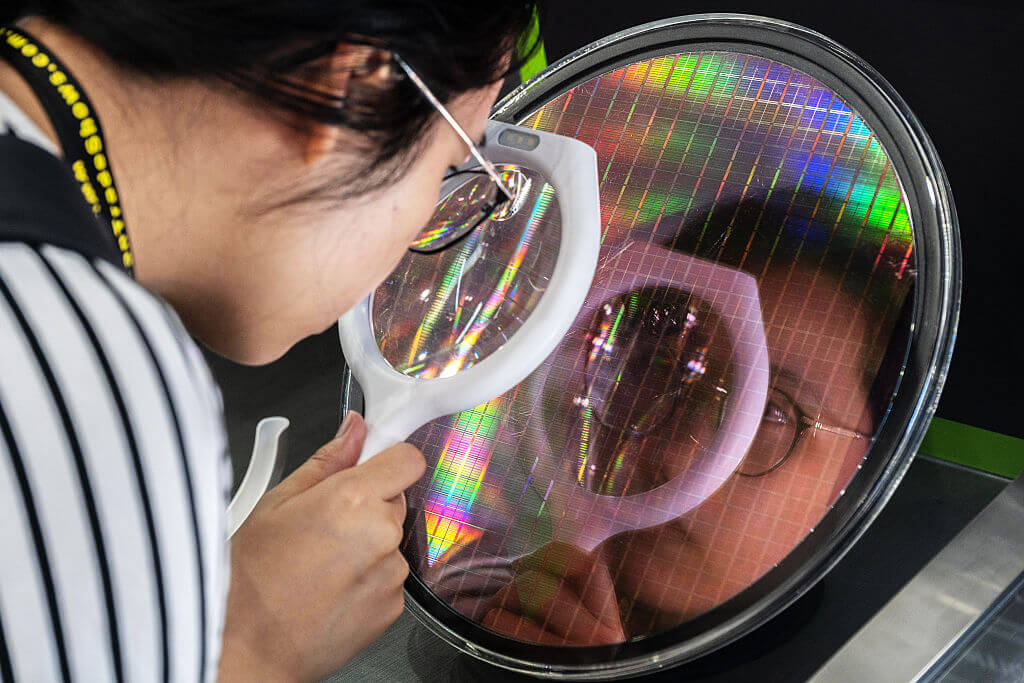
Investors who piled into SK Hynix’s $28 billion blockbuster Nasdaq debut on Friday should be aware: The business model on which the world’s leading memory chip makers are thriving is set to shift to one that requires a bit more strategic and financial gambling.
When Mark Zuckerberg gets a bold new business idea, he likes to throw money at it. Last summer, he dropped $14.3 billion for a 49% stake in Scale AI, allowing him to poach its wunderkind founder Alexandr Wang to lead a new project to build artificial-intelligence systems that surpass human intelligence.
With the artificial intelligence race moving so rapidly, even a momentary lag can be costly. Alphabet Inc.’s Google is learning this the hard way: The search giant rapidly caught up with
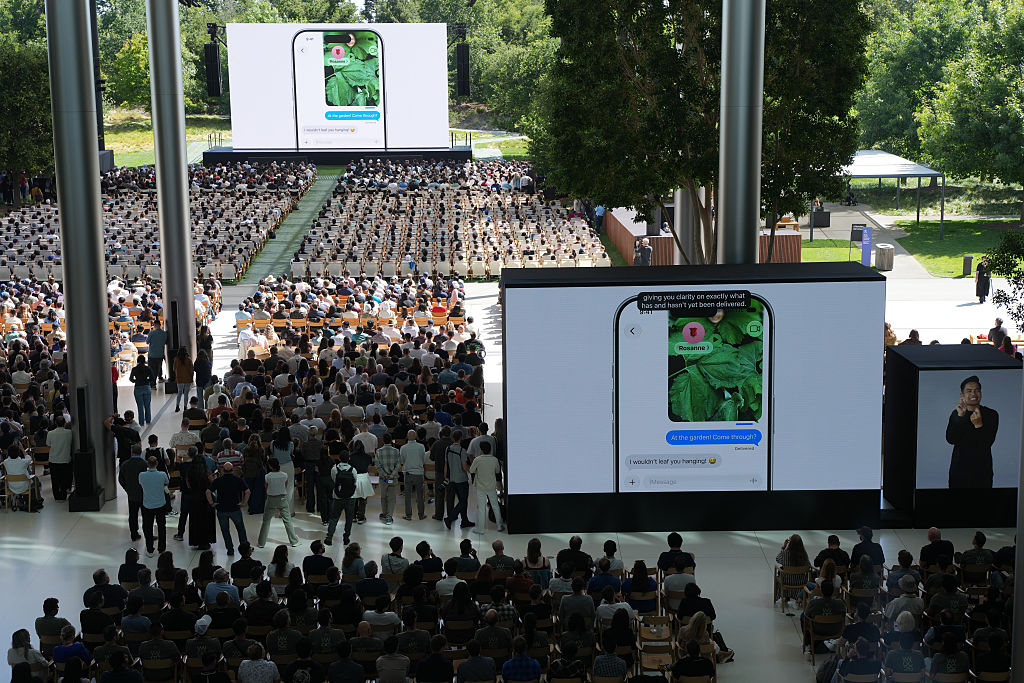
Tim Cook’s last annual showcase of new software as Apple Inc.’s chief executive officer also marked the start of a deepening relationship with one of his biggest competitors: Alphabet Inc.
Elon Musk’s ambitions for artificial intelligence are coming together in a former vacuum-cleaner factory in Memphis, Tennessee.
Mythos, a new artificial intelligence model that Anthropic PBC has teased as too dangerous to release, looked at first like a problem for banks.
Call it the season of IPO prep. Recent launches and announcements from OpenAI and arch rival Anthropic are aimed at laying the groundwork to go public in late 2026 or early 2027, and for OpenAI, which just closed a $122 billion funding round that values it at $852 billion.
The Iran war has laid bare a paradox: Gulf money is helping underwrite America’s effort to win the artificial intelligence race, and now the US has started a conflict that could destabilize those investments.
Big Tech’s consolidation of power seemed a foregone conclusion even as Sam Altman’s OpenAI sparked an artificial intelligence boom with ChatGPT.
Artificial intelligence is a genuinely useful technology, but its impact will be uneven, gradual and impossible to predict. That’s the boring truth, however unlikely it is to go viral.
In an industry numb to eye-watering AI bets, it takes a lot to make a chief executive hesitate. So Nvidia’s Jensen Huang blinking at one such commitment to OpenAI is worthy of notice.
A common proclamation made by tech leaders is that while artificial intelligence will destroy jobs, it will also create many new ones. But what kinds of new careers will AI spark? And, more importantly, will they last?
Anthropic PBC is finally having its own ChatGPT moment. A powerful new version of its Claude chatbot can now take actions on a computer, and the broad repercussions of that advance are impossible to predict.
OpenAI is ruling out the more obvious downsides for users of its free and $8-a-month ChatGPT Go tiers who will start seeing ads. Advertisers won’t influence the chatbot’s answers but rather post banners with images at the bottom of the screen.
The key in both approaches will be to cleverly avoid the ire of regulators by trying not to trigger outbound investment rules when they buy Chinese firms, and by using hiring-and-licensing deals — known in the industry as acquihires — to avoid antitrust scrutiny when they grab competitors in the US and Europe.
Trillions of dollars hang in the balance of two questions that dominated this year and loom perilously large over the next. “Will the artificial intelligence bubble burst?” and “Will China beat the US?”
Tech builders love a good feedback loop, and Nvidia Corp. and OpenAI have created a $100 billion one this week.
This year the world’s four largest tech firms will spend $344 billion on AI, mostly on data centers used to train and run so-called large language models (LLMs) like ChatGPT that can process text, audio and visual content.
Markets naturally see through the lens of businesses. When tech stocks took a dive last month on concerns of an “AI winter,” investors were egged on by a study showing 95% of corporate AI pilot programs failed to deliver any gains in productivity or profit, making all this expensive AI start to look a little useless.
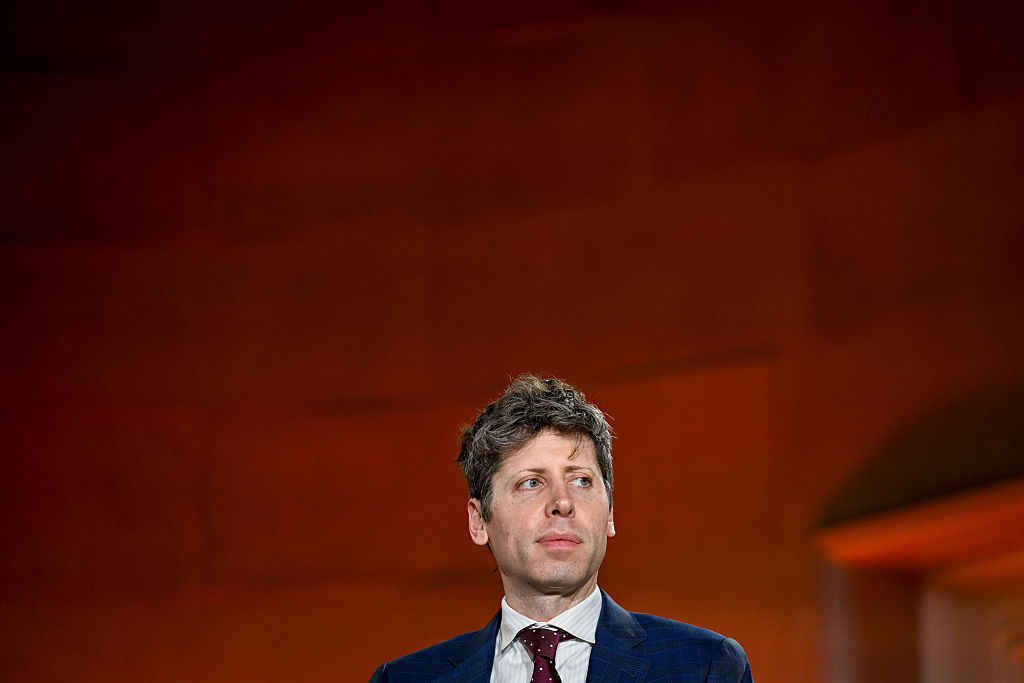
Sam Altman has a good problem. With 700 million people using ChatGPT on a weekly basis — a number that could hit a billion before the year is out — a backlash ensued when he abruptly changed the product last week.
Coders who use artificial intelligence to help them write software are facing a growing problem, and Amazon.com Inc. is the latest company to fall victim.
If you’re a venture capitalist, you dream of backing the next billion-dollar startup to one day feast on the returns of a sale.
Nothing says talent war like a $100 million job offer. Mark Zuckerberg has been on a hiring blitz for AI’s most revered scientists, sending them cold emails and offering them roles in his new Superintelligence Labs division whose goal is nothing less than to build artificial-intelligence software that’s smarter than humans.
Having raised $445 million from investors including Microsoft Corp. and SoftBank Group Corp., the British firm entered insolvency proceedings this week after a major creditor seized $37 million from its accounts, leaving $5 million in the company’s coffers.
In technology, disruption can happen slowly and then all at once. Alphabet Inc.’s Google unit is praying for the former right now.
Sam Altman’s reputation for spin was out in full force this week in a published “letter to employees” announcing that he was abandoning plans to turn OpenAI into a for-profit company. Instead, it will “continue to be overseen and controlled” by its nonprofit board.
A Columbia University student recently shone a light on a disturbing corner of today’s job market. Roy Lee, 21, was fed up with the antiquated way that large tech firms were testing job candidates with computer coding riddles you had to memorize, so he created a tool that his peers could use to beat the system.
Last year, the chief executive officer of a leading AI firm was asked at a private Silicon Valley dinner about how his company differentiated from others building “foundation models,” the systems underpinning chatbots like ChatGPT.
When Mark Zuckerberg earnestly looked at a camera and told the world (or President-elect Donald Trump) that he was shutting down all fact-checking on Facebook and Instagram, he left out some important context.
The AI boom of the past two years has largely been a two-horse race. Alphabet Inc.’s Google and Microsoft Corp.-funded OpenAI have duked it out for customers, while Amazon.com Inc. and Meta Platforms Inc. have nibbled at the margins for market share.
Recommend reading that provides a bed of knowledge for the key themes we think will define 2025. Ours differs from other lists you might see elsewhere at this time of year in that we focus on relevance rather than recency, though there are new books here, too.
Saturday marks two years since OpenAI posted an oddly named widget called ChatGPT to the web. Its staffers placed bets on how many users it would accumulate, the highest estimate being 100,000. How wrong they were.
News broke this week that the US Department of Justice wants to force Alphabet Inc.’s Google to sell Chrome, its dominant web browser. That has led to much head scratching in the tech industry.
The multi-trillion-dollar artificial intelligence boom was built on certainty that generative models would keep getting exponentially better. Spoiler alert: they aren’t.
One of the memorable moments of Nvidia Corp.’s most recent conference for developers came toward the end of the chip giant’s semi-annual event.
A middle-aged man who works in emergency services in the US had been battling depression and suicidal thoughts for 17 years, unable to sleep most nights and leaving his wife and teen daughter walking on eggshells because of his irritability, before he opted for a shot in the dark.
Sam Altman has his hands in countless projects while also building “mankind’s last invention”: artificial general intelligence, or AI systems that surpass our own cognitive abilities. These galactic aspirations were reinforced on Monday when Altman published a dramatic blog post reminding us that superintelligence will bring prosperity for everyone. It’s just a “few thousand days” away, he added.
In the frothy business of selling artificial intelligence service, Salesforce Inc. has been punching above its own weight. “Salesforce?” I hear you wonder. The folks in the dull business of selling customer relationship management software?
Tech companies of a certain size have long expected an easy ride from authorities, and for good reason. They always got it. Apple Inc. for years abused loopholes to pay virtually zero tax in the European Union while generating record profits there, thanks to special treatment from Ireland, where it bases its European headquarters.
Mark Zuckerberg may have a history of copying of others’ ideas, but when it comes to navigating the generative AI hype cycle, he’s the one forging a smarter path.
For a technology that promises to help businesses cut costs, artificial intelligence has had a big problem with being so costly.
Is generative AI worth the money?
Money talks, but even $23 billion didn’t convince the founders of Wiz Inc. to sell to Alphabet Inc.
The artificial intelligence hype that made Nvidia Corp. the world’s biggest company has come with a price for the world’s climate. Data centers housing its powerful chips are gorging power and belching carbon dioxide, and sobering figures now reveal the extent of the problem.
Does anyone in Silicon Valley know the saying, “The bigger they are, the harder they fall?” Perhaps it’s just a matter of time before they will.
You have to hand it to Apple Inc. After an embarrassing, tone-deaf ad last month that made the company look oblivious to AI’s impact on the world, its marketing department has now rebranded AI as “Apple Intelligence.” It’s a feat of superiority only the company could pull off.
When Microsoft Corp. invested more than $10 billion for a chunk of OpenAI, scientists inside its storied research division were rankled about being shoved aside for a newer player from outside the company.
There’s a persistent mystery about Mark Zuckerberg, and it’s not the one about his new chain necklace. The chief executive officer of Meta Platforms Inc. has spent billions of dollars building powerful artificial intelligence models and is giving that technology away for free.
Innovation only gets hindered when AI startups find themselves on an assembly line to Big Tech. Here’s hoping the open-source movement continues to thrive.
It’s almost impossible for an artificial-intelligence startup to build anything as good as ChatGPT, but Inflection was getting there.