In our latest Quarterly Letter, Ben Inker and John Pease discuss the new economic regime, how investors can prepare for a recession, and the merits of combining high quality and cheap assets in today’s environment.
Fed Chair Jerome Powell’s Sept. 20 remarks represented the first time the Fed leadership has sanctioned the idea that the equilibrium policy rate has risen this year; previously, Powell repeatedly avoided taking a view.
However, the regulators made asset management news with their focus on “truth in advertising.” Despite their well-intentioned efforts, it will remain paramount for investors to do their homework and look inside the portfolio.
Active ETFs have scored more investor interest this year than smart beta ETFs—but does that mean the latter will soon be out of the game completely? David Mann, Head of ETF Product & Capital Markets at Franklin Templeton, opines.
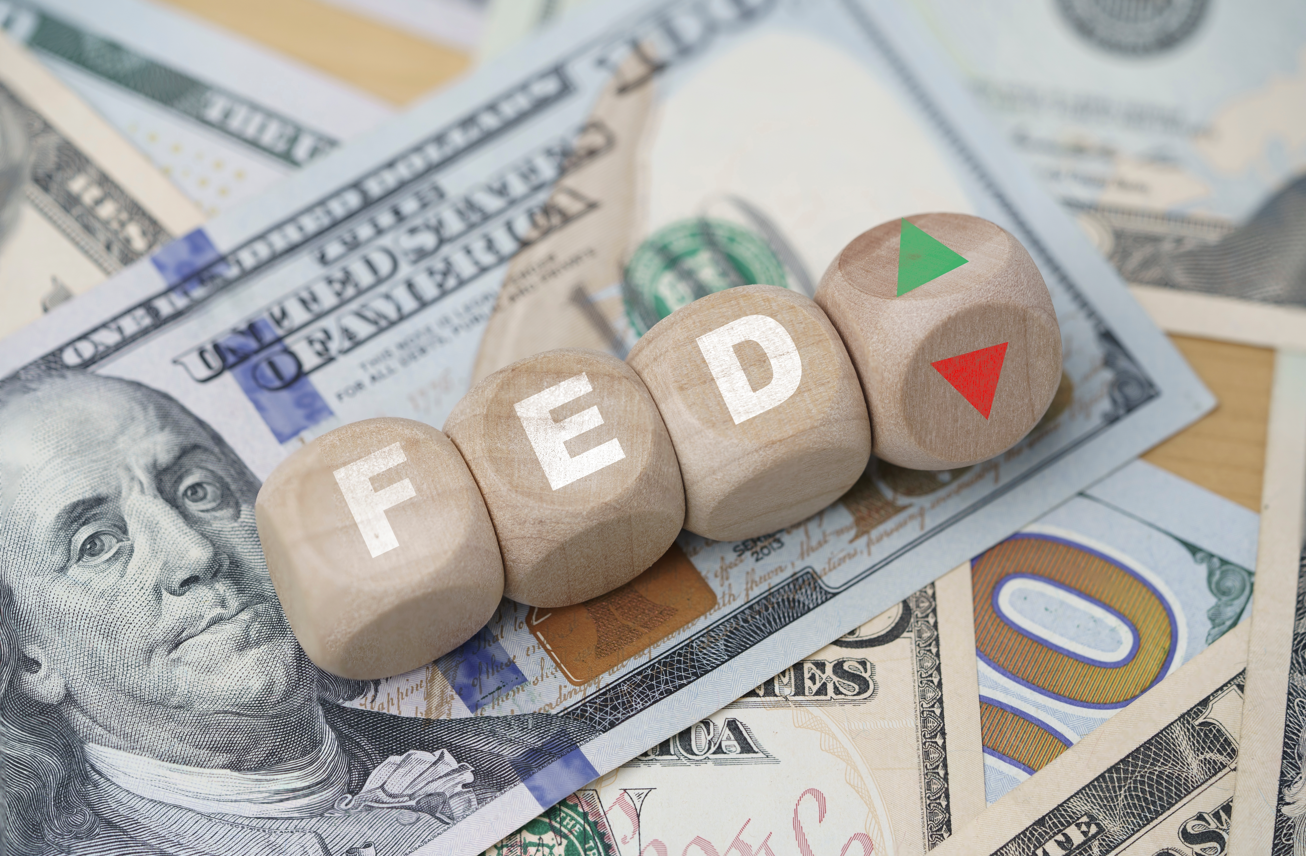
With the Fed pausing rate hikes this month as announced this week, investors now look nervously toward October. While earlier this year markets were even considering the possibility of rate “cuts” this year, now further hikes may be in the cards.
Evidence of China's slowdown is appearing in unexpected places.
Historically, government shutdowns have not caused a major reaction in the markets. But shutdowns can increase market volatility, and an extended shutdown could have an impact on the overall economy.
EnerSys is a leader in stored energy solutions. Based in Reading, Pennsylvania, this company makes batteries, chargers, and accessories for transportation, aerospace, and defense.
Many advisors are finding their clients show little interest these days in how the markets are doing.
While September has been a bit sloppy so far, will further weakness in October weigh on investor sentiment before the seasonally strong period begins?
China’s goal of self-reliance will certainly rely on innovation. Right now, the second-largest economy sits firmly atop the list of the World Intellectual Property Organization (WIPO) when it comes to innovation on a global scale.
The Fed sent a strong signal that interest rates will remain higher for longer, as our Franklin Templeton Fixed Income CIO Sonal Desai has long predicted. The Fed also started to acknowledge that the natural real rate of interest is higher than it thought.
Generative artificial intelligence (AI) is the form of artificial intelligence that’s generating the most buzz this year. Its applications in media/content generation and video, among other related uses, is making life easier and more efficient for scores of freelancers and gig workers.
Private infrastructure offers unique investment characteristics and potential diversification benefits for portfolio construction.
Even the best scientists in the world cannot reliably forecast drug-test results, so why should investors gamble? Quality businesses are key for healthcare stocks.
The Federal Reserve forecasts only a modest uptick in U.S. unemployment next year as inflation cools, but history and current labor market trends make us less certain.
It might be hard to believe after the crypto winter of 2022, but monetary tightening by global central banks could be supportive of Bitcoin upside.
In many ways, 2023 continues to be the mirror image of 2022, with the most volatile assets being some of the best performers for much of the year.
Ultra high net worth investors have been using direct indexing to reduce their annual tax bill for years. But thanks to breakthroughs in technology and the ability to buy fractional shares, direct indexing has become more accessible.
Today, in a shock decision, the Bank of England (BoE) left its policy rate at 5.25% by the tightest possible majority vote of 5-4. All but one of 65 economists polled by Reuters had predicted that the BoE would raise the rate to 5.5%.
Wednesday’s Federal Reserve (Fed) decision to keep the federal funds rate unchanged wasn’t a surprise at all. Markets, as we argued last week, had predicted that the Fed was going to stay put and that is what it did.
The Northern Trust Economics team shares its outlook for major markets in the months ahead.
A balanced portfolio needs assets with strong return potential and those that may provide downside mitigation. We believe direct lending can deliver both—a potentially valuable feature, particularly in today’s uncertain market.
Energy and Gold Produces Face Increasing Pressures, Crimping Supply.
We started RBA in 2009 primarily because we thought the US stock market was entering one of the biggest bull markets of our careers. However, most investors did not agree with our bullishness. Now, risk aversion seems a thing of the past.
A string of CPI readings heading in the right direction. A labor market and consumer that are still intact. All of the sudden, the recession consensus has given way to a soft landing. Learn what may be in store for the equity market.
The hit TV series “That 70s Show” aired from 1998 to 2006 and focused on six teenage friends living in Wisconsin in the late 70s.
Investment-grade credit is currently offering impressive yields, with relatively less risk than other fixed income sectors, according to Josh Lohmeier of Franklin Templeton Fixed Income. He makes a case for investing in the space today.
Environmental, social, and governance policies and investing have become targets of political derision. That doesn’t dampen the need for corporations and governments to pursue agendas tied to climate change and diversity, equity, and inclusion.
Financial advisors often face the challenge of transitioning a new client into their practice in a tax-efficient way.
I, however, like all Kens, have always had a firm grip on the remote for 100% of the time but I decided to let her have her way just once.
When it comes to sheer equities performance over the last 30 years, there’s no denying the United States compared to the rest of the world. However, that could be changing according to one hedge fund manager.
Many of the speakers and attendees were bullish on the physical metal, pointing to gold’s resilience in the face of a very strong U.S. dollar and multiyear-high yields.
Honeywell International Inc. is a global leader in diversified technology and manufacturing. As sectors like aerospace and construction undergo rapid changes, there’s a demand for solutions that boost efficiency while prioritizing safety.
Artificial intelligence (AI) is widely viewed as the fuel for the rocket known as growth and technology stocks in 2023. While there is truth to that notion, there’s more to the story. Including the “magnificent seven” cadre of mega-cap growth names that are powering the market higher this year.
For many wealth advisors, workplace retirement plans are either a burden or an afterthought, according to John Kutz, National Retirement Plan Strategist at Franklin Templeton. He and his team explore why embracing these plans can benefit their practice, and their clients.
Fund managers have been avoiding emerging markets (EM), especially when it comes to China. However, that doesn’t mean there aren’t opportunities that exist.
While our Washington Policy analyst believes there is a path to a resolution to avoid a government shutdown ahead of the looming September 30 deadline, the rhetoric out of Washington suggests otherwise.
The Federal Reserve weighs the data while investors wonder: Is the rate-hike cycle over?
Last week we began exploring the details of my personal portfolio. This week we will finish and then move back to our discussion of various cycles.
With the rapid pace of urbanization, there’s an increasing demand for efficient and sustainable power solutions, and ABB’s advancements in smart grids and renewable energy integration are pivotal in meeting the demands of this transition.
Over the last 100 years, the US equity market has returned about 9% annually. What will it return over the next 100 years?
To survive, businesses must grow. Growing your practice is important in all fields, but it is particularly critical for financial advisors. Without growth, advisors risk falling into a rut and becoming stuck. Here are four tips that can help you grow your practice.
For the second time in four months, the central bank decided to not increase interest rates but indicated another hike in 2023 is likely.
While some stocks may seem expensive, there are areas of opportunity that feature attractive valuations and growth catalysts, according to the Franklin Templeton Investment Solutions team.
Many view growth stocks, including tech stocks, as sensitive to rising interest rates. Last year confirmed this thesis. That script has been flipped for the better this year as technology ranks as one of the best-performing groups in the S&P 500 despite multiple rate hikes by the Federal Reserve.
Yesterday’s Equity Symposium brought together industry thought leaders. Attendees were treated to actionable information. Additionally, the panels presented cutting-edge thinking around equities.
Given concentration risk, understanding what a strategy and portfolio owns is more important than ever in current markets.
ETF Trends interviewed three sources about active ETFs, why financial advisors are opting for these investment solutions for clients, and how these factors have changed in recent years. Each source responded to the same questions in their respective interviews.
While the Fed kept rates unchanged at today’s meeting, between the press conference and forecast updates, Powell and Co. gave plenty of ammo to keep the financial press busy speculating about what may come at the next FOMC meeting this Fall.