AI is changing the investment landscape, but fundamentals still matter, and we remain focused on quality companies with growing free cash flow.
Although economic conditions did not change much between the first and second quarters, investors were far more bullish in the second quarter.
AI is both a foundational technology and the ultimate replacement product, which we believe explains why it has attracted unprecedented levels of capital and why the investment opportunities are so compelling.
Despite a confluence of economic shocks in the first quarter, markets have held up remarkably well, but cracks appear to be forming beneath the surface.
As AI continues to reduce software development costs, investors need to reconsider what makes a competitive moat durable, particularly for technology companies.
The AI boom has pushed technology stocks to new highs, but it has also masked headwinds in other sectors of the economy.
Fixed income performed well in 2025, but we are proceeding cautiously, as we believe headwinds in the new year could cause the rally to stall.
AI remains the economy’s most powerful growth engine, but our Small Cap Growth team believes several other areas are also likely to deliver significant upside in the near-to-medium term.
Spreads are essential for investors who utilize leverage, but for most fixed income investors, yields are much more important. Fortunately, in today’s market, yields are relatively attractive despite historically tight spreads.
Aggressive policy changes from Washington have introduced potential long-term economic risks, but markets continue to rally because the near-term conditions remain favorable.
Sentiment in the fixed income markets remains bullish and issuance is robust, but spreads are tight so we are staying defensive and investing opportunistically.
Over 60% of small cap investors use passive funds, but we strongly believe this is a missed opportunity, as small caps have consistently been one of the most reliable sources of alpha available in the public markets.
High yield bonds have historically delivered attractive long-term returns, and since the Great Financial Crisis they have also become higher quality, as weaker borrowers have departed the sector for the private credit and leveraged loan markets.
As the market marches to new highs, just two months after a violent 20% selloff in equities, we ask ourselves how the narrative has shifted so quickly.
The second quarter featured a trade war, armed conflicts in the Middle East and Europe, and continued turmoil in Washington, yet markets continued to rally, likely due to an elevated money supply and an increase in passive investing.
While we continue to feel the U.S. has structural investment advantages, we are mindful that the scope of the current administration's policy shifts may present challenges to our sustained economic momentum.
Concerns about a trade war have rattled markets so far in 2025, but we believe fixed income investors need to be patient, stay defensive, and see how things evolve before making any big decisions.
In this primer we define small cap growth funds, provide practical suggestions on how to invest in them, and explain why we believe they are a strategically important asset class.
Equity markets are facing a variety of headwinds, but the economy remains strong, and we believe there will be ample opportunities to invest in attractively valued quality growth companies in 2025.
Although we are loath to make predictions, conditions appear to be favorable for fixed income in the coming year, and we think investors should consider adjusting their allocations accordingly.
Investment grade bonds have long been synonymous with a “core” fixed income allocation, but we believe a flexible strategy also belongs in most bond portfolios, as managers can adjust their exposure based on market conditions.
Thanks to a variety of structural advantages, including favorable demographic trends, we believe the U.S. remains the most attractive investment environment in the world.
Credit indices rallied during the third quarter, despite a variety of economic headwinds, and it appears FOMO (fear of missing out) is fueling the bullish sentiment more than fundamentals.
As the U.S. evolved from a goods economy to a services economy, expansionary cycles more than doubled in length. But a recent resurgence in manufacturing may be taking us back to the future.
As we survey the economic landscape, we are reminded of Otis Redding’s classic hit, which is all about patience. “Looks like nothing’s gonna change, everything still remains the same.”
Market inefficiencies create opportunities for active managers. We believe there are more mispriced companies in small cap growth than in other equity markets, and we have developed an approach that allows us to capitalize consistently when we find them.
We have always maintained it is better to accept what the market has on offer than to stretch for returns. Thanks to the inverted yield curve and our flexible mandate, the current environment is making it easier than ever to be patient while we wait for fat pitches.
As the second quarter came to a close, the Fed’s elusive soft landing appeared to be within reach. However, inflation resurfaced during the third quarter, substantially complicating the near-term economic outlook.
Like a watched pot that refuses to boil, the much-anticipated recession of 2023 has yet to materialize. In our latest Strategic Income outlook, we examine the reasons and discuss what might finally cause the temperature to rise.
In our view, the specific market dynamics that influence a company's sales growth prospects have a greater impact on equity returns than the overall direction of the economy.
Artificial intelligence (AI) has been top-of-mind for investors for much of 2023, fueling a strong rally in the S&P 500. While it may take time for AI to have a similar impact on small cap stocks, we share the market’s enthusiasm and believe AI has the potential to become one of the most disruptive secular growth trends ever.
Despite persistent inflation and elevated short-term interest rates, the economy appears to be holding up well, and we believe the Fed may deliver the “soft landing” it has been trying to engineer.
The economy has held up remarkably well despite the Fed’s tightening program, but with two more hikes likely in 2023, the risk of a slowdown remains elevated.
The S&P 500 has generated double digit returns so far in 2023, but the gains have been narrowly focused. Heading into the second half, we will be watching to see whether the rally broadens or the market capitulates.
Investors have been loading up on T-bills and money market funds this year, but according to our Total Return team, that is not a sustainable strategy as it exposes investors to both reinvestment risk and inflation while creating an asset/liability mismatch.
Thanks to the recent banking crisis, the Fed’s “dual mandate” has taken on a new meaning. The increased economic uncertainty during the first quarter drove investors towards safer assets, boosting investment grade bonds.
2023 has already been an eventful year, featuring a banking crisis and more Fed rate hikes. In our view, this is not a “set it and forget it” type of market – investors need to stay vigilant.
Volatility can be challenging but it also creates opportunities. In our view, rotating across sectors within the investment grade market is the most effective way to take advantage of price fluctuations and generate alpha.
Robust risk management is essential for fixed income investors. In his latest commentary, Marcus Moore explains why our sustainable investing team considers ESG factors as material business risks, similar to the traditional risks they also analyze.
Markets are unpredictable, which is one of many reasons it is difficult to consistently deliver alpha over long periods. In their latest commentary, our small cap growth team explains why their approach to managing the trade-off between risk and reward gives them the opportunity to outperform across market cycles.
Many investors have attempted to capitalize on the inverted yield curve by purchasing long-term Treasuries (assuming continued declines at the long end will cause their bonds to appreciate). In his latest commentary, Venk Reddy, CIO of our Sustainable Credit Strategies, explains why he feels this approach is materially riskier than investing in short duration fixed income.
The current debt ceiling debate in Congress is a great reminder that investors should always prepare for the unexpected and invest in companies that are durable enough to withstand a range of economic scenarios.
2022 was a difficult year for bond investors, but the combination of high inflation and tighter Fed policy should keep yields elevated, creating materially stronger fixed income returns in the new year.
In 2022, inflation and interest rates both rose substantially, creating the near-term potential for a recession.
2022 was a rough year for fixed income, but we anticipate better days ahead as the Fed will likely keep rates elevated in its ongoing battle against inflation.
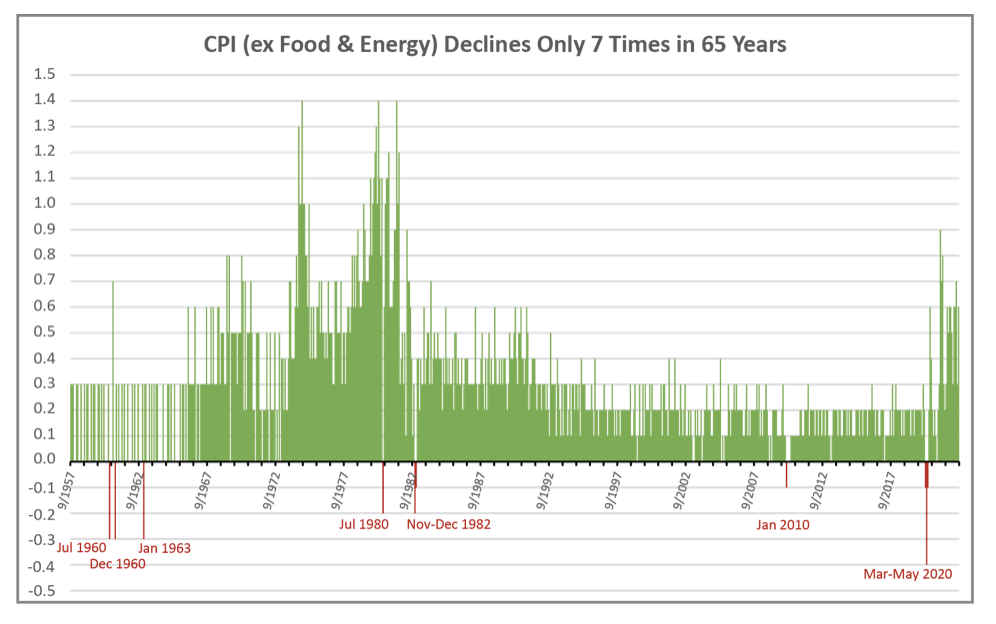
Although inflation appears to have peaked, historical data suggests that prices are unlikely to reverse themselves, which could lead to an extended period of wage inflation.
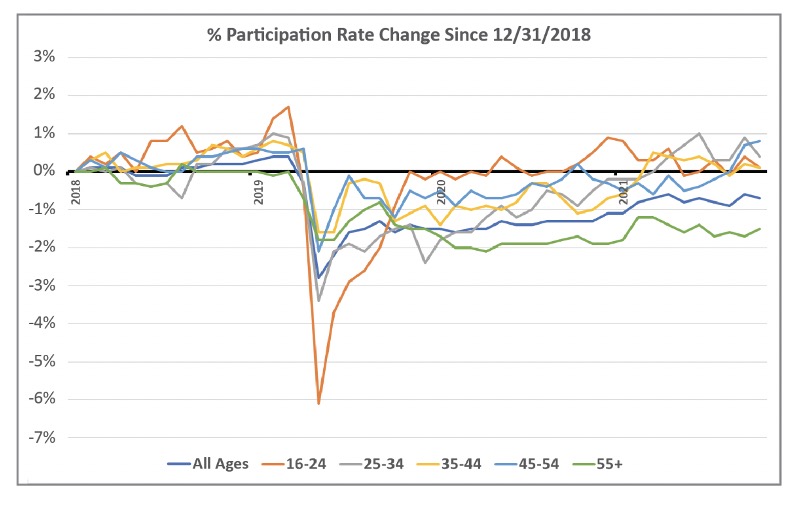
Structurally tight labor markets are providing support for tighter monetary policy, but the Fed may be fighting an uphill battle.
Investors today probably feel a bit like the joker and the thief from Dylan’s classic, “All Along the Watchtower” – there’s too much confusion, they can’t get no relief. But our Core Equity team believes there is a way outta here – investing in dominant companies that pay growing dividends.
The Fed remains singularly focused on containing inflation but has made little headway so far.