DoubleLine CEO/CIO Jeffrey Gundlach, widely known in the capital markets as the "Bond King," spoke at a Total Return Webcast.
The U.S. labor market continued to show signs of cooling, with all major labor indicators pointing to a softening trend and a weak hiring environment. Read through the major economic news from the week of September 2nd - 5th.
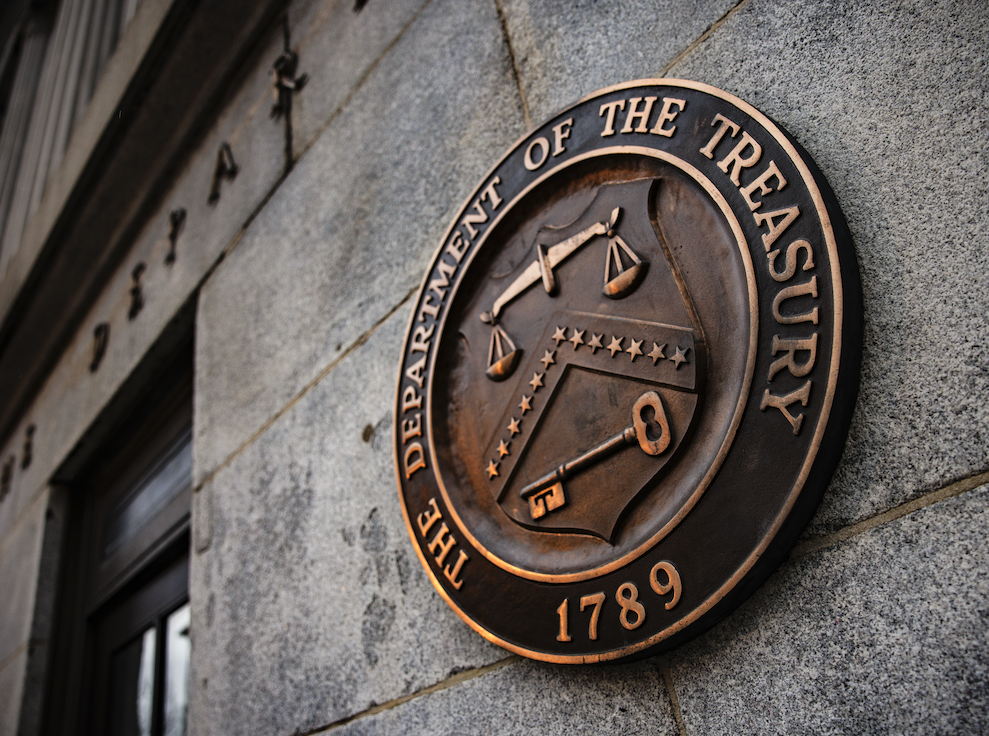
Investors are leaning into bullish bets on US Treasuries ahead of this week’s inflation report, as a recent run of softer-than-expected data opens the door for the Federal Reserve to cut interest rates in September and further ease monetary policy in the months ahead.
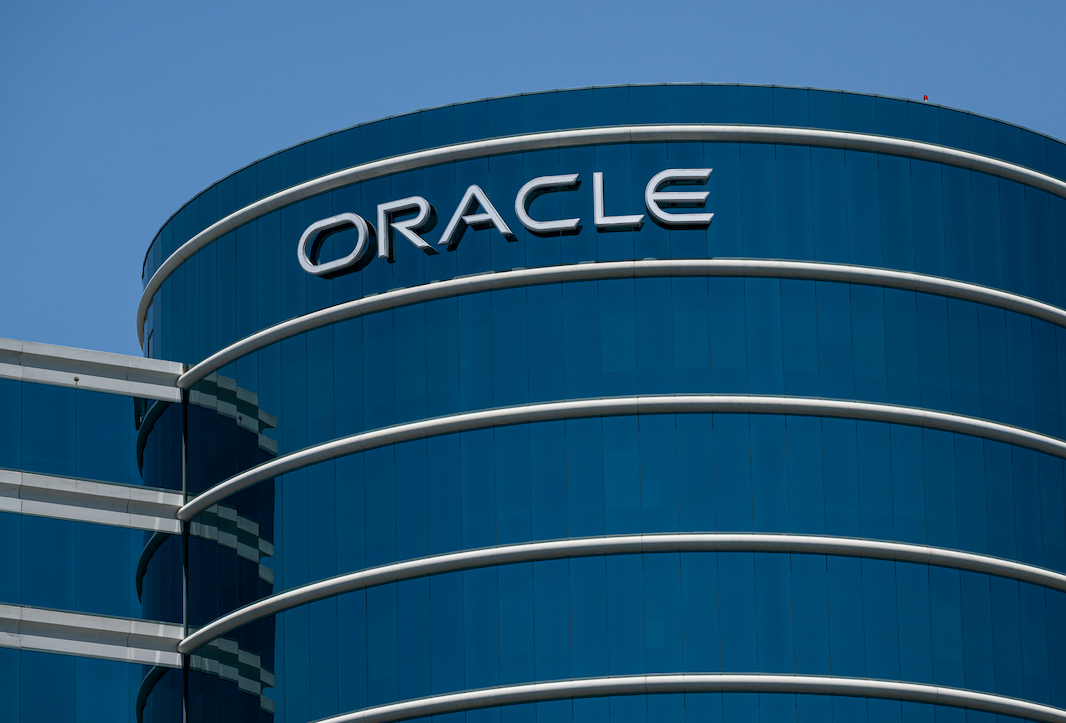
Oracle Corp. is set to vault past stocks such as JPMorgan Chase & Co. to become the 10th most valuable member of the S&P 500, after a blowout cloud business forecast sent its shares soaring.
Market uncertainty continues to linger in the back of fixed income investors’ minds. But that can force much-needed recalibration of portfolios as tariffs and rate cuts loom. A compelling option to consider: corporate bonds.
The rise of private markets has brought new attention to private investment grade (IG) credit, which can offer investors a premium over public IG for giving borrowers customized terms – though that premium comes with certain risks.
Surface-level diversification is no longer enough in a market increasingly driven by passive flows and dominated by a few mega-cap names. Owning multiple funds or asset classes does not guarantee protection if the underlying exposures overlap. Investors must go deeper and look beyond labels and into the actual drivers of risk and return.
Healthcare has been the worst-performing sector in the S&P 500 so far this year.
Ben Fulton, CEO of WEBs Investments, highlights the firm’s suite of Defined Volatility ETFs, which dynamically adjust equity market exposure based on real-time market volatility. Arthur Nowak, Client Portfolio Manager at Alger, discusses the firm’s high-conviction approach to investing in innovation and growth – including the Alger AI Enablers & Adopters ETF (ALAI).
Join Tema ETFs CEO Maurits Pot to discuss how to better manage S&P 500 concentration, which is at 50-year high levels.
There are many ways to describe the strong performance in large cap US stock prices this year. You could simply call it a bull market, with the S&P 500 total return index up 31.2% since its low in early April and up 11.5% year-to-date.
Over the past several years we’ve watched the S&P 500’s performance become increasingly tethered to a handful of Mega-cap technology companies.
Nasdaq Inc. is asking regulators to let investors trade tokenized versions of stocks on its exchange, a move that could mark the first big test of blockchain technology inside the core of America’s equity markets.
Looking back over the past 20 years, airline equities have tended to outperform in the final three months of the year, with the NYSE Arca Global Airlines Index gaining over 3% on average in October; this is followed by an even stronger showing in November and a 3% increase in December on average.
Emerging-market currencies and stocks rose as expectations of an imminent US monetary policy easing pushed the dollar lower and strengthened investor appetite for riskier assets.
Bond investors may need to look elsewhere to supplant income lost from falling yields — they may want to try heading overseas. It's not just a weaker dollar that's been diverting attention to international bonds, but U.S. debt itself.
On this episode of the “ETF of the Week” podcast, VettaFi’s Head of Research, Todd Rosenbluth, discusses the JPMorgan U.S. Tech Leaders ETF (JTEK) with Chuck Jaffe of Money Life. The pair discusses several topics related to the fund to give investors a deeper understanding of the ETF.
A market-wide boom of private equity investment is turning small, local residential service providers into big business. From the outside, it's been easy to miss.
I am a retail advisor and an investment writer, and I have built and managed public funds. Therefore, I see this from multiple angles. But the only angle that matters is that of the retail investor. Let’s evaluate private markets based on liquidity, returns, transparency, and measurement standards.
The U.S. labor market continued to show signs of cooling, with all major labor indicators pointing to a softening trend and a weak hiring environment.
Treasuries edged higher, extending Friday’s gains, as investors shifted their focus to key readings on inflation due later this week.
Investors expecting Apple Inc.’s biggest product event of the year to serve as the next catalyst for its recently-revived stock are likely to come away disappointed.
Advisors and investors find themselves inundated with decisions and choices when investing in the crypto economy. Between deciding what cryptocurrency to invest in (bitcoin, ether, tether, solana, etc.) and how to gain exposure (direct exposure, indirect exposure, via an ETF), fitting crypto into a portfolio can be a complicated affair.
August brought with it a slowing in ETF launches from the summer spree, while inflows continued as investors increasingly bought into bonds.
With an interest rate cut looming this month, investors may be looking at their available options. For many, their passive bond funds have done well, but may not be well-positioned for one or potentially multiple cuts.
Investors betting that a torrid rally in gold miners has room to run face a test of their conviction as the US government gets set to deliver jobs data from August.
Goldman Sachs Group Inc. is making one of the biggest pushes into Middle Eastern private credit yet, betting that a growing need for non-bank lending in the region will open the door for a slew of deals for its clients.
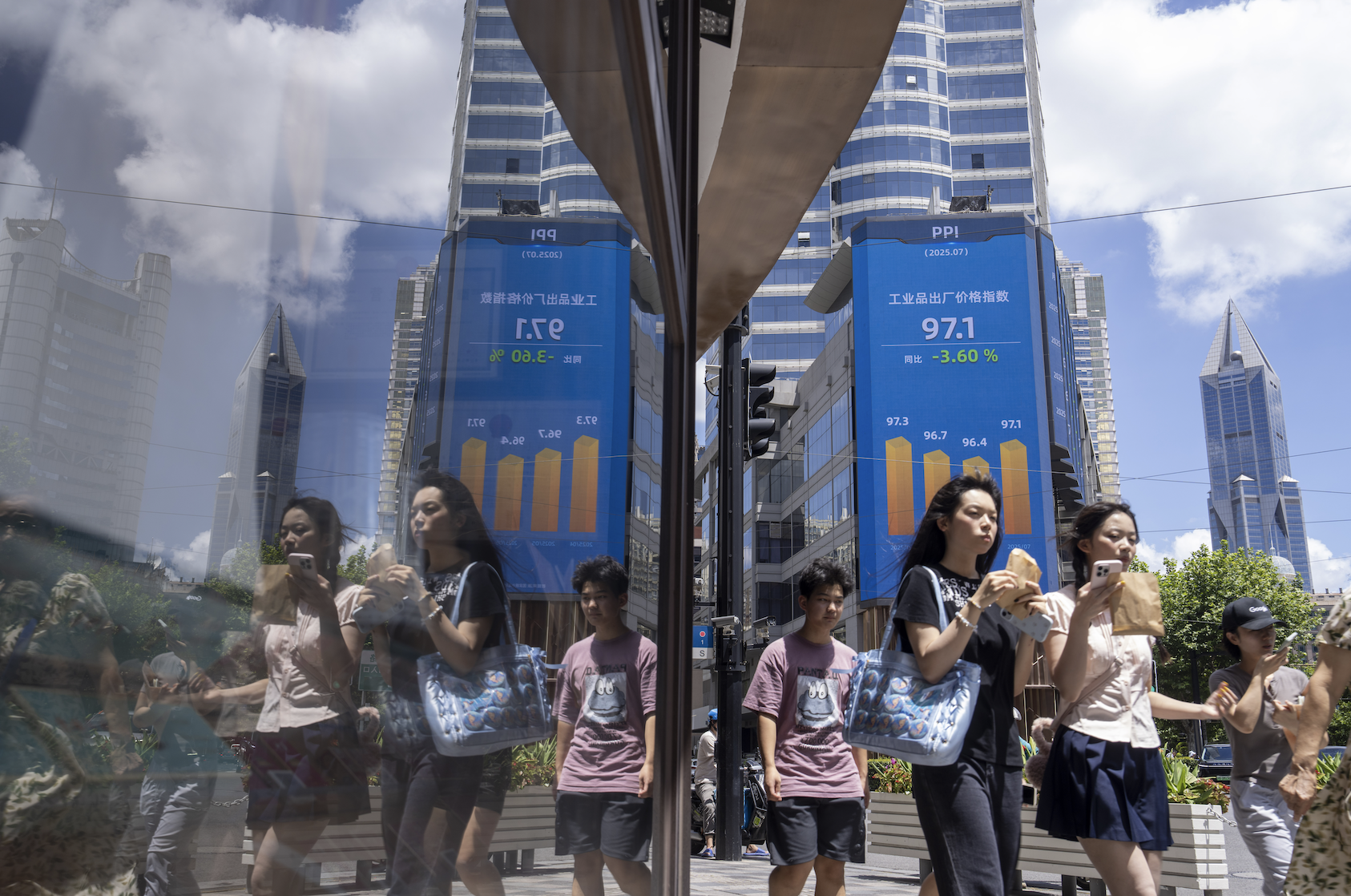
Count stocks from China among this year’s international standouts. Widely observed gauges of equities in the world’s second-largest economy are outpacing both the S&P 500 and the MSCI Emerging Markets Index by comfortable margins since the start of this year.
Advisors have looked to international markets for much of this year for a crucial source of diversification amid U.S. uncertainty.
The AI adoption case is gaining momentum across an array of industries. A trend that largely started in the financial services and healthcare sectors is spreading rapidly to other realms.
From a revenue perspective, we were also encouraged by sales coming in +2.1% higher than analysts expected, with all 11 sectors showing positive revenue surprises. This also allays our fears that tariff impact might be worse than the analyst community feared.
Cantor Fitzgerald LP is planning to hire dozens of bankers in the Middle East in the coming years after the Wall Street firm appointed a veteran EFG Hermes rainmaker to lead its business in the region.
Apple Inc. is planning to launch its own artificial intelligence-powered web search tool next year, stepping up competition with OpenAI and Perplexity AI Inc.
Whether you’re building your portfolio, trying to diversify or considering new investments, understanding the difference between active and passive funds is extremely helpful. Both mutual funds and exchange-traded funds (ETFs) can be either active or passive.
The house of pain continues with small caps, at least on a relative basis. Year-to-date, the S&P 600 index has posted a 3.0% gain, so it's not like money is being burned. But still, even the Bloomberg Aggregate Bond index is up 4.9% YTD and the S&P 500 is up 10.9%.
Something close to the best-case scenario emerged for Google on Tuesday when a federal judge outlined its punishments for running an illegal search monopoly. The company will not be forced to sell its Chrome browser or Android operating system.
If Modi now wants to reach out a hand to the leaders of Eurasia, one might assume it is entirely because India has been insulted and rejected by the US — laden with higher tariffs than almost all its peers, and continually needled by President Donald Trump’s advisers and officials.
Bank of America Corp. will offer investments in private equity funds to its ultra-wealthy clients, a move that comes as more financial firms give access in alternative assets to a broader swath of millionaires.
Blackstone Inc. and State Street Investment Management are joining forces to launch an exchange-traded fund tracking European collateralized loan obligations, a move that comes as private markets seek to widen their investor base.
After a volatile first four months of 2025, it was a good summer for investors to go on vacation, as markets, for the most part, went up weekly.
In the post-pandemic era, one of the ABCs of investing has been “anywhere but China.”
The lifespan of Tesla Inc.’s “master plans,” strategic missives from Chief Executive Elon Musk, has declined dramatically. The first held for a decade. The third, just superseded by Master Plan Part IV, didn’t even make its third birthday.
Equities thrive when discount rates are low. Cheap capital inflates the present value of future cash flows, giving companies more leeway to finance growth and investors more willingness to pay higher multiples.
With an eye on mitigating rate risk, short-term bond funds have been the apple of fixed income investors’ eyes the past few years.
Emerging market investing has long been dominated by China’s outsized role. The country once accounted for roughly 30%-40% of many EM indexes.
Investing in cryptocurrencies began as a grassroots movement of investors who believed in the importance of decentralization.
The Nasdaq-100 Index (NDX) is higher by 87.4% for the three years ending August 28. And the Magnificent Seven stocks are taking on larger percentages of other widely observed benchmarks.
Municipal bond exchange-traded funds drew more than double the amount of cash this year compared to traditional mutual funds focused on the asset class, highlighting the growing popularity of ETFs as an investment vehicle in the space.
Goldman Sachs Group Inc. is looking to capitalize on helping private equity clients saddled with bets they can’t exit.
A truly AI-native management platform isn’t a tool with a few generative features layered on. It’s a system designed to use AI for its core functionality, decision making, and user support. That means machine learning isn’t a sideshow.