We’re back to reading tea leaves! Hooray! Next week the Federal Reserve will have its second meeting since Kevin Warsh officially took the helm. And, at this point, the outcome is far from certain, which is unusual given that ever since Ben Bernanke instituted “forward guidance” the market usually knew what to expect.
As we move toward the mid-term elections, many are making the argument that “democracy is at risk.” We get politicians making this argument, but when supposedly sober political and economic analysts start to make it, we do get worried.
America has proven that men and women not only can make their own history, but they can make it as they please, with circumstances chosen by themselves.
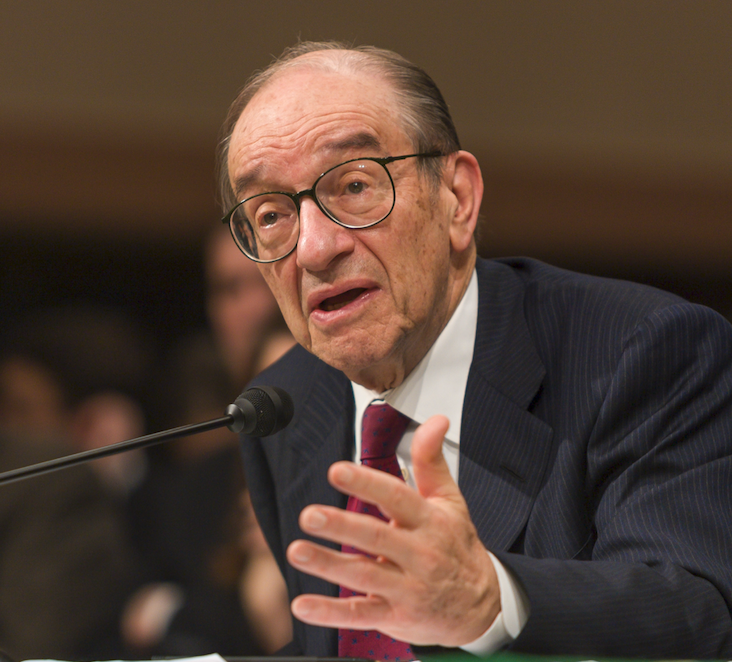
Alan Greenspan passed away last week at the ripe old age of 100. Other than presidents, few Americans have wielded as much power in the arena of economic policy as Greenspan did during his roughly eighteen years and five months at the helm of the Federal Reserve.
The results of Kevin Warsh’s first official set of meetings on monetary policy as the Chairman of the Federal Reserve were like a breath of fresh air.
In Kevin Warsh’s first meeting as Fed Chair, the FOMC held on rates but made significant changes to both their economic projections and the nature of today’s Fed statement. And today’s press conference shows there is a lot more change to come.
This week the Fed has its first meeting under new Chair Kevin Warsh. For only the third time in US history, the former Chair, Jerome Powell, will still participate as a regular member of the Board of Governors.
The job market was surprisingly strong in May with non-farm payrolls growing 172,000, beating even the strongest forecasts for the month. As a result, the futures market is now pricing in a quarter-point rate hike later this year and more likely than not another quarter point rate hike sometime in 2027.
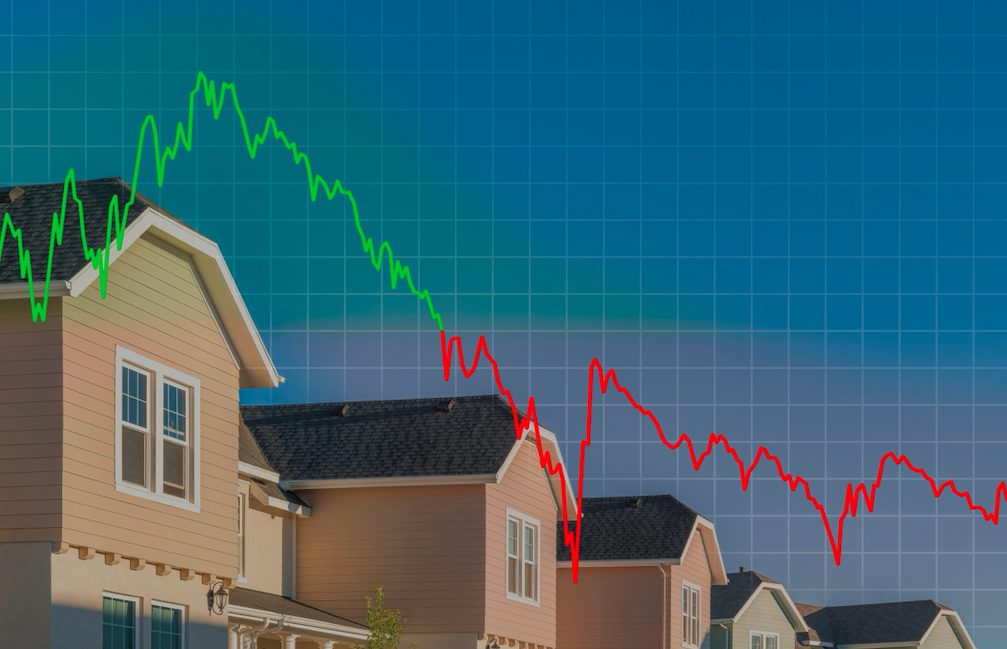
A little more than six months ago there were narratives circulating that national housing prices were in an even bigger bubble than the one twenty years ago and headed for an “inevitable” collapse. Given that national home prices dropped about 27% from peak to bottom in the last housing bust, that would be something to worry about.
You don’t have to go very far to find lots of negative commentary in the popular press about the current state of the US economy. High gas prices (due to a “war of choice”) are squeezing consumers’ budgets, and so the economy is headed for a ditch.
One thing most people don’t know is that prior to the invention of the Fed, other than during wars, there was almost no inflation. Various sources including the Federal Reserve regional banks show the purchasing power of $1 in 1900 was the same as or higher than it was in 1800.
The stock market is on an absolute tear, with the Nasdaq up 5% last week and nearly 13% year-to-date. The proximate causes include a cease-fire somewhat holding with Iran, a 28% surge in S&P 500 corporate profits in the first quarter, and some consensus-beating economic reports, like Friday’s payroll numbers.
Kevin Warsh wants to make some big shifts in monetary policy at the Fed. Unfortunately, unless and until soon-to-be former Chairman Jerome Powell steps down from his regular seat on the Federal Reserve Board, Warsh will be Chairman in Name Only.
Geopolitics – beyond the Fed’s control – have added to economic uncertainty and cloud the outlook as Fed Chair nominee Kevin Warsh (who this morning won the backing of the Senate Banking Committee and will now head to the Senate for final confirmation) looks almost certain to take the reins in just over two weeks.
For all the chatter about Artificial Intelligence lifting economic growth, GDP isn’t showing it yet. We are projecting that real GDP grew at a 2.0% annual rate in the first quarter, matching the average annualized pace of growth since the peak back in late 2007, right before the Financial Panic and so-called Great Recession. In other words, mediocre growth.
The federal government is still on an unsustainable fiscal path with the national debt reaching $39 trillion in March and set to move higher in the years ahead as we keep running budget deficits. However, beneath the headlines both revenue and spending trends have shifted in a positive direction. It’s possible that investors are recognizing this and this may be helping buoy stock markets.
If you expect Kevin Warsh to quickly take the helm at the Fed and start cutting rates, you need to adjust your expectations.
At this point, we think the odds are very high that the Democrats win back the House in the mid-term election in November. Compared to how they did in 2024, the Democrats only have to gain three seats to take back the House.
The US economy grew a pedestrian 2.0% last year and the Atlanta Fed’s GDP Now is currently projecting real GDP growth at a 2.0% annual rate in the first quarter. If anything, we think there is more downside risk than up to the first quarter projection.
The Fed’s decision made sense: don’t change the target for short-term interest rates if we don’t know what the world will look like tomorrow. But investors need to remember a couple of important things. Rate cuts, if they ever come, are less important than the money supply.
As expected, there was no rate cut at today’s meeting, but changes to economic projections and comments at the press conference gave some light into how the Fed is processing political and geopolitical events, and how those events are shaping the Fed’s outlook.
In the aftermath of the first Internet stock-market bubble of the late 1990s the economy went into a relatively shallow recession starting in 2001. That recession was precipitated by a tight monetary policy, with the Federal Reserve setting short-term interest rates consistently above the pace of nominal GDP growth (real GDP growth plus inflation).;
About a month ago the financial markets were surprised by a January jobs report that was stronger than expected. The consensus was for a gain of 68,000 private-sector jobs, but the actual came in at a much higher 172,000.
History may rhyme, but it doesn’t repeat. War is uncertain, and while the US and Israel are dominating, investors would be foolish to assume they know every twist and turn to come. Even here at home, where threats exist.
As we expected, the Supreme Court struck down most of the new tariffs President Trump had imposed since taking office thirteen months ago.
If you’re grading the economy based on real GDP, it looks pretty good; if grading based on jobs, not so much.
President Trump finally made his pick for Fed Chair and it is Kevin Warsh. A Wall Street Journal editorial said Warsh has been “the leading voice in public life for reforming the Fed.”
The Federal Reserve held rates unchanged at the first meeting of 2026, while it waits to see what direction inflation, employment, and other policies take in the months ahead.
The Fed meets on Wednesday to discuss the direction of monetary policy. With the futures market pricing the odds of “no change in rates” at 97.2%, no one should expect a rate cut at this meeting…or, we think, anytime soon.
The data are mixed and trying to draw definitive conclusions from it is virtually impossible. This fog should lead everyone to maintain a cautious investment stance. What does that mean? Be careful concentrating too much in high priced sectors of the market. Broaden out. When driving in fog, drive more defensively.
Last year, we thought economic growth would slow. Verdict: GDP data say we were wrong, employment data say we were right. Last year we thought the stock market would decline. Verdict: it did in March and April, sharply, but the S&P 500 ended the year with an impressive 16.4% gain. Overall, we’d say our negativity was unwarranted.
When it comes to interpreting the economy we put a premium on sobriety. One good piece of economic data doesn’t mean a boom, nor does one bad report mean a bust.
This reflection reexamines the traditional Nativity narrative, suggesting that the "no room at the inn" dilemma was a result of government-mandated census pressures rather than the greed of a private innkeeper.
We’re finally breaking out of the clouds! Economists have mostly been flying blind because of the government shutdown, but this week the data really start to flow again. In particular, we get a partial report on the employment situation in October and a full report for November, retail sales in October, and consumer prices in November.
The Federal Reserve concluded its last meeting of 2025 with another quarter-point rate cut, while maintaining its outlook for only one cut in 2026.
This week features two crucial monetary policy events: the widely anticipated Federal Reserve meeting on Wednesday, where a rate cut is expected along with new economic projections; and the Senate hearing on Thursday focused on "The Fed's Big Bank Welfare Program" (IORB regime).
In the ten years prior to the onset of COVID, the consumer prices index rose at an average annual rate of 1.7%. Since the onset of COVID the overall CPI has risen at a 4.2% annual rate. Inflation peaked at about 9.0% back in 2022 but is still hovering between 2.5 and 3.0%, which is above the Federal Reserve’s official target of 2.0%.
Many of you may have recently seen a chart circulating on the internet suggesting a nationwide collapse in home prices is on the way, that we are in the “biggest bubble in history,” the collapse is “inevitable and nothing can stop it.”
Clearly, policies which boost individual freedom, not government engineering, work best. And as usual, the arguments of one political party are often designed to hide the fact that their policies are the very thing they claim to detest in the other.
With the next deadline at the end of January, well past Christmas, another shutdown and spending battle is brewing early next year. Investors will need to watch the next one closely to see if policymakers who want to control deficit spending are able to make progress.
History is absolutely clear – Capitalism is the best system ever developed (actually evolved by human experiment) to boost living standards. At the same time, Socialism has a seriously lousy record.
Regulatory changes and productivity gains could push growth to move even faster in the years ahead. But we are also still dealing with the uncomfortable process of moving away from government stimulus and massive deficit spending that have boosted growth numbers in the post-COVID era but were unsustainable.
A small part of the federal government took a short break from being shut to make sure the Labor Department could deliver the September Consumer Price Index.
As we recently argued, investors don’t need to worry about the federal government shutdown showdown causing a recession. Before the current shutdown, the federal government had been shut for eighty days in the prior thirty years, with none of those days during a recession.
Over the past two and one-half decades the federal government has buried taxpayers under a mountain of debt, now approaching $38 trillion.
No one, that we know of, is saying Artificial Intelligence (AI) isn’t an amazing new technology that will have an important impact on life, investing, and the economy.
Economic data are all over the place. GDP keeps growing in spite of signs of weakness in the labor market. Tariff policy is volatile, immigration has slowed, monetary policy tightened in 2023-24, with the M2 measure of money declining and “real” short-term interest rates consistently higher than at any time since 2010.
The stock market surged to new highs after the Federal Reserve cut the federal funds rate last week and the futures market has priced in more cuts to come. However, these cuts have not helped reduce long-term interest rates and the price of gold has surged to over $3,700 an ounce.
The Federal Reserve cut rates by 0.25% today, citing a rising risk to the employment side of their dual mandate. While that was no surprise, there were many questions on where the Fed would go from here, and what it would take to accelerate or slow the pace of policy adjustment.
In spite of what appeared to be relatively good data, many polls throughout the 2024 election cycle showed more than half of all voters rated the economy as “poor.” That left the Biden/Harris team often wondering why they couldn’t get credit for what official statistics said was a robust economy.