In June we pointed out that Health Care looks cheap. Even though it has been rallying hard of late, the sector continues to trade at a 59% price-to-sales discount to the S&P 500, despite having an 18% return on equity (ROE) that is just a hair below the 19% ROE accorded the S&P 500.
There’s no doubt the most important aspect to the June FOMC meeting was the fact that policymakers kept the Fed funds rate unchanged and removed its prior easing bias. But, this was not just your normal, run-of-the-mill policy gathering. It was Kevin Warsh’s first meeting as Fed Chair and instead of being a ‘rubber stamp’ for rate cuts, as some market observers were opining, the new FOMC leader put his stamp on the Fed in a different way.
The slippery slope never fails. Go back to the 1979 Chrysler bailout and we can find the roots of the US government’s current predilection for getting involved in stocks and bonds.
Even if the Middle East war does find a lasting settlement, the specter of inflation appears poised to hang over the markets. Indeed, while employment data had, up until recently, been the primary focus for investors, arguably, inflation reports have now moved into the ‘leaderboard’ position.
Stocks’ rally off the March 30 lows has been nothing short of wild, with internal market dynamics showing some performance divergences that we haven’t seen for decades. For example, in the first 6 weeks of the rally, the S&P 500 Growth index beat the S&P 500 Low Volatility Index by more than any other 6-week window on record.
While the Middle East war takes on the lion’s share of headlines, and rightfully so, there has been another development in bond-land that has gone relatively unnoticed. Indeed, one concern that crops up in the U.S. Treasury (UST) market is the potential for higher budget deficits from the already lofty current reading.
The stock market would love to see nothing more than the labor market holding up. Time and again, we find monetary policy having a beautiful, lagged effect in the jobless claims series. We are of the view that the cumulative 175 basis points of Fed rate cuts that hit the market in 2024 and 2025 is exactly what the labor market needs in 2026-2027. We will soon find out if manufacturing employment continued to mend in April.
Developments in the Middle East continue to be, without a doubt, taking center stage for the financial markets. However, it’s important to keep tabs on the U.S. macro-outlook, especially the labor market and inflation aspects.
At the risk of leaving aside the flow-through of the crude oil price into expenses such as electricity, trucking, and so on, let’s just look at the pocketbook hit from filling up the family car specifically.
Prior to the conflict in the Middle East, the U.S. financial markets were being confronted with headlines and attendant concerns surrounding the credit markets.
After peaking above 114 in September 2022, the dollar index has spent the last several years drifting lower, touching 96 a few weeks ago before stabilizing at 97.68 as we write. Much of that move has stemmed from weakness relative to the euro specifically.
The mid-term elections are still more than eight months away, but that hasn’t stopped stories and headlines being posted about possible outcomes and what are perhaps the main drivers come voting day. Without a doubt, the number one issue appears to be the notion of affordability, and of course, what plans do the Republicans and Democrats have in store to address this issue.
The near-perfect timing of gold breaking through $5,000 while silver sliced through $100 has grabbed the market’s attention.
While the breaking news regarding the Fed receiving subpoenas from the Department of Justice will no doubt garner the lion’s share of Fed-related headlines in the days and weeks ahead, we wanted to roll the clock back and delve into what the markets should be looking at in terms of upcoming traditional monetary policy decisions.
We guess if you say something enough, a lot of people will start to believe it. The current refrain is that the labor market is cold, weak, struggling. A Google search for “labor market” is eye opening. The first five headlines use the words ‘weakened,’ ‘troubling,’ ‘risky,’ ‘slowing,’ and ‘warning signs.’
Despite the concern post-2024 election about rising U.S. deficits and a potential return of "bond vigilantes," the supply side of the Treasury market has remained stable, with deficits settling near the $1.8 trillion baseline.
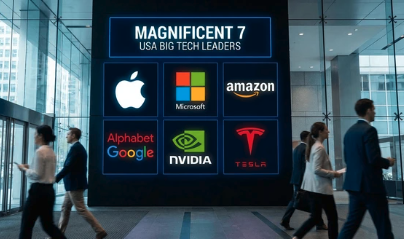
This article questions if the high valuation multiples are justified, arguing that investors will soon need to see actual cash flow results from this massive CapEx bonanza.This aggressive spending has caused their collective free cash flow growth to turn negative, raising concerns since stock valuation is based on future free cash flow.
The Fed can turn QE back on like they did in the latter part of 2019, most likely by buying T-bills. It is important to note that this would be purely a technical mechanism for the funding markets and not a dual mandate monetary policy consideration.
Part of the reason behind Japanese stocks’ discount to the U.S. is the profitability gap; the U.S. has a Return on Equity (ROE) of 18.3%, while Japan’s broad market has yet to break above 10% on that measure (though some forecasters believe Japan will get its act together).
The financial markets have been laser-focused on upcoming policy decisions from the Fed, and rightfully so. Following the resumption of the current rate cut cycle, investors have been wondering what exactly this second phase will ultimately look like.
Market sentiment has come a long way since the Tariff Tantrum. Earlier this year, the VIX volatility index shot up into the 60s, a fear level previously seen in such episodes as the October 1987 crash and during 2008’s rolling bank insolvencies.
One question we’ve been fielding quite a bit of late is what do you think the Treasury (UST) yield curve will do?
Nvidia made a splash last week, or maybe an anti-splash, when it reported earnings and stated an intention to buy back $60 billion in stock.
It happened quickly. One minute, the focus was on the furious nature of stocks’ rebound off the April 8 lows. The next minute you start hearing strategists, including ourselves, making references to 2021.
One of the more storied headlines this year has been President Trump’s disappointment with the Fed for not cutting rates. We should all know by now that the President cannot fire a Fed Chair simply because he/she is not lowering interest rates to their liking.
It wasn’t too long ago that you could confidently proclaim that most of the Street was ebullient, maybe even wildly so, with respect to the greenback’s prospects.
In the current land of uncertainty the markets and investors find themselves in, the monthly Employment Situation report is ‘must-see TV’ and will remain that way for the foreseeable future.
Remember last July and August when the yen carry trade blew up? At the time, the central bank surprised the market by signaling a faster pace of rate hikes than expected. Investors sold foreign currency, bought back yen and sent markets into a tailspin.
After a brief reprieve from all the recession talk while the Fed was raising rates to decades-old high watermarks, the ‘R’ word has come back into vogue once again post-Liberation day.
First, let’s check the market action. Fortunately for stocks, the public has come around to a thesis that the sky is not falling, though there are a ton of market viewers who remain decidedly skeptical that the worst is behind us.
The month of April will unfortunately go down in financial market folklore as being one of the more noteworthy on record.
Compensation dynamics are commanding investor attention once more. For the first time in decades, Japan's pay increases—finalized at +5.46% in this year's shunto negotiations—have notably exceeded compensation growth rates in the United States.
In the understatement of 2025 thus far, the headlines emanating from Washington, D.C., have been fast and furious. Whether they be tariff-related, involving federal government cuts or geopolitical in nature, there has been a headline for many facets that investors could think of.
Following the relatively solid January Employment Situation report, the market’s undivided attention, at least economic data-wise, then turned to the latest CPI reading. Indeed, with the jobs aspect of the Fed’s dual mandate clearly showing no urgency to cut rates further at this time, the question then turned to the inflation portion of the policy maker’s mission.
There weren’t too many market observers who penciled in higher tariffs on Canada than on China, but that’s where things stood, at least for a few hours, before Trump struck a deal with Prime Minister Justin Trudeau yesterday.
All of the attention when it comes to future Fed monetary policy decisions has been laser-focused on rate cuts. We would have to concur, and rightfully so. However, that doesn’t mean investors should take their eyes off the ball and not consider the Fed’s balance sheet.
While the market has largely moved past that year’s recession debate, it’s worth noting that the traditional definition that persisted for all our careers—two consecutive quarters of negative GDP growth—did occur in the first half of 2022.
A couple of weeks ago, we wrote about how the deficit had come back into focus for the U.S. financial markets.
To judge by the action in some foreign markets, Donald Trump’s election is pricing in economic winter.
While the primary focus for the financial markets has been on the continued resilient U.S. economy and what the current Fed rate cut cycle will ultimately look like, there has been another topic that has been making the rounds in the bond arena: the budget deficit.
The Fed’s “recalibration” of monetary policy is more than just about shifting to rate cuts. It also involves where the policy maker is now placing its greater emphasis on setting the course for easing in the future. Rather than inflation being the primary driver in the decision-making process, labor market activity has now taken center stage, and with that, one could argue, for the Fed, it’s now about the economy.
In the span of a few days in late July, the market got live to two contrasting theories at once: that U.S. inflation is collapsing while Japanese inflation will remain stubbornly high.
Post-Jackson Hole and now post-jobs report, the markets can settle in for a rate cut at next week’s FOMC meeting.
Is the Japanese yen carry trade back on? Tough question. We think it is, now that the Bank of Japan has toned down its hawkish rhetoric. More on that later. Still, even if we are wrong, the reality is that the market will be talking about the violent ructions of August 2024 for the rest of our careers.
The financial markets appear to be rather confident the Fed will finally begin its rate cutting process at the September Federal Open Market Committee meeting, at a minimum. The debate has now shifted as to what this easing cycle will ultimately look like.
The big story making the rounds this summer is the spike in the small-cap Russell 2000 since the release of the latest Consumer Price Index (CPI) report, which shocked the market by printing 0.0% month-over-month in June.
The outlook for the Federal Reserve (Fed) through the first six months of 2024 has been a bit of a roller-coaster ride to say the least. While one could argue the overarching premise has been for rate cuts, it has certainly not been a smooth ride.
Is the labor market okay? Depends on who you ask. The answer to that question should be a strong guidepost for whether you like Consumer Staples relative to the broad market.
Here we are through the first five months of 2024, and you could say the more things change, the more they stay the same. What exactly do we mean, you might ask?
The consensus has egg on its face with respect to Chinese stocks. It wasn’t supposed to be this way. Entering this year, one of the big concerns—and the primary reason for China’s ugly multi-year bear market—was the country’s destiny with a “4-handle” on gross domestic product (GDP) growth.