US Treasuries edged higher as oil prices softened after the US paused its nearly two-week campaign of strikes against Iran, while traders eyed a roughly one-in-three chance of a Federal Reserve interest rate hike on Wednesday.
US Treasuries are offering investors solid protection against losses as yields remain elevated, according to BlackRock Inc.
The US 30-year bond yield is trading above 5% for the longest stretch since the dawn of the financial crisis, echoing investor concerns about a growing debt pile and sticky inflation.
Bond traders and Federal Reserve Chairman Kevin Warsh are in agreement on a crucial point: The central bank’s fight against inflation still seems far from over.
What’s good for the US dollar isn’t always good for US bonds — but investors are finding ways to work around it.
Investors from Fidelity say new Federal Reserve Chairman Kevin Warsh stands to stoke bond-market volatility by offering his views on inflation.
The rise in US yields has extended across the entire Treasury curve, creating a charged backdrop for Fed policymakers and their new chairman, Kevin Warsh, who helms his first meeting and press conference next week.
Najimah Roberson, a lifelong renter, spent the past two years searching around Harrisburg, Pennsylvania, for a home she could afford — getting outbid nearly 30 times along the way.
Bond traders held onto wagers that the Federal Reserve will lower interest rates once this year after data confirmed that US inflation quickened in March as the Iran war led to higher gasoline prices.
Some of Wall Street’s biggest bond-fund managers say financial markets are underestimating the risk that the US war in Iran will cause a sharp slowdown in an already sputtering economy.
BlackRock Inc.’s Rick Rieder, the firm’s top bond-market executive who was passed over by President Donald Trump to be chair of the Federal Reserve, is pursuing investor cash for his first hedge fund in years.
Morgan Stanley is sticking with a forecast that sees the Federal Reserve resuming interest rates cuts in June and delivering another reduction in September, even as soaring oil prices prompt traders to curb bets for how much policymakers will lower borrowing costs this year.
Bond investors, who have been focused on inflation since the Iran war began, say a surprise in the monthly US jobs report has the potential to upend their expectations for Federal Reserve interest-rate cuts.
Treasuries fell for a fourth day — lifting yields to the highest levels in several weeks — as rising oil prices ignited inflation expectations and dented the outlook for Federal Reserve interest-rate cuts.
US Treasuries slumped for a second day as surging oil prices prompted traders to slash bets on more than one Federal Reserve interest-rate cut this year.
US bonds are wrapping up their best monthly performance in a year against a backdrop of rising global risks, with resurgent demand serving as proof that investors still see Treasuries as the premier haven in turbulent times.
The US Treasury refrained from any major shift in its debt-issuance strategy, meeting dealers’ expectations in the face of speculation that officials might take steps to bring down longer-term borrowing costs.
Treasuries gained across the curve as softer-than-forecast US inflation data led traders to step up bets that the Federal Reserve will cut interest-rate next year.
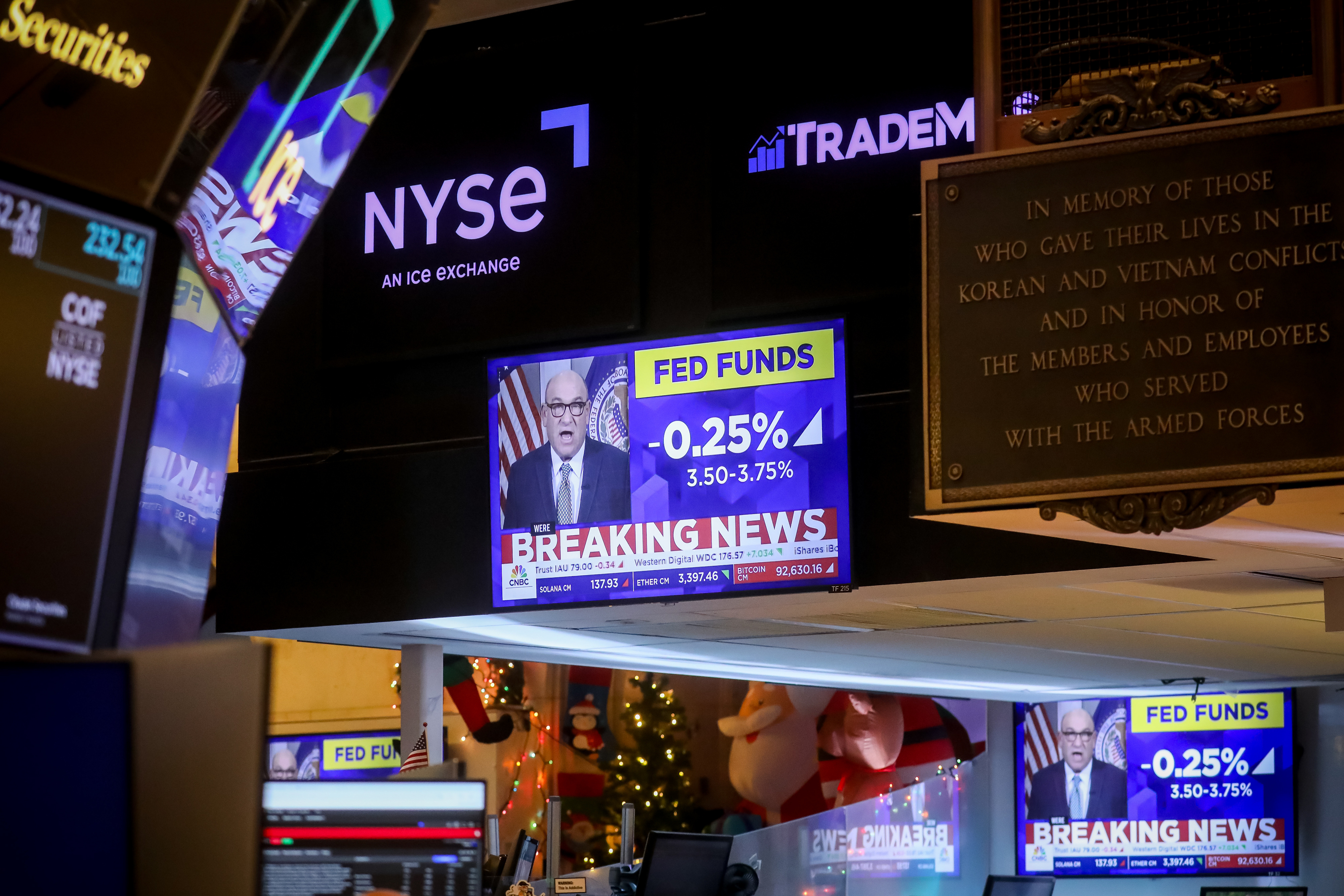
US Treasuries rose after the Federal Reserve lowered interest rates by a quarter-point for a third straight meeting and left the door open to additional policy easing in 2026.
Market focus is shifting to the Fed's 2026 outlook, as stubbornly elevated inflation and recent hawkish signals suggest the central bank may signal an "extended pause" after this cut. Consequently, traders have recently scaled back expectations for the total number of cuts next year, expecting the easing cycle to stop closer to 3.5% rather than the previously forecast 3%.
Across April and May, the bond giant’s positions in 5- to 10-year Treasuries and mortgages were getting hammered. First, after President Donald Trump’s punitive “Liberation Day” tariffs, and then amid the burst of “Sell America” calls that followed.
Treasury yields edged lower, with the 10-year nearing 4%, as data affirming labor-market weakness and remarks from Federal Reserve Governor Stephen Miran bolstered expectations for an interest-rate cut next month.
The US Treasury indicated it’s not looking to boost sales of notes and bonds until well into next year, in a decision that will see the government increasingly rely on bills to fund the budget deficit.
Investors are bracing for Treasury Secretary Scott Bessent to lean more toward shorter maturities in the government’s funding mix to keep down long-term yields amid a mounting debt burden.
Treasuries fell the most in nearly five months after Federal Reserve Chair Jerome Powell cast doubt on a December interest-rate cut, even as a sagging labor market prompted policymakers to bring down borrowing costs Wednesday.
All it took was a classic bout of haven buying to wake up a slumbering Treasuries market and drive benchmark yields to the lowest in months.
Treasuries advanced Friday as traders reacted to evidence the US government shutdown may be curtailing economic activity.
At BlackRock Inc., PGIM and other Wall Street firms, bond-fund managers are sticking to trades that will likely pay off even if the Federal Reserve’s path is again knocked off course by surprising turns in the economy.
A key question for investors this week is whether Federal Reserve officials push back against market bets on a series of interest-rate cuts extending into next year.
Investors are leaning into bullish bets on US Treasuries ahead of this week’s inflation report, as a recent run of softer-than-expected data opens the door for the Federal Reserve to cut interest rates in September and further ease monetary policy in the months ahead.
US Treasuries were under pressure amid a rout in long-dated European bonds and a surging calendar of corporate debt sales as traders returned from the holiday long weekend.
Bond investors are heading into Friday’s much-anticipated Jerome Powell speech largely expecting the Federal Reserve chair will indicate policymakers will start cutting interest rates next month.
Jack McIntyre’s US global bond fund, aided by a slumping dollar, is posting one of the best performances in its almost two decades of existence. His challenge is convincing investors that it’s more than just a flash in the pan.
Investors in US Treasuries will scour employment data Friday for clearer evidence of a hiring slowdown that could open the door to the Federal Reserve cutting interest rates in September.
Treasuries tumbled after a stronger-than-expected jobs report for June prompted traders to exit bets on an interest-rate cut by the Federal Reserve this month.
Treasury yields declined Tuesday as US economic data left intact expectations that the Federal Reserve will cut interest rates at least once more in 2025.
After weeks of hand-wringing around demand for long-term US debt, all eyes are on Thursday’s 30-year Treasury auction for a fresh read on whether spiraling deficits are causing investors to shun the maturity.
US Treasuries surged as easing US consumer inflation prompted traders to increase their wagers on more than one Federal Reserve interest-rate cut this year.
The “Sell America” trade that gripped markets this month has left a potentially lasting dent in investors’ willingness to hold the US government’s longest-maturity debt, a mainstay of its deficit-financing toolkit.
Treasuries jumped after comments by a Federal Reserve official bolstered odds that the central bank will cut interest rates as early as June.
US Treasuries consolidated gains in a choppy trading session with markets remaining confident that policymakers at the Federal Reserve are still on a path toward lower interest rates.
Bond investors will look for Federal Reserve Chair Jerome Powell to hit just the right notes in his Wednesday remarks to keep up the momentum behind a rally in the $29 trillion Treasury market.
US Treasuries surged and investors boosted their bets on Federal Reserve interest-rate cuts Monday as fear of a economic slowdown took hold across US markets.
Investors in US government bonds are wrapping up their biggest monthly gain since July as the Federal Reserve’s preferred gauge of underlying inflation rose at a tepid pace in January.
Treasuries rallied, led by 10-year yields dropping 10 basis points as traders boosted bets on Federal Reserve interest-rate cuts, with US President Donald Trump’s tariff plans weighing on risk appetite.
US government bonds fell as mixed employment data left traders holding tight to expectations that the Federal Reserve will keep interest rates steady until later this year.
Treasuries rallied on Monday as investors flocked to the safety of US government bonds after equities slumped in a selloff driven by technology shares.
US bond funds actively managed by industry heavyweights like Pacific Investment Management Co. attracted the most new investment last year as money returned after a two-year dry spell.
US government bond yields approached their lowest levels of the year after President Donald Trump refrained from immediately implementing tariffs and oil prices declined, easing inflation concerns.
US government bonds surged as benign inflation data prompted traders to resume their bets on additional Federal Reserve interest rate cuts by July.