What the heck is going on at Stanford? Theo Baker’s How to Rule the World explains. The book answers the question by centering on Baker’s pursuit at The Stanford Daily of the MTL-associated scientific frauds. And an astonishing journey it is.
What do “the utilities of retirement” refer to? Buy gas and electric stocks and live off the dividends? No. Not in this article. We’re talking about utility as an economic term of art, meaning reward, pleasure, and satisfaction.
You don’t have to agree with Chater and Loewenstein’s “crowding-out” hypothesis or their policy prescriptions to benefit from It’s on You, which will, at a minimum, allow the reader to identify and deconstruct i-frame PR when they come across it.
The egregious irony here is, according to Luke Kemp’s Goliath’s Curse, that powerful billionaires like Thiel, Altman, and Hoffman may well have a hand in, or at least be tangentially associated with, ushering in said apocalypse. The primary driver of societal collapse, Kemp believes, is tech-powered inequality, for which Thiel, Altman, and Hoffman are the poster children.
The bulk of “Everybody Loses” sends the reader on a lurid journey through the sportsbook ecosystem. Funt is a talented investigative reporter with a velvet prose hand, but “Everybody Loses” features some key omissions. These oversights, however, are minor, and perhaps even necessary in such a tightly focused, powerful work.
It pays to know what financial storms — and especially their underlying meteorology — look like. This reviewer has not come across a volume that accomplishes this as well — and as entertainingly — as Andrew Ross Sorkin’s 1929: Inside the Greatest Crash in Wall Street History — and How It Shattered a Nation.
No matter how long you delay taking Social Security, it likely won’t cover all your living expenses. But that doesn't mean you should take it early.
More than a generation ago, financial historian Peter Bernstein wrote about investors’ 'memory banks,' the market experience that accumulates in their hippocampi over their investing lives and molds their investment strategy. As he put it, looking back on the 1990s: 'Most of the new participants in the market had no memory of what a bear market was like.'
This reviewer found Breakneck one of the most provocative and insightful national-level policy discussions he has come across: Despite its shortcomings, the general reader wishing to understand just why China seems to be overtaking the US, and what can be done about it, cannot do better.
Financial planners perform a valuable service by discussing with married clients what will happen if the income of one of them disappears upon death. But the focus should be on the adequacy of the remaining income to the spending needs of the survivor — not the change in tax rate from married to single.
At the risk of assaulting an already deceased equine, happy talk about decreased spending in retirement strikes us as the whistling-past-the-graveyard rationalization of those who fear they haven’t saved enough. In plain English, the average retiree spends less than while working because they have to, not because they want to. Advisors and prospective retirees should take care not to confuse the two.
We love Roth accounts - really, we do. As long as we don't have to pay too high an entrance fee. Which would be dumb.
The ever-louder brouhaha surrounding BBD is much ado about nothing. It is expensive, dangerous, and likely to benefit only bankers and brokerage firms.
Don’t allow your middle-aged clients depending on their 401(k) plan to fool themselves. Markets can’t rescue a failure to save until it hurts. And don’t let them kid themselves that a smoother ride with bonds won’t come at the cost of increased shortfall risk.
The book’s title derives from the author’s criticism of young, self-absorbed Silicon Valley types unconcerned by the public good — the “hollow republic” — as opposed to those focused on the commonwealth, the “technological republic.”
No matter how conversant one is with global security issues, it’s hard to fully grasp what that abyss would look like; Jacobsen accomplishes this formidable task by spending more than a decade with the dramatis personae in the history of nuclear weaponry.
While Merton is one of the most brilliant financial economists who ever lived, high-level quantitative chops do not guarantee financial success.
“Risk,” according to London Business School’s Elroy Dimson, “means that more things can happen than will happen.” Serhii Plokhy’s Chernobyl Roulette provides the reader with a compelling demonstration of that dictum.
Foreign Agents provides a powerful and depressing master class in the famous warning of Hamilton’s Federalist No. 21. To quote another founding father, Benjamin Franklin, “a republic, if you can keep it” indeed.
The money manager who hasn’t cracked open the Journal of Finance, Journal of Financial Economics, Journal of Portfolio Management, or Financial Analysts Journal for the past few years probably hasn’t lost any steps.
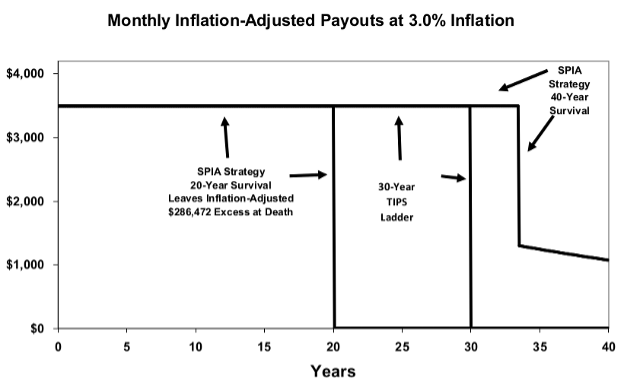
The safest way to ensure retirement security is to match, on a year-by-year basis, future spending needs with a reliable stream of inflation-adjusted income and maturing fixed-income assets. As we’ve already seen, a conventional stock/bond portfolio may not cut that mustard.
Few human activities are more central to historiography than war, and yet historians are poorly equipped to understand its evolutionary and psychological roots: Why War? attempts, with only partial success, to close this gap.
Haidt’s The Anxious Generation documents the post-iPhone 4 explosion of anxiety and depression disorders among adolescents. Haidt calls the substitution of screen time for play “The Great Rewiring” of young brains that is directly responsible for the dramatic increase in adolescent mental health disorders.
Those wishing to explore the gap between the nation’s apparent macroeconomic success and its microeconomic malaise would do well to consult Ruchir Sharma’s What Went Wrong with Capitalism.
Albert Einstein supposedly said that compound interest is the most powerful force in the universe. (He didn’t.) Thanks to neuronal adaptation, however, amnesia is the most powerful force in the financial universe.
Few investments pay off as well as time spent pursuing financial history – to paraphrase George Santayana only slightly: study the past in order to prevent it from picking your pockets.
Rising temperatures will soon render increasing parts of the world uninhabitable.
Rob Copeland’s marvelously readable and well-researched book, The Fund: Ray Dalio, Bridgewater Associates, and the Unraveling of a Wall Street Legend, details a detachment from reality borne on the absolute power deployed by Dalio at Bridgewater.
Victor Haghani has thought long and hard about his participation in the 1998 blowup of LTCM. His big mistake, he concluded, was investing 80% of his personal assets in the firm.
If you believe that an easy solution to improve lower-class standards of living is to raise the minimum wage, or you are curious about what university presidents spend their time on, Angus Deaton’s new book provide insightful answers to those and many more questions that, taken together, challenge the relevance of modern economics and the capitalism it supports.
The Big Myth is the remarkable, and largely untold, story of how America fell in love with market fundamentalism.
If someone’s good enough to regularly trounce the market, they don’t want your money.
Peter Turchin’s End Times is a brilliant, sprawling, and oft-times maddening look at the rise and fall of nations and empire. He’s worried, and rightly so, about the United States.
Inspired by the modest market turbulence late last year, I just couldn’t resist trying my hand at a daily financial column. Only the names have been changed to protect the clueless.
The next time someone expresses a firmly held opinion about homelessness, ever so gently recommend that they read Homelessness is a Housing Problem. The more people who read this book, the closer we’ll be to a solution.
The problem with Gretchen Morgenson and Joshua Rosner’s These Are the Plunderers: How Private Equity Runs – and Wrecks – America is that while their moral and factual indictments of private equity operations find their mark, their pound-the-table-and-yell-like-hell tone detracts from its credibility.
Few financial topics grab more media attention than money managers who make gobs of money while everyone else suffers. Scott Patterson’s The Chaos Kings centers on two colorful participants who regularly do just that, Nassim Taleb and Mark Spitznagel.
A TIPS is risky in the short term and riskless in the long run, which is precisely the opposite of, and complementary to, a T-bill, which is riskless in the short term but, because of reinvestment rate volatility, risky in the long run.
Consumption smoothing, the idea that individuals should budget to match savings and spending over their lifetimes, has been the subject of vast academic research. But a new study challenges basic assumptions and illustrates the divergence between financial theory and practical experience.
The question most asked by investors late last year, as Treasury bill yields hovered just above zero was “Where can I go for yield?” followed soon after by “What can I do to protect myself from inflation?”
MegaThreats, Nouriel Roubini’s latest full-length offering, puts his Olympic-class pessimism on full display.
Antti Ilmanen’s Investing Amid Low Expected Returns updates his 2011 Expected Returns, a volume considered by many the definitive work on the subject.
Investment professionals liken trading against small, uninformed investors to shooting fish in a barrel. With the GameStop saga in late 2020, however, the fish started shooting back.
Flying Blind is beautifully written and comprehensive, covering subjects as diverse as early aviation history, the rise of the shareholder-centric economic doctrine, and aeronautical engineering.
Laurence Kotlikoff is a world-class economist who can convince you to pay off your mortgage and make you snort out your nose laughing at the same time; Money Magic is his compendium of life hacks aimed at leaving the reader wealthier and happier.
Fiona Hill’s tour d’horizon of the worldwide populist backlash is an essential, and highly enjoyable, essential reading for anyone who cares about the health of our economy, our society, and our democracy.
This book is the best, and certainly the most readable, description of the existential threats to privacy and our democratic institutions posed by Facebook and social media. Advisor Perspectives’ informed readership will need only a minimal effort to fill in its gaps.
Desmond Shum’s message for investors is clear: Institutions matter, and beware the siren song of the Chinese economic miracle.
As predicted by financial theory, stocks of companies with positive ESG records underperformed the market. But the problems for ESG investors don’t stop there.
In a society with a weak social safety net, homelessness is the inevitable result of exuberant real estate prices. Those living on the street are the indirect victims of loose monetary policy and low interest rates that foster high property and rental prices.