With stocks struggling to break out of their range, rates climbing, and valuations stretched investors are rightly asking whether it’s time to sell.
Andy Rothman provides a first-hand perspective from his first trip to Shanghai and Beijing since the start of COVID in 2019.
Transitioning into the post-COVID investment environment shifts the foundations of portfolio construction that investors relied on in recent decades. On full display in 2022, inflation and recession risk punished both bonds and stocks together to historic declines.
For this edition of Bull vs. Bear, Nick Peters-Golden and Karrie Gordon discussed the fundamentals for and against investing in Japan ETFs.
Of course, over 300,000 people getting new jobs is good in itself, particularly for those with newfound opportunities. But, for the last several years, as the “great resignation” took hold, there were not many new workers coming into the workforce, leading to falling unemployment.
The first few years of the 2020s have seen a number of acute economic, financial, and geopolitical disruptions on a worldwide scale, and it will take time for the ultimate consequences of these shocks to be fully felt.
Despite market headwinds, investors remain bullish on real estate. As traditional sectors, like office and retail, continue to underperform, farmland presents an opportunity for investors seeking capital preservation and downside protection.
ChatGPT and AI seem to be everywhere these days, but what do they really mean for asset management and financial advisors? Does AI arrive as just a theme, or can it really have an immediate impact on financial advisors’ work?
We have used the word “unprecedented” to talk about the economy during and after COVID. We have never before locked down economic activity, while printing trillions of new dollars to help finance trillions of extra government borrowing to pay people not to work.
Anne Walsh, CIO for Guggenheim Partners Investment Management, discusses drivers of returns going forward. She also offers advice to young women looking to make a career in asset management.
The collapse of Silicon Valley Bank will likely lead to tighter credit conditions as banks pull back from lending. Private credit managers are poised to fill the void that banks have left and can negotiate favorable terms, according to Franklin Templeton Institute’s Tony Davidow.
Several key economic indicators are released every week to help provide insight into the overall health of the U.S. economy.
Real estate ETFs have become a popular investment option for investors who want to gain exposure to the real estate market without owning physical properties. However, with some experts predicting a real estate recession, advisors may be wondering if such funds remain a good option.
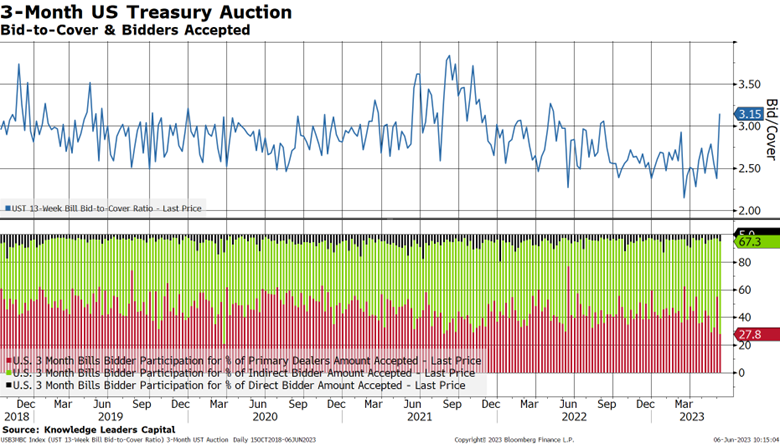
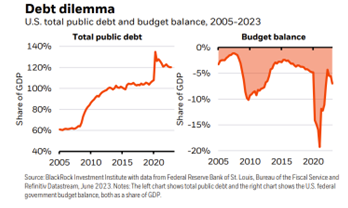
Two weeks ago, we noted that Congress would soon raise the debt ceiling, but that this could set up unexpected consequences for investors. Now that the debt ceiling is raised until 2025, the US Treasury is free to fund the government’s liabilities since January.
Zehrid Osmani, Head of Global Long-Term Unconstrained at Martin Currie, discusses the recent positive earnings reports from large U.S. banks and explains why their firm has no plans to invest in the banking sector.
Investors have had a lot to contend with thus far in 2023. Moderating economic growth, persistent inflation, volatile interest rates, falling profits, stress in the banking sector, war in Ukraine, and the debt ceiling debate all combined to weigh on sentiment.
Earlier this month, WealthManagement.com announced the finalists for its 2023 Industry Awards (the “Wealthies”). VettaFi is one of two firms to be recognized for outstanding achievement in research innovation. The Wealthies was the first award program of its kind to honor companies, organizations, and individuals supporting financial advisor success.
Chief Economist Eugenio J. Alemán discusses current economic conditions.
Top Silver Mining CEO: "On the demand side, it’s pretty phenomenal…"
We see the market’s focus returning to higher-for-longer rates and sticky inflation after a U.S. debt ceiling deal. We prefer an up-in-quality portfolio.
As Pride month begins, financial advisors have an opportunity to reflect on how trans-friendly their practices are and take steps to make them warmer, more inclusive, and more appealing to transgender clients.
The drama characterizing the first half of 2023 may abate, with potentially milder returns for investors due to the effects of the Cardboard Box Recession.
Some investors may not want to go all-in on AI, preferring a more diversified approach to their investments. For those investors, there are stock picker ETFs that have holdings in AI-focused companies but won’t bet the house on AI.
Lately, we discussed macro-related market issues such as the” A.I., chase,” but a technical review can help manage shorter-term risks. Currently, the debate is about the market rally from the October lows. Is it a resumption of the 2009 bull market trend or an extended bear market rally?
It has been over seven months since the October lows, and during this time, the S&P 500® has rallied over 19%. Naturally, investors are pondering whether this marks the beginning of a new bull market.
Nvidia’s (NVDA) management team is sending a signal to the market.
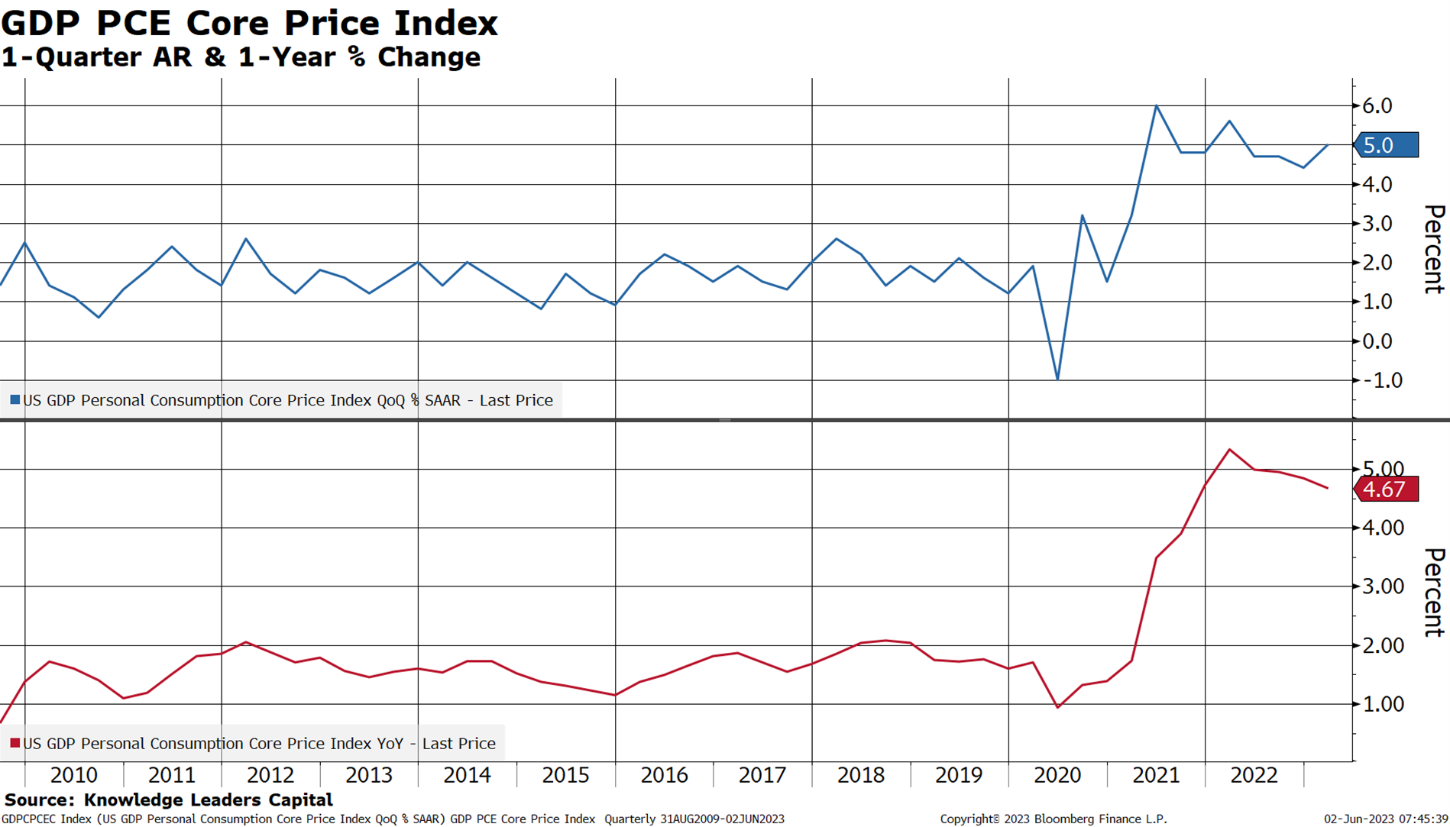
In the United States, Core PCE Inflation is still 5.0% after a recent reversal in disinflation. This measure is followed by the Fed and excludes volatile food and energy inflation.
The measure ends weeks of negotiation and unease about a potentially catastrophic government default.
Doug Drabik discusses fixed-income market conditions and offers insight for bond investors.
Portfolio Manager Alex Zarechnak identifies six key themes from the COVID years—some new, some familiar—to help anchor investors in today’s emerging markets.
The passage of the debt-ceiling deal removes a significant threat to the economy and markets. The focus now shifts back to where it’s been for the past 18 months: inflation, the Fed, and recession risks.
Tony Davidow, Senior Alternative Investment Strategist with Franklin Templeton Institute, illustrates the potential impact of adding alternative investments to pursue growth and income—as well as seek to dampen volatility—during the accumulation and distribution phases of retirement.
The US debt ceiling negotiations brought considerable volatility to market prices.
Tired of the AI hype yet? It’s OK, I understand. I’m tired of it too. The pace of human progress — and our insatiable need to be entertained by the shock of the new — seems to be forevermore in the “hockey stick” part of the growth curve.
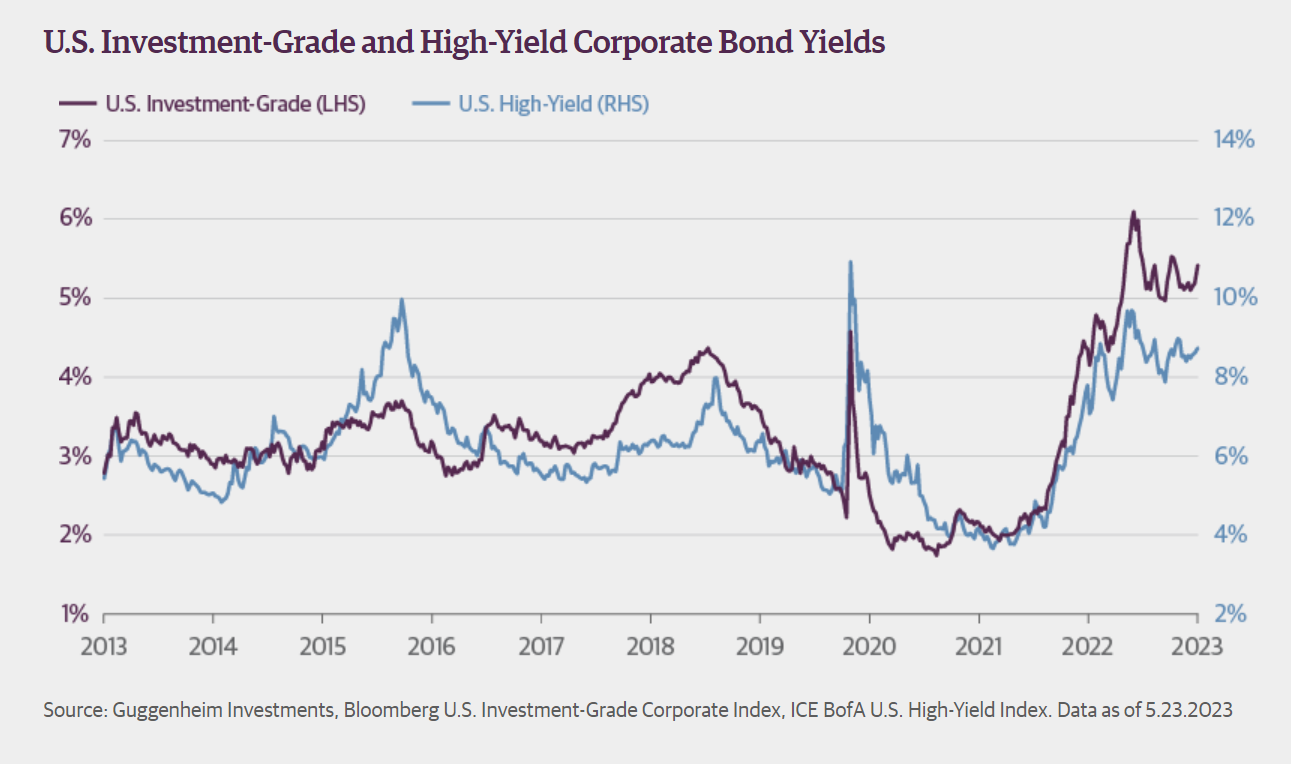
Improved value proposition in credit.
Could monetary conditions be supportive of the “soft landing” scenario? While the “recession” versus “no recession” debate rages, there is a precedent for a “soft landing” scenario. Such is where the economy slows substantially but avoids a deeper contraction.
A robust implementation strategy and real-world implementation capabilities are both necessary in order to achieve your portfolio’s preferred position.
The industry group Airlines for America predicts that approximately 257 million people will travel on U.S. commercial airlines this summer, representing a 9.5% increase from last year. That would also set a new record, as volumes are projected to surpass the summer 2019 levels by around 2 million passengers.
“Crisis” is an overused word. Actual crises are those rare times when we are on the knife edge of disaster. It’s not a crisis when a bank fails, or Congress can’t agree on a budget. Those are annoyances (unless it's your bank). While not good, they don’t spell immediate catastrophe.
The AI Powered Equity ETF (AIEQ) has garnered attention recently, but not for positive reasons. Despite using artificial intelligence to make investment decisions, the ETF has struggled to perform well, with a disappointing one-year return of -13.92%.
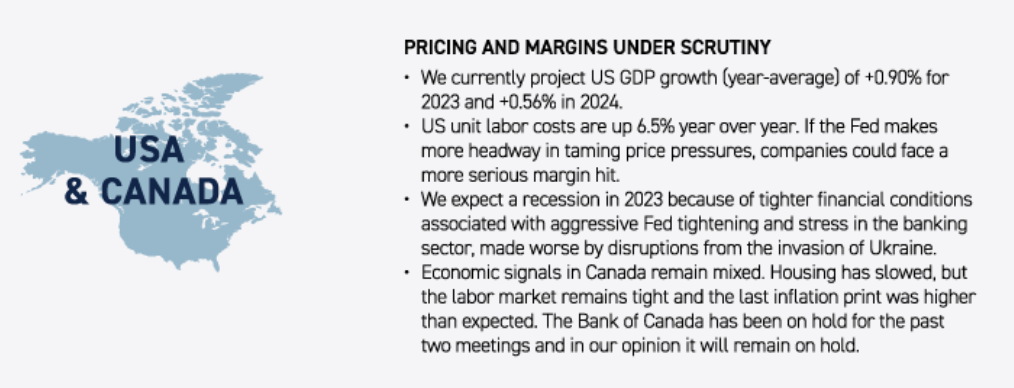
What's next for global growth? Our Macro Strategies team shares a regional breakdown of their growth expectations across the globe.
Structural changes in the world’s energy systems represent significant investment potential across an array of sectors. Analysts on our equity research team offer insights into the impact and opportunities.
Managing substantial wealth often requires specialized capabilities and expertise.
New findings from EBRI’s recently released 2023 Retirement Confidence Survey reveal what’s top of mind for American workers and retirees. Below, we look at two key findings – alongside ways the industry is responding.
The latest last-minute deal to raise the US debt limit does not solve the underlying political problem. On the contrary, with the country on track for a Biden-Trump rematch next year – a contest that Trump just might win – the truce is likely to be short-lived.
A core concern for investors contemplating taking advantage of the incredible cheapness of deep value stocks today is the potential for a near-term recession.
Truist Financial Corporation is a purpose-driven financial services company committed to inspiring and building better lives and communities. Truist has a leading market share in many high-growth markets in the country.
The standoff between the White House and Congress over raising the US debt ceiling has been the talk of the town for months. Now that the government has reached an agreement, savvy investors will be on the hunt for opportunities—and we think there will be some attractive ones.
Choppiness in the equity market continues as investors look to see a debt limit deal approved.
David Dali, Head of Portfolio Strategy, provides his 12-month outlook for global equity markets.