We are prone to animal analogies when describing disorderly situations: like herding cats, like a barrel full of monkeys, like a dog’s breakfast.
Some post-election stock market excitement has receded, but the story of strong breadth—which predated the election—has not changed and continues to support the market for now.
Not everyone is ready to give thanks for moderating food prices.
Going into Thanksgiving week, we are reassured of two things we already knew about artificial intelligence, but that could play a role in portfolio allocation decisions for the new year.
On whole, EM growth has been resilient, while inflation has fallen closer to normal levels.
Following President Trump’s re-election, the S&P 500 has seen an impressive surge, climbing past 6,000 and sparking significant optimism in the financial markets. Unsurprisingly, the rush by perma-bulls to make long-term predictions is remarkable.
In the weeks surrounding the US election, US bond yields climbed sharply, reflecting speculation that President-elect Trump’s policies could lead to higher inflation and a widening federal deficit.
For most of the last fifty years, fixed income investing has been characterized by owning some combination of Municipals, Corporates, Treasuries and Agency Mortgage-Backed Securities.
he Tax Cut and Jobs Act (TCJA) was passed in 2017, otherwise known as the Trump Tax Cuts.
As we look through our financial lens and reflect upon everything that has transpired in 2024, we have compiled a list of the top ten economic and market-oriented things that we are most grateful for this year.
This week’s data and market momentum solidified the case for a resilient U.S. economy, defying concerns of an imminent slowdown. Initial jobless claims dropped to a five-month low, reinforcing the strength of the labor market, while GDP growth projections hover around an impressive 2.5%.
You won’t catch a fish unless your line is in the water, and you won’t benefit from the market’s potential move higher unless you are invested.
There has been a lot of talk about (in)efficiencies in government spending, both before and since the election. Much of the conversation has been driven by Elon Musk, who will co-head the Department of Government Efficiency (DOGE, not an actual government agency). Musk has boasted he could find $2 trillion to cut from the federal budget.
New ideas are never as easy as they sound in campaigns.
On the latest edition of Market Week in Review, Investment Strategist BeiChen Lin reviewed the latest inflation numbers from Canada.
Some retirees say they could have planned better for lifetime income—helpful insight for current participants.
For investors looking to get ahead of the greater bond market, Eaton Vance's Total Return Bond ETF can do the trick.
Take a moment to understand a few recent breakthroughs in medicine and explore a few ways to get actionable exposure to them with ETFs.
With the re-election of President Donald Trump, the worries about tariffs and pro-business policies sparked concerns of “Trumpflation.” Inflation has been a top concern for policymakers, businesses, and everyday consumers, especially following the sharp price increases experienced over the past few years.
Politicians and think-tank wonks of all stripes love to condemn government “waste, fraud, and abuse.” But saying it isn’t hard. Who is the opposition? No one says we need more waste, fraud, and abuse. We’re all 100% agreed all three are bad.
This week, at the North American Blockchain Summit in Dallas, Texas, I had the distinct privilege of moderating a fireside chat with former Canadian Prime Minister Stephen Harper.
Today’s video is another in the continuing series of videos where we are looking for value in each of the 10 major sectors as reported by Standard & Poor’s.
Generosity knows no season. But as the year-end holidays approach, many of your clients may be thinking about making a charitable donation or increasing their charitable giving.
It is important for savers to understand guaranteed and non-guaranteed options when looking at retirement solutions offered within a 401(k) plan. Our Mike Dullaghan shares the highlights and talks about the need for personalized strategies.
Treasury inflation-protected securities can help buffer a portfolio against inflation. However, it's important to understand their unique characteristics and complex nature.
Rick Raczkowski, PM, Relative Return Team, Loomis, Sayles & Company, discussed how the team views fixed income investing looking ahead.
Actively managed ETFs are among the fastest-growing products in the broader ETF space.
Sticky underlying price pressures could prevent a faster return to neutral monetary policy.
Uncertainty ahead of the election may have resulted in lower corporate capex and M&A trends, but hope abounds that 2025 could bring about renewed animal spirits.
US President-elect Donald Trump's administration will face a wary, inflation-sensitive public and a Chinese regime that is well prepared to pursue large-scale retaliation. If it is serious about introducing new tariffs, it will need to clarify its priorities and then choose among conflicting policy goals.
Many of the myths and controversies surrounding the equity risk premium (ERP) are rooted in semantics: The same term is used for multiple purposes.
How does the euphoria for stocks in the days after the 1980 election contrast with today’s Trump election euphoria?
In 2025, Social Security will see a 2.5% cost-of-living adjustment. At the same time, Medicare Part B premiums and the annual deductible will increase.
U.S. policies are set for a major reshaping as full Republican control takes hold in 2025.
I’ve been looking for the best dividends in the market for over 13 years. Time after time, I keep coming back to this question.
Why the equity market rally following the U.S. presidential election could continue into year-end.
In January 2022, we ventured three hundred years back in time to an episode that has long been considered the classic example of mania in the early annals of market history.
To judge by the action in some foreign markets, Donald Trump’s election is pricing in economic winter.
Vanguard has a pair of bond options if fixed income investors are looking to get active with their portfolio.
In Europe, the ECB stimulates a sluggish economy while in the UK, the problem is inflation. In contrast, the US responds to stronger growth.
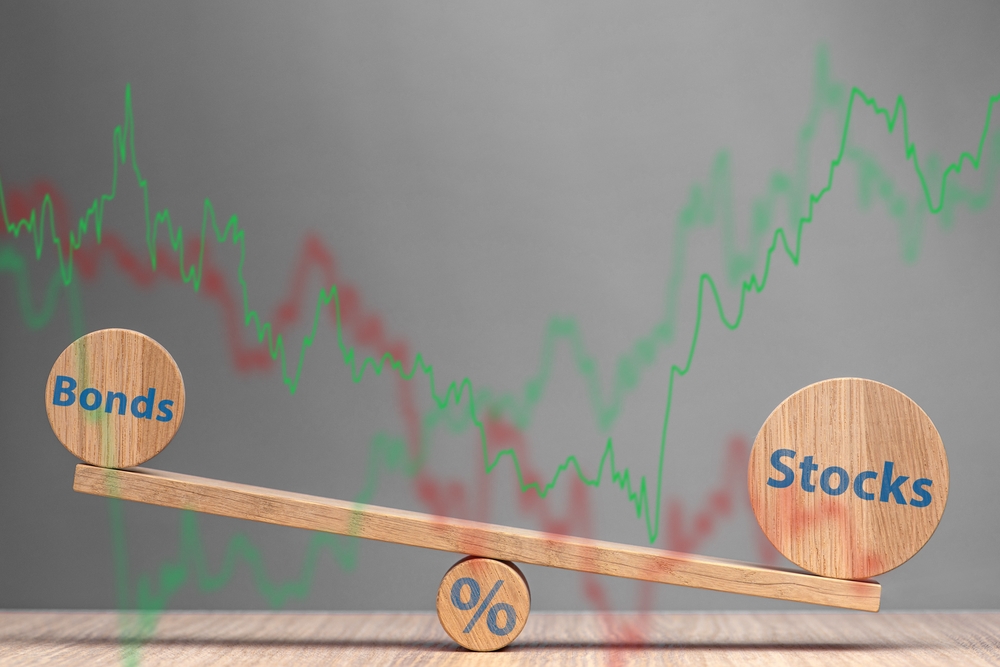
The inverse correlation between bonds and stocks has returned, broadening potential for risk-adjusted returns in multi-asset portfolios.
Is inflation tamed? It's a key question that got lost in election coverage. It looms more than a new administration does over portfolios.
The 2024 Global Survey of Financial Advisors from Natixis revealed the ongoing hesitance of investors to move out of cash and into bonds.
For most of the last fifty years, fixed income investing has been characterized by owning some combination of Municipals, Corporates, Treasuries and Agency Mortgage-Backed Securities which has worked well with periods of secular disinflation.
We seek to capitalize on today’s attractive yields while staying mindful of economic and market uncertainties.
Chief Investment Officer Sean Taylor considers the implications of a second Trump administration for emerging markets.
The Treasury yield curve has shifted appreciably all year long. In particular, the last few months have realized substantial rate changes. The shift in the Treasury curve is not isolated. The corporate curve is also changing.
We take an early look at how a new policy platform could factor into the US deficit and debt.
Paul Tudor Jones recently voiced concerns that rising U.S. deficits and debt and increasing interest rates could lead to a fiscal crisis. His perspective reflects the long-standing fear that sustained borrowing will trigger inflation, raise interest rates, and eventually overwhelm the government’s ability to manage its debt obligations.
Lost in the excitement of election week was a meeting of the Federal Reserve. At its conclusion, interest rates were lowered by another quarter-point. But where they are heading from here is a matter of increasing uncertainty.