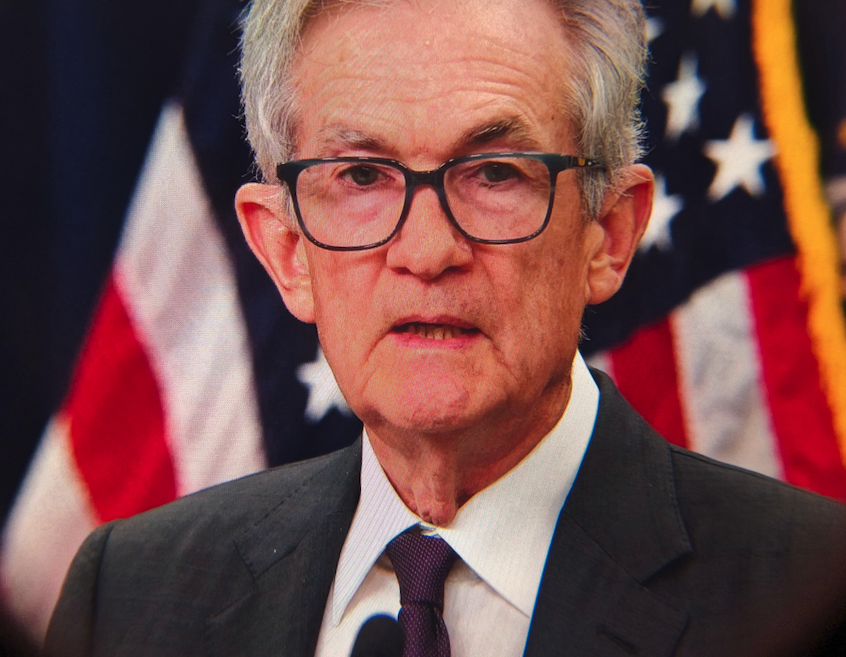
For a Federal Reserve (Fed) chairman committed to reducing noise coming from the institution and/or to changing how the Fed communicates, his first attempt to do so was not very promising. Just after Chair Warsh’s first press conference, we argued that inflation was not a choice, as he suggested during the press conference.
While tariff uncertainty hasn’t completely disappeared, it has diminished, and firms are feeling less uncertain about the future.
From our experience participating in Fed meetings, we know that the dot plot has never been universally embraced within the institution. The concern was not that it lacked informational value, but rather that markets interpreted it as a forecast, which was never its intended purpose. Forward guidance is meant to shape expectations and influence behavior, not to serve as a firm prediction of future policy decisions.
There is a great deal to unpack from this week’s press conference by the new chairman of the Federal Reserve, Kevin Warsh. Most striking is his markedly different approach to Fed communications. This was evident not only in the statement accompanying the federal funds rate decision, but also in the abandonment of forward guidance and his reluctance to provide insight into the committee’s internal deliberations.
This week’s inflation data highlights a growing disconnect between how markets interpret inflation and how consumers experience it. The May Consumer Price Index (CPI) report delivered a nuanced message: While headline inflation accelerated, core inflation remained relatively contained, an outcome that provides some comfort to policymakers.
Labor market fundamentals have improved meaningfully from last year’s near standstill while inflation has moved higher, driven in part by the Iran conflict and the resulting increase in petroleum and gasoline prices. As a result, Federal Reserve (Fed) officials are likely becoming more concerned about the risk of broader inflation pressures, a theme highlighted in this week’s ISM Manufacturing and Services PMI releases.
Ahead of next week’s May employment report, the summer jobs market is coming into focus as teenagers and students finish the school year. According to Challenger, Gray & Christmas, teen hiring from May through July is expected to total just 790,000 jobs this summer, down slightly from 801,000 last summer.
After a slowdown earlier in the year, stronger April and May data support the view that weakness in January and February, followed by a rebound in March, was largely weather-related rather than the start of a broader deterioration in housing demand.
Yes, this time is different, but not because inflation itself is unprecedented. What has fundamentally changed is the macroeconomic starting point. Unlike the post-Global Financial Crisis period, when persistent disinflation and repeated downside surprises dominated policy decisions, the economy today is operating in a world where structural disinflation is no longer the default backdrop.
Firms pulled back sharply on hiring last year as policy uncertainty and higher input costs – driven largely by tariffs – forced a reassessment of risk. Nonfarm payroll growth averaged just 9,700 per month in 2025, down dramatically from 121,600 in 2024. That slowdown reflected a familiar corporate response: When uncertainty rises, labor – the largest and most flexible cost – becomes the primary adjustment mechanism. Rather than expand headcount, firms chose to wait.
Despite repeated wars, equity markets have delivered strong long-term returns, and in some stretches, market performance appears to have coincided with wartime episodes rather neatly. Viewed through the lens of financial markets, the implication seems almost intuitive: wars have not been bad for investors and may even have been supportive.
Headline economic indicators remain resilient as gross domestic product (GDP) continues to expand, the unemployment rate remains low and wage growth has held up better than expected. However, these figures reflect averages, not the lived experience of households.
The question that is increasingly on everyone’s mind is simple: Is this time different? The answer will hinge squarely on what happens to core inflation, specifically the core Consumer Price Index and the core PCE price index.
Next week’s releases should help clarify whether recent volatility remains contained or begins to translate into weaker fundamentals.
Although the US now produces more oil than it consumes, it still exports lighter crude and imports heavier crude that US refineries need. As a result, global supply disruptions continue to play an outsized role in determining what US consumers pay at the pump. In short, during geopolitical crises, international oil markets matter more for gasoline prices than domestic production alone.
Raymond James Chief Economist Eugenio J. Alemán discusses current economic conditions
Raymond James Chief Economist Eugenio J. Alemán discusses current economic conditions.
This week’s press conference by Federal Reserve Chair Jerome Powell was one of the most consequential of his tenure at the helm of the Federal Reserve (Fed).
Raymond James Chief Economist Eugenio J. Alemán evaluates economic conditions heading into 2026.
This week’s release of the FOMC meeting minutes showed relatively strong diverging views on current monetary policy as well as on the path for policy this year.
Chief Economist Eugenio J. Alemán discusses current economic conditions.
Although the September employment report surprised to the upside, the overall stance of the US labor market remains weak, something that was underscored by the third consecutive increase in the rate of unemployment, from 4.1% in June to 4.4% in September.
Although the stability of the consumer depends on its ability to generate labor income, i.e., wages and salaries, households’ financial conditions are very important in supporting the stability of consumption.
Markets were taken by surprise by Federal Reserve (Fed) Chair Powell’s strong suggestion that a rate cut in December is not a certainty, as they were sure they were going to get one at December’s Federal Open Market Committee (FOMC) meeting.
From the lack of conviction in the previous meetings to last week’s “risk management cut,” Federal Reserve (Fed) officials continue to walk a very fine line, hoping for the effects of tariffs to be transitory.
Our biggest concern today is that if the labor market is as weak today as the numbers are showing, what will happen when all the federal government workers start dropping out of the employment numbers at the end of the fiscal year and during the next several quarters.
Most economists, including us, were wrong about the ‘ensuing’ recession back in 2022 and 2023 as the US Federal Reserve (Fed) increased interest rates to fight higher inflation.
The ability of the US economy to avoid a recession in 2022-2023 rested, in part, on the resilience of non-residential investment, which was propped up by a strong private investment push from companies taking advantage of provisions in both the CHIPS Act as well as the IRA.
We have seen a lack of conviction from the Federal Reserve (Fed) in previous opportunities. Last year, during the first quarter, Fed members were spooked, as inflation numbers moved higher, changing their view on the path forward regarding interest rates.
If there is something the Federal Reserve (Fed) does not want to see today, as it approaches next week’s Federal Open Market Committee (FOMC) meeting, it is a shock to oil prices.
The GDP report for the first quarter of the year showed a very engaged business sector as it rushed to try to minimize, as much as possible, the future impact of higher tariffs.
Some of the reasons, but not the only ones, why our trade deficits are so large is because government expenditures are too high and/or we are not collecting enough taxes.
The international trading system is not perfect, but as we have said so many times, freer trade is better than no trade and tariffs are, typically, the worst solution to trade issues between countries.
We were in the camp that the new administration was using the threat of tariffs as an instrument to negotiate deals with other countries, especially with our largest trading partners, Canada and Mexico.
This week, and according to many, Federal Reserve (Fed) officials jumped onto the uncertainty bandwagon, along with consumers and businesses, waiting for more policy clarity from the Trump administration – and who could blame them with policies in daily flux?
Markets have been overwhelmed lately by the administration’s fast-paced and, many times, highly uncertain tariff measures.
We understand that in the business world the word ‘monetization’ of a service a company provides has become one of the most important words as, if successful, this monetization increases the valuation of that company’s stock price.
Back in May of 2024, we wrote a weekly commentary called: “We Can’t Import Cheap Homes; But We Could Import Cheap EV Cars.” In that weekly we argued that since the U.S. auto industry, does not want to build small cars because it is not competitive, then we should open the lower-end EV automobile industry to imports from China.
As you know, economists are normally criticized and accused of being ‘two-handed.’ This is because when we talk, we typically say, “on the one hand, and on the other hand.” Many argue that we are hedging our bets and lack the spine to take a position. While we disagree with that simplistic view of our job, we can understand why we are accused of being ‘two-handed.’