Over the first half of 2026, markets faced some expected — and unexpected — tailwinds and headwinds, ranging from geopolitical developments, blockbuster corporate earnings, increasing artificial intelligence (AI) scrutiny, resilient economic data, and a new Federal Reserve (Fed) Chair.
The second quarter wraps up today, and it was a good one. With the S&P 500 having returned more than 14% (including dividends) with just one trading day left, it will almost certainly end up being the best quarter for the index since the second quarter of 2020. Technology was the leader despite the June weakness.
A strong quarter across major indexes. The second quarter is winding down and what a quarter it has been with the S&P 500 up 12.6% quarter to date, while the Nasdaq-100 and Russell 2000 are both up over 20%. Despite some twists and turns, the path of least resistance for stocks broadly remained up and to the right for much of the last three months.
LPL Research analyzes stock valuations, finding them fair given growth, rates, inflation, and AI-driven earnings outlook despite risks.
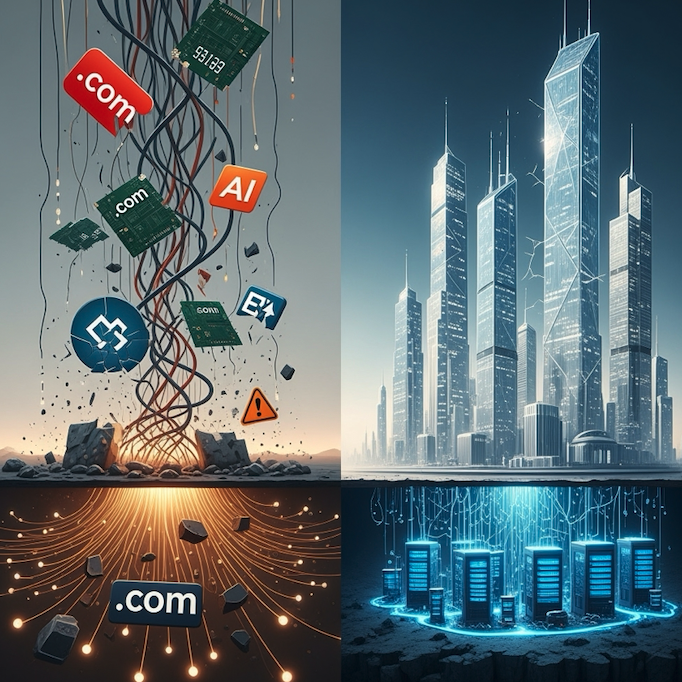
Many have drawn the comparison between the current AI buildout with the dotcom period in the late 1990s, when the infrastructure for the internet was built. It’s a sensible comparison to make because of the massive amount of capital deployed to commercialize the buildout of revolutionary and life-changing technology.
LPL Research examines overlooked tech growth, assessing strong earnings, AI skepticism, and valuation opportunities for investors.
In what should be a surprise to no one, energy has been one of the better performing sectors since the joint U.S.-Israel airstrikes on military targets in Iran on February 27, although it has given up some ground since a two-week cease fire was announced last week.
Jeff Buchbinder and Adam Turnquist explain why solid earnings, AI investment, and economic resilience underpin stocks, even as oil prices and volatility pressure markets.
As has been the case from day one when the first airstrikes began, the key factor in assessing economic and market impact is the duration of the effective Strait of Hormuz closure and resulting effects on prices of energy and other commodities. Prediction markets are split on whether the conflict ends by the end of May.
LPL Research reviews how the Iran conflict is affecting markets, highlighting energy risks, market resilience, and what investors should watch in the weeks ahead.
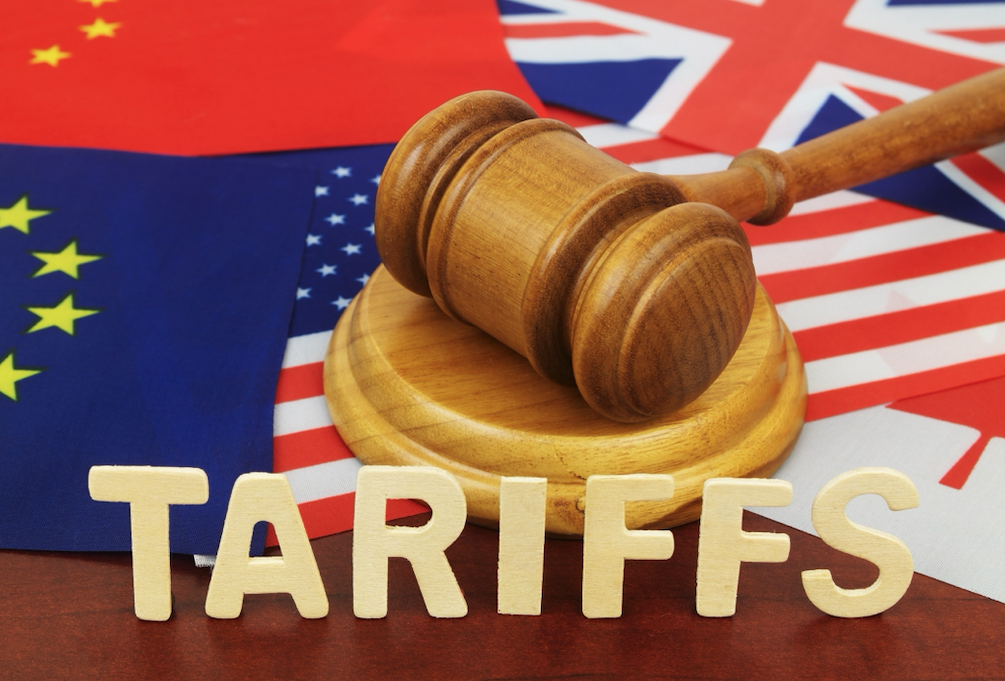
While the Court did not explicitly order refunds to be paid — instead sending that decision to the lower courts — by some estimates this decision opens the door to potentially as much as $175 billion in tariff reimbursements to U.S. importers.
Capital markets have faced quite an array of moving pieces over the last couple of weeks, ranging from equity market rotation dynamics, volatile metals and commodity price action, geopolitical flare-ups, global central bank decisions, and high-profile earnings.
LPL Research highlights five reasons emerging markets look attractive in 2026, from dollar weakness to accelerating earnings, and AI-driven growth.
Another signal of earnings strength is the ISM Index. Historically, the Institute for Supply Management (ISM) Manufacturing Index has correlated well with S&P 500 earnings growth because earnings are more manufacturing-driven than the more consumer-oriented economy measured by gross domestic product (GDP).
At the heart of value investing is the concept of buying an undervalued stock that appears to be mispriced by the market and holding that stock until its intrinsic value is reached. Investors determine intrinsic value in several ways, including analyzing a company’s financial statements, evaluating management, and identifying competitive advantages.
LPL Research takes a look at fourth quarter earnings season as it unofficially kicks off this week with a dozen banks and asset managers in the S&P 500 slated to report.
LPL Research examines why the bull market appears ready to continue its run in 2026, powered by AI enthusiasm and further easing of monetary policy from the Fed.
As we put the finishing touches on Outlook 2026, here are several other key factors that will drive markets in 2026 that investors will want to keep in mind.
Despite an intra-year drawdown of 18.9%, the S&P 500 is poised for a strong 2025, currently up about 14%. This pattern of experiencing a large correction on the way to significant annual gains is common; since 1980, the average yearly drawdown has been over 14% while the index gained an average of 10.7%.
For starters, much has been said about equity valuations, and stocks are definitely trading at elevated multiples. However, the forward price-to-earnings ratio (P/E) of the S&P 500 has yet to reach dotcom era levels, and in fact remains below December 2020 levels because earnings were depressed coming out of the COVID-19 pandemic. T
The summary of economic projections and “dot plot” that reveals where members of the Federal Open Market Committee (FOMC) expect the economy and rates to go in coming years will be interesting given the recent slowdown in job growth and relatively little upward pressure on inflation.
Late last Friday, the Court of Appeals for the Federal Circuit (CAFC) largely affirmed the Court of International Trade’s (CIT) May ruling blocking President Trump’s tariffs imposed under the International Economic Emergency Powers Act (IEEPA).
July’s Consumer Price Index (CPI) report showed headline year-over-year inflation remained steady at 2.7%, below the anticipated level of 2.8%.
With 90% of S&P 500 companies having reported second quarter results, corporate America has handily topped expectations, displaying resilience in the face of a challenging policy environment.
With a week as jam-packed with economic data, earnings, and events as last week, it’s no surprise it ended with a bout of volatility.
Outlook 2024: A Turning Point, released in December 2023, featured our perspective on how stocks might respond to turning points in inflation and monetary policy.
It’s a bull market for pessimism right now.
The near-10% correction in the S&P 500 Index and even larger drawdown in the Nasdaq have gotten a lot of attention this year.
Several policy-related risks loom in September and October that may lead to an increase in market volatility. The debt ceiling needs to be raised (likely by mid-October), the government needs to be funded to avoid a shutdown by the end of September...
This earnings season will be unlike any other, as travel restrictions and lockdowns related to COVID-19 have impacted results dramatically. The biggest economic hits came in mid-March, however, and won’t be fully captured in first quarter results.