The world turns. New people are born and eventually move off the couch and into something resembling employment. And thus new generations of nonsense about “solved” topics are produced.
The Fed’s “soft landing” hopes are likely overly optimistic. Such was the context of the recent #BullBearReport, which discussed the long record of the Fed’s economic growth projections.
Last year, Exchange solidified itself as the most valuable advisor-centric event in the country, uniting advisors with thought leaders and experts in financial services, fintech, and economics. Exchange 2024 looks to be the boldest yet.
Rising rates in the second half of the year have brought year-to-date returns for the US Aggregate (“Agg”) benchmark index negative.
During Q4, we believe there is an elevated risk of market volatility when monthly U.S. inflation data is released, quarterly earnings season begins, and major central banks meet.
Last week in the State Street Global Advisors’ Gold ETF Impact Study, the firm reported that “Among approximately 1,000 investors surveyed, Millennials have the biggest allocation to gold at 17%, with Baby Boomers and Gen X investors lagging behind at just 10%.”
For various reasons, both have since struggled to recoup the necessary confidence to once again borrow in international commercial debt markets.
Gold and silver prices slid lower to close out the third quarter. Entering trading for the fourth quarter, the metals are back, once again, in the middle of the range where they have languished for more than three years.
Inflation has declined considerably from last year’s peak of ~9.0% to ~3.7%. However, policymakers still think they have more work to do and have signaled that one additional rate hike is likely.
Today, I am going to bring a new technology, and a new company, to your attention – a company in control of a technology so powerful that lithium-ion batteries could soon become yesterday’s story.
Energy and information technology are the two sectors most top of mind for investors, according to polling at VettaFi’s recent Equity Symposium.
Certificates of deposit (CDs) and Treasuries both can offer steady, predictable investment income—but how to decide between them? Here are five factors to help you choose.
From inflationary tailwinds for earnings growth to corporate reforms that unlock shareholder value, multiple regime shifts are underway to restore the appeal of the Japanese equity market, according to the Templeton Global Equity Group team.
Public credit markets offer high quality investments with attractive yields and downside resilience, while we see growing longer-term opportunities in private markets.
Prices of bitcoin and ethereum haven’t done much to spark enthusiasm in recent weeks. That lethargy could be belying significant appreciation potential.
Downside equity market volatility can be unsettling, but it is important to put the pullback in perspective and identify the drivers of the negative market reaction. First and foremost, the equity market was due for a modest pullback.
With negligible incremental risk, a RAFI Global Index hypothetically outperformed a Cap-Weighted Global Index by 40 bps per annum and a Cap-Weighted Global Value Index by 2.2% from 2007 to 2022—a 16-year period covering the long value rout and its aftermath.
“Compound market returns.” During bullish markets, there is inevitably a regurgitation of this myth that was contrived to extract capital from retail investors and place it in the hands of Wall Street.
Last week was all about financial factors, primarily interest rates. But this week was all about the real economy, notably the United Auto Workers (UAW) strike and the pending government shutdown. Indeed, worries about a recession rose on those two risks.
The degree of success of muni impact bonds often stems from showing issuers how they’ll be graded.
The S&P 500 has fallen almost 3% within the past month, highlighting the volatility that typically hits at the end of the summer. For volatility through the end of 2023, investors may want to consider two active ETFs from American Century.
Chuck Carnevale, Co-Founder of FAST Graphs, a.k.a. Mr. Valuation has 5 really interesting growth stocks for you in today’s video. These are companies that have double-digit earnings growth that can be bought at attractive valuations based on that growth.
The commercial real estate sector’s continued challenges could potentially impact US banks. Franklin Templeton Fixed Income’s Shawn Lyons discusses the ongoing commercial real estate crisis and how US banks are safeguarding themselves against these issues.
Preferred stocks are what’s known as hybrid securities, meaning the asset class displays both equity and fixed income characteristics.
Resurgent energy prices could contribute to higher for longer monetary policy.
Certain asset classes thrive or lag as economies move through one cycle to the next. Franklin Templeton Institute’s Tony Davidow shares how to analyze different economic indicators and how asset classes perform through economic regime changes.
The Chinese yuan has lost nearly 6% of its value against the U.S. dollar this year, while Shanghai-listed stocks are off about 8% from their 2023 high, set back in May.
U.S. stocks typically post their best returns in the final quarter of the year. Our review of S&P 500 performance since the index’s inception in 1957 found an average Q4 uptick of 4%. (Q1 was next best at an average of 2%.)
Big tech is often cited as the primary catalyst in 2023’s stock market rally. Yet at some point, the laws of market gravity will set in, and what comes up must eventually come down. As 2023 winds down, some market experts foresee pressure ahead for big tech.
The prevailing narrative about the U.S. economy is that it’s ‘resilient’: despite rapid rate hikes, economic growth has held up and may even be accelerating.
We believe a mild U.S. recession is more likely than not in 2024, although a soft-landing scenario cannot be ruled out. A recession is also likely in the UK and eurozone, but appears less likely in Australia.
Active management in ETFs are gaining market share in 2023, as leading managers bring their best ideas into the ETF industry.
Rising real interest rates invariably trigger recessions. The residual impact of pandemic related behaviors delayed the impact in this cycle.
The Bank of Japan met last night to cap off a week of central bank activity.
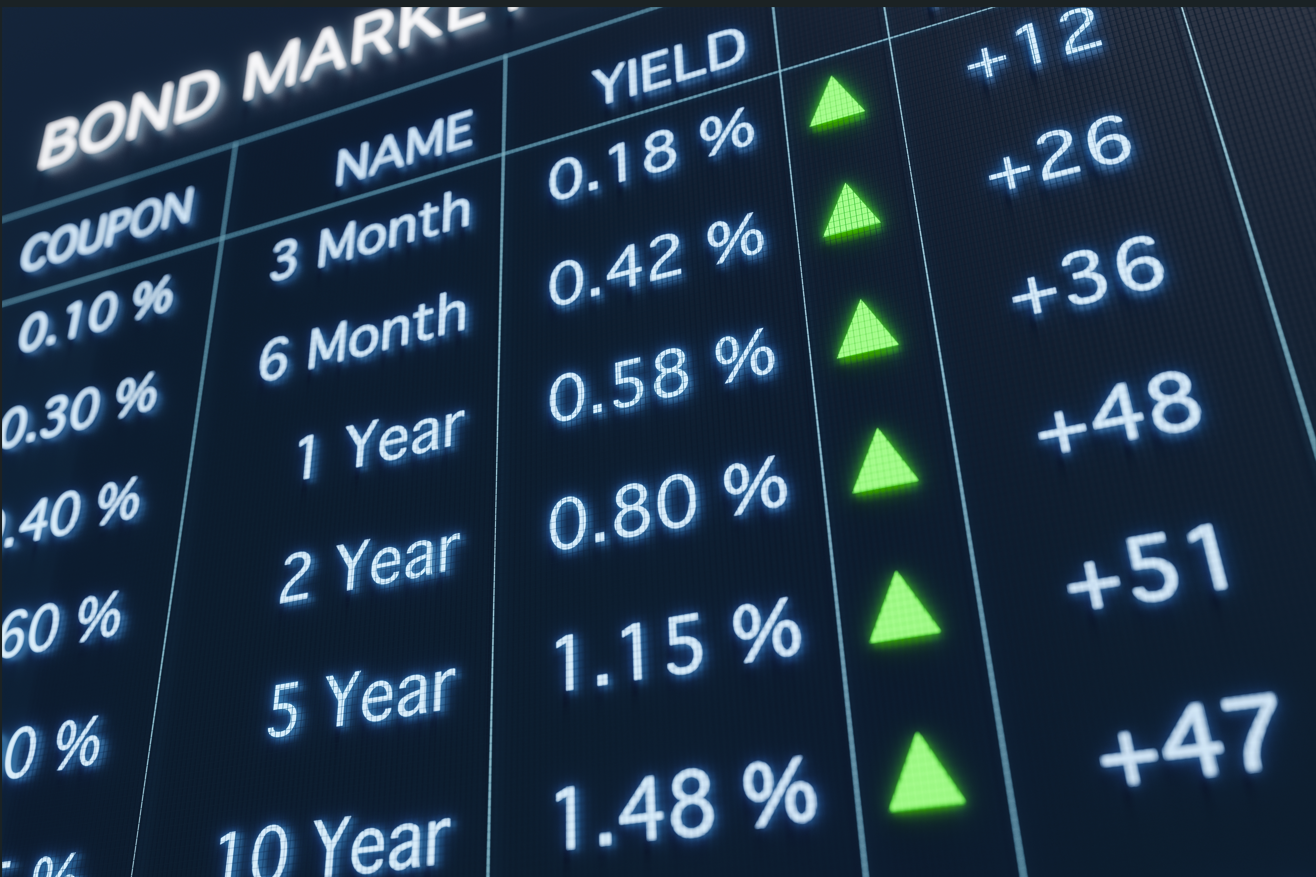
Despite the Fed’s aggressive monetary tightening and the regional banking crisis earlier this year, the U.S. economy has been surprisingly resilient. Bond yields continue to rise, with long-term Treasuries at their highest level since October 2007.
Gilt prices have been struggling this past year due to surging inflation and interest-rate increases. David Zahn, Franklin Templeton Fixed Income’s Head of European Fixed Income, shares his outlook for the UK economy and why he thinks now is a good time to consider investing in gilts.
Intermission is over. Today we resume my series on the global cycle theories that, probably not by coincidence, all point to major change unfolding in the next few years. Finishing it may take some time since I keep finding new material.
Anyone who even casually pays attention to the financial media has likely become familiar with the current state of inflation as well as how high interest rates have risen over the past ~2 years.
China’s growth has slowed, but the context is important—an intentional transition to a more balanced economy that relies less on investment and exports.
2023’s market rally continues to center itself on the big tech comeback with certain themes exhibiting strength like artificial intelligence (AI) and cloud computing. While these themes can offer traders short-term opportunities, they can also persist in the long term as growth plays.
We hope you enjoy the latest Newsletter from Harold Evensky.
Like any recovering reporter, I like to keep tabs on my old beats, and the marijuana ETF space never disappoints. Or, perhaps more accurately, it never stops disappointing.
Quarterly commentary giving an overview of the markets and the importance of having and implementing a strategy when investing in the markets.
The post-Covid era seems ripe for a Yogi-ism since economists and policymakers have been so wrong about the path of the economy and inflation. Yes, inflation is finally on a downward trend, but it has proven far stickier than the Federal Reserve and most economists predicted and remains above the Fed’s 2% target.
Artificial intelligence (AI) has been at the forefront of the 2023 market rally, offering investors long-term growth opportunity as well as short-term trading opportunities. For the latter, consider a pair of leveraged exchange traded funds (ETFs) from Direxion Investments.
The strike comes at an inflection point for automotive production.
Monetary tightening still continues in the form of quantitative tightening, bringing potential volatility, earnings pressures, and lackluster performance to stock markets.
Small-cap stocks and related exchange traded funds are taking a back seat to large-cap counterparts this year. The Russell 2000 Index has shed almost 5% over the past month. However, some market observers remain constructive on smaller stocks.
The Atlanta Fed’s GDP Now model is tracking a Real GDP growth rate of 4.9% for Q3, which would be the fastest quarterly growth rate since the earlier part of the COVID recovery.
I’ve been writing financial newsletters for 15 years. I have seen a few cycles. There have been good times and bad times, thrills and spills.