Chuck Carnevale, a.k.a. Mr. Valuation gives an update on Medical Properties Trust (MPW) in this video.
Today we’ll continue reviewing Neil Howe’s magisterial new book, The Fourth Turning Is Here, focusing on the Millennial Generation’s important role in the coming crisis. Then we’ll think about what the crisis may look like. Finally—because I always try to look on the bright side—we’ll consider what Neil expects in the “First Turning” that will follow.
A team of scientists claimed to have created a breakthrough material that could superconduct electricity at room temperatures and ambient pressure. But then people started trying to replicate the experiment.
VettaFi head of research Todd Rosenbluth appeared on Yahoo! Finance to discuss ETFs with unexpected demand — including AI-focused ETFs.
With the second half of 2023 underway, how are the macro and market landscapes unfolding?
David Dali, Head of Portfolio Strategy, provides his 12-month outlook for global equity markets.
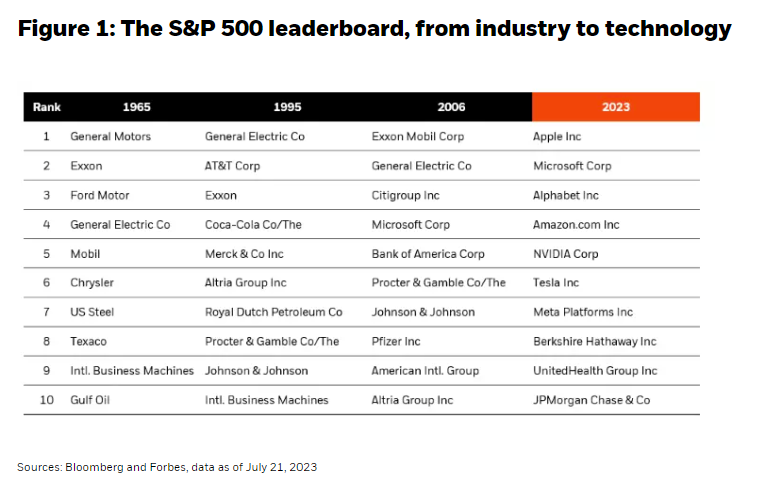
For the better part of the last century, the largest companies in the world were those that produced physical property – traditional transportation machines, the energy that powered them, or the capital that financed them.
Franklin Templeton’s Head of Digital Asset & Investor Advisory Services Sandy Kaul has a wealth of experience in the financial industry and a vision for the future in the digital asset space. She finds the trend toward democratizing new investment frontiers exciting. Learn more about Sandy in this Q&A.
For experienced and novice investors, there are myriad complexities associated with environmental, social, and governance (ESG) ratings and scoring.
For this edition of Bull vs. Bear, Karrie Gordon and Nick Peters-Golden discuss the case for trading in the old 60/40 portfolio for an alts augmented 50/30/20 portfolio.
Recession? Soft Landing? Getting a read on where the US economy is headed hasn’t been easy.
What might the sensational superstar Taylor Swift have in common with exchange-traded funds? David Mann, our Head of ETF Product and Capital Markets, lightheartedly examines the different eras of the ETF industry—drawing parallels to Swift’s memorable eras as a musician.
Effective tax planning means thinking about how tax rates might change.
Once again, markets are taking the elevator while economic data takes the stairs.
Broader domestic equity benchmarks turned in impressive showings through the first seven months of the year. A significant portion of that bullishness comes thanks to large- and mega-cap growth stocks.
I thought I’d lead with some really impressive statistics. I just finished reading our latest ADV Part 2 (the SEC disclosure document provided annually to clients) describing the firm.
Each year, I head to the woods of Maine for an event called “Camp Kotok.” Over the coming week or so, I’ll be sharing some videos of conversations I had with attendees while there (and also pointing to coverage from other attendees, as well).
Investors should be aware of potential real-time market exposure risks when implementing large changes to their portfolios.
After a rush among issuers to file for spot bitcoin ETFs, followed shortly by a rush to file for ether futures ETFs, the environment for crypto-related ETFs looks significantly different from early 2023 when several crypto ETFs announced closures.
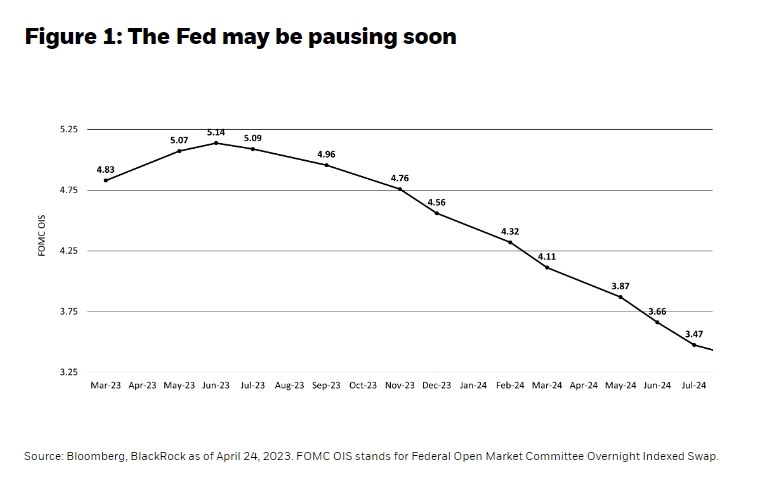
The potential for a Fed pause presents an opportunity for investors to consider adding duration back into their portfolios.
Public and private projects are fueling a new building boom.
Flagging office occupancy rates have municipal bond investors concerned. But US cities have more than one card to play in the revenue game.
In this video, Chuck Carnevale, Co-founder of FAST Graphs, the Fundamentals Analyzer Software Tool will analyze the performance and valuation of PayPal (PYPL) stock.
This article takes a look at a long-term perspective on Treasury yields as of the July 31, 2023 close. The chart below shows the 10-year constant-maturity yield since 1962 along with the Fed funds rate (FFR) and inflation.
Doug Drabik discusses fixed income market conditions and offers insight for bond investors.
Do high-yield bonds still make sense for income investors at this stage of the credit cycle? We think so.
The common currency has not led to common outcomes.
We see compelling value in high-quality, liquid fixed income assets that may offer potential resiliency if the economy weakens.
After an unprecedented pause that started in March 2020, student loan repayments will finally resume in October 2023.
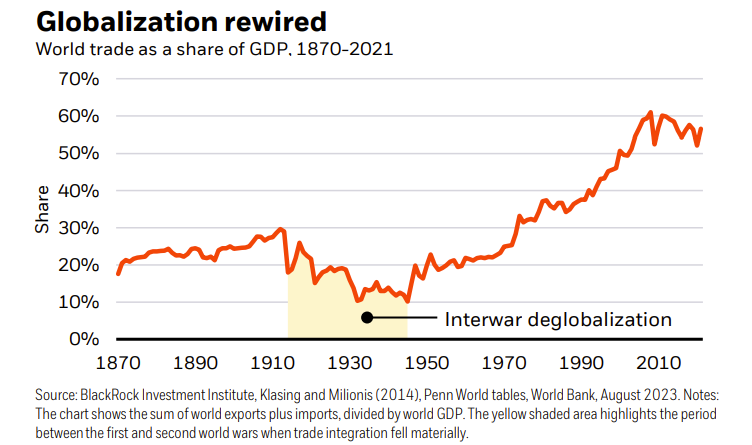
We see emerging markets better withstanding volatility and benefiting as supply chains rewire. We switch our EM debt preference to hard currency from local.
It’s time for our annual August report, “Charts for the Beach.” Each year we highlight five of our favorite charts we think consensus is currently overlooking. So, head for the beach, but be safe and heed the warning about the critical lifeguard shortages. Yet another sign the labor markets are historically tight!
Investors are taking fright at commercial real estate risks in Sweden. But we think the situation is less threatening than feared.
What would you do if you won the Mega Millions? It’s now up to a record $1.55 billion! We would start a not-for-profit to educate people not to play the lottery.
Such is the latest rationalization to support the “bull market” narrative.
July was an impressive asset-gathering month for ETFs. Much of the heavy lifting was done by the industry’s largest ETFs.
Investors often conclude that they would have performed better by simply investing in the S&P 500 index rather than a well-diversified portfolio.
July was another good month for stocks across the board. The U.S. indices were up in the low single digits, while international markets also did well. Riskier investments like the Nasdaq and emerging markets did best.
It’s no secret that we are currently in a high interest-rate environment. The Federal Funds rate, the benchmark rate in the U.S. set by the Federal Open Market Committee (FOMC), currently sits between the range of 5.00% and 5.25%.
Despite some improvements in corporate health, Global Macro Strategist Craig Burelle shares why he thinks companies are likely to experience more pain in the months to come.
Of course, hindsight is always 20/20. Last year there were many reasons to be bearish. Things were seemingly so bad, with everyone expecting a recession, that there was nowhere to go but up.
Coming into the year, over 60% of economists expected the economy to enter a recession in 2023. But the economy’s resilience, particularly in the wake of aggressive rate hikes, has surprised the market and supported better than expected earnings growth and the equity rally year-to-date.
Evan Harp sat down with Dr. Preston Cherry to discuss financial psychology, how it differs from behavioral finance, and how advisors can benefit from incorporating it into their practices.
Earnings season has thus far been a mixed bag, and despite a notable increase in the beat rate, the market is rightfully shifting focus to guidance for the rest of the year.
Companies that are on course to overcome ESG controversies deserve closer attention from investors.
The nation's complex and contentious fiscal processes are deemed a credit risk.
After 17 months of intense fighting, the costs of rebuilding Ukraine will most likely be far higher than previously expected. European countries, which have repeatedly pledged to support Ukraine but have contributed relatively little to its defense thus far, must coordinate and facilitate this effort.
For now, and according to the June Summary of Economic Projections (SEP) ‘dot-plot,’ the Fed still has one more 25 basis point increase for the federal funds rate before the end of this year.
Market volatility is an inevitable part of investing. And, understandably, tumultuous times will likely trigger emotional responses to match.
Research Affiliates explain why their long-term return forecasts have risen across asset classes and the implications of their near-term outlook for U.S. recession.
Alphabet Inc., the umbrella organization encompassing Google, is a global conglomerate that has revolutionized the world by organizing information and making it universally accessible and beneficial.