It is human nature to be captivated by unbelievable stories, great victories, and thrilling endings. One could argue that we have a penchant for the dramatic.
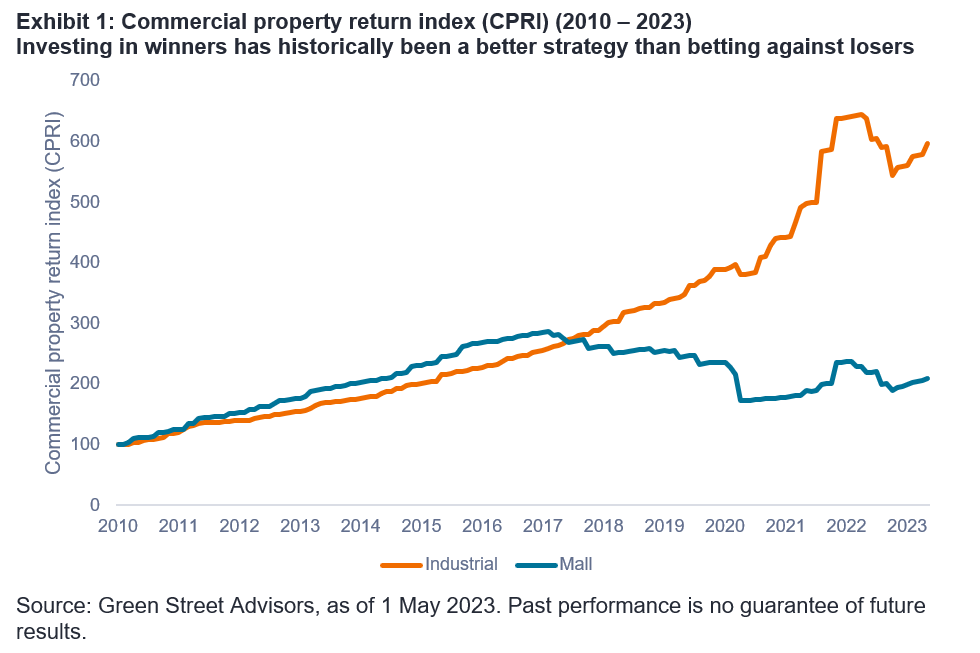
While the financial media has focused on the headwinds for commercial real estate and the challenges the office and retail sectors face, this narrative ignores the differences across sectors and the potential opportunities available in today’s market environment, according to Franklin Templeton Institute’s Tony Davidow.
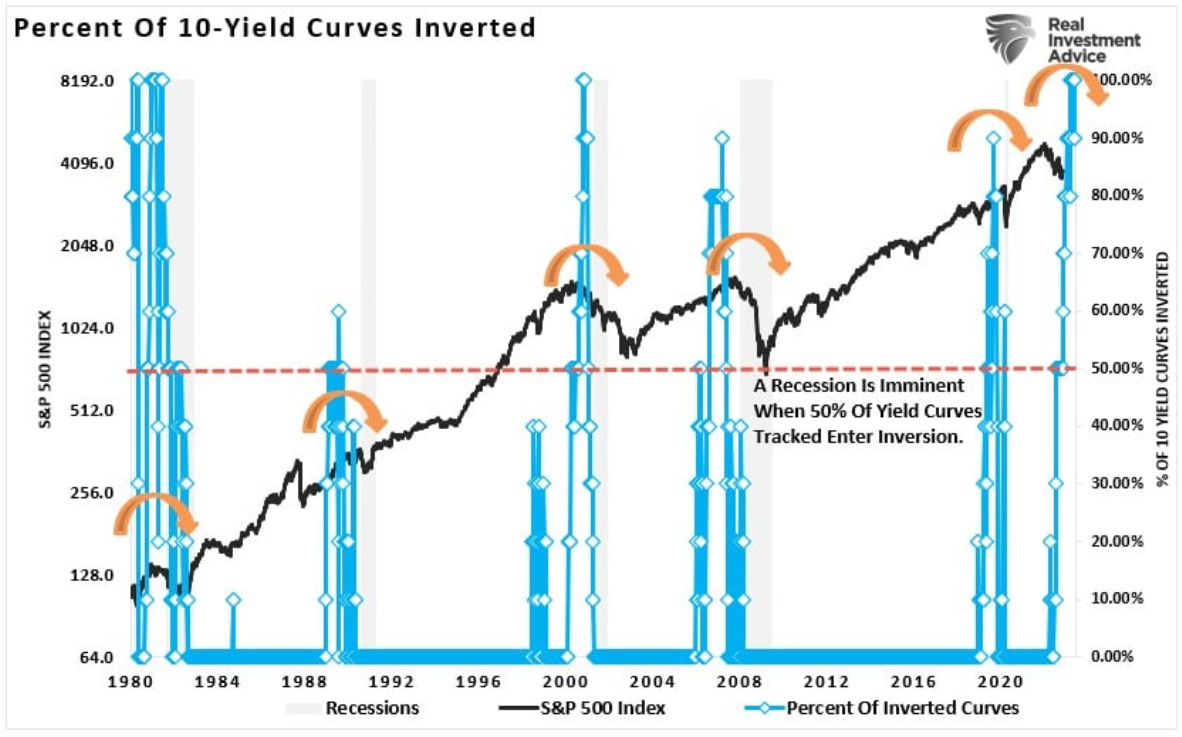
We believe that the creeping economic slowdown in the United States will probably persist for a few more months, with a recession possible over the next 12-18 months. The onset of the recession may be delayed until 2024.
Central bankers think they can handle a situation and fire the artillery. It always has an effect… but ultimately it is rarely the effect they wanted. Doing nothing at all might have been better but that wasn’t an option. They’re trapped in an endless spiral of intervention.
In this article, we take a deeper look into three key housing releases from the past week: existing home sales, building permits, and housing starts. By examining this data, we gain valuable insights into the current state of the housing market and the broader economy.
Economies are struggling to shake off effects of COVID.
India is rapidly transforming into a formidable global superpower and an increasingly attractive destination for investor capital. Amid rising geopolitical tensions and the impact of disruptive technologies, India's story is a beacon of opportunity in a challenging landscape.
Exchange-traded funds are certainly popular with investors—here’s a look at how they can coexist in harmony with other investment vehicles, from David Mann, Head of ETF Product & Capital Markets.
One crystal-clear pattern has emerged. Everyone wants real-world, specific examples of how AI can and can’t enter into an advisor’s, investor’s, or creator’s workflow.
For decades, rich countries have urged developing countries to shift away from fossil fuels while failing to heed their own advice or offer meaningful funding. Kenyan President William Ruto’s recent call to establish a new “global green bank” is the sort of thoughtful proposal that developed countries must seriously consider.
One such company is NVIDIA Corporation, a leader in the AI industry. With the growing interest in AI, it’s no surprise that investors are looking for ways to gain exposure to NVIDIA, including through leveraged and inverse ETFs.
A direct indexing solution can help make an investment portfolio as personalized as a home.
Did you know that American forests offset 12% of total U.S. emissions? With wildfires back in the headlines, Energy Analyst Pavel Molchanov discusses the crucial role of reforestation efforts.
After the disruptions of the past few years, many of us are looking for a return to normal. For investors in emerging-market bonds, normal would mean a world in which global inflation is in check, interest rates are no longer rising, China is healthy, and traditional asset correlations resume.
Evan Harp sat down with financial advisor Ramona Maior. Maior reflected on how financial advisors can better serve LGBTQ+ clients. She offered a number of quick and useful tips for advisors.
Aggressive monetary policy tightening in developed markets led to a drawdown in house prices in 2022, but not a meltdown.
A month or two ago, people were having a conniption about commercial real estate. An absolute meltdown.
Financial advice often focuses on boosting personal savings rates and maximizing return on investment during a worker’s accumulation years. Equally important, however, is the decumulation process, when people spend those savings in the form of income.
We review the key themes of the first half of a busy year.
Activities that help companies avoid emissions are an attractive investment opportunity, according to Templeton Global Equity Group Portfolio Manager Craig Cameron. By actively seeking opportunities to reduce emissions, he says investors can align themselves with sustainability goals that contribute to a low-carbon economy.
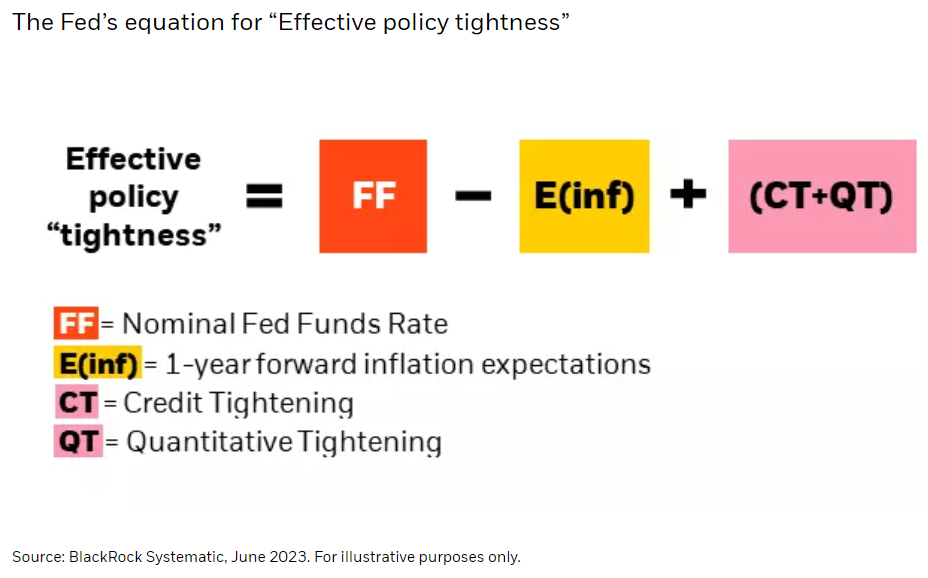
The Federal Reserve (Fed) still has a very tough job ahead to bring inflation down to its 2% target over the long run while facing pressures from markets, which have a very different timetable than the Fed.
The World Silver Survey is an annual report published by The Silver Institute since 1990. It provides market participants with supply and demand statistics for critical sectors of the silver market, along with price and trade data.
The European Central Bank (ECB) hikes rates and signals more tightening ahead.
After falling into its own recession last year, the housing market has started to turn decisively higher; but a sustained recovery might not be the strongest elixir for the economy.
In this article, we’ll closely examine the EM bond ETFs that have performed the best over the past year.
In a hawkish move coming on the heels of data that showed a reacceleration in inflation, the Bank of England raised its key lending rate by 50 basis points at today’s policy meeting.
1969 is often remembered as one of the biggest years in pop culture history.
After yesterday’s testimony by Fed Chair Jerome Powell to the US House of Representatives I analyzed its sentiment on key issues compared to his previous four FOMC policy statements, using ChatGPT. The table below shows the results.
Howard Marks (Co-Chairman) and David Rosenberg (Co-Portfolio Manager, U.S. High Yield, Global High Yield, Global Credit) discuss topics from the June 2023 edition of The Roundup. They consider the evolution of the high yield bond market, investor optimism, and why this time might actually be different in financial markets.
Sam Weitzman of Western Asset Management highlights the overlooked potential of municipal bonds as a high-quality asset class. With fixed income yields reaching near-decade highs and higher tax rates impacting taxable fixed income investing, municipal bonds are offering above-average after-tax returns and downside protection, making them attractive for income seekers.
Striking the right balance between interest rate and credit risk can be a good idea in the late stages of a credit cycle. We think it’s a particularly good idea in this credit cycle.
We expect generally good performance during the second half of the year, although volatility may increase, especially for high-yield bonds.
The US Federal Reserve (“Fed”) paused rate hikes in June, but signaled it expects to deliver 50 basis points of additional hikes this year.
While a severe hurricane for the global economy looks less likely than a few months ago, we are still likely to encounter a tropical storm that could cause significant damage. Much will depend on how major central banks confront the trilemma of simultaneously maintaining price, growth, and financial stability.
With June being Pride Month, advisors and market participants are paying renewed attention to strategies relevant to the LGBTQ+ community.
This past Wednesday marked the official start of summer! The summer solstice represents the best time of year – the maximum amount of daylight coupled with warm temperatures.
“Signs” was a song by the Five Man Electrical Band in 1970 about the hippie movement. The song came to mind as I was looking at the economic data recently.
Today we’re going to look at two stocks – Visa vs. Mastercard – that seem to be oblivious to that. Frankly, they’re two better-performing companies from a standpoint of operating results but also from the standpoint of price as pointed out in the original video.
In this article, we will delve deeper into some of the top-performing Japan ETFs, analyzing their YTD performance. We will also discuss whether advisors and investors should consider investing in them.
We get a big bunch of data reports this week: GDP revisions and economy-wide corporate profits for the first quarter; durable goods, new home sales, personal income, and consumer spending for May; home prices for April.
An ounce of optimism, a pound of prudence. It’s still a good time to be measured about taking risks in equities, but we believe the longer-term horizon holds particular promise for active stock pickers.
After an outstanding 2022, global liquefied natural gas (LNG) prices have weakened in 2023. However, the long-term outlook for LNG remains constructive as customers continue to sign 20-year purchase agreements with US exporters. This note discusses growing US LNG export capacity and how this benefits midstream companies.
The Northern Trust Economics team shares its outlook for U.S. growth, employment, interest rates, and inflation.
Today's U.S. equity market is highly concentrated, with seven stocks contributing to an astonishing 96% of the Russell 1000 Index's year-to-date return.
We continue to watch the fascinating developments in Russia. While the coup has failed and Yevgeny Prigozhin is either in exile or meeting a worse fate, the reality of the situation is that Russia is on a path to internal strife.
Stress in the banking sector — whether or not more banks fail — remains an area of concern for us because of potential implications for the Treasury and agency MBS markets.
The current market speculation surrounding artificial intelligence (A.I.) has garnered everyone’s attention.
This article will cover some of the top small-cap ETFs based on their year-to-date (YTD) performance.
Today the minutes of the April 27-28, 2023, Bank of Japan meeting were released. Below in italics are the top ten highlights generated by our AI engine.
Heading into 2023, a looming recession dominated the headlines.