Every dollar in a growth equity index reflects two decisions: which companies to own and how much of each to hold. Indexes form intricate systematic rules to make the first decision. The second decision—position sizing—is usually determined by market-cap weighting.
When it comes to systematic investing, numbers tell only part of the story. Traditional quantitative models rely on prices, earnings, and balance sheet data, but words matter too.
Emerging markets offer important exposure to economic growth through rapid industrialization, natural resource endowments, and strong demographic dynamics.
As globalization gives way to reshoring and resurgent resource nationalism, emerging markets may offer fresh alpha opportunities through their ability to supply the raw materials required to fuel the AI boom.
Right now, AAI’s two highest 10-year expected return forecasts are for large-cap value equity strategies outside the United States—Emerging Markets RAFI and Dev ex US Large RAFI. AAI’s expected return model anticipates valuations for equity strategies to mean revert and therefore tends to elevate out-of-favor regions and styles, predicting higher future returns for recently underperforming equity indices.
Rapid development of AI technology poses a direct threat to the SaaS sector, but the risks are not necessarily terminal or universal and vary based on time horizon.
If the economic life of AI hardware is shorter than its accounting life, reinvestment needs are higher than reported depreciation suggests. What appears to be capital deepening by hyperscalers is largely capital churn.
Investing is an exercise in decision making under uncertainty. No single signal—no matter how intuitive or well supported by history—captures the full complexity of markets.
Carry is an important return driver for multi-asset futures and forwards. Simple trend signals have benefited from trading in line with, not against, the carry of an asset.
U.S. equities had another strong year in 2025. Returns were impressive, headlines were dominated by large-cap growth, and investor confidence remained high. Yet a quieter and more important story unfolded beneath the surface. Non-U.S. equities meaningfully outpaced their U.S. counterparts.
Whether these diversified firms can maintain their positions indefinitely is an open question, but market history suggests the competition always catches up.
In this article, we look both back and forward, first at the 2025 capital markets to analyze not just what happened but also how it fits in the historical context and what we believe it means for 2026 and beyond. We then pivot to our return expectations for major asset classes in the next decade.
In the last 10-plus years, investors have grown accustomed to Japanese financial assets lagging their global counterparts.
As index investing continues to evolve, it does not have to be towards ever-expanding complexity. Sometimes progress comes from asking simpler questions and answering them consistently.
Our latest research investigates how U.S. corporations have managed to consistently increase profits, despite a secular trend of declining net domestic investment.
As the final quarter of 2025 begins, it's a critical moment to look back at the preceding three quarters. Each year carries its own narrative, and 2025 was no exception. Markets trended downward early in the year owing to trade-talk-driven uncertainty, reaching a crescendo in volatility following the unexpected announcement of significant tariffs in April.
In their latest article, Why Hold Expensive Slow-Growing Stocks? An Alternative Framework for Value and Growth Indices, Chris Brightman, Campbell Harvey, Que Nguyen, and Omid Shakernia, argue that traditional style-box construction forces investors to hold stocks that are neither true “value” nor true “growth”—notably, expensive, slow-growing companies that have historically underperformed.
Even thoughtfully managed strategies may underperform or suffer sharp losses. This can encourage poorly timed emotional decisions that exacerbate the decline. A systematic risk-management framework that employs stop losses can help minimize such behavioral biases.
Since the recovery from the global financial crisis (GFC), the S&P 500 has delivered one of the strongest and longest bull markets in U.S. history, with 16.2% annualized returns.
There has not been a fundamental innovation in broad-market cap-weighted indexing in decades. Until now. With the Research Affiliates Cap-Weighted Index (RACWI), we introduce a fresh approach designed to fix a costly but little-known “bug” in cap-weighted indexing.
In the 2018 thriller A Quiet Place, silence masks imminent danger. Today's equity markets offer a similarly deceptive peace.
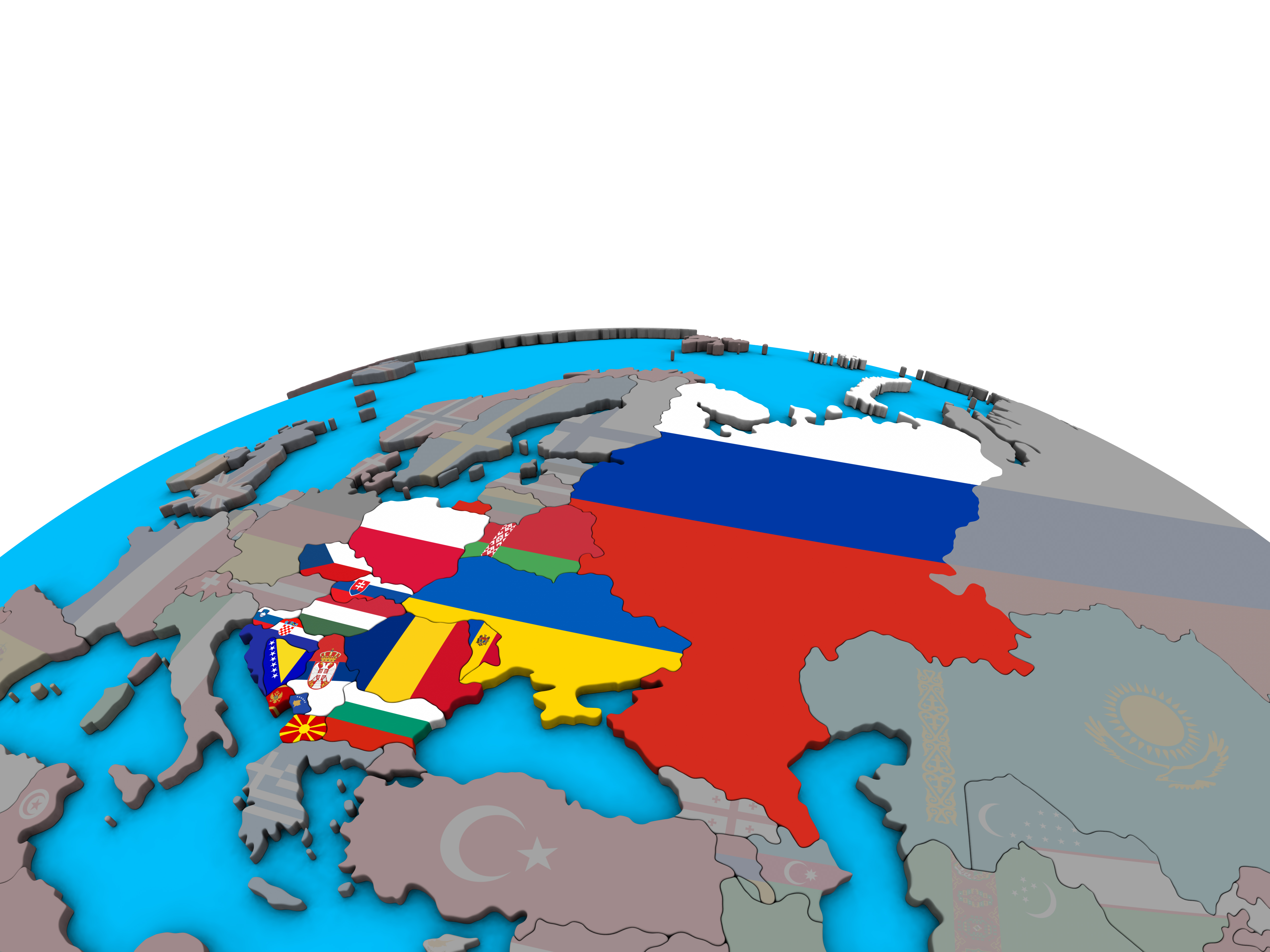
Last summer, we highlighted the investment potential in Eastern Europe.
Standard value and growth style indexes categorize stocks based on a composite signal that combines valuation (cheap vs. expensive) and growth (fast vs. slow) metrics.
The RAFI™ Fundamental Index has a value tilt, but to characterize it as a value index would be an oversimplification that misses the important advantages that the fundamental index offers above standard “value” index approaches.
For good reasons, many investors have a love-hate relationship with commodity investments. Operationally, the annoying K-1 form complicates tax filing, although thankfully the industry has started to launch “no K-1” funds.
This is the first in a three-part series outlining why I believe bonds are set to outperform. Here, I focus on the Federal Reserve’s dual mandate, the June 2025 meeting, and why the Fed’s approach is positive for bond investors. Parts 2 and 3 will address valuation, politics, recession risk, and the secular horizon.
Smart beta strategies have endured a prolonged stretch of disappointing results, falling short of investor expectations. This article explores the underlying causes of that performance and outlines why the conditions ahead could be more favorable.
Passive capitalization-weighted index funds now surpass active management in aggregate investor allocations.
Despite strong year-to-date performance, developed ex-U.S. large-cap equities continue to trade at far more attractive valuations than their U.S. counterparts.
Common sense and economic theory often collide. Take the stubborn belief that government stimulus spending and debt issuance reliably boost economic growth. It is a simple and seductive idea—when the economy falters, the government can step in, inject capital, and jumpstart growth.
Trend-following strategies can offer attractive, positively skewed returns, with large positive outperformance often coinciding with large equity selloffs, thereby offering tail protection.
While gold has offered some protection during stock market downturns by either rising or declining by less than equities, its current high price levels and historical patterns suggest that future returns may be limited.
Simply stated, the U.S. doesn’t save and invest enough. As a result, we pay for too many of our imports by borrowing from our trading partners.
In an era when a select group of tech behemoths has dominated market returns, investors are growing increasingly wary of the concentration risk it poses.
Lost in the focus on the bludgeoning that tariff policy has had on equity markets, is the impact on global currencies. From the end of February through April 3rd, the U.S. Dollar is down 5.1% relative to other developed market currencies (DXY). In addition, we’ve also seen a violent unwinding of the popular currency carry trade.
The parallels between the AI narrative driving the current market and the dot-com bubble of a quarter century ago raise important concerns for investors.
The EV shakeout is underway. When the dust settles, only a few players will remain. Many more will be relegated to the scrapyard of failed ambitions.
According to Research Affiliates’ Asset Allocation Interactive (AAI) online capital market expectations tool, U.S. large-cap equities are expected to yield 3.4% annually over the next 10 years compared to 9.1% for EM equities and 7% for REITs. This left many webinar participants wondering, How does this extra return square with these assets having similar betas?
Dean LeBaron’s name may not be familiar to many readers, especially those who only began their careers in the 21st century. But all of us should know who he is. Before there was even a term for it, Dean was the first truly successful quant.
The article introduces CC CAPE, a modified version of Shiller CAPE, which corrects index biases for improved forecasting. While both measure market valuations for long-term return forecasting, the CAPE Spread helps gauge sentiment for medium-term predictions.
Deregulation is among President Donald Trump’s most enduring policy themes. In his 2016 campaign, he called for widespread deregulation and made it a central plank in both his economic and energy platforms.
Ten years ago, Research Affiliates launched the Asset Allocation Interactive online tool, making our CMEs freely available to the public. With one full cycle complete, we can see what has worked well and where we can improve.
Index funds emerged in the early 1970s and were designed to match rather than beat the market. For decades, they were associated with the capitalization-weighted (CW) market indexes that defined their investment approach.
We are all familiar with this SEC-required warning that “past performance does not predict future performance.”
Many of the myths and controversies surrounding the equity risk premium (ERP) are rooted in semantics: The same term is used for multiple purposes.
Much of modern finance falls into one of two camps, neoclassical finance and behavioral finance. The former posits efficient markets, the latter posits the opposite.
Accumulating inconsistencies in the prevailing paradigm then trigger a crisis, leading to the emergence of new theories and ideas, resulting in a paradigm shift where the old framework is rapidly replaced by a new one.
The latest AI-driven euphoria, led by big tech names that include NVIDIA, has dominated investment sentiment in the post-COVID era. Of course, many investors know that this has driven the U.S. equity market to an all-time high, stretching valuations to an extreme level (U.S. CAPE is at the 98th percentile of historical observations!).
The 2022 broad market downturn across major asset classes came as a nasty surprise to investors. Historically, such an event is very rare, and no one was expecting to see almost all asset classes down for the year. Yet, even though it might seem as if diversification was of no help in 2022, the story changes if we look beyond the major headline asset classes.
News of that day included rioting in northern England, apparently in response to misinformation spread online claiming the person who stabbed to death three children and injured eight others in Southport was a Muslim immigrant.