Historically, many in the pension industry viewed funding above the "plan termination level" as having little incremental value. Once a plan reached “plan termination level”, thought of as roughly 110% funding, conventional wisdom suggested additional surplus had little economic value because it is effectively "trapped capital."
For much of the last decade, investing felt relatively one dimensional. Falling inflation, near zero interest rates and abundant liquidity rewarded long duration growth assets, compressed dispersion and made passive exposure difficult to challenge.
Fixed income transition costs are increasingly driven by what happens in credit markets. As credit trading becomes more efficient, the cost of transitioning fixed income portfolios is coming down, and how those transitions are executed is changing too.
The dominant theme this week was a tug of war between improving macroeconomic conditions and weakness in parts of the technology sector.
Total-portfolio thinking is gaining momentum across institutional investing, with investors looking to adopt portfolio-wide approaches that integrate risk, liquidity, and capital allocation decisions. As institutions manage broader opportunity sets and place greater emphasis on portfolio integration, total-portfolio thinking is increasingly influencing how they set objectives, allocate capital, implement strategies, and govern portfolios.
Recent economic data continues to point to a resilient U.S. economy. The unemployment rate held steady at 4.3% in May, while payrolls increased by 172,000 jobs. Hiring remained strongest in leisure and hospitality, though there were also encouraging signs from more cyclical areas of the economy.
For many registered investment advisors (RIAs), success has traditionally been measured in assets under management (AUM). As the industry evolves and consolidation accelerates, a broader question is emerging: are you building a practice or an enterprise?
Trade policy returned to the spotlight this week as the United States announced new tariffs on 60 countries, with rates of either 10% or 12.5% depending on the trading partner.
The IPO market may be entering one of its largest cycles in years, but the next wave may be defined less by breadth than by scale. Instead of hundreds of companies listing, a smaller group of AI and strategic infrastructure leaders could reset the market on their own.
Equities extend gains as earnings and semiconductors lead markets higher. Consumer confidence remains subdued despite economic resilience. Inflation is easing gradually but remains above the Fed’s targey.
The next IPO wave may create a different kind of portfolio challenge for institutions already holding private stakes in companies like SpaceX and OpenAI.
Global equity markets moved modestly higher this week as first-quarter earnings season continued to deliver strong results.
Institutional investors have spent years hearing about the promise of artificial intelligence. That phase is giving way to a more practical question: not whether AI can create more scale, but whether that scale can be governed, validated, and translated into better fiduciary decisions. For OCIO providers, AI without discipline is not an advantage.
U.S. inflation and rates remain elevated. Credit markets continue to show resilience. Opportunities are emerging across securitized and high yield assets
Global equity markets entered 2025 with a familiar narrative. U.S. leadership remained firm, supported by strong earnings, AI-driven optimism, and a market structure increasingly dominated by a narrow group of large-cap companies. For many investors, the path forward seemed clear: stay anchored to what worked.
Last week’s data was a good reminder that we are likely in a “resilient but uncertain” phase of the cycle.
For much of 2025, the U.S. dollar looked vulnerable: expensive, less supported by the exceptionalism narrative and heading toward a weaker regime. Then the war in the Middle East changed the picture. Energy prices rose, risk sentiment shifted and the dollar reclaimed its safe-haven role.
The Iran conflict has turned energy markets into a moving target, with oil prices adjusting as expectations around Strait of Hormuz supply risk shift.
Back-and-forth developments over the weekend around the Strait of Hormuz have added near-term volatility to energy markets. That uncertainty is feeding into oil prices and reinforcing questions about how persistent energy-driven inflation pressures could become, particularly if disruption risks continue to ebb and flow.
For a long time institutions treated tax-aware investing like a retail conversation; helpful for individuals, interesting for private wealth, but not front and center for institutions.
The S&P 500 reached another all-time high this week, supported by easing concerns around geopolitical risk.
As transition activity increases, what was once seen as a step between portfolios is becoming part of the outcome itself. Execution is now more closely tied to how portfolios are reshaped, particularly as restructures grow larger, more frequent, and more complex.
Every March people around the country start talking about their brackets. Most are referring to their basketball tournament bracket, hoping to predict the winners and maybe earn some office bragging rights.
The conflict in the Middle East remained a key driver of market sentiment this week, with rapidly shifting headlines contributing to heightened volatility.
Geopolitical volatility is not only increasing investor demand for infrastructure assets; it is urgently reshaping where and how capital is deployed. As energy security, supply chain resilience, and digital sovereignty rise up policy agendas, infrastructure investments that expand capacity and relieve bottlenecks are becoming critical.
Geopolitical headlines rarely arrive quietly. The recent escalation in the Middle East is a reminder of how quickly tensions can feel destabilizing.
Geopolitical developments in the Middle East drove market attention this week, with reports of energy infrastructure being targeted leading to sharp moves in oil and gas prices.
Outsourced chief investment officer (OCIO) relationships have evolved dramatically. What once teed up primarily as a solution for smaller institutions seeking a roadmap to improving their governance, strategy and execution is now being adopted by much larger asset owners.
Market leadership shifted modestly this week, with the performance gap between small cap and large cap stocks narrowing.
Corporate pension sponsors don’t enjoy unwelcome surprises, particularly those that create financial strain. Many experienced significant financial stress following the Global Financial Crisis and the prolonged decline in interest rates that followed.
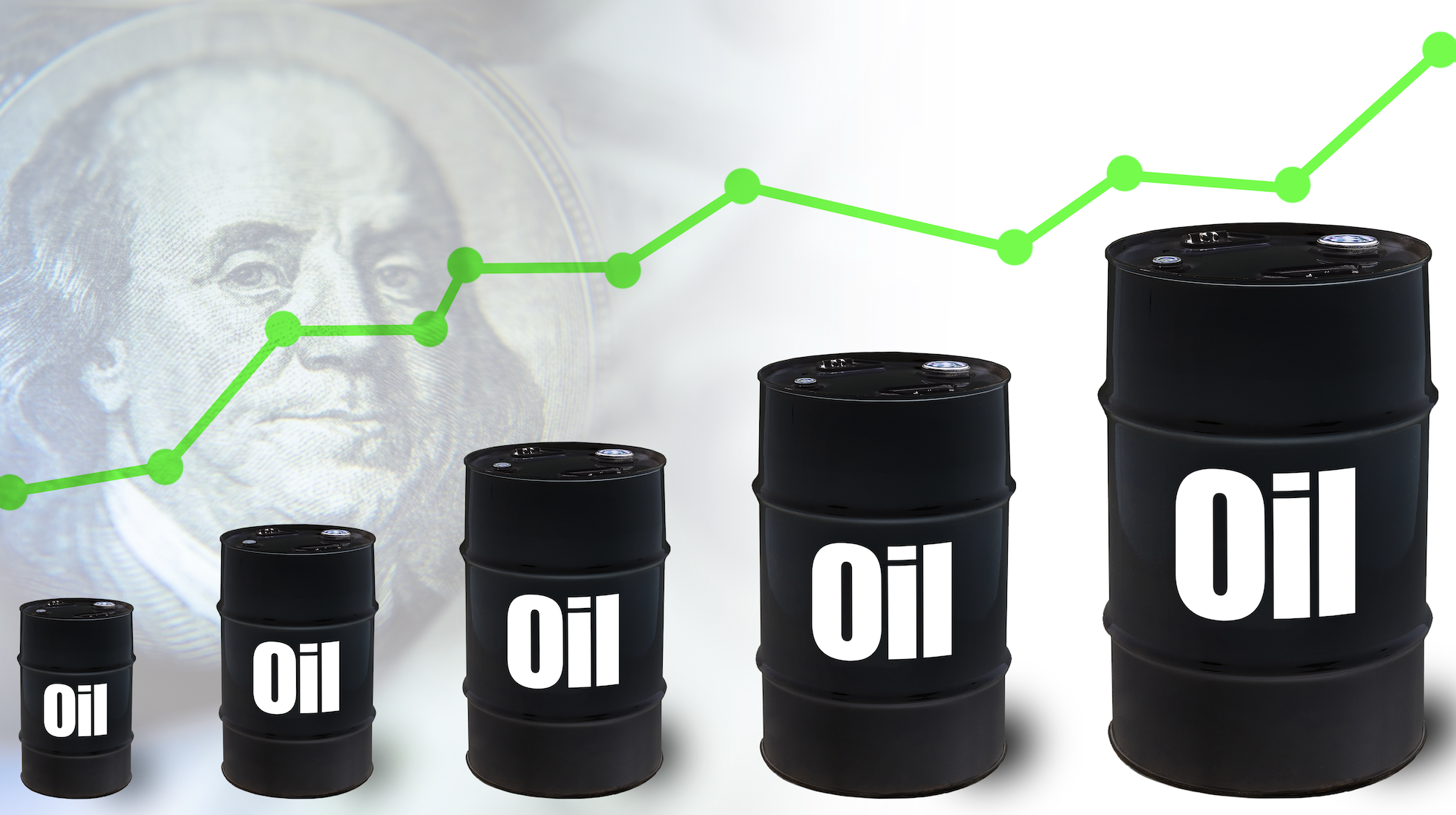
The ongoing conflict involving Iran and the disruption to energy markets has moved beyond headline risk and is now influencing expectations for growth, inflation and policy. As of March 9, oil prices briefly breached the $100 per barrel threshold — a development that shifts the macro conversation compared to last week.
Energy markets drove this week’s market volatility, with the conflict in Iran triggering a sharp rise in oil and natural gas prices. Through Thursday’s close, West Texas Intermediate crude oil was up roughly 17% from last Friday, pushing prices close to $80 per barrel.
February ended with a sharp escalation in conflict involving Iran, putting geopolitical risk back on investors’ radar and unsettling energy and emerging markets. But for most of the month, performance was driven largely by continued rotation tied to AI disruption and shifting earnings expectations.
Markets are responding primarily to uncertainty, with oil prices rising and equities volatile. The economic impact will depend largely on energy supply disruption, particularly whether oil prices remain contained or move sharply higher.
The U.S. is on the back end of fourth-quarter earnings season, and the overall tone from corporate management teams has been constructive. For the S&P 500 Index, earnings growth tracked close to 15% year-over-year, marking a fifth consecutive quarter of double-digit growth.
Managers are strategically maintaining AI exposure toward memory and semiconductor supply chains, and rotating toward enterprise adopters while trimming crowded hyperscalers.
For today’s RIAs, the tension is real. Many clients seek portfolios tailored to their individual goals and values, while advisory firms also aim to deliver that level of service efficiently and at scale.
In a 6-3 decision on Friday, the U.S. Supreme Court struck down most of the tariffs implemented by the administration last year. Markets initially showed little reaction to the announcement, with U.S. equities rising by 0.3% while yields on the 10-year Treasury inched up by 2 basis points.
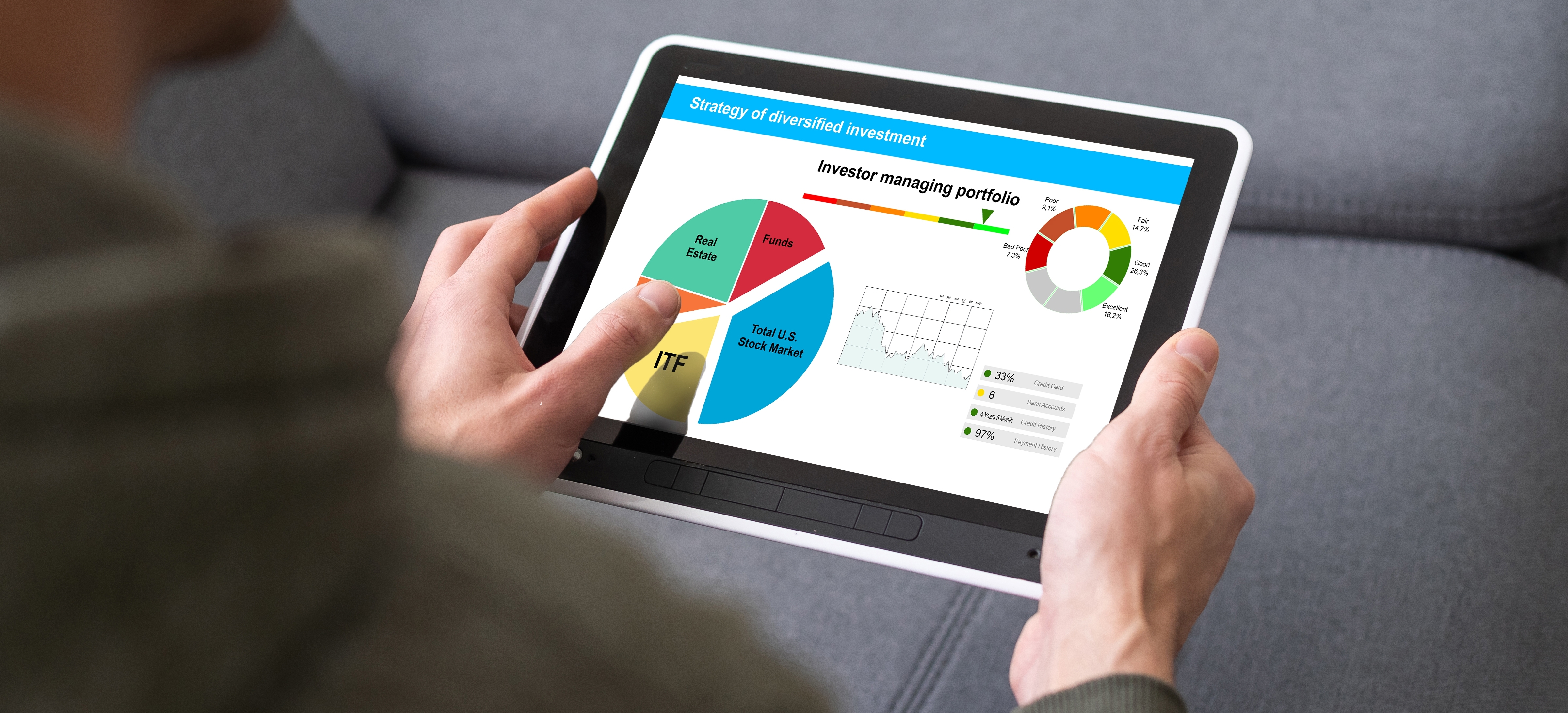
Diversification seeks to help manage risk, smooth portfolio outcomes, and improve the likelihood that clients stay invested and on track toward their long-term goals.
Global equity markets posted modest gains to start the year, driven by selective strength in technology and cyclical areas as leadership rotated. Beneath the surface, performance diverged across companies, sectors, and regions. While macro uncertainty continues to unsettle markets, outcomes are increasingly shaped by company fundamentals.
Monetary policy stayed front and center this week as major central banks kept rates unchanged. What stood out was not the decisions themselves, but how economic momentum is diverging across regions.
Client demand for tax planning is high, yet many advisors may still fall short of meeting expectations. Direct indexing can offer tax benefits such as the potential for tax-loss harvesting but remains underutilized across the advisor community.
At its January meeting, the U.S. Federal Reserve (Fed) voted to pause its rate-cutting cycle, a move that aligns with recent signs of stabilizing labor markets and easing inflation pressures.
It was a volatile week in financial markets, largely driven by geopolitical developments. Last weekend, the U.S. administration proposed new tariffs on several European countries linked to tensions around Greenland.
Investors were thrown another tariff curveball, with the U.S. administration declaring that unless a deal for the U.S. to acquire Greenland can be reached, a 10% tariff will be imposed on eight European countries (Denmark, Norway, Sweden, France, Germany, the United Kingdom, the Netherlands and Finland) effective Feb. 1.
U.S. fourth-quarter earnings season began with major banks reporting results that were generally stronger than expected. Most large banks beat earnings forecasts, with many also exceeding revenue expectations, reinforcing our view that the U.S. economy remains in a healthy state.
The U.S. and global economy remain on solid footing. We don’t believe recent geopolitical developments pose a systemic risk to markets at this time
It’s only been a few days since the start of 2026, but global equity markets are already reaching new all-time highs. Major benchmarks—including the Dow Jones Industrial Average in the U.S., Canada’s S&P/TSX Composite Index, and Japan’s TOPIX—posted strong gains this week.
Global equities closed 2025 with solid gains, supported by strong headline returns from the world’s largest firms, along with a surprising combination of smaller companies, many of which handily outperformed the top ten in the MSCI World Index.
Last week delivered welcome news on inflation in the United States. The November report showed headline inflation slowing to 2.7% year-over-year and core inflation easing to 2.6%—both below consensus expectations of 3.1% and 3%, respectively.