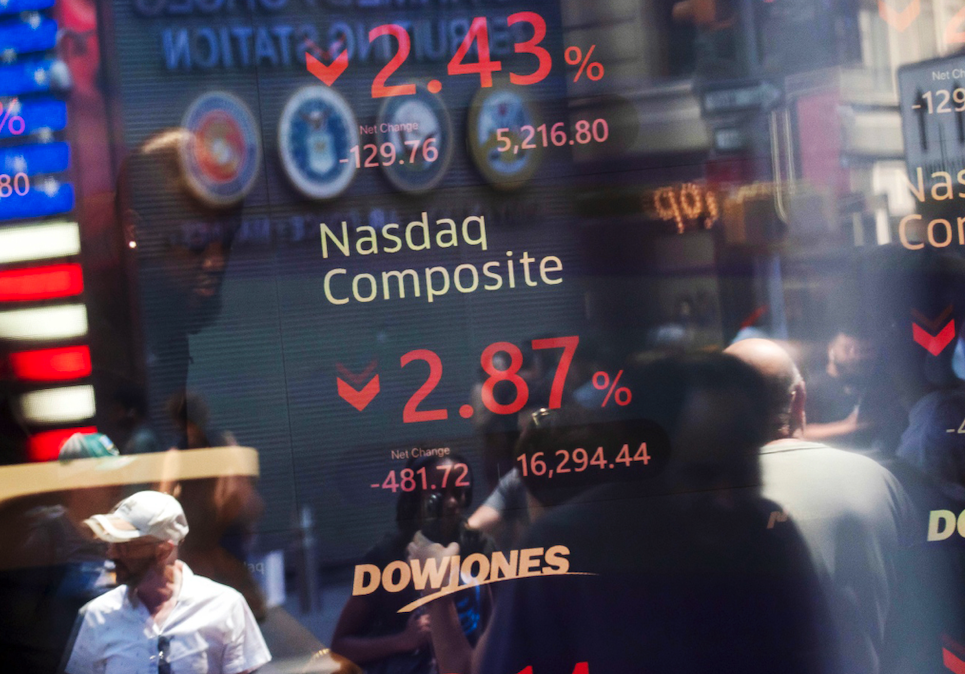
US technology stocks rebounded, lifting key indexes, after the latest flareup of concerns about the scale of the artificial-intelligence-fueled rally wiped nearly $1.3 trillion from the market capitalization of Nasdaq 100 companies over the first two days of the week.
Investors were forced to pay attention Friday, when the most interest-rate sensitive corners of the market saw big plunges in an ugly market selloff. The small-cap Russell 2000 Index dropped 2.4% for the biggest single-day decline since November.
US stocks rallied Friday after Iran said it would open the Strait of Hormuz following the truce between Israel and Lebanon, promising to ease an oil shock that has shadowed the global economic outlook ever since President Donald Trump started the war seven weeks ago.
The S&P 500 Index is on track to close at its first record since January, as traders bid up stocks amid optimism over the ceasefire between the US and Iran and robust corporate fundamentals.
Tech megacaps entered a correction, oil prices broke out, big-money funds retreated and small-lot investors showed waning conviction in buying the dip. While the war in Iran that triggered all that didn’t end a three-year bull run in US equities, it is shaking it to its core.
The war in Iran may be showing few signs of easing, but Wall Street strategists are encouraging investors to start buying stocks again.
Stocks attempted a rebound Wednesday morning as traders seized on a report that Iranian officials had indirectly reached out to the US about potentially ending the conflict in the Middle East. New data pointing to steadiness in the US labor market also helped fuel gains.
The last time an armed conflict upended the global energy economy, crude spiked past $100 and shares in oil and gas producers rallied for months. A similar trajectory might be unfolding as war rages in the Middle East.
The placid surface of an equity market that’s treaded water for months is masking dramatic swings underneath, as stock moves whipsaw traders and threaten more turbulence ahead.
The tech sector’s once relentless push higher in the US stock market has turned into a topsy-turvy ride, forcing investors to seek calmer waters where stodgy, old-economy companies ply their trades.
Wall Street loves few things more than a good acronym to describe a trading thesis. Think FANG, FOMO/YOLO and TACO.
US economic growth is set to accelerate with cheaper oil. Federal Reserve rate cuts are likely with inflation cooling.
The rotation from technology stocks has investors, at long last, scouring one of the least loved corners of the market: energy producers.
A third straight week of market turbulence left US equity investors searching for any edge on how to position ahead of what is normally a strong seasonal stretch for stocks.
The result is the first sustained selloff for the group since April, with the Nasdaq 100 leading the broader market lower as investors ditch tech winners in favor of more defensive stocks. One of the beneficiaries: companies with juicy dividend payments.
US equities dropped at the open, poised to snap a four-session winning streak, as investors continue to grapple with a lack of US economic data despite the end of the government shutdown.
First it was a $400-million stake in MP Materials Corp., a little-known miner of rare-earth materials.
As Donald Trump unleashed his trade war, mused about annexing Canada and generally roiled global sentiment toward the US last spring, worries mounted that foreign buyers would boycott American financial products.
The Russell 2000, home to some of the riskiest stocks on the market, has been on a tear — and a spate of Wall Street strategists say the rally is just getting started.
US stocks climbed on Thursday, posting fresh records amid hopes that an in-line inflation report will push the Federal Reserve to cut interest rates next week.
Investors betting that a torrid rally in gold miners has room to run face a test of their conviction as the US government gets set to deliver jobs data from August.
As the specter of stagflation ripples through equity markets, investors are zeroing in on the upcoming consumer inflation report to see how close the dire economic scenario is to becoming a reality.
As President Donald Trump’s trade war continues, Canadian equities are poised to outperform their US counterparts, portfolio managers argue.
The energy sector has pulled off a rare feat: It’s the only industry group in the S&P 500 Index to rise in the month of March.
Stocks of North American natural gas exporters are trimming a three-year rally as the White House seeks a swift resolution to the war in Ukraine. Analysts say those companies could suffer even more if sanctions on Russian gas are lifted, adding new competition in their key markets.
Canada’s stock market — where returns have lagged the US for two straight years — might offer investors protection against a downturn in US stocks, a Toronto-based asset manager says.
Energy is the star sector of the S&P 500 Index in the early days of 2025, shaking off two consecutive years when it was a market laggard, and gaining despite Wall Street’s dim outlook for oil and gas stocks.
Warren Buffett is shielding Occidental Petroleum Corp. from the worst of the drubbing hitting oil and gas producers and making the stock trade like fossil fuel firms more than five times it size.
As automakers seek stakes in lithium miners to lock in supplies for electric-vehicle batteries, they’re following a path already forged by their shareholders.
Investors are losing one of their few places of refuge in this year’s stock market plunge, as the selloff in energy shares that started last month is leaving them with nowhere to hide.
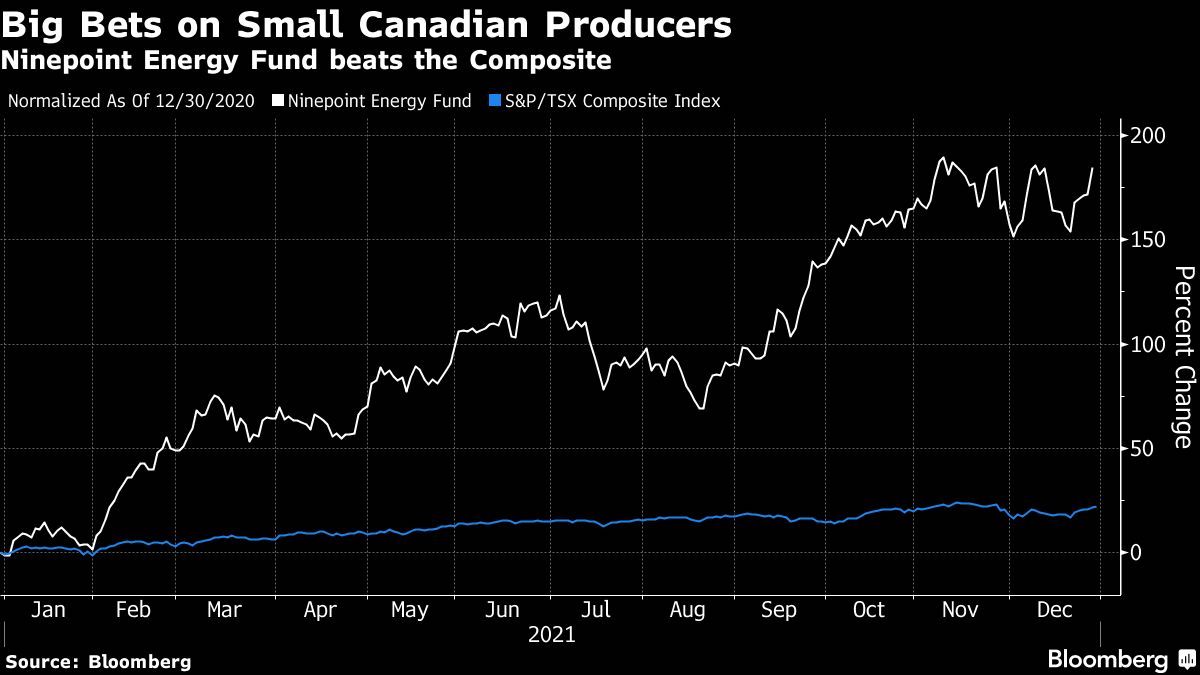
Looking at oil and gas stocks this year? Think small and Canadian, at least according to the world’s leading energy fund manager.