Alphabet Inc.’s impressive second-quarter earnings release on Wednesday seemed on course to go down mostly well with investors. Until the earnings call, the Google parent’s share price was up marginally in after-hours trading, buoyed by cloud growth that smashed estimates.
The White House’s decision to take a 9.9% stake in Intel Corp. is looking like very shrewd business indeed. Since the government bought in at $20.47 a share last August, the American chipmaker’s surging stock price has delivered the US a $43 billion return.
At Google’s developer conference, which is being held near its Mountain View, California, headquarters this week, Chief Executive Officer Sundar Pichai started his keynote by emphasizing the remarkable reach of Google’s services. Thirteen have more than a billion users, he said, and five of them have more than 3 billion.
We’ve all been in meetings that “could have been an email,” so why not have a jury trial that could have been an AI prompt?
It may be a cliche to invoke the pick-and-shovel sellers of the California Gold Rush, but what better way is there to frame what’s happening to Apple Inc.?
The OpenAI bubble was inflated thanks to the company’s first-mover advantage from the almost accidental success of ChatGPT. That launch, OpenAI’s first huge viral moment, made it the fastest-growing consumer tech product in history — 100 million users within two months. Extraordinary sums of venture capital followed, and the company is now worth $852 billion. Quickly placed on its shoulders was the fate of the industry.
The AI hyperscalers are lumped together for obvious reasons, but after the four largest reported their earnings on Wednesday night, it became abundantly clear that one of these big-spending giants is not like the others.
The stakes for OpenAI are existential at worst and a serious burden at best as it seeks to go public. In preparation, the company has taken spring cleaning to the next level — embarking on a culling of “side quests” like the video creator Sora, ending some science research and even putting on hold its plans for an erotic version of ChatGPT.
In announcing on Monday that John Ternus would be succeeding Tim Cook as chief executive officer of Apple Inc. this year, the company’s board made it clear: We’re a hardware company and we’re going with the hardware guy.
Sam Altman, the chief executive officer of OpenAI, said at a finance conference in October 2023 that he and his “CEO friends” were running a betting pool on when the first one-person billion-dollar company would be created thanks to artificial intelligence.
In essence, the IPO is an acknowledgement that the ChatGPT-maker, which just raised $122 billion from investors at a valuation of $852 billion, needs what seems to be an endless amount of money to fund its race for artificial general intelligence.
Thanks to Nvidia Corp.’s practice of reporting earnings outside of the typical cycle for technology companies, the question of whether the almost $5 trillion company will record strong demand in 2026 had already been safely answered well before its latest announcement on Wednesday.
If inquisitive investors wanted to measure the demand for AI with some actual numbers, one place they might look on the balance sheet is the line reading “remaining performance obligations,” known more simply as the backlog.
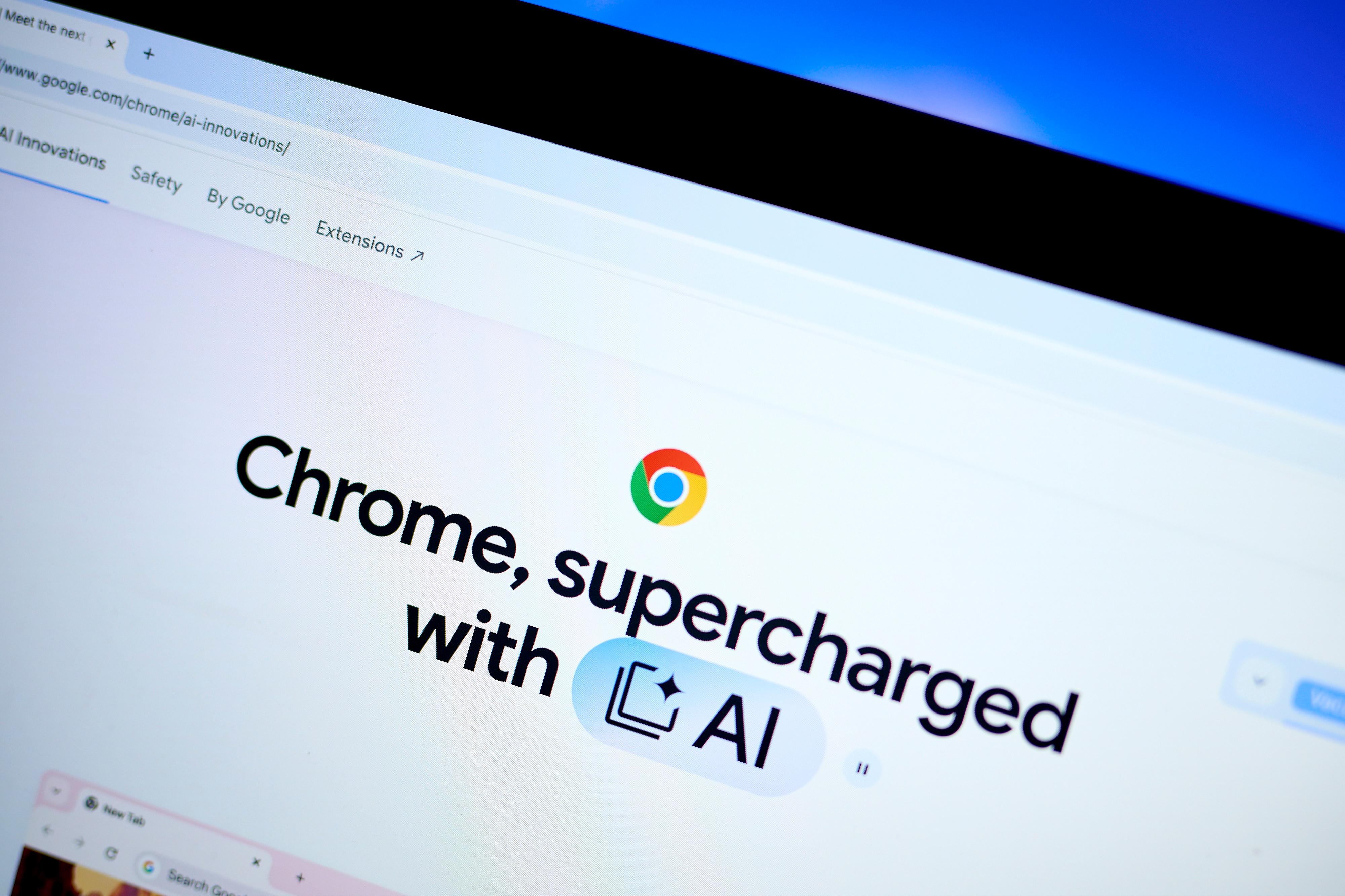
As the company moves to integrate its Gemini chatbot into more products like Gmail and the Chrome browser, it is rapidly gaining popularity and eating away at ChatGPT’s market lead.
Apple Inc. had a very, very merry Christmas. “Unprecedented” demand for the latest iPhone pushed revenue for its top device up 23% year-on-year to a staggering $85.27 billion in the holiday quarter.
Who could forget those heady days when Microsoft Corp. Chief Executive Officer Satya Nadella looked like the smartest man in tech? When ChatGPT emerged in late 2022, his decision to back OpenAI put Nadella’s company at the forefront of the AI boom.
One frustrating characteristic of the AI boom seems to be that everyone must pay for it, regardless of any interest in using it. For some, it will be through rising utility bills as data centers strain the grid.
In 2026, AI hectacorns might go public. That process, historians would tell you, was a harbinger for the dot-com bust as hopeless balance sheets were ignored in favor of overhyped promises that eventually collapsed.
Trillions of dollars hang in the balance of two questions that dominated this year and loom perilously large over the next. “Will the artificial intelligence bubble burst?” and “Will China beat the US?”
The dominance of Jensen Huang and Nvidia in the AI hardware market is facing a significant challenge, signaling a shift in the industry's power dynamic. This is driven by news of Google potentially selling billions of dollars in its own Tensor Processing Units (TPUs) to Meta, following a similar major deal with Anthropic.
Something remarkable happened the other day: I tried an AI device I didn’t instinctively loathe. It was a smart ring, created by two former Meta Platforms Inc. employees, that finally met some of the key criteria I think about when it comes to wearable tech and artificial intelligence, an intersection already fraught with failure and no shortage of justifiable anger.
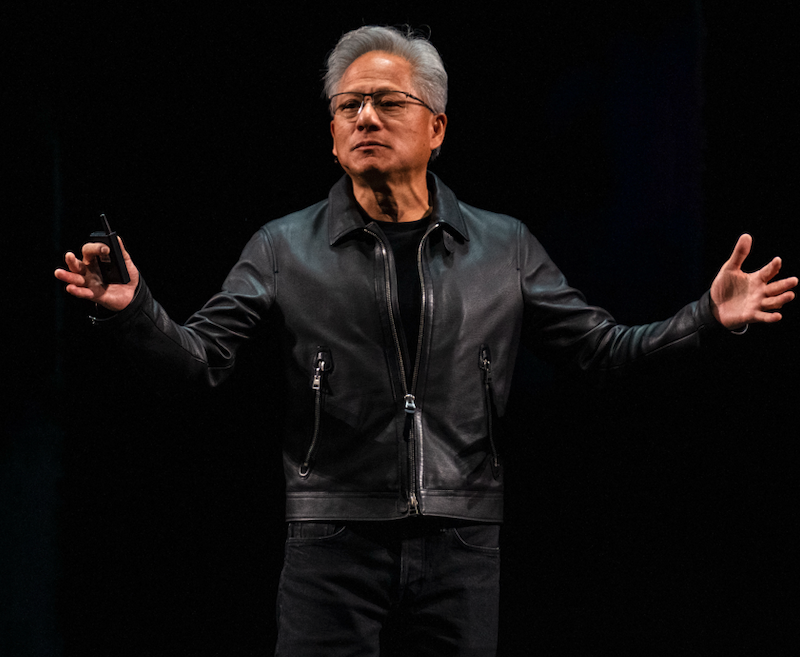
Nvidia CEO Jensen Huang’s insistence this week that he did not “believe we’re in an AI bubble” is all well and good when you’re the man selling the finest shovels for the artificial-intelligence boom. But what of the companies that are expected to turn all that AI building into gold?
By far the most finicky part of OpenAI’s necessary conversion into a for-profit company was reconciling its convoluted partnership with Microsoft Corp. With the year-end deadline fast approaching, they have made a deal both sides can live with for now, though it sets out the timeline for an eventual split.
In many respects, one could argue that ChatGPT’s primary function is to help gather user data to train its AI, bringing on a wealth of extra information on browsing habits that it doesn’t have access to now. That makes the product release worth it, even if market share stays minuscule.
Like having the hottest A-lister on your arm, being a company merely associated with the OpenAI hype machine can send your street cred soaring these days.
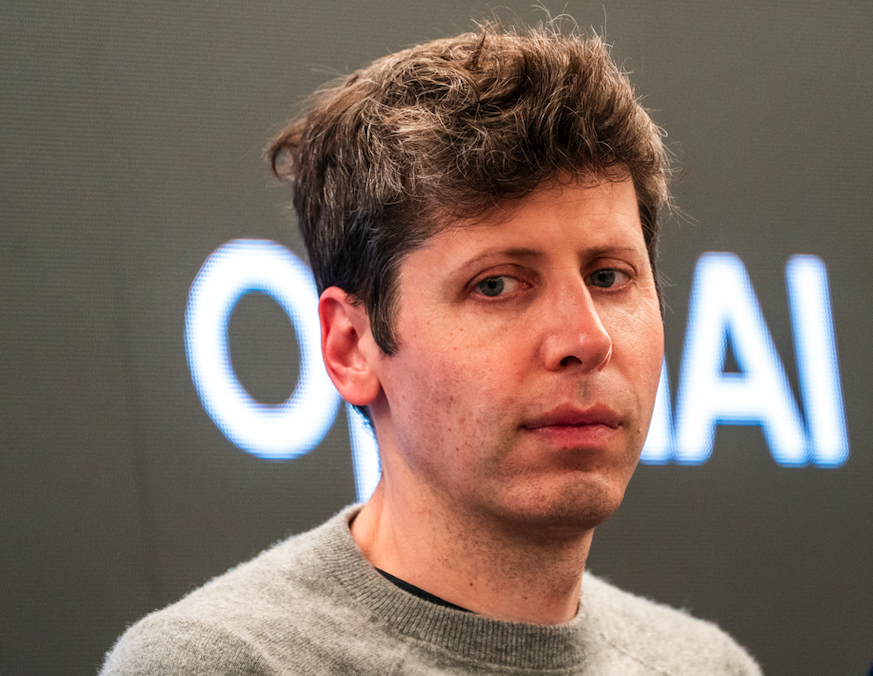
Talking to the former Fox News host Tucker Carlson recently, Altman, the chief executive officer and co-founder of Open AI, was only half-joking when he said he hadn’t “had a good night’s sleep since ChatGPT launched” in November 2022.
When all the top tech companies seem to moving in a pack toward artificial intelligence, Apple Inc. has stood startlingly apart.
Something close to the best-case scenario emerged for Google on Tuesday when a federal judge outlined its punishments for running an illegal search monopoly. The company will not be forced to sell its Chrome browser or Android operating system.
If you’re a tech company not called Apple Inc., getting regular people to pay attention to your smartphone launch is a challenge. Your executives, who simply must be involved, are stuffy, wooden and, more often than not, white and old. Even worse, they’re not famous.
My takeaway from the GPT-5 launch has been that while AI companies can tout overall performance on various benchmarks, these are becoming increasingly less relevant.
If you’re fighting an antitrust lawsuit that might end up breaking your company into pieces, one defense is to argue that those pieces would wither away if separated from the mother ship, thus creating a worse outcome for the consumer.
A quarter of a century ago, when Microsoft Corp. used its dominance of the personal computer market to force people to use Internet Explorer, it famously led to a devastating antitrust lawsuit loss that some believe held the company back for more than a decade.
Did tariffs help Apple Inc. to a blowout quarter?
On Wednesday, Mark Zuckerberg addressed every constituency that mattered.
With 2 billion monthly users in 200 countries, Google’s AI Overviews can claim to be the most popular generative artificial-intelligence product yet released to the public.
Now that the Big Tech conference season is behind us, the smart money in Apple Land is saying that Chief Executive Officer Tim Cook should be preparing to open his checkbook for a huge AI deal, so apparent are the company’s shortcomings.
It sounded like something that should have come from the sports desk — a $14.3 billion transfer fee for a young up-and-coming prospect as Meta Platforms Inc. looks to rebuild its team for the tough season ahead.
For starters, Anduril Industries Inc. is a defense tech company co-founded by Palmer Luckey, the man who created the Oculus VR headset that was acquired by Meta Platforms Inc. for $2 billion in 2014, only for Luckey to be pushed out when it emerged he had financially backed a pro-Trump campaign group.
You wouldn’t exactly call it understated. In a video, Sam Altman, co-founder and chief executive officer of OpenAI, jostles through a busy San Francisco sidewalk.
Ahead of this quarter’s crop of tech earnings, I predicted companies would be reluctant to offer much in the way of forward guidance given the almost Covid-like upheaval of the global economy thanks to President Donald Trump’s tariffs. I was half right: There was some guidance — though it arrived with a large asterisk.
The Big Tech stocks are beginning the year’s earnings season with mild optimism. After signs from the White House that President Donald Trump may be softening his scorched-earth tariff plan, the Magnificent Seven stocks have been up more than 6% this week.
For simplicity’s sake, let’s boil down the multiple questions facing Apple today into just one: How much are Americans willing to spend on an iPhone?
Meta Platforms Inc. heads to court on Monday to defend claims it is an illegal monopoly and should be broken up. The Federal Trade Commission, even without former President Joe Biden’s antitrust hawk, Lina Khan, at the helm, seems to be going full steam ahead — despite Chief Executive Officer Mark Zuckerberg’s attempts to wine and dine the president into a change of heart.
One reason Apple Inc.’s brand is so valuable is that for decades, it had a reputation for only making promises it could keep.
After a search for a new chief executive officer that lasted more than three months, Intel Corp. has decided Lip-Bu Tan is the best choice to salvage the company’s future. He’ll take up the most difficult job in the chip business, Bloomberg News reported on Wednesday evening.
The last time we heard from Amazon.com Inc. Chief Executive Officer Andy Jassy, he was breaking it to investors that his company was forecasting $100 billion in capital expenditures this year — the largest outlay of the tech giants in the pursuit of artificial intelligence.
The Great DeepSeek Panic of January 2025 is officially over.
Apple Inc. described its latest results as its “best quarter ever,” but that’s only true if you stop reading near the top of the press release issued Thursday evening. Overall revenue may have reached record levels, but big questions lurk about large parts of the iPhone maker’s business.
By now, almost everyone has heard about DeepSeek, the Chinese-made AI that has taught the US a thing or two about building cheaper artificial intelligence.
Recommend reading that provides a bed of knowledge for the key themes we think will define 2025. Ours differs from other lists you might see elsewhere at this time of year in that we focus on relevance rather than recency, though there are new books here, too.