In this month’s issue, Franklin Templeton Emerging Markets Equity explains how markets in many regions are weathering US policy uncertainty and offers an upbeat assessment of Vietnam after a recent research visit.
In the weeks leading up to last month’s Israeli and U.S. strikes on Iran, oil prices climbed – not due to actual supply disruptions, but in response to a geopolitical risk premium.
In this article, you’ll learn how to evaluate crypto ETFs with the same rigor you apply to traditional investment products.
A new era of regulation is bound to bring high hopes for the crypto bulls. House Republicans are now gearing up for “Crypto Week” – during which the committee has agreed to prioritize digital asset legislation and review several crypto-related bills.
At the recent 2025 Morningstar Investment Conference, CEO Kunal Kapoor highlighted a growing trend that is reshaping the investment landscape.
Our strategy work and quantitative insights suggest the conditions behind more than a decade of U.S. equity outperformance are starting to shift.
Our long-time investors are probably wondering why we haven’t made any gains over the last 18 months.
Looking at the first half of 2025 reveals a nuanced landscape for private equity (PE) and principal investors.
The artificial intelligence investment landscape reached a critical inflection point in Q2 2025, with the ROBO Global Artificial Intelligence Index (THNQ) delivering exceptional returns of 24.4%.
ClearBridge Investments believes positive forces from One Big Beautiful Bill Act passage and future interest rate cuts should soon outweigh negative forces of tariff actions.
Markets rebounded sharply in 2Q 2025 following April’s tariff-driven selloff. Our mid-year market outlook breaks down the recovery, Fed policy, and where to invest next.
Are interest rates too high? A lot of people think they are, and a growing chorus of voices is calling on Federal Reserve Chairman Jerome Powell to cut rates.
Elevated interest rates and market uncertainty make for an interesting tandem regarding getting core bond exposure. When considering yield, reinforcing a portfolio to absorb market shocks, or both, consider this active option from Vanguard: the Vanguard Core-Plus Bond ETF (VPLS).
Tariff volatility rocked markets for much of the second quarter, creating pressure on U.S. bonds and equities. In the challenging environment, rife with uncertainty and investor concern, a handful of funds generated significant performance.
How the Matthews Emerging Markets Equity Fund’s strategy helped it achieve outperformance during a historic period for global markets.
The headline employment figure came in stronger than expected and better than feared following the weak ADP report, but the details were far from a blockbuster.
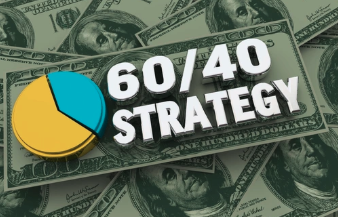
In the latest Alternative Allocations, with guest Brian Ullsperger from Andersen, Tony Davidow examines the traditional 60/40 portfolio and how it can be expanded to include alternatives to meet clients’ needs.
If you’ve been following the mainstream financial media lately, you might think the airline industry is in crisis. From headlines about tariffs and labor costs to geopolitical tensions and delays at Newark Airport, it sounds like air travel should be tanking.
We upgrade equities to neutral from underweight as falling interest rates and improving economic conditions in emerging markets offset uncertainty over US tariff policies.
It was a positive quarter for emerging markets equities.
The earnings bar is fairly low for the second quarter, setting companies up for a potential easy jump—but there will likely be more focus on forward guidance.
As the second half gets underway, we think a modest overweight to risk assets is called for.
This year, so far, the world has been riddled with geopolitical news, resonating in widespread unrest, yet seemingly yielding less impact on financial markets.
In the immediate aftermath of Friday’s much anticipated Employment Report it seemed like the judgement from analysts, talking heads, and even markets was unanimous (or nearly so) that there was good news to celebrate.
Below, we recount highlights from constituents of the ROBO Global Robotics and Automation Index (ROBO) and the ROBO Global Artificial Intelligence Index (THNQ).
Semiconductor equities and related ETFs notched impressive performances in the first half of the year. They were buoyed by ongoing enthusiasm for the AI trade and post-Liberation Day resurgence by the Magnificent Seven.
In this video, Chuck Carnevale, co-founder of FAST Graphs, reviews 13 stocks investors asked to see.
Last week, the U.S. labor market took center stage, delivering conflicting signals. The S&P 500 reached many record highs during the shortened trading week.
In last week’s letter, I referenced Torsten Sløk’s excellent midyear outlook for Apollo Global Management. Today I’ll share some longer quotes which will, I hope, help you visualize where the economy is headed.
Tariffs have been the dominant theme in economic policy this year. While President Trump has long held protectionist views, his administration’s approach to international commerce has been more belligerent than was seen in his first term.
The bull market is alive and well, even amid widespread talk of the “death of U.S. exceptionalism.
Investors looking for cash flow from commercial real estate may want to check out the debt side.
This quarter might best be described as the “Big Beautiful Bounce”. Or the BBB. History has proven time and time again that markets do come back – but this was a historically quick market turnaround.
After a tumultuous few months, June of 2025 saw a strong rally which took global markets to (or close to) new highs. The rally was broad-based, with international and U.S. markets all up strongly.
From investing to economics to politics, patterns emerge, lessons resurface and the past becomes a powerful guide for navigating today’s unpredictable landscape. Timing, perspective and adaptability can make all the difference in managing the complexities of modern markets.
As the global economy navigates a complex landscape, investors are left wondering: are they right to be optimistic or are they being complacent? This article from Franklin Templeton Institute explores the signs of resilience as well as numerous risks.
Though some urge rate cuts, doing that won't necessarily reduce borrowing costs if the market doesn't agree with the timing. It could raise inflation fears, hurting Treasuries.
Do you feel like you spend more and more money every month but get less and less for it? That’s because you are.
Sharp U.S. policy shift and elevated uncertainty reflect an evolution of the new macro regime. What matters: getting a grip on uncertainty by identifying its core features.
The Senate has approved its own version of the "One Big Beautiful Bill" tax-and-spending plan. Here's how it differs from the version the House passed in May, and what's next.
Some say private credit hasn’t been tested. We disagree…and stress can sharpen the senses.
In this video, Chuck Carnevale, co-founder of FAST Graphs, aka Mr. Valuation discusses 10 subscriber-requested stocks that you asked to see, highlighting how FAST Graphs simplifies stock analysis. He reviews companies like AES Corporation, Amgen, Alibaba, and Chipotle, showing how FAST Graphs quickly reveals key data, such as earnings growth, dividend history, and valuation.
The first half of 2025 may not have been kind to private equity, but new data suggests that things could turn around soon.
Israel-Iran hostilities brought a short-term market focus on oil. Longer term, artificial intelligence (AI) electricity needs could create a power shortage, as well as opportunities and risks for investors.
Proposed regulatory changes involving the Supplementary Leverage Ratio may have benefits for both large banks and the Treasury market.
Equity markets continued to march higher in June, seemingly unfazed by heightened Middle East tensions (which were short-lived) and the looming July 8 deadline for the administration’s pause on reciprocal tariffs.
We began the year optimistic that an environment of slowing growth, disinflation and easier monetary policy would be favorable for fixed income markets. Now at midyear, we maintain that view, while acknowledging that policy uncertainty and geopolitical risks may likely result in continued volatility.
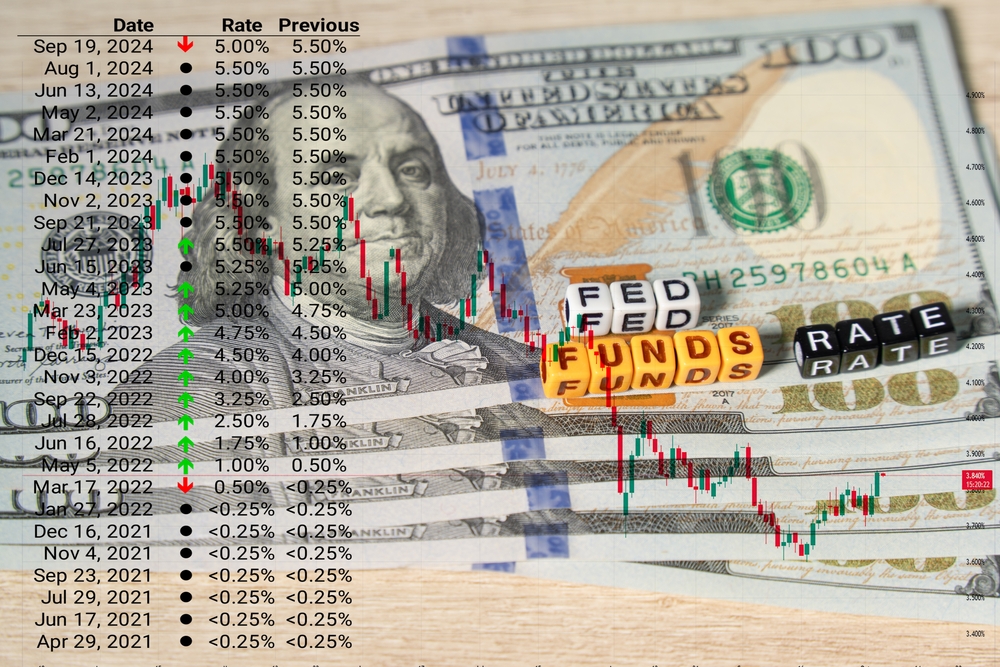
It has been over six months since the FOMC has made a change to the Fed Funds rate. While the debate continues as to when the next cut will be, market consensus (per Bloomberg calculations) is currently for a 25 basis point cut in September.
An economy cannot subsist on services alone.
On the latest edition of Market Week in Review, Global Chief Investment Strategist Paul Eitelman explored key drivers behind the strong performance in markets. He also provided an update on a proposed U.S. tax measure.