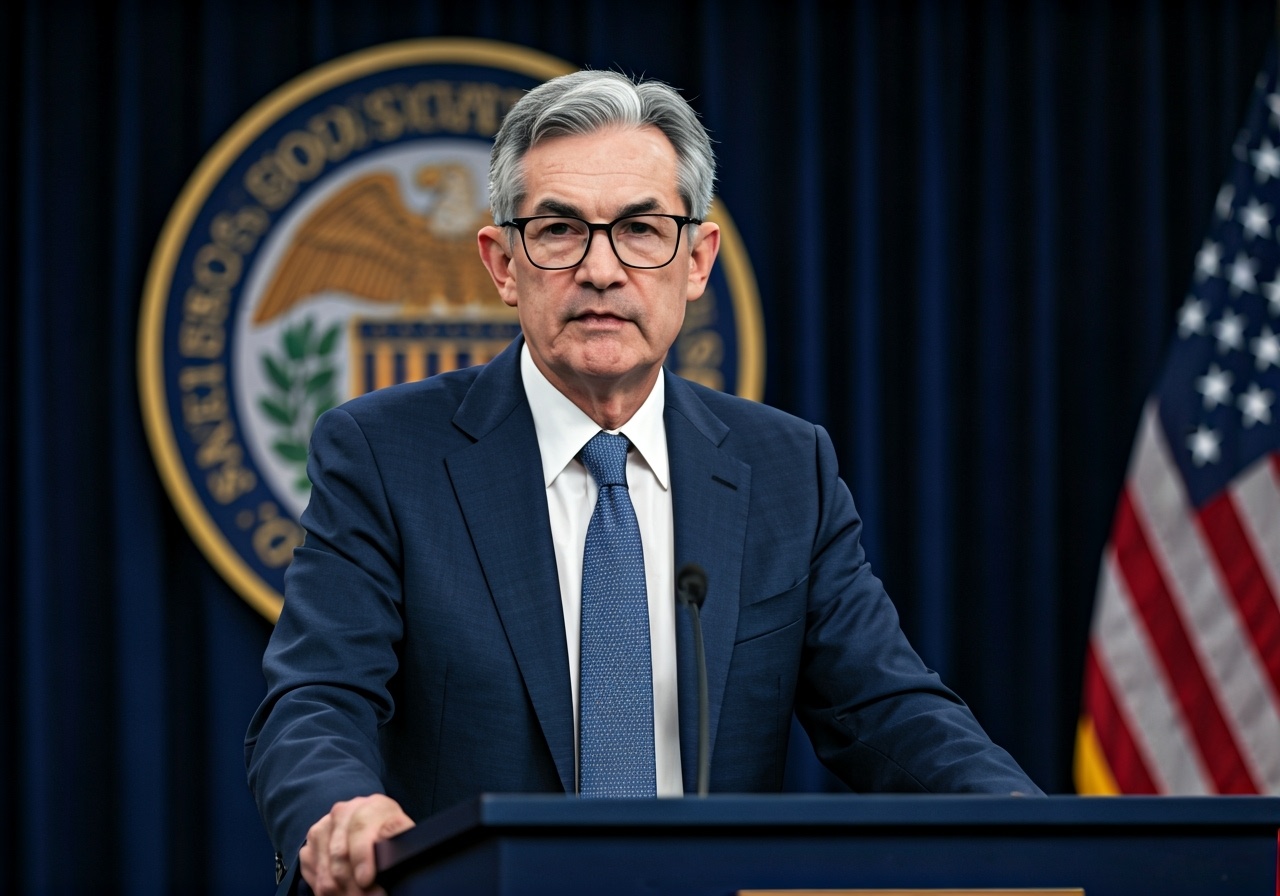
Although the outgoing chair of the US Federal Reserve cannot correct for the institution's biggest recent policy mistakes, he can, and should, address other failures that are equally important for the economy.
Last week’s data sharpened the focus on the pivotal Fed meeting this week. I expect a 25-basis point cut, with real potential for dissents on both sides. Markets are actively gaming out a larger move, but the bar for 50 is still high and would likely require a notably weak retail sales print.
Despite the slowdown, the Federal Reserve remains hesitant. Chair Powell noted softening labor conditions at Jackson Hole and suggested the door is open to rate cuts. But no concrete shift in policy has occurred.
No one wants to be a party pooper. It drives away friends and makes you generally unpopular. But if you are a monetary policymaker, ending the party before it gets too wild is quite literally your job.
Today, volatility isn’t a blip on your radar; it’s the landscape. The question isn’t if, but when the next market shaking event will hit your portfolio. So, are you equipped—or exposed?
Since the first rate cut of this cycle in August of 2024, the S&P 500 has risen by roughly 16%, broadly in line with historical performance during prior expansionary easing episodes.
A Federal Reserve rate cut won't necessarily lower longer-term bond yields or mortgage rates.
Last week's economic data presented a challenging picture for the U.S. economy with key inflation reports delivering conflicting signals and a timely labor market indicator added to the narrative of a softening labor market.
In a recent LinkedIn newsletter, we highlighted how mid-caps have historically delivered a compelling mix of growth and resilience, the "sweet spot" between innovation and maturity.
Artificial intelligence (AI) continues to defy the norms of linear progress and present a type of exponential growth unlike no technology before, according to BlackRock’s Tony Kim. This fast evolution has brought us to what Mr. Kim calls “AI at the frontier,” a characterization that was confirmed on his recent tour of 25 public and private technology companies across Silicon Valley.
Investor and consumer surveys indicate that confidence is stabilizing following the initial tariff agreements, and consumers’ spending and income remain robust.
A key theme dominating global financial markets in recent weeks has been the general upward pressure on sovereign bond yields, particularly at the long end of government bond market curves.
It is certainly possible for the Federal Reserve, as the biggest player on the block, to lower money market rates over the course of the next few meetings. However, if it turns out to have been orchestrated out of political expediency rather than as stimulation for a weak economy, inflation will result. We saw a similar movie in August 1971.
Every time the mainstream declares price inflation dead and buried, new data comes out and rains on the funeral.
In the latest Money Metals Midweek Memo, host Mike Maharrey analyzed the ongoing bull markets in gold and silver, highlighting record highs, historical ratios, supply deficits, and why silver may now be poised for an even stronger run than gold.
With just a week remaining until the highly anticipated September Federal Open Market Committee (FOMC) meeting, Wednesday’s wholesale inflation print and Thursday’s consumer inflation results for August are the last major hurdles lying between the expected resumption of the FOMC easing cycle.
A look inside why more Americans are turning to lifetime income.
The One Big Beautiful Bill Act offers valuable tax benefits specifically for businesses. Our Bill Cass discusses the highlights of the new law and how business owners may benefit.
While equity markets are buoyant worldwide, emerging markets stocks and bonds are the only assets that merit an 'overweight' allocation.
It’s no understatement to say this could have been the most anticipated jobs report in quite some time.
For much of its nearly 17 years on the market, bitcoin has been viewed as a volatile asset. The largest cryptocurrency’s history is chock full of dramatic price swings in both directions and extended periods of turbulence.
Last week's employment update seems likely to prompt a shift in the Federal Reserve's monetary policy. The August jobs report revealed a significant slowdown, with Nonfarm Payrolls (NFP) increasing by only 22,000, well below the 75,000 expectation from economists surveyed by Dow Jones.
As summer comes to a close and life adjusts back to normal for most of us, we thought it was a great time to get back to basics and take a look at the current U.S. stock market.
We’ve received many client questions about seasonality in stocks, and specifically about the ‘September Effect’. This is the theory that investors should sell their stocks after Labor Day to avoid autumn volatility.
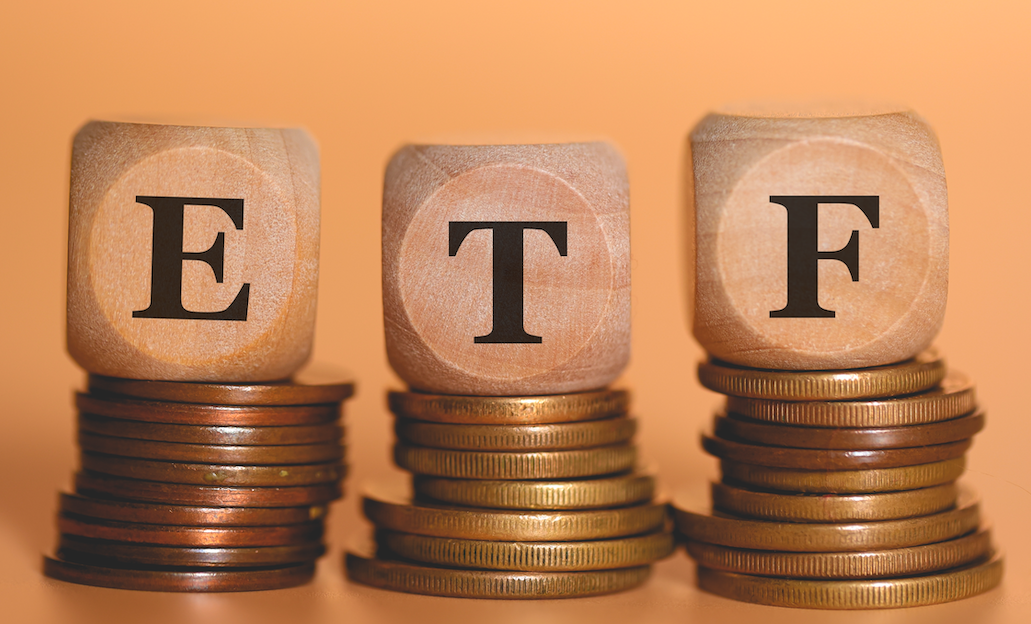
Assets under management (AUM) by ETFs globally closed at another month-end peak and is now just 6 percent below the all-time high reached during the pandemic.
Markets now see more than an 80% chance of a rate cut from the Fed this month, and it may be a good time to reallocate short-term cash positions to medium-term fixed income positions with maturities between 5 and 10 years.
Before you fully consider purchasing a new ETF, you need to understand what makes the fund different from what you own.
One of the standout developments in financial markets in August 2025 was the unprecedented surge in ETF inflows.
Global macro conditions remain constructive for risk assets, according to Franklin Templeton Investment Solutions. Get the team’s views across global assets in the latest “Allocation Views.”
The financial world is replete with terms and definitions, many of which overlap in concept or application. Perhaps I can simplify a familiar concept for most investors who strive to grow and preserve their wealth.
There has not been a fundamental innovation in broad-market cap-weighted indexing in decades. Until now. With the Research Affiliates Cap-Weighted Index (RACWI), we introduce a fresh approach designed to fix a costly but little-known “bug” in cap-weighted indexing.
Earnings expectations for the Magnificent Seven (or Mag Seven) mega-caps remain optimistic, but profits may face pressure as spending rises. Equity investors should carefully evaluate each of the mega-caps while searching across other sectors for solid sources of profitable growth.
Markets cheered an imminent Fed rate cut, with small caps outpacing the S&P 500, but rising unemployment, sticky inflation, and slowing job growth point to stagflation risks. Advisors face a market both buoyed by near-term catalysts and shadowed by longer-term vulnerabilities.
Making the case for potential rate cuts in his recent speech at Jackson Hole, Fed Chair Powell noted that policy is presently in restrictive territory.
This summer has been a big one for digital assets in the U.S., with major policy steps moving forward in Washington. The White House has been clear that the goal is to strengthen American leadership in digital financial technology, and the bills and executive actions we've seen over the past two months all fit under that theme.
Although the relationship between fundamental returns and total returns after a decade is solid, valuations do matter – their impact is evident in the vertical distance between each stock observation and the diagonal line on the chart.
Markets are hoping for a “Goldilocks” outcome: tariffs that don’t hurt margins, inflation under control, and just enough labor softness to justify rate cuts. It’s an appealing story, but history suggests this mix is rare, and chasing it could set investors up for disappointment.
Private equities are a growing and increasingly significant part of the investing landscape.
DoubleLine CEO/CIO Jeffrey Gundlach, widely known in the capital markets as the "Bond King," spoke at a Total Return Webcast.
Market uncertainty continues to linger in the back of fixed income investors’ minds. But that can force much-needed recalibration of portfolios as tariffs and rate cuts loom. A compelling option to consider: corporate bonds.
How should investors think about integrating private credit into their portfolios?
Progress on reducing fiscal deficits has stalled in some large economies around the world. Should investors be worried?
LPL Research sees bull market strength as stocks follow recovery trends, with AI growth, Fed cuts, and economic resilience driving upside.
Gold, digital gold (blockchain-backed gold), and critical minerals are drawing interest as money supply grows and certain resources become scarcer.
The rise of private markets has brought new attention to private investment grade (IG) credit, which can offer investors a premium over public IG for giving borrowers customized terms – though that premium comes with certain risks.
As summer fades and the first hints of fall appear, football fans have reason to celebrate – the new season officially kicked off last night. But while excitement builds on the field, the equity market may be losing steam.
The U.S. dollar is experiencing a rare volatility squeeze, indicating that a major move is near. While the most likely direction is downward, any move will have a big impact on precious metals.
Surface-level diversification is no longer enough in a market increasingly driven by passive flows and dominated by a few mega-cap names. Owning multiple funds or asset classes does not guarantee protection if the underlying exposures overlap. Investors must go deeper and look beyond labels and into the actual drivers of risk and return.
Healthcare has been the worst-performing sector in the S&P 500 so far this year.
There are many ways to describe the strong performance in large cap US stock prices this year. You could simply call it a bull market, with the S&P 500 total return index up 31.2% since its low in early April and up 11.5% year-to-date.