It’s a deeply ingrained investing maxim that risk and return go hand in hand: to get more return, you must accept more risk.
The housing market remains out of sync with the broader economy as affordability is depressed, but an improvement in supply and demand dynamics might be on the horizon.
Earnings results surpassed expectations for the third consecutive quarter, which drove the market's strong August performance.
Powell’s speech seemed to give an all-clear signal for a cut in September. The speech started with a focus on the softening labor market, concluding it is in a “curious kind of balance” with rising risks of layoffs.
Here’s how I see it going into a critical data week: the inflation gauges landed precisely on expectations while an ugly July trade gap shaves some growth from Q3, and that combination keeps the Fed on a path to cut 25 basis points at the next meeting.
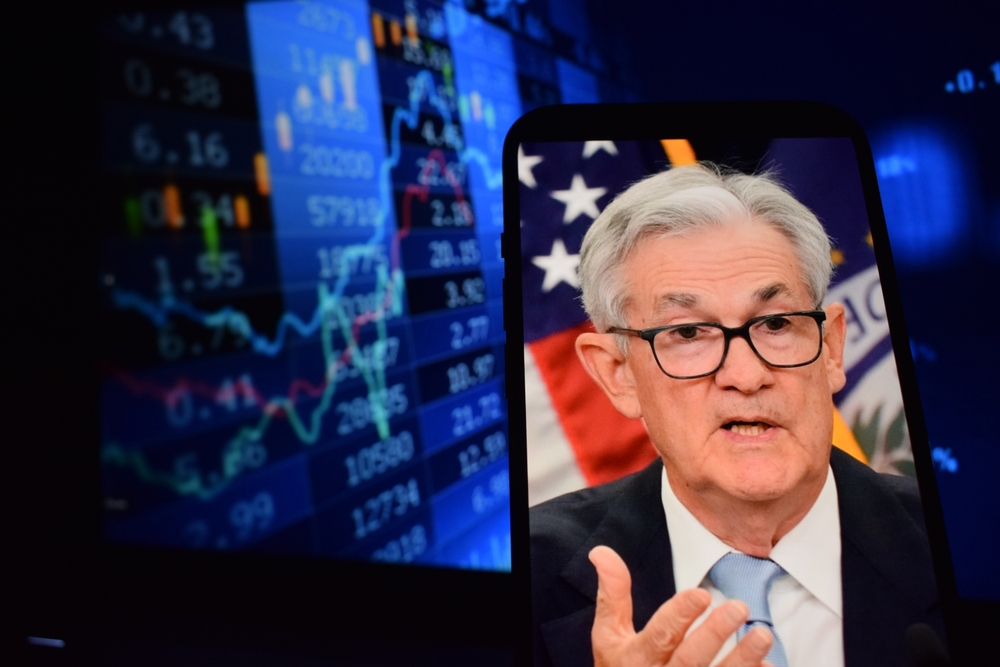
Markets surged late last week after Federal Reserve Chairman Jerome Powell suggested at Jackson Hole that the U.S. central bank may be ready to cut interest rates in September. Traders took it as a green light, while Goldman Sachs, J.P. Morgan, Barclays and others quickly pivoted their forecasts. The CME FedWatch tool now puts the odds of a September cut at nearly 90%.
In our opinion, all of these legitimate concerns are, to various degrees, already priced into financial markets. The impact of these on the ongoing stock market rally will depend on their trajectory relative to investor expectations.
For the past two years, we have been warning that the stock market is overvalued. While our capitalized profits model is simple, it is more complex than just looking at price-earnings or price-sales ratios.
Streamlining government spending is a worthy cause in the effort to establish a more sustainable budget. Let’s review the progress of the Department of Government Efficiency (DOGE) and outline some areas for improvement.
Energy prices indicate economic strength, or, in this case, weakness. If the global economy grew strongly, the need for oil consumption would rise, absorbing the current production levels, causing energy prices to rise.
Curiosity gave birth to philosophy. Ongoing intellectual curiosity is still driving investment success thousands of years later.
Learning to read the Fed minutes effectively can help traders understand the central bank's policy-making process, sentiment, and rate expectations, all of which can impact markets.
Each bank sets its own Beige Book reporting priorities, though prices, jobs and real estate are common themes. The Kansas City Fed, for example, covers nine topics, including community conditions, community and regional banking and agriculture.
In this video, Chuck Carnevale—co-founder of FAST Graphs and known as Mr. Valuation—explains why investors should avoid paying premium prices for stocks, why buying overvalued stocks Is risky – even when the businesses themselves are high quality.
Last week's economic data revealed strong economic growth running up against rising prices and falling confidence.
On this week’s edition of Market Week in Review, Senior Investment Strategist and Head of Canadian Strategy, BeiChen Lin, explained key factors fueling the strong performance in North American stock markets. He also assessed the latest U.S. Federal Reserve (Fed) developments and shared upcoming watchpoints for the U.S. and Canadian labor markets.
The adage “don’t borrow trouble” advises us against distressing over problems yet to occur. But we don’t think it should apply to retirement planning. In fact, digging into what concerns DC plan participants now may help them avoid retirement pitfalls down the road.
Muni & corporate bonds trading activity has been reaching record levels through the first half of 2025 at the Intercontinental Exchange.
Radical policy changes can launch new economic eras.
When the value of the U.S. dollar declines, international developed-market bonds tend to become attractive. Here's why the bond outlook is more positive than it has been for the past decade.
NVIDIA (NVDA) earnings are the focus tonight, but investors’ attention will quickly shift back to the macro later this week. According to our Economic Calendar, with data licensed from Econoday Inc., a second read on Q2 GDP hits the tape Thursday morning.
Is the U.S. economy “all twisted up in the game” with the S&P 500 Index dominated by technology/AI stocks? How much is investor confidence affecting consumer confidence? How much has the increase in financial advice and advisors been fed by the success of this stock market?
The global exchange-traded funds (ETFs) market has rarely been more dynamic. Active strategies may be commanding the headlines, but index-based ETFs remain the bedrock of portfolios worldwide.
Europe's defense landscape has undergone a paradigm shift—a rearmament cycle unfolding at a velocity unseen since the Cold War.
The financial markets often shift gears in September, moving away from the quiet summer months marked by low trading volumes and limited volatility, and entering a period historically associated with seasonal weakness and increased market instability.
The year to date has been complicated by a cloud of uncertainty as a new U.S. administration took the world economy by storm.
A full-scale implementation partner does the behind-the-scenes—but critically necessary—work of managing portfolios according to the investment objectives, risk tolerance and preferences set by an investment team. In doing so, they free up time and energy for the investment staff to focus on decision-making.
According to recent analysis from the Congressional Budget Office (CBO), tariff revenue could meaningfully impact both sides of the bond market pendulum, which on net, could be beneficial to the Treasury market.
It’s hard to ignore the effect Fed Chair Jerome Powell’s comments made last Friday had on equities, particularly small-caps.
The recent passage of U.S. crypto regulatory policies follows on the heels of a convoluted path to bringing frameworks to digital assets.
Fed Chair Jerome Powell’s comments at Jackson Hole shifts the outlook for interest rates.
While investors often look to the Federal Reserve for macroeconomic signals, Walmart’s earnings may offer even more insight. As a barometer of consumer behavior, pricing trends and tariff impacts, Walmart is a must-watch for anyone trying to understand the real-time U.S. economy.
Investors enjoying the pairing of domestic stocks and the momentum factor are likely familiar with some related ETFs. This includes the Invesco S&P 500 Momentum ETF (SPMO).
Director elections can be a powerful tool for investors to weigh in on ineffective boards.
Benefit Street Partners believes private credit managers need to focus on the financial conditions during a fund’s investment period. Skilled managers know when to dynamically deploy more capital or pull back, as the weather changes.
The prospect of lower rates could translate to falling yields, forcing investors to diversify their fixed income portfolios. One area that's been seeing renewed interest is mortgage-backed securities (MBS).
Contrary to some popular stereotypes about young investors, the kids are all right. They typically save more and invest in age-appropriate, low-cost funds at higher rates than previous generations did at the same age, all while avoiding frequent trading or excessive risk in their portfolios.
The U.S. dollar has experienced a notable decline in value this year relative to a broad basket of foreign currencies. This depreciation has meaningfully affected the investment returns of U.S. based investors holdings in international stocks and bonds.
The largest company in the world, with a market capitalization of about $4.4 trillion, reports Q2 results today, after the market close.
Today is the day that analysts and investors have been waiting for the entire earnings season—earnings and updated Q3 guidance from NVIDIA Corp. (NVDA).
Finding attractively valued stocks that can overcome evolving conditions requires a new mindset.
International stocks have outperformed the broad U.S. stock market so far this year. If the U.S. dollar continues to weaken, it could boost international returns even more.
Nick Goetze discusses fixed income market conditions and offers insight for bond investors.
China’s economy has propagated itself through branches like trade, finance and infrastructure. But supply chains are where its roots have thickened into trunks, particularly across Southeast Asia.
As central bankers, economists, and policymakers gathered last weekend in Wyoming’s Grand Teton National Park for the 2025 Jackson Hole Economic Symposium, the Federal Reserve (Fed) found itself at a critical juncture marked by political pressures, personnel changes, and internal divisions over monetary policy direction.
Market volatility can feel like an emotional yo-yo: sudden drops, sharp rebounds, and the unsettling feeling of not knowing what’s next. Feeling anxious, unsettled, or even tempted to take swift action to protect your investments is natural. But often, the best move is the one you don’t make.
“Buy Every Dip” has lately been the “Siren’s Song” for this market. Such is seen in the flows into ETFs over the course of this year. Retail investors treat pullbacks as temporary noise, and their behavior borders on mechanical. Every sell-off is seen as an opportunity, not a warning.
Amid the push to reshore, the United States faces a clear challenge when it comes to labor. Even though manufacturing has been contracting (PMI below 50 for more than two years), the U.S. still has 380,000 unfilled manufacturing jobs.
While the majority of the capital markets are anticipating rate cuts, certain economic data continues to run counter to the forecast. That’s why in times of persistent inflation, getting commodities exposure can be beneficial.
Last Friday, Jerome Powell gave the Fed Chief’s annual speech at the Kansas City Fed’s 2025 meeting in Jackson Hole, WY.