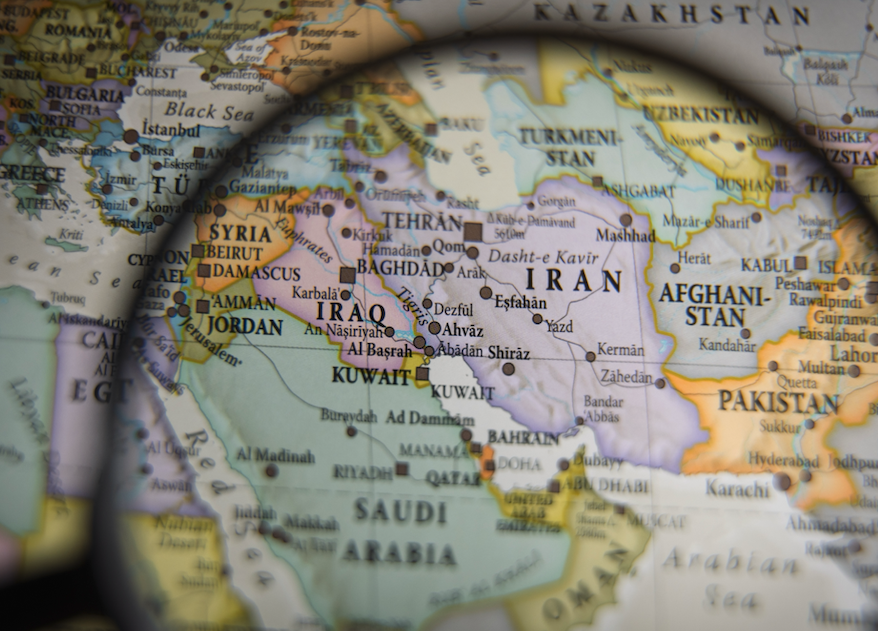
The summer has once again brought a miasma of wildfire smoke across wide stretches of the nation, leading to hazy views and slower activity. The clouds in our outlook are not merely atmospheric. A failed ceasefire and renewed conflict in the Middle East have created new reasons to worry about economic performance.
Lock, stock and barrel, a British phrase, originally referred to the three essential components of a firearm. Over time, it evolved into shorthand for the whole package. When tensions flare in the Middle East, the global economy often feels the consequences lock, stock and barrel.
I really struggle to understand my utility bills. They often run to several pages, with sections describing just how difficult it is to get water from the source to your faucet, or internet service from a satellite to your home router. At the end, there is a long list of charges from a range of payors that adds up to an astronomical sum.
We had a data center at my first banking job. It was a dusty room filled with old Federal Reserve Bulletins, Economic Reports of the Presidents, and annual reports from the International Monetary Fund. I was the search engine, and the operation was powered by caffeine.
Productivity is an essential component of economic success. It allows for growth without inflation; compensates for demographic deficits; and helps nations attract investment.
While the Middle East is still far from calm, it does appear the worst of the volatility in the region is in the past. The U.S.-Iran ceasefire is in place, with negotiations underway for a more durable peace.
Circumstances since 2020 have repeatedly demonstrated how adaptable the economy is in the face of new challenges. We see no reason for that resilience to fade in the balance of the year.
The announcement of an extended ceasefire in the Middle East is welcome news. The accord, which is scheduled to be signed late this week, reduces a source of geopolitical uncertainty that has hovered over the global economy. But significant risks remain.
An increasing number of our neighbors are now retired. As they have made that transition, their sensitivity to the costs of living has increased, as has their skepticism over the way that inflation is measured. A common refrain: “I don’t care what the numbers say…things are REALLY expensive these days!”
Economies around the world aren’t just reliant on AI investments for growth. The appreciation of AI stocks has supported spending, which is following “K-shaped” patterns. A significant correction to the valuations of tech leaders would therefore be even more likely to result in recession.
During the American cigar craze of the 1990s, a couple of my neighbors purchased humidors and began collecting. The holy grail for them was Cuban Cohibas, banned from import by longstanding U.S. sanctions.
Kevin Warsh was confirmed this week as the next Chair of the Federal Reserve’s Board of Governors. As we discussed in a recent article, his transition comes at a delicate time; inflation is rising, and questions about the Fed’s independence are pressing. The honeymoon period will be brief.
With those simple words, Jerome Powell departed his final press conference as Federal Reserve Chair. Powell’s eight years at the helm have been anything but simple, however. A review of his tenure includes some hits, some misses, and some important lessons in leadership.
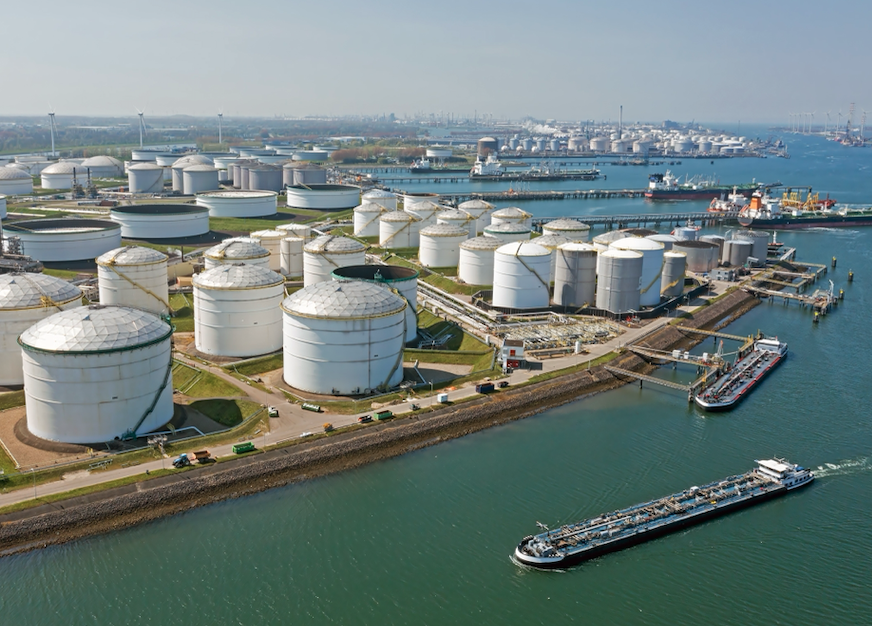
Global risks have tilted against both growth and price stability. The ceasefire in the Middle East has brought a measure of calm to financial markets, but it has not resolved the underlying economic shock. With the Strait of Hormuz effectively shut, supply constraints continue to ripple through energy markets and are increasingly spilling over into downstream sectors.
Leaders often have trouble focusing on the longer-term. In the corporate arena, pressure to produce quarterly earnings can truncate planning horizons. In public life, popular opinion and election cycles can impose myopia. It takes a unique set of ingredients to set, and stick to, a lasting vision.
I was working in one of our regional offices this week when the network on our floor experienced a brief outage. People were clearly not prepared for a return to an analog world, and grew increasingly anxious as the minutes ticked by.
The war in Iran has been costly, in a number of ways. First and foremost, the humanitarian consequences have been substantial: the price paid by those in harm’s way is immeasurable.
During the pandemic, my wife lived in constant fear that we would run short of paper products, disinfectants and other essentials. I was frequently sent out on reconnaissance missions to replenish supplies.
The Iran conflict has changed the paths for inflation and central bank actions.
“Smoke on the Water, Fire in the Sky,” the iconic Deep Purple refrain, endures because it captures a familiar dynamic: threats appear on the horizon before the heat arrives.
The whole world will feel the consequences of this conflict.
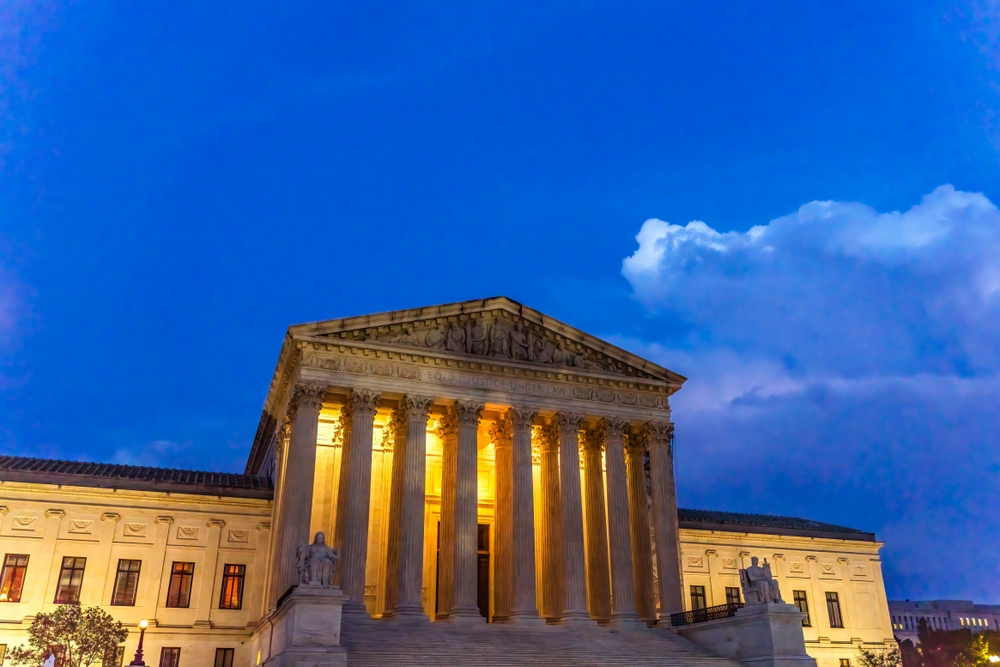
The opening months of 2026 have been hectic. A partial inventory of major developments during the year to date would include the removal of Venezuela’s leader; a government investigation into the Chairman of the Federal Reserve; tension with Europe over Greenland; and a broad swath of U.S. tariffs stricken down by the Supreme Court. It’s been a lot to digest.
Last week’s Supreme Court ruling has prompted a re-set of U.S. tariff policy. As an updated strategy is being formulated, it is worth assessing whether the effort is worth sustaining. A high level review suggests that American trade policy over the last year has detracted from economic performance, and should be re-thought.
The year got off to a cold start in the U.S., with many regions experiencing unusually freezing temperatures and precipitation. February has brought relief in both the weather and in economic reports.
The U.S. economy is all in on artificial intelligence (AI). But there are some natural limitations to progress which will have to be carefully managed.
A financial innovation brings new insights and new risks.
At the start of my career, the Federal Reserve was content to operate in the shadows. Today, by contrast, the Fed is a much more public entity. And so the fact that the derby to become the next Chairman played out so vividly in the media was not surprising.
Climatically, Europe has been fortunate: its winter has been moderate so far. But Europe’s need for fuel remains substantial, and the cooling of relations between the U.S. and the European Union (EU) may make it more difficult to keep EU homes and the EU economy warm.
Long trips rarely end at the airport. We arrive, but our internal clocks lag behind; the first day back is spent acclimating to the new landscape. The global economy enters 2026 in much the same way. Shifting rules of commerce, political stoppages and patchy data have left decision makers disoriented.
We are in the midst of a tech-led investment boom supporting what some think is a transformational technology. The annualized pace of U.S. productivity growth was 5% in the third quarter of last year, well above the long-term average.
Taking time away due to illness is never ideal. Upon return to school or work, we are greeted with all the tasks we did not complete while incapacitated. The recovery may feel worse than the disease.
We just closed another banner year for asset prices. The S&P 500 was up 16% in 2025, and many overseas exchanges saw gains of more than 25%. Bond prices rose, and most housing markets held onto high values. There were even some signs of recovery in commercial real estate.
Reflections on the unexpected outcomes of an unpredictable year.
This year has witnessed some of the most significant policy shifts in recent memory. Economic, strategic and fiscal norms have all been challenged, creating a level of uncertainty that has been hard keep up with.
The rapid expansion of Artificial Intelligence (AI), while promising increased productivity, is creating a significant and often overlooked strain on the global power grid.
Capital controls can be used to keep investors at home. Bank reserve and liquidity requirements can also be employed for this purpose: U.S. banks hold $2 trillion more in government debt than they did six years ago.
Sports wagering has come a long way since then. Global revenue derived from this activity now exceeds $100 billion, and is expected to grow exponentially in the years ahead.
2025 has not been just a story of U.S. resilience. The Asia-Pacific (APAC) region has weathered storms and stayed firmly on course.
The U.S. government shutdown is about to enter its second month. We did not rush to comment on it, because we didn’t think that it would have much of an economic impact. But the risk that lasting damage will be done is rising.
While many lessons have evolved over time, one maxim has never changed for children: look both ways before crossing the street. I reinforced with my children to then look again. We might not see everything on a quick glance, and traffic can change quickly.
Global equity markets have surged this year, in spite of moderate economic growth and an accumulating series of risks. This has led some to worry that valuations have been stretched a little too far. The same can be said of credit markets, which have seen spreads fall to levels last seen in 2007.
So while there is a lot of focus on drug prices, measures taken to date are unlikely to make a meaningful impact on costs paid by the U.S. and its citizens. More fundamental reform would likely take an act of Congress, which would be hotly contested by lobbyists. There is no end in sight for debate on this front.
With the U.S. government shut down, the Labor Department was unable to release the monthly employment report on October 3. You could almost sense the economics community experiencing a kind of withdrawal, not sure of how to cope with the deprivation of data.
The office real estate sector is working through a difficult cycle.
Back in the day, the arrival of the postman was a big deal. E-mail and texting existed only in the dreams of technologists, so people communicated with one another by writing letters.
China continues to struggle with deflation. Producer prices have been falling for more than two years, and consumer prices have been essentially flat over that time.
Independent central banks are a relatively recent concept.
Radical policy changes can launch new economic eras.
Few have accomplished as much as Janet Yellen during the course of their careers. She broke two significant glass ceilings, becoming the first woman to serve as the Chairman of the Federal Reserve and as U.S. Treasury secretary.
Younger workers are facing difficult employment prospects.