I don’t recommend running away from things in most cases. As Kelly Clarkson sings in “Stronger (What Doesn’t Kill You)”, we want to get stronger by facing things we are afraid of. In most cases standing up to bullies or those people who ridicule you actually feels good.
What will really determine whether your firm has success using AI or any technology is whether employees and advisors trust the way these tools are explained, implemented, and managed.
Aspiring homebuyers should find the US housing market slightly more affordable in 2026, even without the benefit of lower mortgage rates.
European real estate companies have been buying back junior bonds like never before, seeking to get their balance sheets in order after a tumultuous few years.
Here’s a shocker — if you give businesses more time to respond to a survey, chances are you’ll get more data back in return.
US-listed biotechnology and pharmaceutical company share sales are staging a late-year revival, as mergers and acquisitions in the industry boost valuations and stoke additional demand.
Oracle Corp. shocked investors with the disclosure of $248 billion in future lease-payment commitments, primarily for AI data centers and cloud capacity, which are set to commence by its 2028 financial year but are not yet on its balance sheet.
As more retail investors gain access to private markets, advisors should be careful to communicate the risks, and not just the potential upside, of diving into these alternative investments.
As anxiety over an artificial-intelligence bubble reached a fever pitch in recent months, no Wall Street bank helped the industry power past the noise like Morgan Stanley.
Market participants said the longer-term outlook for the sector remains upbeat as power demand is too high to be met by Big Oil alone. And the rally this year is far from overdone, with the clean-energy stock gauge remaining about 73% below its 2007 peak.
Every time there’s a raging bull market in stocks, as there is now, people start worrying about too much leverage in the market, and for good reason. When investors chase stocks with borrowed money, bad things can happen.
The goal with perpetual, unsolvable problems is to move from gridlock to dialogue. You don’t have to agree. You do have to understand.
This data shows we’ve just experienced one of the biggest periods of financial turbulence in the last 20 years, but are we, as financial professionals, acting accordingly and showing our clients enough support?
One of the most important roles of a financial advisor is to help retired clients determine how much they can afford to spend each year. It might be a good idea for advisors to ascertain whether their client’s spending goals are actually consistent with a retirement paychecks approach.
Investors are gravitating to dollar bonds to ride the rally in emerging-markets, and have poured the most money in two years into a fund tracking the asset class.
Despite rapid growth, including significant trading volume increases, the company faces major challenges from competitors like Robinhood and Interactive Brokers, an ongoing association with gambling, and regulatory pushback regarding its classification as a financial-derivatives exchange.
It pays to know what financial storms — and especially their underlying meteorology — look like. This reviewer has not come across a volume that accomplishes this as well — and as entertainingly — as Andrew Ross Sorkin’s 1929: Inside the Greatest Crash in Wall Street History — and How It Shattered a Nation.
The flood of big money into the RIA space is a tribute to what the pioneers created. But it also represents a step backward. The new masters are profit-driven capitalists, not creative, client-focused entrepreneurs.
Clients with large, concentrated stock positions, often from vested Restricted Stock Units (RSUs), face undiversified risk and a huge potential tax bill. This article introduces two new, complex methods that defer capital gains.
While the Federal Reserve is expected to cut short-term interest rates next year, these reductions are predicted to have minimal effect on long-term rates, such as the 10-year Treasury yield.
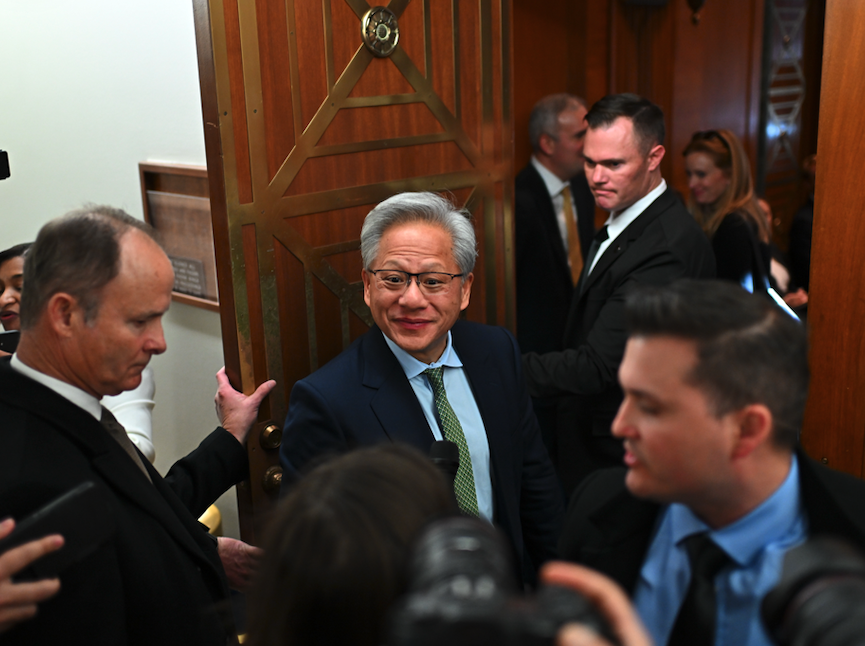
China has figured out the US strategy for allowing it to buy Nvidia Corp.’s H200 and is rejecting the AI chip in favor of domestically developed semiconductors, White House AI czar David Sacks said, citing news reports.
A flare up in high-profile corporate buyouts is likely to spread into 2026, spurring demand for leveraged financing that could double by some estimates, according to debt managers.
Emerging market carry trades, a popular strategy that returned about 17% in 2025, are widely expected to continue yielding gains in 2026 due to persistent interest rate gaps and a weakening US dollar.
It’s been three years since OpenAI set off euphoria over artificial intelligence with the release of ChatGPT. And while the money is still pouring in, so are the doubts about whether the good times can last.
Imagine headlines flashing news of 20,000 jobs lost each month from US payrolls. Consumer and investor sentiment would crater and the pressure on the Federal Reserve to keep cutting interest rates would be intense.
Oracle's recent earnings report offered little comfort for those concerned about the cost of AI infrastructure, revealing unwelcome surprises like a $10 billion quarterly cash burn and significantly increased capital spending.
The Treasury Department is preparing to release a corporate tax workaround that would deliver large tax savings to companies including Salesforce Inc. and Qualcomm Inc.
Foreign corporate insiders would have to reveal when they buy or sell company stock under a provision included in the House-passed defense authorization bill, a move backers describe as closing a loophole that hurts US investors.
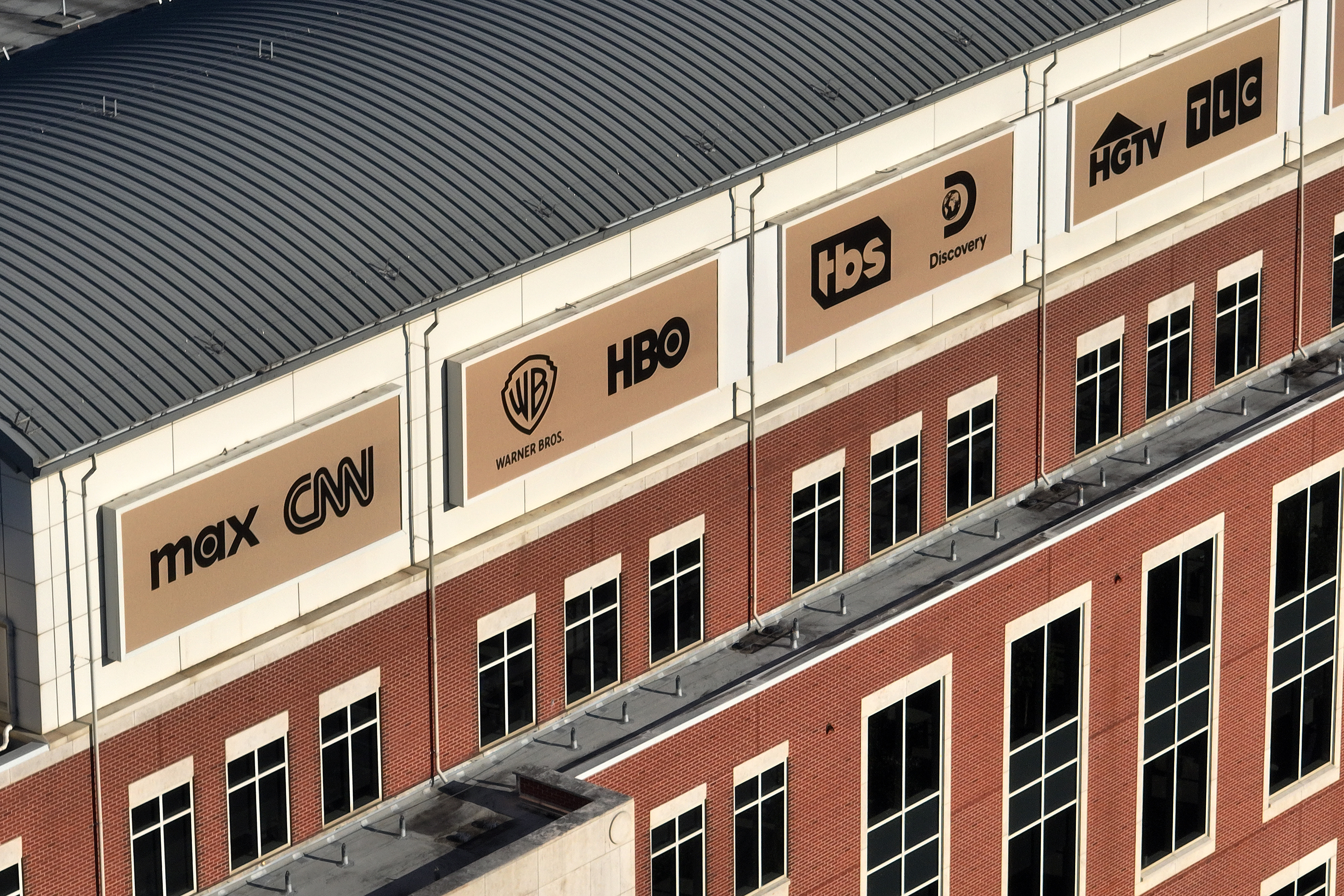
The dueling suitors for Warner Bros. Discovery Inc. have had a rough week. Will this rule out an auction? Don’t count on it.
Oil held near its lowest close in almost two months, as concerns about an oversupply offset bullishness in wider financial markets.
Silver jumped for a fourth day, as exchange-traded fund inflows, momentum-following and physical market tightness pushed the white metal toward its best year since 1979.
Walt Disney Co. agreed to invest $1 billion in OpenAI and license iconic characters like Mickey Mouse and Cinderella for use on the startup’s short-form, artificial intelligence video platform.
Gold wavered as traders mulled the Federal Reserve’s outlook for interest rates. Bullion gained as much as 0.5% in US trading before paring some gains, while Treasury yields and the dollar declined.
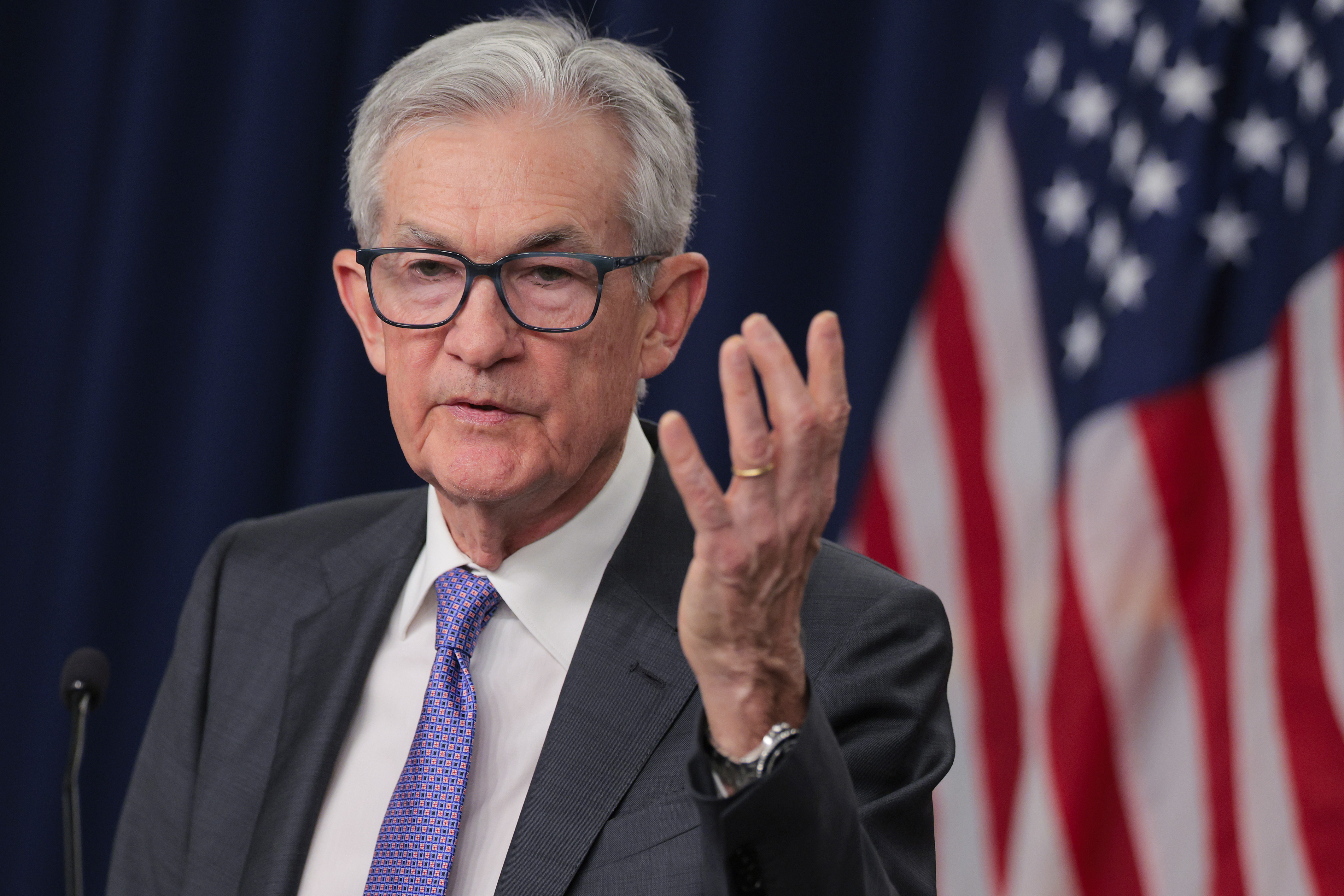
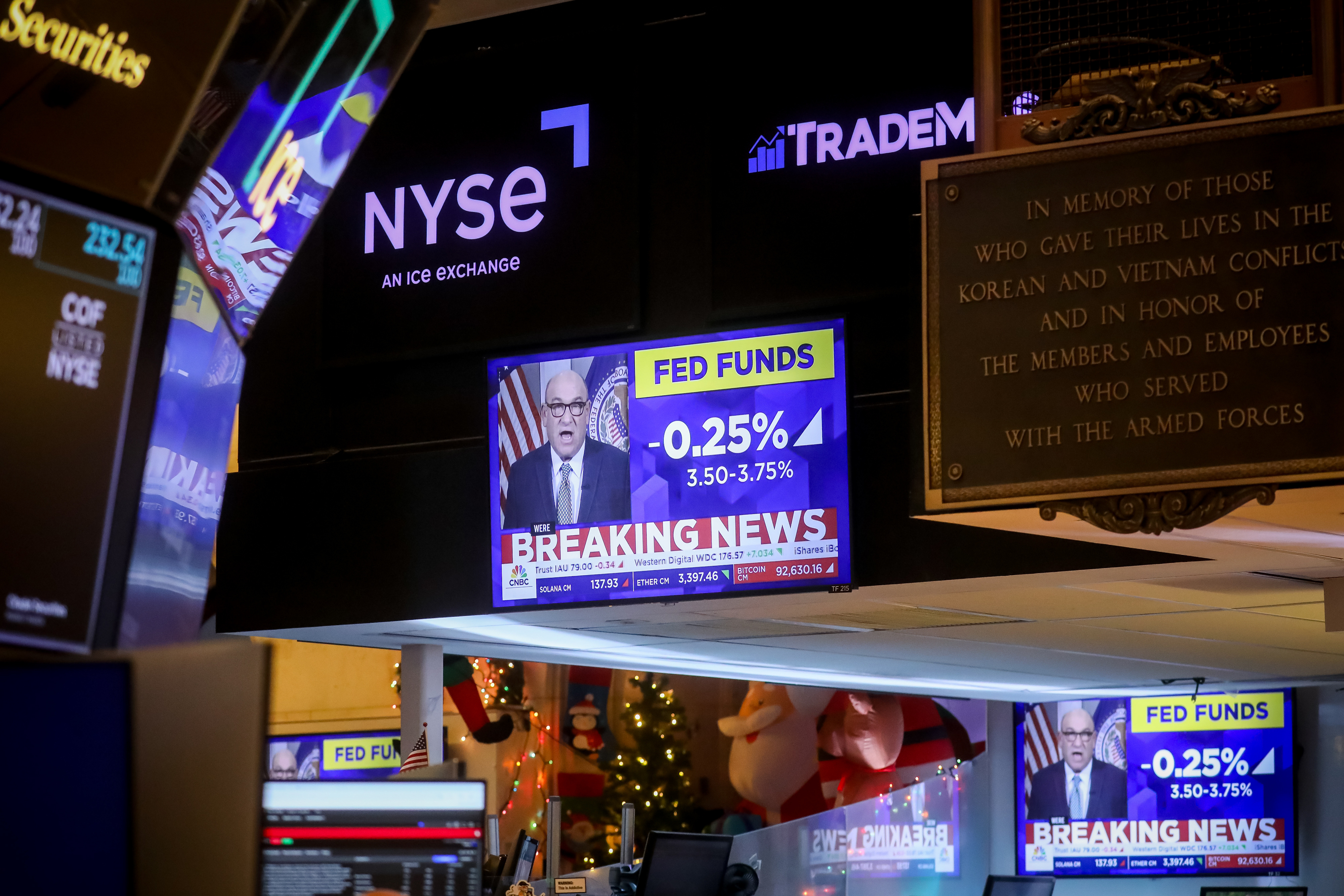
US Treasuries rose after the Federal Reserve lowered interest rates by a quarter-point for a third straight meeting and left the door open to additional policy easing in 2026.
Oracle Corp. shares fell the most in more than 24 years after the company reported a jump in spending on AI data centers and other equipment, rising outlays that are taking longer to translate into cloud revenue than investors want.
The rotation from technology stocks has investors, at long last, scouring one of the least loved corners of the market: energy producers.
After a "mini swoon" in November driven by AI bubble concerns, market tranquility has returned this December as investors await the Fed's widely anticipated 25 basis point rate cut and Chair Powell's subsequent remarks.
JPMorgan Asset Management is seeking to convert two municipal-bond mutual funds with over $840 million of assets into ETFs in 2026, underscoring the growing popularity of the products.
The crypto downturn has pushed a slew of Bitcoin miners to the brink of unprofitability, prompting operators to scale back the energy-hungry machines that keep the blockchain running.
Following the disappointment of its open-source Llama 4 model, Meta's AI strategy is undergoing a major shift, with CEO Mark Zuckerberg now personally directing efforts toward monetizable models.
Despite controversial leadership and little to no profits, experts believe public stock investors will be highly eager to embrace these massive listings, potentially breaking the multi-year IPO rut. If SpaceX lists at its massive rumored valuation, it would catalyze a "massive trend of IPO activity," forcing similar giants like Stripe and ByteDance to follow suit.
Discover the power of niche marketing for financial advisors to attract high-value, ideal clients and achieve scalable growth. Stop generalizing and start specializing to build a more profitable practice.
Gen Z and younger millennials are the high-asset clients of the future, and advisors need to work on connecting with them now. From my perspective, there’s one clear success strategy for advisors: expanding your financial planning services.
As 2025 comes to a close, I am using this column to offer high-impact strategies for you and your team to implement before the year ends. While you are likely focused on tax planning, Required Minimum Distributions (RMDs), and the other client necessities, it is equally important to address the operational and strategic health of your practice.
Global fund managers expect the surge in nuclear stocks to continue, driven by energy demands that extend beyond the needs of artificial intelligence and an improving regulatory outlook worldwide.
Recent frauds in the subprime auto and private credit markets have led observers to wonder if these are the "cockroaches" signaling a turn in the broader credit cycle. This transition is characterized by increasing volatility and dispersion in the debt markets, where bonds no longer trade in unison and earnings misses trigger sharp price drops.
In most cases, construction loan pricing isn’t a sign of greediness. It reflects the fact that a construction loan is both riskier and far more labor-intensive than a conventional mortgage.
Starting in the aftermath of the 2008 financial crisis, a profound change to the Fed’s liquidity-providing role in the capital markets was underway.
Market focus is shifting to the Fed's 2026 outlook, as stubbornly elevated inflation and recent hawkish signals suggest the central bank may signal an "extended pause" after this cut. Consequently, traders have recently scaled back expectations for the total number of cuts next year, expecting the easing cycle to stop closer to 3.5% rather than the previously forecast 3%.
While Netflix Inc. and Paramount Skydance Corp. vie for President Donald Trump’s blessings in their competing bids for Warner Bros. Discovery Inc., investors have an irony to consider.