I am not right as often as I would like. And feeling bad about being right occurs very, very rarely. But now is one of those times. I was not surprised when the ceasefire between the United States and Iran broke down long before it was due to expire.
Election season often follows a familiar script. Investors debate congressional control, speculate on policy outcomes and search for clues about what markets might do next.
The summer has once again brought a miasma of wildfire smoke across wide stretches of the nation, leading to hazy views and slower activity. The clouds in our outlook are not merely atmospheric. A failed ceasefire and renewed conflict in the Middle East have created new reasons to worry about economic performance.
Lock, stock and barrel, a British phrase, originally referred to the three essential components of a firearm. Over time, it evolved into shorthand for the whole package. When tensions flare in the Middle East, the global economy often feels the consequences lock, stock and barrel.
I really struggle to understand my utility bills. They often run to several pages, with sections describing just how difficult it is to get water from the source to your faucet, or internet service from a satellite to your home router. At the end, there is a long list of charges from a range of payors that adds up to an astronomical sum.
The measurement of inflation has been getting a lot of attention lately. Some modifications are underway, with more potentially to follow.
General Douglas MacArthur once remarked that “rules are mostly made to be broken.” He was at odds with U.S. President Harry Truman over the conduct of the Korean War, feeling that the restrictions placed on his forces weren’t supportive of success.
We had a data center at my first banking job. It was a dusty room filled with old Federal Reserve Bulletins, Economic Reports of the Presidents, and annual reports from the International Monetary Fund. I was the search engine, and the operation was powered by caffeine.
Productivity is an essential component of economic success. It allows for growth without inflation; compensates for demographic deficits; and helps nations attract investment.
Former Fed Chair Alan Greenspan’s passing has brought a stream of retrospectives on his approaches to managing the economy. He erred on the side of parsimony, favoring short public statements. Greenspan’s vague communication style offered little clarity over the future path of interest rates.
While the Middle East is still far from calm, it does appear the worst of the volatility in the region is in the past. The U.S.-Iran ceasefire is in place, with negotiations underway for a more durable peace.
Circumstances since 2020 have repeatedly demonstrated how adaptable the economy is in the face of new challenges. We see no reason for that resilience to fade in the balance of the year.
The AI boom goes from strength to strength. Big technology companies are pouring hundreds of billions of dollars into chips, data centers and power-hungry infrastructure. One estimate puts annual AI infrastructure investment above $650 billion in 2025 and potentially over $800 billion in 2026..
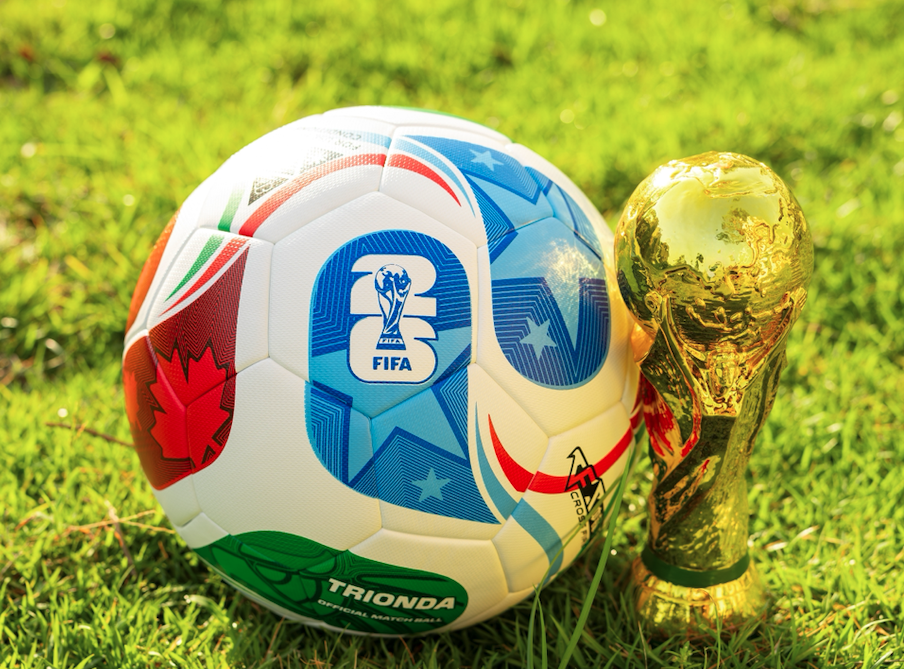
The ongoing World Cup showcases three countries working together. The USMCA review will reveal whether that cooperation extends beyond sport. A shared platform can continue to deliver strong outcomes, but only if the rules remain clear, stable and broadly accepted.
The announcement of an extended ceasefire in the Middle East is welcome news. The accord, which is scheduled to be signed late this week, reduces a source of geopolitical uncertainty that has hovered over the global economy. But significant risks remain.
At graduation ceremonies, audiences are often reminded to limit their audible reactions and hold applause, so that all graduates’ names can be heard. But a few viral videos this year showed a new disturbance to be managed: graduating students booing speakers if they extolled the virtues of artificial intelligence (AI).
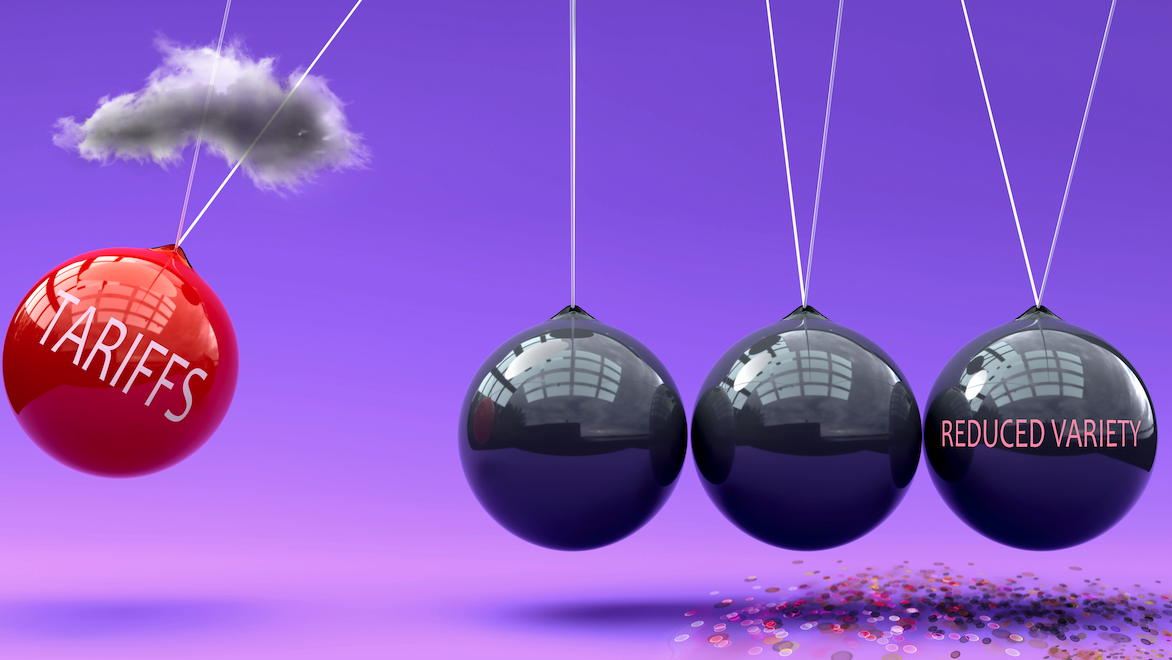
Tariff rates will vary, but their persistence is certain.
Fertilizers sit at the center of this transmission mechanism. As much as a third of the global supply of these commodities passes through the Strait of Hormuz, which has largely been closed for three months. This has triggered shortages and a price spike.
An increasing number of our neighbors are now retired. As they have made that transition, their sensitivity to the costs of living has increased, as has their skepticism over the way that inflation is measured. A common refrain: “I don’t care what the numbers say…things are REALLY expensive these days!”
Economies around the world aren’t just reliant on AI investments for growth. The appreciation of AI stocks has supported spending, which is following “K-shaped” patterns. A significant correction to the valuations of tech leaders would therefore be even more likely to result in recession.
An unexpected rap on your front door is sometimes cause for anxiety. You are not sure who or what is out there, wanting to get in.
Contrary to what legal television series portray, verdicts rarely turn on a single moment of drama. They take shape gradually, as evidence accumulates and a broader narrative comes into focus.
This week marked the passing of former Massachusetts Congressman Barney Frank. His signature legislation, the Dodd-Frank Act of 2010, was the most recent increment in a long-running history of tighter financial regulation. Some of those rules are now coming under scrutiny, with the goal of making bank lending more competitive.
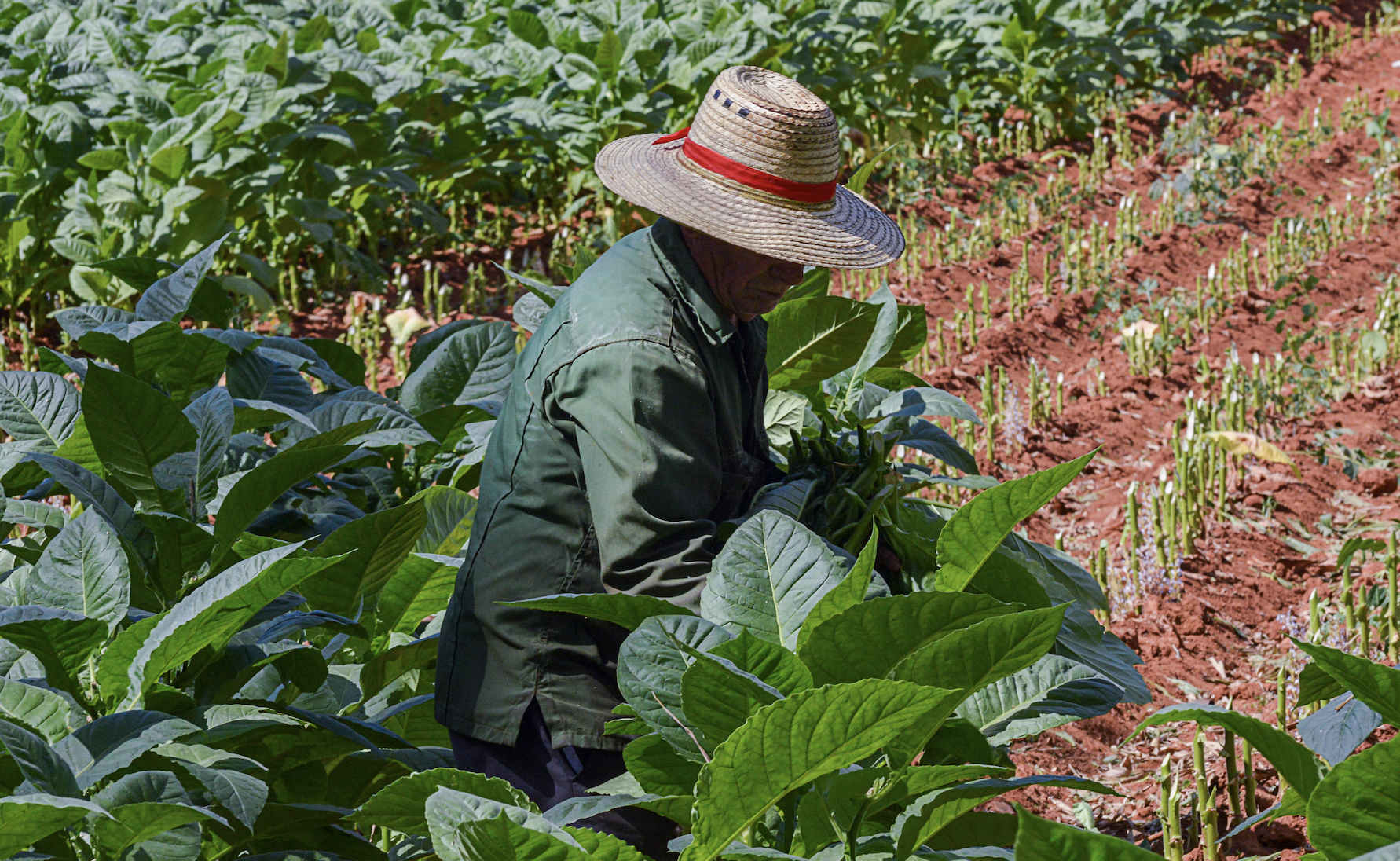
During the American cigar craze of the 1990s, a couple of my neighbors purchased humidors and began collecting. The holy grail for them was Cuban Cohibas, banned from import by longstanding U.S. sanctions.
Nineteenth-century oil processing plants used simple, column distillation of crude oil to produce kerosene, which was in high demand for lighting lamps. The process also yielded a dangerously flammable byproduct called gasoline which had no obvious use.
Kevin Warsh was confirmed this week as the next Chair of the Federal Reserve’s Board of Governors. As we discussed in a recent article, his transition comes at a delicate time; inflation is rising, and questions about the Fed’s independence are pressing. The honeymoon period will be brief.
The United States has not felt the greatest costs of the Iran conflict, but challenges are becoming visible. Energy prices have risen, with limited prospects for relief. Inflation measures are poised to spread to other product and service categories. Inventories that helped to blunt the impact are depleting; supply chain distortions are accumulating.
Stock markets have been hitting all-time highs and credit spreads remain low, yet higher interest rates and mounting floating-rate debt are straining lower-rated borrowers. This tension is surfacing first in leveraged loans as “quiet defaults” become more common — opening up a dynamic set of opportunities for investors specialized in stressed and distressed assets.
A tariff is a tax on the value of an imported good, paid by the importer at the time the good is taken from an entry port. The tariff is absorbed in some combination of price concessions by the exporter, lower margins for the importer or higher final prices.
With those simple words, Jerome Powell departed his final press conference as Federal Reserve Chair. Powell’s eight years at the helm have been anything but simple, however. A review of his tenure includes some hits, some misses, and some important lessons in leadership.
Artificial intelligence unknowns are creating stress in the market, and we don’t see that ending any time soon. For long-term investors, these stressors can create opportunities.
Students of game theory often start with a lesson in the prisoner’s dilemma: two agents would gain a better collective outcome by cooperating, but each has an individual incentive to take action that is at their partner’s expense.
Automotive enthusiasts have coined the phrase malaise era to describe U.S. vehicles made from roughly 1973 to the early 1980s. New emissions and safety standards, plus high gasoline prices following the 1973 oil crisis, permanently reshaped the market.
Global risks have tilted against both growth and price stability. The ceasefire in the Middle East has brought a measure of calm to financial markets, but it has not resolved the underlying economic shock. With the Strait of Hormuz effectively shut, supply constraints continue to ripple through energy markets and are increasingly spilling over into downstream sectors.
One of the most important decisions anyone will make in their lives is whether, and whom, to marry. A well-chosen partnership can lead to a happy steady state and help to weather downturns. But even the best long term partnerships can have their ups and downs. For currencies that are wedded to the U.S. dollar, the war in Iran has put some stress into their relationships.
The Middle East war has entered a fragile ceasefire, offering tentative relief to energy and financial markets. Oil prices have eased and volatility has subsided, feeding hopes that the worst disruptions may be passing.
Leaders often have trouble focusing on the longer-term. In the corporate arena, pressure to produce quarterly earnings can truncate planning horizons. In public life, popular opinion and election cycles can impose myopia. It takes a unique set of ingredients to set, and stick to, a lasting vision.
Each spring, the International Monetary Fund (IMF) releases its World Economic Outlook (WEO), a review of global growth, and the key challenges confronting the world economy. This year’s edition followed the Fund’s usual structure, but the circumstances underneath it had shifted. ]
Every employee has heard calls to be more efficient: “Work smarter, not harder.” “Do more with less.” “Don't reinvent the wheel.” These platitudes are not only applicable at the micro level: the modern economy has continually become more efficient. Our use of energy tells the story clearly, and serves as a source of resilience during today’s supply disruptions.
I was working in one of our regional offices this week when the network on our floor experienced a brief outage. People were clearly not prepared for a return to an analog world, and grew increasingly anxious as the minutes ticked by.
Over the past several years, those patterns have been changing. The evolving flows of both tourists and emigrees will have important economic effects.
Beyond keeping party balloons aloft, helium plays a far more serious role in the modern economy. Extracted as a by‑product of natural gas production, it is an essential input across semiconductors, medical imaging, aerospace and defense systems.
The middle is typically not where you want to be. In American sports, teams in the middle of the standings aren’t contenders for either a championship or a high draft choice. The middle seat on an airplane, subject to incursions from either side, is not very comfortable. The middle manager is accountable in every direction, empowered in none.
The war in Iran has been costly, in a number of ways. First and foremost, the humanitarian consequences have been substantial: the price paid by those in harm’s way is immeasurable.
During the pandemic, my wife lived in constant fear that we would run short of paper products, disinfectants and other essentials. I was frequently sent out on reconnaissance missions to replenish supplies.
Rationally, no one should feel happy about an income tax refund. The refund is a correction of a tax overpayment; the recipient effectively gave the government an interest-free loan over the course of the prior year.
Sharp moves in energy prices rarely arrive at a convenient moment for policymakers. When shocks occur, governments are left juggling two competing imperatives: cushioning households from rising costs while preserving fiscal credibility. T
The Iran conflict has changed the paths for inflation and central bank actions.
While agricultural best practices have moved on to other resources, the Guano Wars teach us that nations are willing to go to great lengths to sustain their crops.
The ongoing Middle East war has once again underscored oil’s strategic importance. Vital resources warrant buffers against disruptions in the form of a strategic reserve.