There are several market headwinds that warrant attention, as well as a tailwind that may be large enough to keep the boat moving forward. Fully understanding the headwinds and tailwinds will help you better monitor the market barometer, allowing you to assess and adjust risk levels with more awareness going forward.
Bear flattening trades, inverted yield curves, and frantic style rotations (factor or sector) are not definitive warnings of a market peak. They are extremely informative about where the economy, markets, and investor sentiment stand, but they do not tell investors whether or when the economic or market cycle will turn.
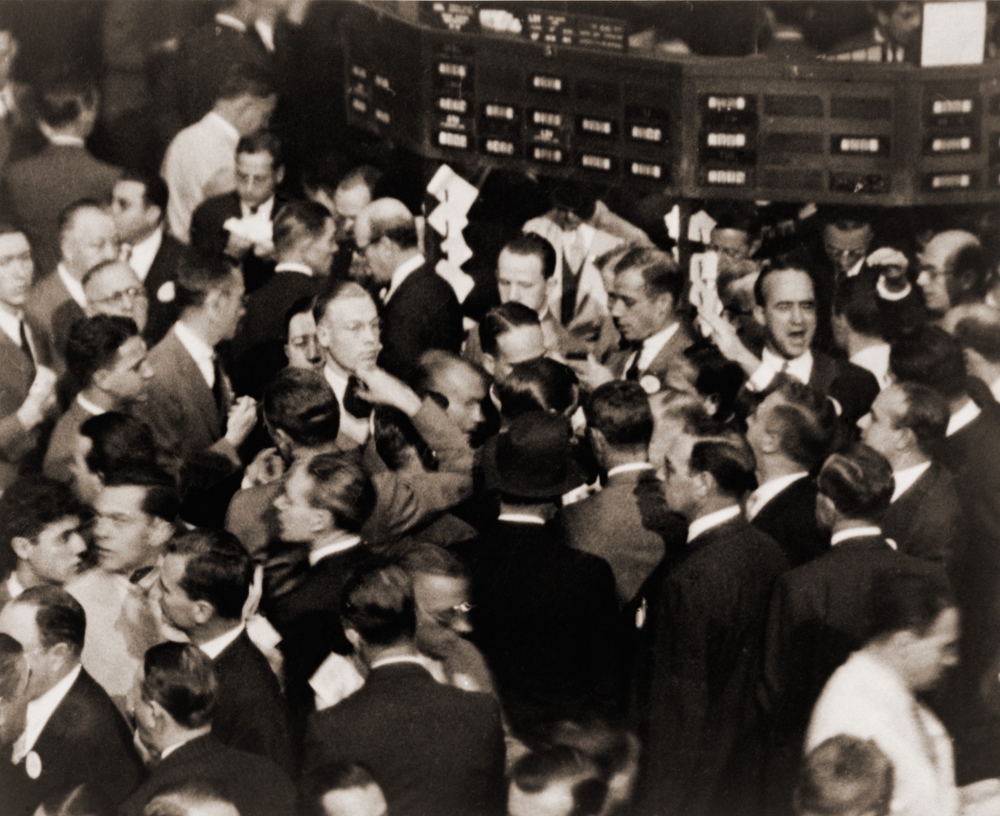
What is remarkable about Livermore is that his rules are still incredibly valuable. The markets he traded in no longer exist. The technology, the communication speeds, and the regulatory framework of his day are unrecognizable compared to today. But the principles and behavioral patterns he identified are as operational in 2026 as they were a hundred years ago.
Jesse Livermore’s prolific trading stories about the fortunes he made and lost are well documented in two books. While his career was marked by the incredible volatility of his wealth, and some consider him a failure as he died broke, his market knowledge is invaluable. Accordingly, we share his 21 market rules.
The IPO market is bubbling with excitement. The headlines surrounding the IPOs are hyperbolic, banker fees are enormous, and social media is teeming with bullish sentiment on how high the new shares may trade after going public. While that is all great for clickbait, nobody is asking the most important question. Where will the money come from?
Quantum computing is being hailed as the next technology to revolutionize computing, following in AI's footsteps. But promising headlines loaded with industry jargon have a long history of appearing well ahead of reality. Accordingly, it’s important to better understand what quantum computing is, why it matters, and whether the hype is justified and worth investing in.
Innovation drives productivity growth, which in turn raises the standard of living for a nation's population. Accordingly, we support the theory that AI will benefit the economy and the population. We laid this bullish case out in "The AI Economy: Looking Beyond The Façade Part I."
We separate this article into two parts. Part one is the optimistic case: an AI-induced, productivity-led economic boom in which the benefits spread quickly to society. Part two will address a more bearish outlook: the possibility of a large gap in the distribution of AI's productivity benefits, accruing to corporations much more quickly than to employees.
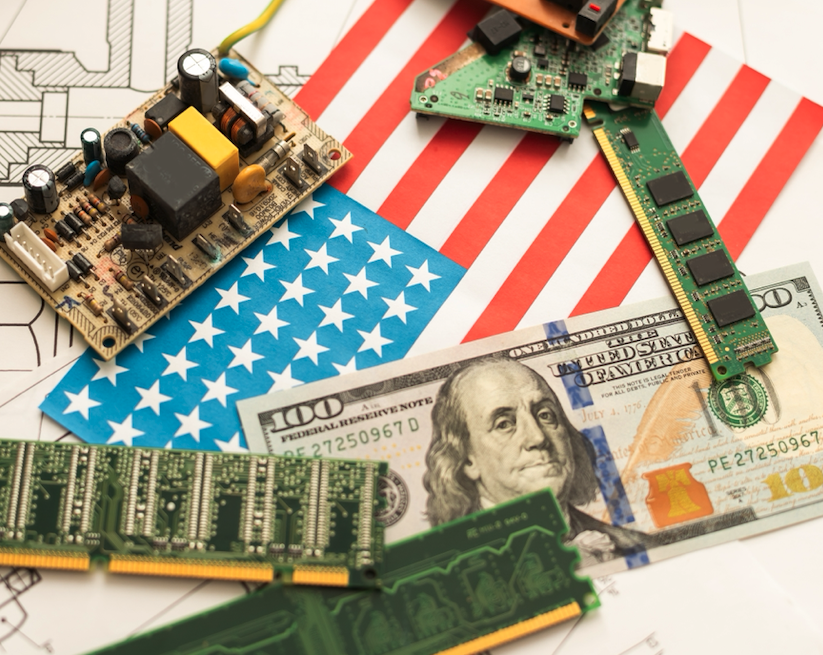
Semiconductor stocks, along with some computer hardware companies, are the market’s latest AI darlings. Momentum and gamma are driving the outperformance, and, in their wake, a supportive narrative is trying to justify it.
Gold bugs often claim that when more dollars are in circulation, each dollar buys less; prices rise, and gold, as a store of value, helps protect purchasing power from that decline. As a result, they believe that a rising money supply, in and of itself, is inherently inflationary.
The poor sentiment toward private credit funds has dragged down many high-quality BDCs, as well as weaker ones. The chaos and bad press surrounding private credit funds are not reasons to avoid BDCs. In fact, we think it’s a reason to consider them.
With a better understanding of the derivatives and leverage that led to the GFC, we now explore private credit — a small “niche” financial sector, such as subprime mortgages — which is being called the next match to light a financial bonfire.
Given the misunderstanding linking subprime mortgages and private credit, I discuss how leverage and derivatives, layered atop subprime mortgages, were at the heart of the GFC. A better understanding of that event will help advisors and investors better assess whether recent woes in private credit are an omen of another crisis or an overstated concern.
While tech giants race to invest billions into AI, executives at Apple are quietly sitting on their hands and a mountain of cash. The puzzling question, however, is why Apple isn't following suit. Or is it taking a different approach to winning the AI arms race?
When investors want to reduce risk, one commonly used tool is beta. For instance, an investor may sell higher-beta stocks and replace them with lower-beta ones to cushion against an expected market decline. Such a strategy is intuitive and widely used; however, it can be greatly flawed.
To better understand how AI might affect the labor market and, ultimately, the economy, we’ve summarized Citrini’s bleak outlook alongside rebuttals from Citadel Securities and Bianco Research. These summaries provide a useful primer on how labor markets may adjust to the upcoming major technological changes.
With liquidity and credit stress in the private credit market rising, we must consider whether the Fed might once again ignore its mandates to backstop exuberant markets.
In our recent article, "The Value Rotation Illusion," we explained that in the recent rotation from growth to value. In this follow-up, we take the three-tier earnings valuation framework we introduced in the previous article a step further to uncover true value stocks.
In this article, we explore how this speculative environment and the aggressive trading in passive ETFs are playing out. We also examine how to identify and capitalize on sector and factor rotations, turning passive investors' aggressive behavior into an opportunity.
The recent rotation from growth to value is well documented. While the return divergences between technology stocks and materials or industrials stocks are significant, they do not tell the whole story. There are also extreme return differentials between broad industries and their sub-industries. In this article, we address the divergence of the broad technology sector and the software-as-a-service (SaaS) sub-industry.
Given the divergence between the calm market surface and the volatility of its underlying stocks' returns, let's get a better grip on the market’s undercurrent and decipher what it may be trying to tell us.
Before turning your investment perspective upside down, let’s define how most investors think about value and growth stocks. For some reason, investors often assume that growth and value are mutually exclusive. They are not, as we will explain.
Whether you follow Japan or not, its situation is incredibly important for investors because it is a major provider of global liquidity. Instead of being overly dramatic about the slim chance of a near-term Japanese crisis, we prefer to focus on how Japan normalizes policy after years of artificially suppressed interest rates and how that process will impact the yen carry trade.
No one knows what the future holds — especially not with burgeoning technologies such as AI. The best opportunities in AI may not be in today’s high-fliers but in lesser-known companies — some of which may still be private or not yet formed.
This endless sequence of numbers that form ratios, known as the Fibonacci sequence, provides a technical analysis tool for managing financial securities. Before you assume we've lost our minds —relying on biology or, even worse, mysticism to predict stock prices — let us explain.
Silver has been on a tear, rising fourfold in the last few years. To help investors assess whether silver is in a bubble, we take a new approach by examining a recent phenomenon: the recurring pattern of micro-bubbles.
Instead of offering a forecast, let us consider the potential events and factors that could influence investor sentiment and move markets this year. Inevitably, no matter how many events we and others are considering today, there will be market-moving ones that are not on anyone's radar currently.
Silver’s parabolic rise has been remarkable. In this article, we examine the two similar price surges to provide context for what may be occurring today and, importantly, for what might cause this bubble to pop tomorrow.
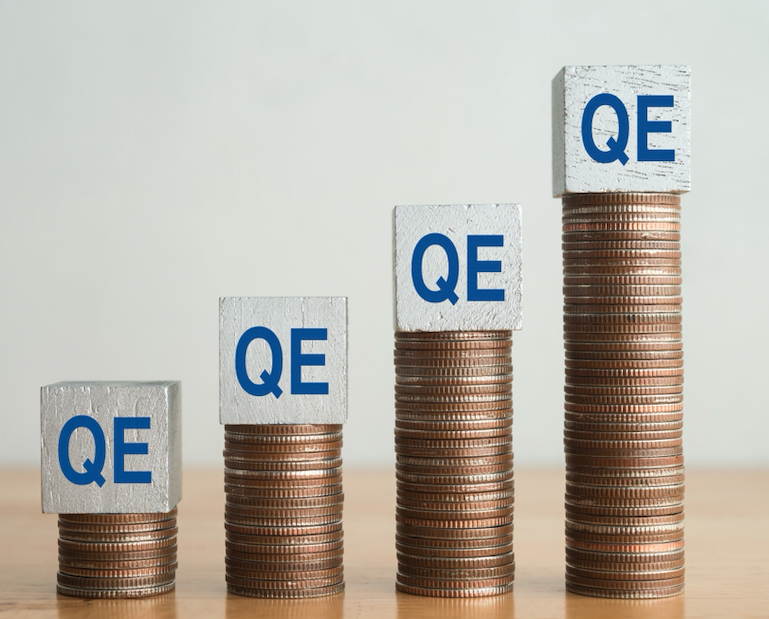
QE is back! On December 10, the Federal Reserve announced its plan to purchase $40 billion in Treasury securities each month for at least four months. Through these purchases, bank reserves will increase, and recent liquidity concerns should lessen.
Starting in the aftermath of the 2008 financial crisis, a profound change to the Fed’s liquidity-providing role in the capital markets was underway.
This article walks readers through the Federal Reserve’s balance sheet to explain how it now acts as the primary provider of liquidity to financial markets. It details the Fed’s reserve management tools, including the well-known QE and QT, to show exactly how it injects or withdraws reserves from the banking system.
Fed policy — not free markets — now plays a crucial role in forecasting how today’s speculative excesses might return to their normal levels. Will it be a pop, a slow leak, or will the Fed keep bubbles afloat at any cost?
To better understand how the AI industry is funding itself and the potential risks involved, we believe it is helpful to draw on historical context from the dot-com bubble, when similar deals were common amid a thriving technology sector.
As equity valuations approach — or in some cases surpass — the record highs of 1999, investors are growing increasingly anxious. This unease is partly driven by the media issuing grim warnings, often based in part on CAPE valuations.
This article does not discuss the rationale of owning gold as a long-term asset. Instead, it questions the recent jump in gold prices and whether the current levels are fundamentally justified.
Connecting the dots, we found that a nation's court system and level of justice have the most significant impact on its Freedom Index, and therefore, by extension, on the wealth and happiness of its citizens. Aristotle connected these ideas over 2000 years ago when he opined, “A just life is inherently a happy one.”
It's odd to consider, but a recession could flip our bullish outlook on bonds to bearish. It's unusual because typically, inflation drops during a recession, leading to lower yields and higher bond prices. However, we believe that if an economic downturn or recession occurs soon, the immediate effect on bonds will be favorable.
Some political commentators believe Stephen Miran is a pawn of President Trump, aiming solely to lower interest rates, regardless of whether such action is justified. But, regardless of your political views, set aside your own perspectives for a moment and consider Miran’s views on the economy and monetary policy.
Some Wall Street pundits believe that the recent Fed rate cut makes its policy too accommodative, and they also argue that the Fed is creating a “Goldilocks” scenario for the stock market. To better gauge where policy lies on the accommodative to restrictive spectrum, it's critical to compare the policy to current economic growth and inflation rates.
Based on valuations, there's no denying we're in a bubble. That's noteworthy by itself, but it doesn’t tell us what will happen next. I will explain why selling now might not be the best move.
Recently, we have seen rapid shifts in and out of various sectors and stock factors that disrupt momentum strategies. Therefore, understanding how momentum strategies work can help you better identify when they might be effective and when it's time to switch to a different approach.
Despite not meeting three of the four criteria, UPS valuations provide a better margin of safety than many stocks. However, while it may fare better comparatively, we would want to see improvement in earnings and sales trends before committing UPS to our roster of rainy-day stocks.
While stock indexes generally give a broad idea of what is happening, they can greatly overlook the performance of many individual stocks.
Investor behaviors and preferences during the dot-com boom/bust and the current environment are similar. It's too early to label the recent speculative activity as a boom on the same scale as the late 1990s.
Is this period different from the high-beta boom-and-bust cycle during the dot-com era? Only time will tell. While there are some similarities, key differences exist.
AI is rapidly increasing the speed and accuracy needed for financial market research and trade execution.
The recent relatively weak performance of the Magnificent Seven, in aggregate, may point to a new trend. Time will tell if the laggards in the Magnificent Seven are taking a well-needed break or if an actual change in leadership is coming.
Our advice to Fed Chairman Powell is to consider both sides of the argument and act to lower inflation over the longer term.
In part 2 of this series, this article looks past the data center operators and focuses on the natural gas pipelines and the manufacturers of natural gas power plant equipment.
Despite concerns regarding the electrical power grid, there are solutions to meet the surge in AI-driven energy demand. For example, nuclear energy is making a comeback.